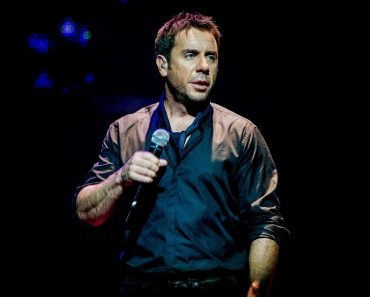


The Nikaia-born singer behind “Savvato,” “Nikotini” and “To Gucci Forema” brought theatrical daring to Greek popular music and forged a lasting connection with audiences across the diaspora.
By HNA Newsroom
Giorgos Mazonakis, one of the most distinctive voices and commanding stage personalities in modern Greek music, died Wednesday, September 9, after suffering cardiac arrest during a medical procedure at a private practice in central Athens. He was 54.
Emergency responders performed cardiopulmonary resuscitation at the Kolonaki office and during his transfer to Elpis Hospital. Doctors continued resuscitation efforts, but Mazonakis was pronounced dead at the hospital at 5:30 p.m.
The circumstances surrounding his death have become the subject of a criminal investigation, adding a difficult final chapter to the life of an artist whose voice, image and music helped shape more than three decades of Greek nightlife.
News of his death spread rapidly across Greece, Cyprus and the diaspora. A concert scheduled for September 20 at Technopolis in Athens—marking his 33 years in music—was canceled.
From Nikaia to national stardom
Born March 4, 1972, and raised in Nikaia, the working-class Piraeus district that remained central to his identity, Mazonakis discovered his ambition to sing professionally while still a teenager.
His career began in the nightclubs of Patras, where he was discovered in 1992 by representatives of PolyGram. His debut album, Mesanihta Kai Kati, followed in 1993.
A year later, Me Ta Matia Na To Les brought him national attention through songs including “3 To Proi” and “Aniko Se Mena.” The gold-certified Mou Leipeis followed in 1996, while the platinum album Paidi Tis Nychtas established him as a leading figure on the Greek nightclub circuit.
Mazonakis went on to headline major Athens venues and release songs that became fixtures of Greek popular culture. “Savvato,” “Nikotini,” “To Kalytero Paidi,” “Ena Keno” and “To Gucci Forema” could be heard in bouzoukia, at weddings and on radios throughout Greece and wherever Greek communities took root.
An artist who resisted convention
Mazonakis drew from the emotional directness of traditional laïko music but refused to remain within its established boundaries. He incorporated pop, rock, electronic music and elaborate performance into his work, helping transform the conventional nightclub program into something closer to a theatrical production.
His heavy, immediately recognizable voice was matched by an equally distinctive visual identity. He appeared onstage in skirts, platform shoes, military-inspired costumes and other bold designs that challenged expectations surrounding the image of a male laïko singer.
The experimentation never displaced the emotional center of his music. His songs returned repeatedly to heartbreak, loneliness, desire and personal independence—subjects he delivered with an intensity that made even his most theatrical performances feel personal.
Television introduced him to another generation. He appeared as a judge on the Greek edition of The X Factor and Your Face Sounds Familiar and later became a coach on The Voice of Greece, where his spontaneity, humor and support for young performers broadened his appeal.
His final release, “Epiptoseis,” arrived in March 2026. The accompanying video reflected the more cinematic and visually ambitious direction he had pursued during the later stage of his career.
A lasting bond with the diaspora
Mazonakis performed extensively beyond Greece, with appearances in Cyprus, Germany, Australia and the United States.
His American engagements included concerts in New York, New Jersey, Atlantic City and Chicago. For Greek Americans, particularly those of the second and third generations, his performances offered a direct connection to contemporary Greece rather than a nostalgic recreation of it.
He carried the sound and spectacle of Athens nightlife into American theaters and concert halls, where audiences often sang every word with him. His music also became a familiar presence at Greek-American weddings, community events and celebrations.
That connection helps explain why his death was felt so strongly beyond Greece. Mazonakis represented a living, evolving Greek culture, one that could honor the emotional power of laïko music while remaining modern, provocative and unmistakably his own.
Investigation into his death
Greek authorities are investigating the medical care Mazonakis received during a plasmapheresis procedure at the private practice in Kolonaki.
Two doctors connected to the facility were arrested. On September 14, the charge against them was upgraded to homicide with possible intent following the submission of new evidence to the investigating magistrate. The doctors have not been convicted, and the judicial investigation remains underway.
Investigators are examining the operation of the plasmapheresis equipment, the timing of the medical emergency and the interval before emergency services were contacted. The forensic examination and other medical evidence are expected to play a central role in determining the cause of death and whether criminal liability exists.
Nikaia says farewell
Mazonakis returned to his childhood neighborhood for his final farewell.
His coffin was placed at the Church of Agia Triada in Nikaia, where thousands of admirers, friends and fellow artists came to pay their respects. At the family’s request, mourners were encouraged to support Humanity Greece in place of sending funeral wreaths.
The funeral service was held September 14, followed by burial at the Third Cemetery of Athens. Although the burial was intended to remain private, members of the public followed the procession carrying flowers and singing his songs.
Mazonakis leaves behind a catalogue that chronicles the changing sound of Greece from the early 1990s through the present day. He expanded the possibilities of laïko performance without surrendering its emotional force, bringing together the nightclub, the concert stage, television and the diaspora.
For more than three decades, his music provided the soundtrack to Greek nights around the world. That voice and the defiant individuality behind it, will continue to be heard wherever Greeks sing, dance and remember.