
A man wearing the chiton plays the lyre while I admire the hand-laid mosaics and replicas of Greek vases that surround me. Soon, I will be savoring a cup of wine paired with figs, cheese, and nuts. Outside, Matera stands still as the sun sets, and the ancient, labyrinthine city prepares for the night.
What I just described is part of the experience offered by the world’s first “inhabited museum.” Moyseion Matera opened its doors in late 2024, and it is a project that challenges our understanding of heritage. But before we talk more about the Moyseion, a few words about Matera.
The Ancient City of Matera
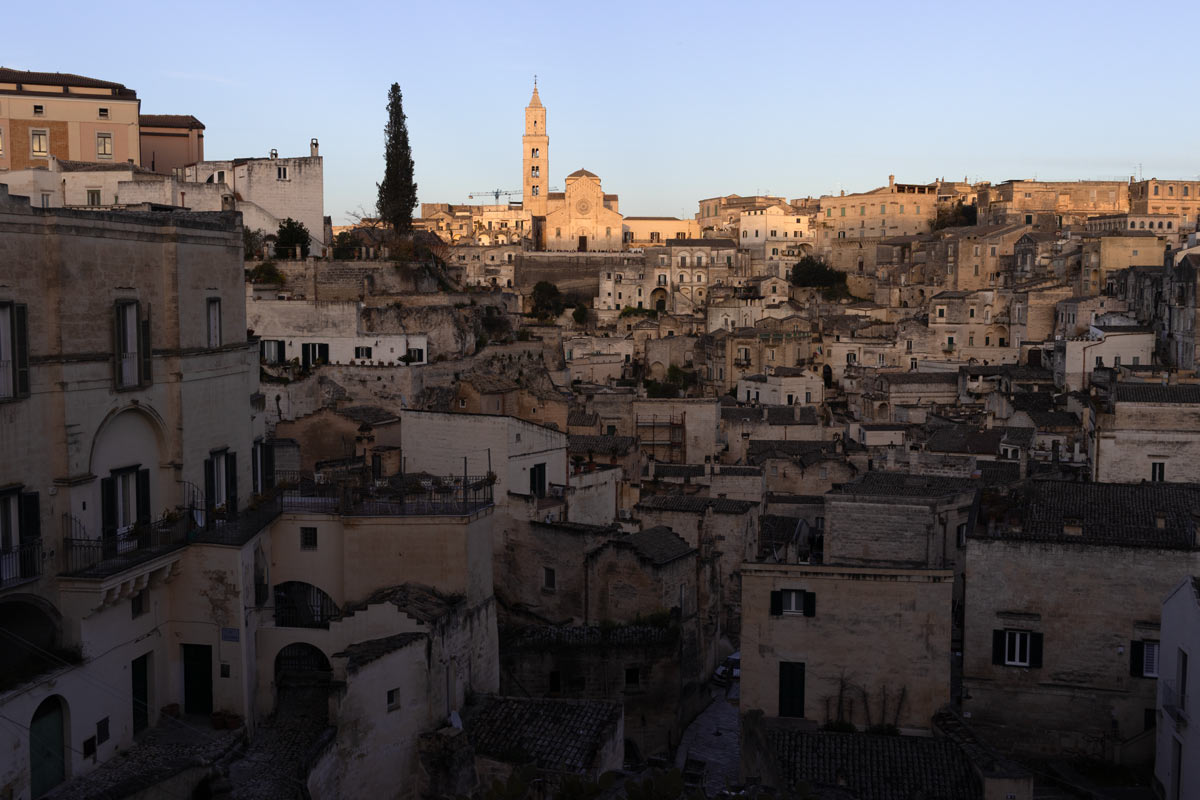
Matera is located in the region of Basilicata in Southern Italy. Often cited as the third-oldest continuously inhabited city in the world, Matera is a palimpsest carved in limestone, overlooking the Gravina river.
Matera’s old city, known as the Sassi, is often cited as one of the earliest settlements in Italy, going back 9,000 years. The term Sassi comes from the Latin saxum, meaning “rock” or “stone,” and refers to the cave dwellings carved into the rock. By the mid-20th century, Matera’s Sassi had become a site of extreme poverty dubbed the “shame of Italy.” However, things began to change after interventions by the state, the Sassi’s designation as a UNESCO World Heritage site in 1993, and the city’s designation as a European Capital of Culture in 2019.
With time, the “shame of Italy” became a popular tourist attraction and, undoubtedly, a picturesque journey through time (just look at the photos). Mel Gibson’s The Passion of the Christ (2004) was filmed in Matera alongside more recent films such as James Bond: No Time to Die (2021) and Wonder Woman (2017).
The Inspiration for a Different Heritage
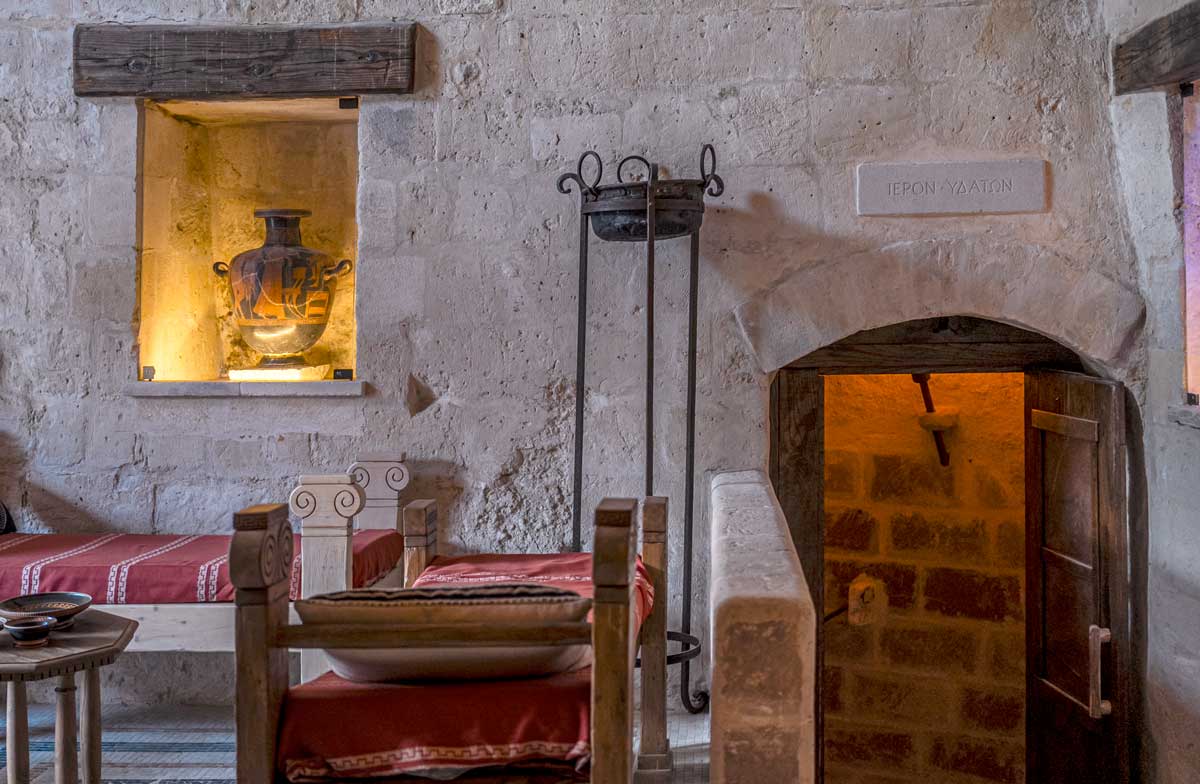
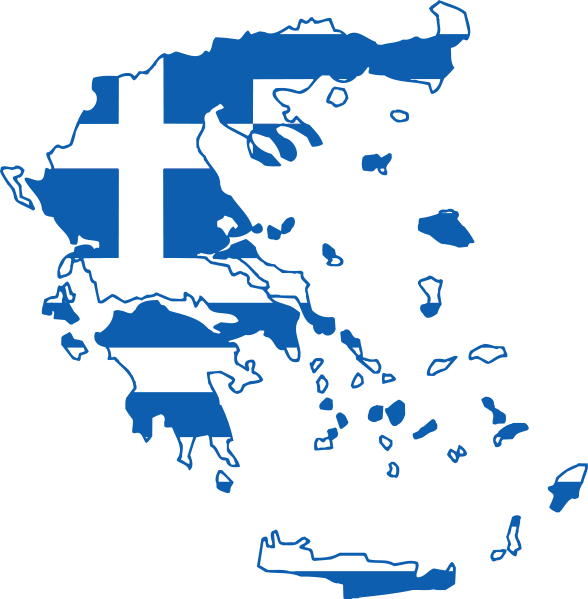
Matera’s heritage is multifaceted. However, Antonio Panetta, an artist and lawyer with a deep-seated passion for the classical world, thought that something was missing. For Antonio, the missing element was the heritage of Magna Graecia (Great Greece), the long and influential ancient Greek past of Southern Italy; a past that is mostly locked away in museum collections and rather difficult to engage with.
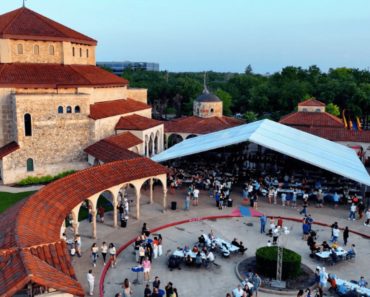
Antonio also felt a personal connection to this ancient Greek heritage, which, to him, deserved a different approach. The Moyseion was his way of connecting with this past. Spanning over 1,000 square meters of excavated rock, the Moyseion is, literally, a piece of Matera’s history. However, the story it tells is much different than anything else one will encounter in the Italian city.
At first glance, what strikes the guest is the attention to detail. The mosaics (my personal favorite), the marbles, the fabrics, the three-legged wooden tables, the ceramics, and even the lighting invite you to leave your comfort zone and enter a space of imagination where the past is lived, not simply viewed. It is also worth noting that every, or almost every, element of the interior is a replica based on archaeological finds and research.
Poetic Archaeology
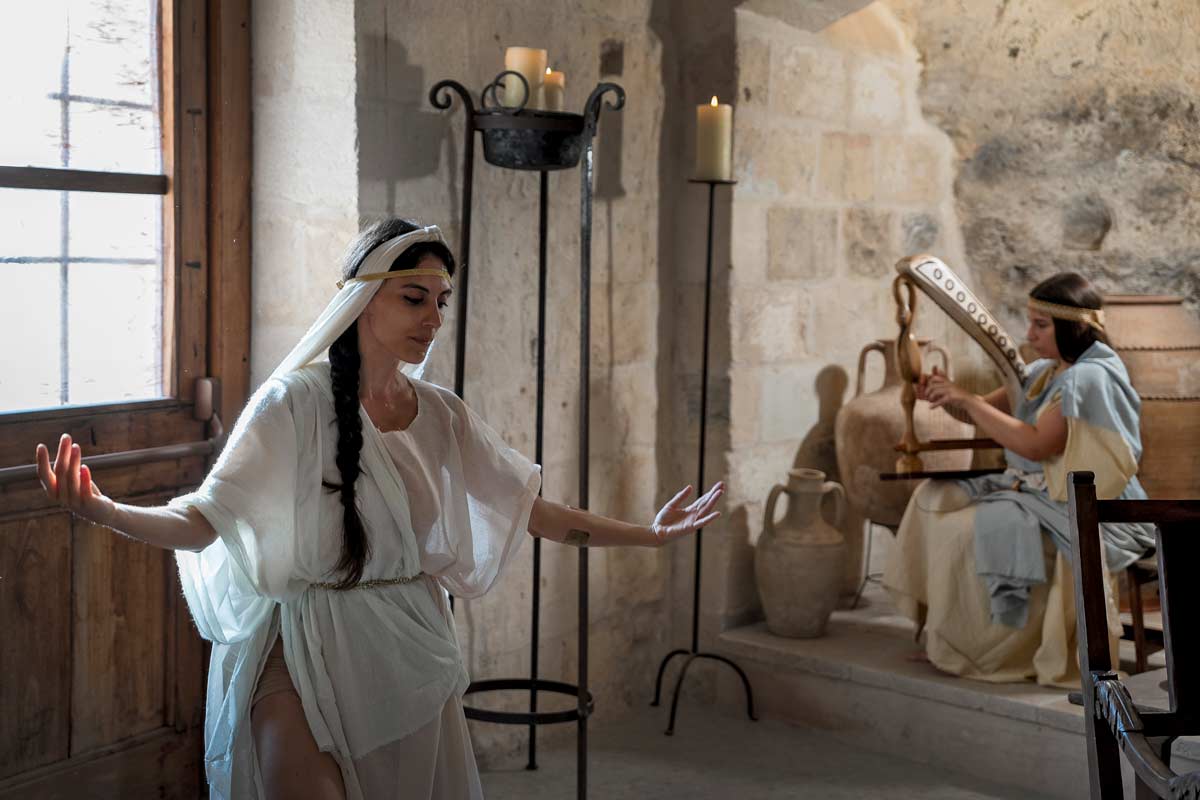
What distinguishes the Moyseion from a themed resort is its commitment to “reactivate” cultural heritage through poetic archaeology, which it describes as:
“…a form of research and restitution that unites the symbolic with the sensory, the body with the intellect, the word with the gesture.”
In the age of social media, the Moyseion shows that poetic archaeology can reintroduce a different, slower pace and a more conscious approach to engaging with cultural heritage through an emotional and sensory lens.
Beyond Hospitality?
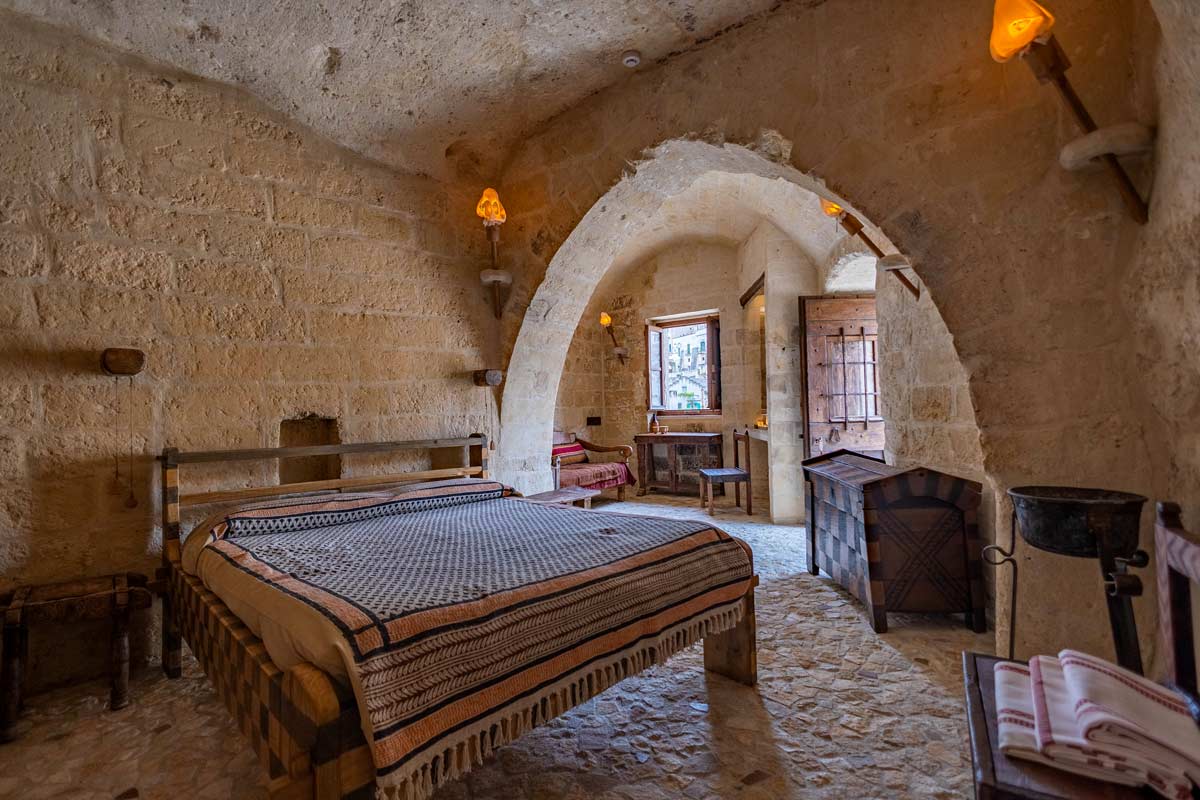
Moyseion Matera is a complex composed of different spaces. There is a main building (lobby and water sanctuary) where the rituals (more on that later) take place. The guests occupy 16 dwellings, which are divided chronologically:
- Three dwellings reflect the Neolithic origins of the site
- Five are dedicated to the Enotrians (the indigenous populations of Southern Italy)
- Eight are tributes to Magna Graecia
A Strange Feeling
The most striking aspect of the rooms is the absence of the contemporary. The modern world, in the form of climate control systems or even mirrors, is carefully concealed to allow for different levels of immersion. This creates a liminal space where the inhabitant is free to engage with the materiality of the past. The textures of natural fabrics, the scent of ancient herbs, and the flickering light work in tandem to dissolve the temporal distance between the 21st century and the past.
Leaving the Moyseion after a few hours feels strange. The sight of technology and tourist crowds suddenly feels foreign. It is only after leaving that you begin to reflect on the experience and contemplate it for what it was: a trip into the past.
The Water Sanctuary and the Rituals
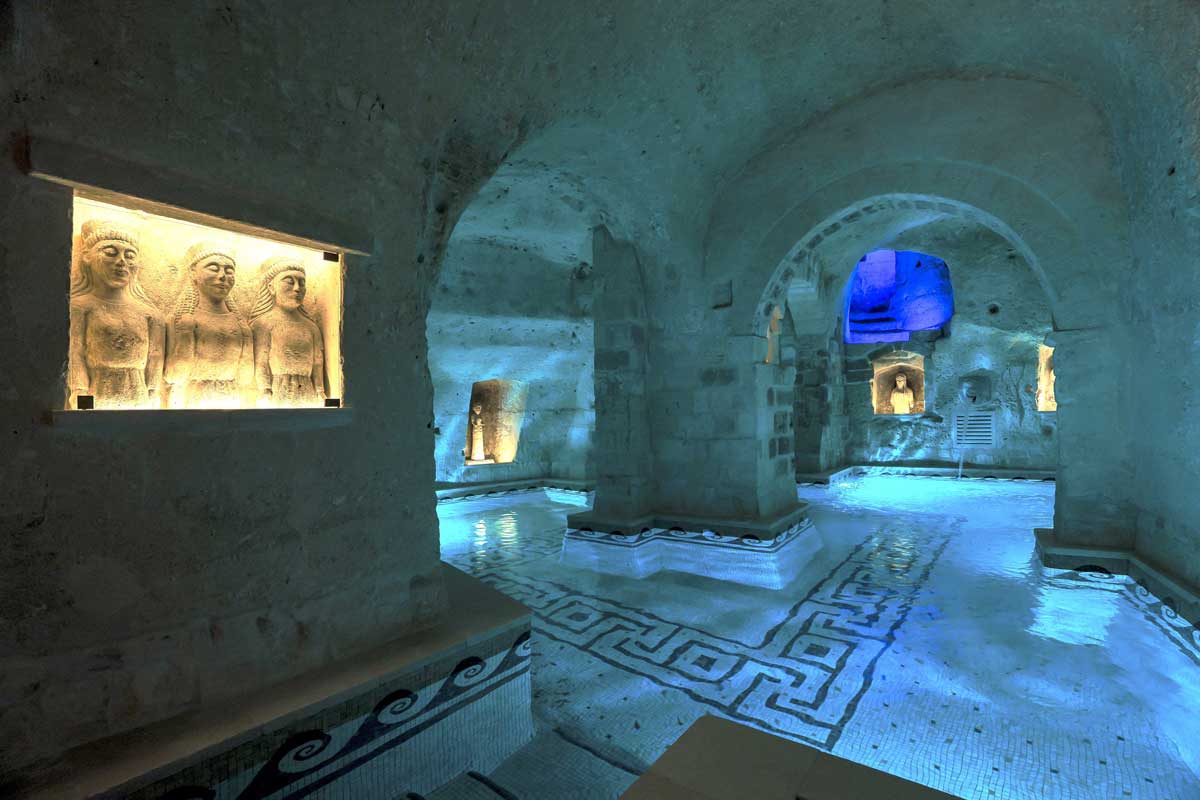
The heart of the Moyseion is the Water Sanctuary, a multilevel complex dedicated to the goddess Demeter. The Sanctuary is inspired by the Hellenistic thermal complexes discovered at sites like Kaulonia and Herakleia. It is a somber, evocative space of stone basins, pools, and floor mosaics that replicate archaeological discoveries.
The space is not a standard spa; it is a site of ritual purification. The dimly lit space, filled with statues of Demeter and stunning mosaics, allows for a spiritual trip into the past that pairs well with the need for relaxation.
It is in this space that a team of classicists and performers guide guests through narratives inspired by the myth of Demeter and Persephone in a ritual that feels ancient and universal at the same time.
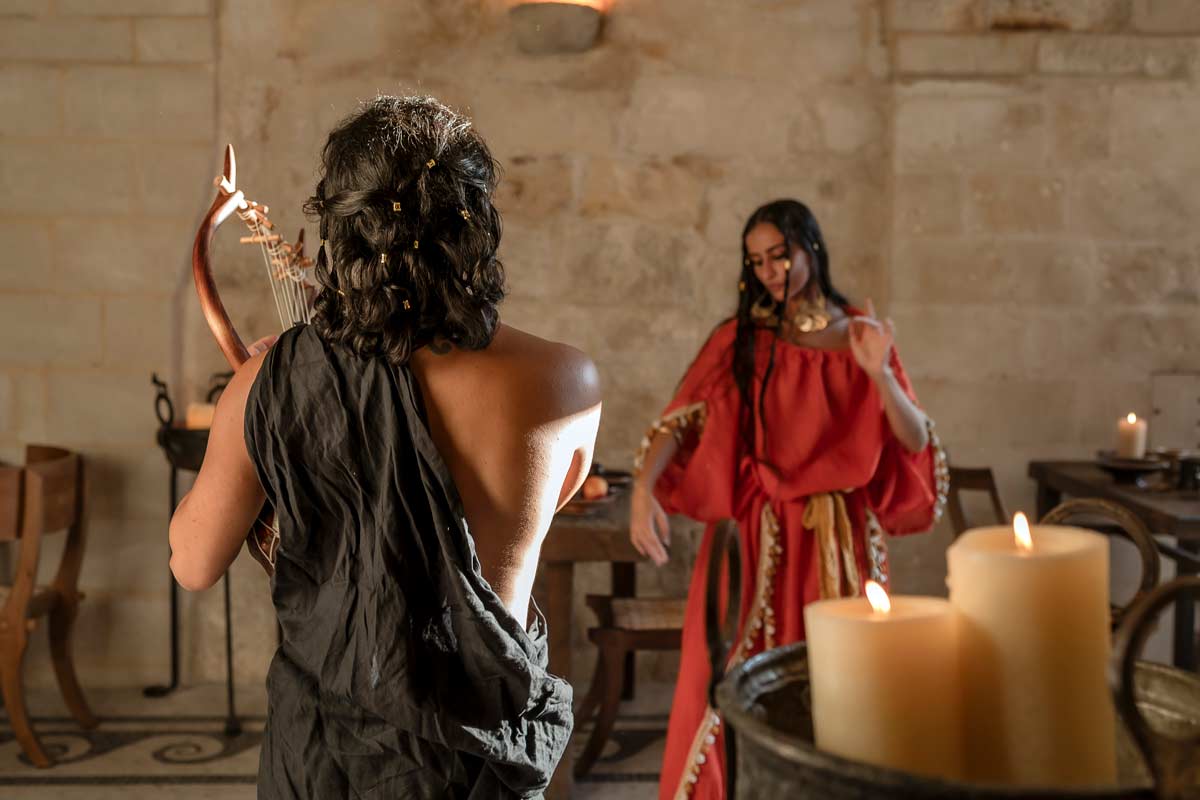
Another interesting ritual is the symposium that takes place every evening at 7:00. The symposium features wine, dried fruits, olives, and cheese—staples of Magna Graecia—served on copper trays, accompanied by live music played on period instruments, by musicians in period attire. According to the Moyseion’s website:
“Each night is different, but in every one the wine flows, conversation flourishes, and community is reawakened.”
Ancient Greek Music and Food
One of the most ambitious aspects of Moyseion is its dedication to the intangible heritage of the classical world: music and food. The project collaborates with Lotos Lab in Cambridge to research and revive ancient Greek music.
Upon my arrival, I was greeted by Davide, a musician (originally a bassoon player) undertaking a residency at the Moyseion to study the aulos—an ancient double-piped wind instrument. Davide showed me around the Moyseion while wearing his chiton. After xenia, the welcoming ritual, Davide demonstrated the breathing techniques that allow him to bring the aulos to life and shared how experimenting with the instrument has allowed him to get closer to the way it could have sounded in antiquity.
It was evident that the staff were more than just hospitality workers. As I would discover, there were no “traditional” hospitality workers, but archaeologists, classicists, musicians, performers, costume designers, and dancers. To them, the Moyseion was a form of public engagement and an experimental space where guests and staff alike could explore both tangible and intangible aspects of the past.
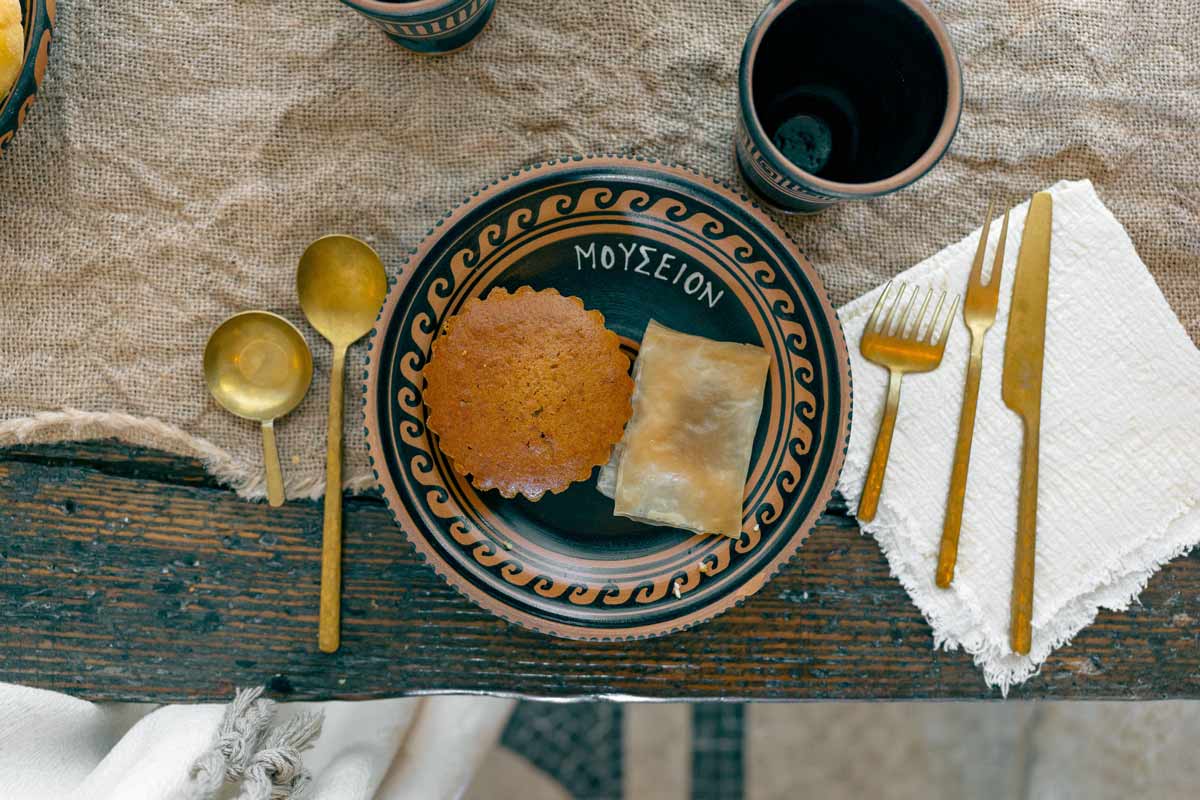
This immersion extends to the akratisma, the Moyseion’s version of breakfast. Curated by food anthropologists and historians, the menu is a gastronomic journey into ancient Greece. Melitoutta (a cake of yogurt, honey, and cinnamon), plakous (filo pastry with ricotta, figs, and walnuts), and barley salads flavored with pomegranate and wild onions are served alongside various collections of cheese, bread, and pastry that remain faithful (as much as possible) to the ancient Greek paradigm.
An Immersive Experience
As I leave Matera, I am thinking about Antonio’s reply to my question about whether Moyseion Matera would consider employing digital technologies such as VR/AR in the future. Antonio had replied:
“Everyone thinks that you need technology to make something new these days. But Moyseion shows that you can do something different by moving to the opposite side.”
Truly, while in the Moyseion, I didn’t use my phone, forgot about social media, and was immersed in a different world.