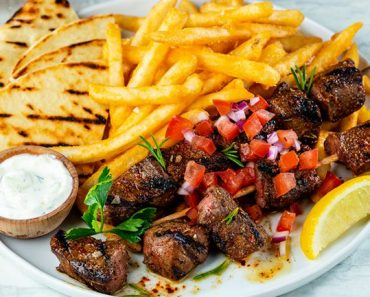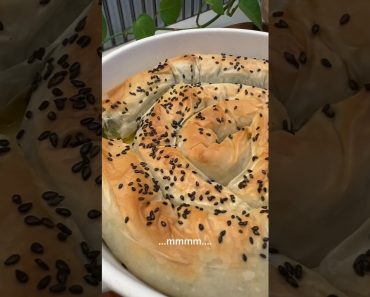

From June until September, at Greek churches across New England, the same thing happens every summer. The tents come out of storage. The knives get sharpened for the gyro. The ovens are turned up for the festival menu, and somewhere in a parish hall, folding tables are wiped down and set end to end, waiting to hold more spanakopita than any one kitchen should be able to make. It has gone on this way for decades, in towns that otherwise have no reason to know what loukoumades are.
These parish festivals, weekend fundraisers built around home cooking, dancing, and live music, help small Greek Orthodox communities cover their costs and share their culture with the towns around them.
This year, at St George Greek Orthodox Church of Cape Cod, in Centerville, Massachusetts, the tables were set by a man who did not grow up Greek at all.
Tom Benton married into the church, and after many years attending it, he was received into Greek Orthodoxy himself four years ago. Now he is president of the parish council. A core group of volunteers has run the festival for years, but with no one stepping forward this year to co-chair it, Benton’s job was to help keep everyone working together for the mid-July event.
“I call the Greek festival organized chaos,” he says. “But it all does get done.”

The festival began around 1980, the same year the parish traded a converted Grange Hall for its first real church and community center. It was small at first: homemade pastitsio and moussaka, spanakopita rolled by women who had learned the fold from their mothers. It grew steadily for 40 years, until the pandemic shut it down entirely for two summers. What came back afterward was smaller, and increasingly, the delicacies were store-bought.
“Unfortunately, a lot of the people who made the food from scratch have passed away,” Benton says. “We don’t cook many things anymore.” The parish still makes its own spanakopita, gyro, salads, and butter cookies. The rest, the dishes that take the most time and skill, now arrive frozen, to be baked rather than made from scratch.
Benton calls the women still willing to help in that kitchen “the newer generation of yiayias,” a phrase that is half tribute, half warning. The old generation, the ones who built the festival, is gone. “Long gone, not forgotten but long gone,” he says, and life has simply gotten harder to balance for the women who came after them. “People are busier. They don’t have the time,” he says. “I remember the little old ladies in the kitchen, cooking, preparing: They started the week before. We don’t have that many people around who can do that anymore, and I understand why.”

Parents work two jobs now. Children move away for work, the way so many parish families’ children have, to states with no parish attached to them.
This year, the parish trained 64 volunteers in all (half a dozen on the pastry line, five at the grill, five behind the bar), and Benton had to fill the last slots himself, days before opening. “It is getting rougher each year,” he says.
If a shrinking pool of helpers were the only problem, the festival might simply keep getting smaller each year and settle there. What worries Benton more is a set of rules, built for restaurants, now landing on what has always been, in practice, an oversized church supper. The state has begun requiring new certifications for key roles that were never part of running a festival before. Anyone who pours at the bar needs a liquor certification, and everyone this year got it. The food line manager role now carries its own certification, too. “The town requires someone to be the food line manager, and someone has to be here at all times,” Benton says, a role he took on himself this year, only to learn afterward that it also required a separate class in allergy training. For now, the town only recommends, rather than requires, that everyone else on the food line get certified as well. But he doesn’t expect that to last. “I can see in the next year or two that they will require everyone who works the food line to take the food line certification,” he says. “And I know a lot of people won’t do that.”

He describes the manager’s test itself with real disbelief: a proctored online exam, administered through one of the accredited providers Massachusetts recognizes for its state-mandated food manager certification, that requires panning a webcam around the whole room (floor, ceiling, under the table) and emptying your pockets before the questions even begin, with no pausing, no looking away, no reading a question out loud: a lot of process, it seems, for an event that runs two days a year. It costs $70 and is good for three years. The parish reimburses volunteers for it, but that hasn’t made it any easier to get people to sit for it. One woman gave up halfway through the exam this year. “It is very restrictive,” he says, sounding like a man who has already decided this fight isn’t one he can win.
The festival has already shrunk under the pressure. What was once a three-day event, with food served entirely outdoors and vendors lining both sides of the lot, is now two evenings: Friday night and Saturday from noon to 10. “I think what will happen is what happens in a lot of situations,” Benton says. “I think the regulations will kill it. Unfortunately. And the fact that we cannot get a lot of help.”

There is a quiet grace to the center of all this, and Benton is the first to see it. A man who was not born into this heritage now helps hold its biggest weekend together alongside the volunteers who have carried it for years, and he has come to believe that it is not a strange twist of fate, but part of what might save it. “We have a lot of young men coming to our church who have converted to Orthodoxy,” he says: Russian, Serbian, a mix of backgrounds that would have seemed out of place in the parish his wife’s grandfather helped found.
The Greek families, meanwhile, are the ones moving away, their children following jobs to other states, thinning the pool of families with roots in the church even as the pews, for now, stay full. “In order for the Greek churches to survive,” Benton says, “you have to accept and take in people from other cultures that are interested in our faith.” He doesn’t say it like a calculation, but like something he has simply come to accept: that faith, like the festival itself, also needs hands that weren’t born into it to keep it standing.

None of this has cooled what the festival still draws. Two summers ago, Benton says, visitors were “wrapped around the church,” pulled in by a stretch of coast where a plate of real Greek food and a live band are hard to find otherwise. Tourists build their vacations around the date and come back for it, year after year, the way people return to a lighthouse.
“The people that are here love coming every year,” Benton says.
The food is served out of the community hall, while outside, they grill the gyro and other items, and most people eat outside, under the tents, with some tables set up in the hall as well. When it rains, the grilling moves inside, into the kitchen’s ovens.
“We are praying for good weather every year,” he says, maybe the most fitting line in the whole conversation, proof that after the certifications, the proctored exams, and the shrinking kitchen crew, what actually decides the festival’s fate each summer is still, in the end, out of their hands.