

Few bands have reshaped the landscape of extreme metal as decisively as Septicflesh. Formed in Athens in the early 1990s, the Greek outfit has spent more than three decades forging a singular identity that fuses death metal’s crushing intensity with the grandeur of orchestral composition and cinematic atmosphere. While countless bands have since embraced symphonic elements, Septicflesh remain among the genre’s defining innovators, demonstrating that classical arrangements can be an integral compositional force . Their influence can be heard across generations of symphonic, black, and death metal acts that followed in their wake.
The band’s evolution has been marked by constant artistic ambition. Early albums established Septicflesh as one of the most adventurous acts to emerge from the Greek metal scene, but it was following their reunion in 2007 that they fully embraced the monumental symphonic direction that now defines their sound. Beginning with „Communion“ (2008, Season of Mist), orchestral arrangements became inseparable from the band’s songwriting, further developed into expansive works that balance brutality with elegance on latter albums, like „The Great Mass“ (2011, Season of Mist), and „Modern Primitive“ (2022, Nuclear Blast) . Never ones to sacrifice heaviness for grandeur, Septicflesh have refined a formula in which both elements amplify one another, earning widespread critical acclaim and a devoted international following.
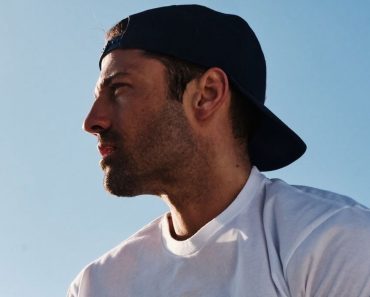
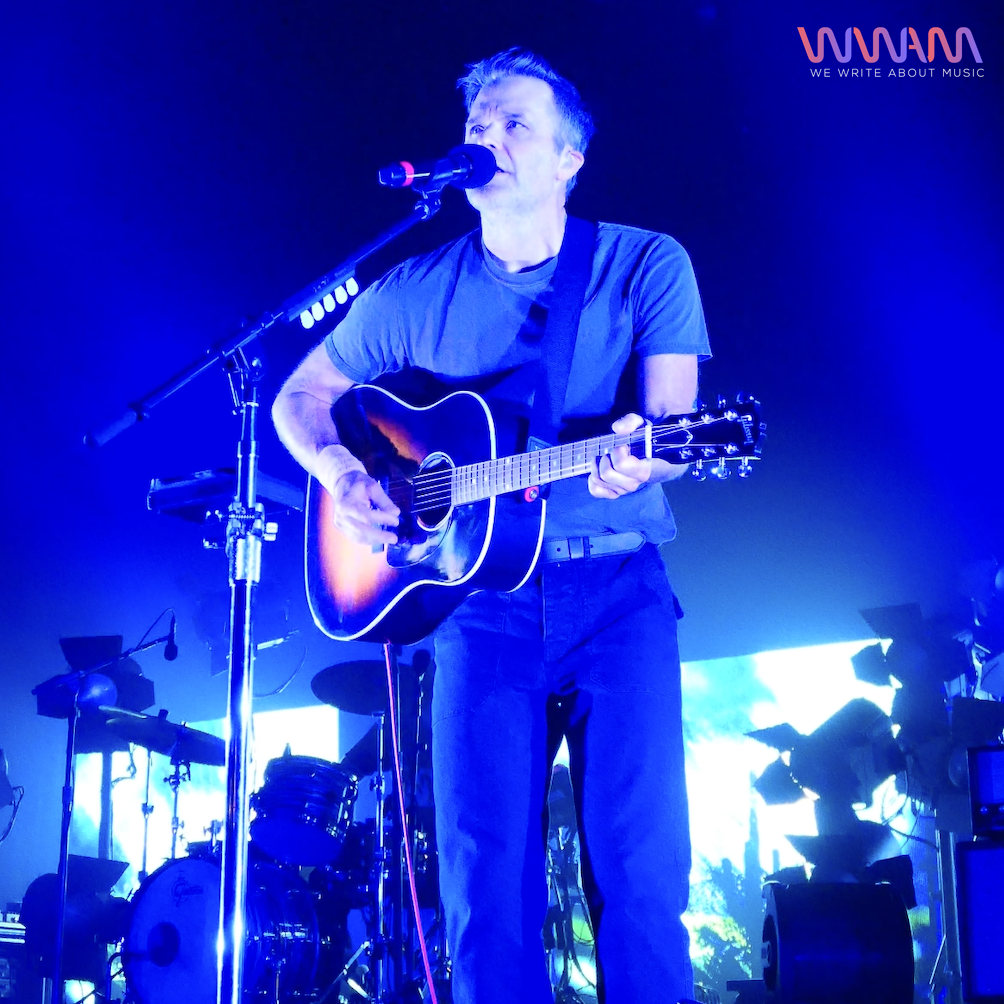
Central to that creative identity is guitarist Sotiris Vayenas. As a founding member and principal songwriter, whose distinctive clean vocals serve as the counterpoint to the band’s inner darkness, Sotiris has helped shape Septicflesh’s musical vision since its inception. As one of the key architects behind Septicflesh’s enduring artistic evolution, his melodic sensibilities and ability to weave memorable guitar work into dense orchestral frameworks have become one of the group’s defining characteristics.
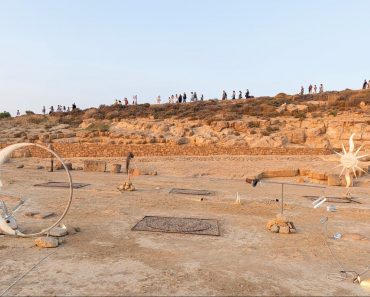
The band is expected to reach another milestone this September 19th, 2026, when the band is set to debut their Ancient Whispers show at the Ancient Theater of Philipopolis in Plovdiv, Bulgaria. Promoted by Blue Hills, the performance will be the band’s only orchestral concert of 2026 and the only symphonic metal production of its scale scheduled in Europe that year. Featuring the Plovdiv Philharmonic Orchestra and the National Opera Choir Plovdiv under the orchestral direction of Christos Antoniou, the event marks only the seventh time in the band’s history that they have performed with a full orchestra and choir, with Bulgaria becoming just the third country—after Greece and Mexico—to host such a production.
Set against one of the world’s best-preserved Roman theatres, Ancient Whispers follows Septicflesh’s acclaimed sold-out orchestral performances at Athens’ historic Herodion in 2025 and promises to be among the most ambitious concerts of the band’s career. Ahead of this landmark event, we spoke with Sotiris Vayenas about the creative journey that has brought Septicflesh to this point, the challenge of translating their monumental compositions to the stage, and what audiences from around the world can expect when the ancient stones of Plovdiv resonate with one of extreme metal’s most distinctive voices.
Balkanrock: Let’s start with the bigger picture – Septicflesh comes from the Hellenic metal scene, which is a beast of its own. Early on in your very first interviews, the band acted as big advocates of the local scene. What can you tell me about the situation in that scene now, since everyone is stuck in their own digital niche?
Sotiris: Well, first of all, a lot of the old bands, I see that they are reuniting and they’re making some shows. And that’s really great to see friends from the past. And of course, some bands like us, Rotting Christ, and other bands made quite an impression to the underground. And so now it’s the next generation that has to continue. And there are a lot of bands from different kinds of metal, which is great. I’m not only thinking about death or black metal. The whole spectrum of metal music is represented in Greece. And the crazy thing is that, we’re a very small country, and we’re not like Germany when it comes to metal. A lot of people here that are supporting metal music are also musicians. And that’s why there is a continuous flow of bands.
And now, as you said, the means come easier, because everybody can release something on a digital platform. And they also have a chance to promote their music by using YouTube or whatever fits their style. Of course, on the other hand, the competition also is more difficult, because as the audience is bombarded by releases, sometimes it’s difficult to stand out from the crowd. This is the hard part now. But I really think that, once again, the metal scene has something to present. And that’s great.
BR: Of course, the scene has changed vastly since Septicflesh first started. Back then, there was no Internet, everything was still pretty much analog, and the music also was very different. So much so, that you could say the band went through two, if not three, very distinct phases, or eras, as people now call them. How do you look back upon the sound of your pre-„Communion“ (2008, Season of Mist) albums? Do you ever feel the desire to write something more bare-bones – simpler than what you’re doing now with the band?
Sotiris: You know, things have changed a lot. It’s not, I think, a good idea for someone to try to repeat what he has already done. It’s not as creative. It’s like you don’t have ideas, so you just try to get inspiration from what you have already presented to your audience. We were always just letting ourselves be guided by our own inspiration. And it was either to make something rough, or something more metal-oriented with less death metal – or more death metal, whatever. We were just letting ourselves and our inspiration guide the result.
We are continuing with this path. After all these years, and after all those experiments, you can say that we feel more comfortable in pursuing a specific style of composition because we know what worked best from previous attempts. We’re starting from the next step in the ladder. And we’re always trying to push ourselves, and not remain in our comfort zone, just repeating what’s already been done. And this is also the case with the new album.

BR: Back then, when someone played extreme metal, be it like black or death metal, whenever outside influences became part of the sound – in your case, this would be gothic music – some fans would always find a gripe with this approach. Whenever there was a mixture of styles, there would always be a lot of criticism, even though this kind of marriage of styles is exactly what breeds innovation, always pushing things forward. How did you react to this type of criticism back in the day? And what do you think of it now?
Sotiris: When we started, especially in Greece, there was a tension between the different styles of metal. There were people that were fanatical in doing this or that kind of one style. They hated stylistic combinations. And ours was not an easy road to take. We knew that, at some point, people would be turned against us because we changed something. It would’ve been much easier to have decided on one style, saying we play like this.
But as I mentioned, we never made a judgment. We never decided from the beginning what we’re going to play. Some bands do, saying, we want to play death metal, or black metal, or whatever. We never decided on a style. And that’s why we had a great difficulty in describing what we were playing. I remember that our label also faced this difficulty. So they pushed us as a “dreamy, emotional” death metal. You know, a lot of words, not just one. And the description always changed through the years, until it became symphonic death metal, that will most likely turn out to be our last, because we have such an intense classical music presence in our songs.
But I always thought of us as an experimental band. Not even just metal, because we are listening to a lot of different artists and bands in rock, in all kinds of music. And we are always thinking about creating music, not just one style. But another characteristic we have is that we love extremes and to have antitheses in our songs. We always have heavy riffs, we have blast beats, elements that create contrast. And we understand that, precisely because we have these elements and the brutal vocals, we will never be a very popular band with the core metal audience that wants softer stuff. But it is what it is.
BR: I would say, there’s a pretty sizable audience that likes this kind of symphonic metal. Not every band gets to play big arenas with full backing orchestras. When did you realize that you wanted to do this kind of massive production with real orchestras? When did that become possible? Was it actually something you wanted to do earlier, but couldn’t because of logistical or organizational reasons? This, I assume, is related to Christos’ orchestration degree.
Sotiris: Exactly. From the band’s inception, Christos, Spiros and I were listening a lot to soundtrack music, and a lot of music that had classical arrangements, including composers like Basil Poledouris, the composer of the Conan movies and other more epic and orchestra-oriented stuff. And also, of course, some horror stuff.
So, we experimented. If you remember, in our first album, we had a huge last song in two parts called “Mythos”. It was an attempt to play this kind of stuff. But, back then, we were in a really hostile environment. We had nothing – no studio, no one experienced, and we had no budget. Nothing. So, we had to depend on synths, on samples, on whatever solution we had.
But from the first even album, we were aiming to have these elements present. We also had a song „(Morpheus) the Dreamlord“ with violin. You could say that it was a matter of reaching a point where the name of the band was strong enough in order for us to demand more resources, to have the potential to go out from Greece to bigger studios, and have the option to use a choir. And then the choir became the orchestra.
Of course, a greater role was played Chris, not only because he studied classic orchestration, but also due to the acquaintances he made in his field. He met classic musicians, and opened some doors that we could use. And we made acquaintance with the Prague Philharmonic Orchestra. That was actually our step into real symphonic death metal. And then, gradually, we dived deeper into this situation.
Of course, it’s a very expensive situation. But we don’t care, because we want to present to the people the music that we make in the best way possible. So, we make no fallbacks.
BR: And really, that kind of sound, it really takes the right producer to do right. You worked with Fredrik Nordström and Peter Tägtgren, all amazing in their field. The latter, if I remember correctly, was also the first to produce on that Dimmu Borgir record, featuring the first use of a real orchestra in extreme metal.
Sotiris: Yes. Because we had to push towards directions that even the producers were not so accustomed to. We had to depend on great producers that had a wider range of experience and an ear to understand the frequencies, because, when you are mixing music, you are actually in a battle of frequencies, and you can lose.
If you have a lot of different frequencies, they fight each other. And, so it’s very, very easy to have bad production – to have, for instance, a good orchestra, but very weak guitars, or good guitars, but an orchestra that sounds like a MIDI. There was no point in having an orchestra and sounding like that. There was just no point in doing so.
So, from the moment we had the budget to do it, we started selecting great producers that are really able to perform the task, to get it done.
BR: With this transformation in sound, which you are still perfecting to this day, you also shifted quite a bit in terms of visuals. And I wanted to talk with you about visuals because you started your own video production company, Silent Pyramid, that also produced of the videos on the „Amphibians“ EP?
Sotiris: Two. Yes, my first production was for the song „Psychohistory“ for the previous album. And then I produced the clip for „Amphibians„
I think it was before the COVID era that I was attempting to make visuals and incorporating my knowledge of 3D. And it was a very interesting field for me because I had the total control to create everything, from the modeling to the animation, and also the editing in the end.
It was a really exciting process for me. Of course, this demanded a lot of time, months of work. But as I was also working as a musician, for me, it was like creating a world that I was seeing inside. I had the luxury of projecting my lyrics and making a world, and living inside this world.
Of course, 3D has its limitations. Every medium has its limitations and strengths. So, you know, for me, it was a new adventure. I’m someone who gets bored really fast if when always doing the same thing. When I feel that I have done something, I always try to learn something else and extend my journey. Because, you know, life is full of pressure and time is very limited. I’m trying to live my life fully [immersed] into artistic situations, not only music. So, for me, it was that kind of trip.
BR: Right. Always a challenge in learning something new, especially in the arts. And to touch upon the more general visual direction of Septicflesh – when you restarted the band, the metal scene had already experienced a visual shift. Metal visuals went from this kind of dark fantasy of the 1990s to a more like… I’m not sure what to term it, but I think “digital gothic” is a good term for this style. Were you all on board with this kind of visual change? Was there any protest from the label, or from anyone else?
Sotiris: No, the labels were always happy with the visuals that we provided. And, you know, it’s part of our artistic expression. It’s not only the music – we see the whole package. We try to present an experience to the audience. And we always try to go further, not just stop with the music and hire someone else to do the other stuff.
We love to push the limits of artistic experience. And, as you said, the artistic experience is something that is changing with the times. For instance, Spiros, or Seth as you know him, is able to paint, and he has done some paintings in a traditional manner. He has tried a lot of different means of creating visuals, using airbrushes, and whatever.
But, you know, in the digital age, creation allows a to do a lot of stuff that wouldn’t have been possible in another manner. You can create your own style after trying and striving for it. You can do stuff that is complex. You can also do stuff that is really simple. The most important is to have something that is effective. Something that, when your audience sees it, entices a connection. And, of course, the connection will be not only with the image, but with the whole concept, the whole of the music. And that’s why we’re trying to do as much artistic stuff as is needed. As much as possible to do ourselves.
BR: So, going with the times and also trying to innovate along the way, I understand. With this framework in mind, what are Septicflesh are up to these days?
Sotiris Vayenas: We are composing new material and so as you can imagine we are working a lot. We are exchanging ideas and we are in a very good situation that they are taking form, so we are moving to the next phase with the songs.
BR: Okay, so you’re working on a full-length album. Cool! So, is this going to be in any way connected to the „Amphibians“ EP (2022, Nuclear Blast), maybe conceptually, musically?
Sotiris: No, „Amphibians“ was its own thing. Now, the new album is a totally different situation. Besides the main style of the band, the new ideas also present some really unique approaches. And I have to combine every aspect to fit the main theme of the album. I’m still developing the lyrics.
BR: Would you care to divulge, in the most general sense, some themes you’re developing for this album? What are you exploring thematically this time around?
Sotiris: I’m thinking about making a story this time. The songs will be connected, and present a story. I have the main characters in my mind. I have thought about which songs will present the core of the concept. But of course, also I have to finalize stuff after having the order of the songs down. This is the complicated part, because right now, I don’t have the order of the songs ready. But I have a very strong idea about the main theme of the album. You could say it’s about having a promise for something better, but getting something really different, and really bad.

BR: Okay, that’s a very good teaser for what’s coming up next. And it’s interesting how you mentioned song sequencing as a big problem, because I think a lot of artists treat their albums more like collections of random songs these days, as opposed to a big, unifying concept.
On the live front, you’re also playing a show in Bulgaria with the help of Plovdiv Philharmonic Orchestra and National Opera Choir. And I was really interested in two things. Firstly, since this is not your first time working with a classically-trained choir and orchestra, how do these people react to working with metal musicians and metal music? Do they enjoy it? Do you find any pushback from them? And how easy does it come for them?
Sotiris: It’s easy for them and they like it. That’s the crazy thing, because we have worked together with a lot of different musicians. In Mexico, in Greece, in different countries, and not always with the same musicians. Still, we see the same reaction.
You can understand from someone’s eyes if he’s enjoying or not, and they seem to really enjoy and a lot of times they congratulate us. They take pictures with us to show to their friends. You know, it’s a really strange situation that a lot of classical musicians with no metal background are really loving it. Especially our conductor whom we have worked with for a lot of our shows. He’s a maestro, you know, for the live shows, in a lot of shows. He’s really into Septicflesh. He wears the band’s T-shirts. It’s crazy. For some reason, it seems that classical musicians are connecting with our music.
And maybe, you know, also for them it’s like an experiment. They get out from their comfort zones. They have fun doing something different. And they really enjoy it.
BR: Very insightful and unexpected! To conclude, how much in advance does it take for a project of this scale to materialize? Because it’s a lot of people, plenty of coordination, and difficult logistics. Everyone has to learn their parts.
Sotiris: You need months. First, of course, you have to decide the set list. Although we live in different parts of the world, or Greece – you know, I’m in Patras, the other guys are in Athens, Chris, in whatever country he is – we are talking almost every day. And we are talking about arranging stuff, important stuff like these kinds of concerts. We are always months ahead of what we’re going to do. I know what we’re going to do next year.
We have to be prepared a lot of months in advance in order for us to bring the best experience to the audience. Of course, the main coordinator is Christos, because he is the guy that talks with the orchestra and decides on a lot of the main factors that make what we want possible. He has to communicate exactly what we need.
Of course, we have to make sure that the logistics will work, because there are a lot of people. We have played some shows with crazy numbers, with 100 musicians. Crazy stuff, you know. So, as you can imagine, you cannot leave everything until the last minute. You have to really be prepared. You need to have options if something goes wrong.
But we managed to do it, you know. The first time was the most difficult because we were doing something that we didn’t know how it’s going to work. But then, after each further successful attempt, everything becomes easier because the people also know that they can depend on us. And it’s very important for us also to collaborate with people that we know who we can also depend on to bring this kind of production.