
Discover seven ancient Greek theaters and other historical sites across Greece where theater, music, and mythology come alive at dusk during summer 2026.
As daylight fades over the stone seats of an ancient Greek theater, a monument normally encountered in silence begins to change.
Visitors take their places. Musicians tune their instruments. Actors step into an orchestra or across a stage first used millennia before the modern production was conceived.
Greece’s best-known summer performances are associated with Epidaurus and the Odeon of Herodes Atticus in Athens. Yet each year, contemporary theater, dance, and music also reach archaeological sites far beyond the country’s most famous stages.
In 2026, the Greek Ministry of Culture’s “All of Greece, One Culture” program is presenting events at archaeological sites, monuments, and museums across the country. The performances are free, although reservations are required and normal admission charges may still apply at some sites.
The most memorable venues are not necessarily the largest. Some overlook lagoons or Aegean bays. One stands in the center of a modern city. Another preserves the names of ancient spectators carved into its seats.
Together, they offer travelers a rare opportunity: not simply to visit Greece’s ancient monuments, but to experience them once again as gathering places.
Ancient Theatre of Gitana: Where Ancient Spectators Left Their Names

In the hills of Thesprotia in northwestern Greece, the Ancient Theatre of Gitana preserves an unusually personal connection with its original audience.
Built in the middle of the third century BC, during a period of prosperity and intense building activity in Epirus, the theater once accommodated approximately 4,000 spectators across 29 rows of stone seats.
Its most striking feature is the series of names carved into the fronts of many seats. They may have indicated ownership, reserved places, or associations with particular individuals. Whatever their precise purpose, the inscriptions make the ancient audience feel unexpectedly close.
Gitana was destroyed by the Romans in 167 BC, but restoration and site-improvement work have returned the theater to the visitor route. In July 2026, it hosts the theatrical and musical production Forgive Me.
The experience is far removed from attending a performance in a conventional auditorium. The landscape remains visible beyond the stage, while the inscribed seats serve as reminders that people gathered here for public experiences more than two thousand years ago.
For travelers seeking a lesser-known archaeological site, Gitana offers one of the program’s strongest combinations of history, atmosphere, and human detail.
First Ancient Theatre of Larissa: A Stage Recovered From the Modern City
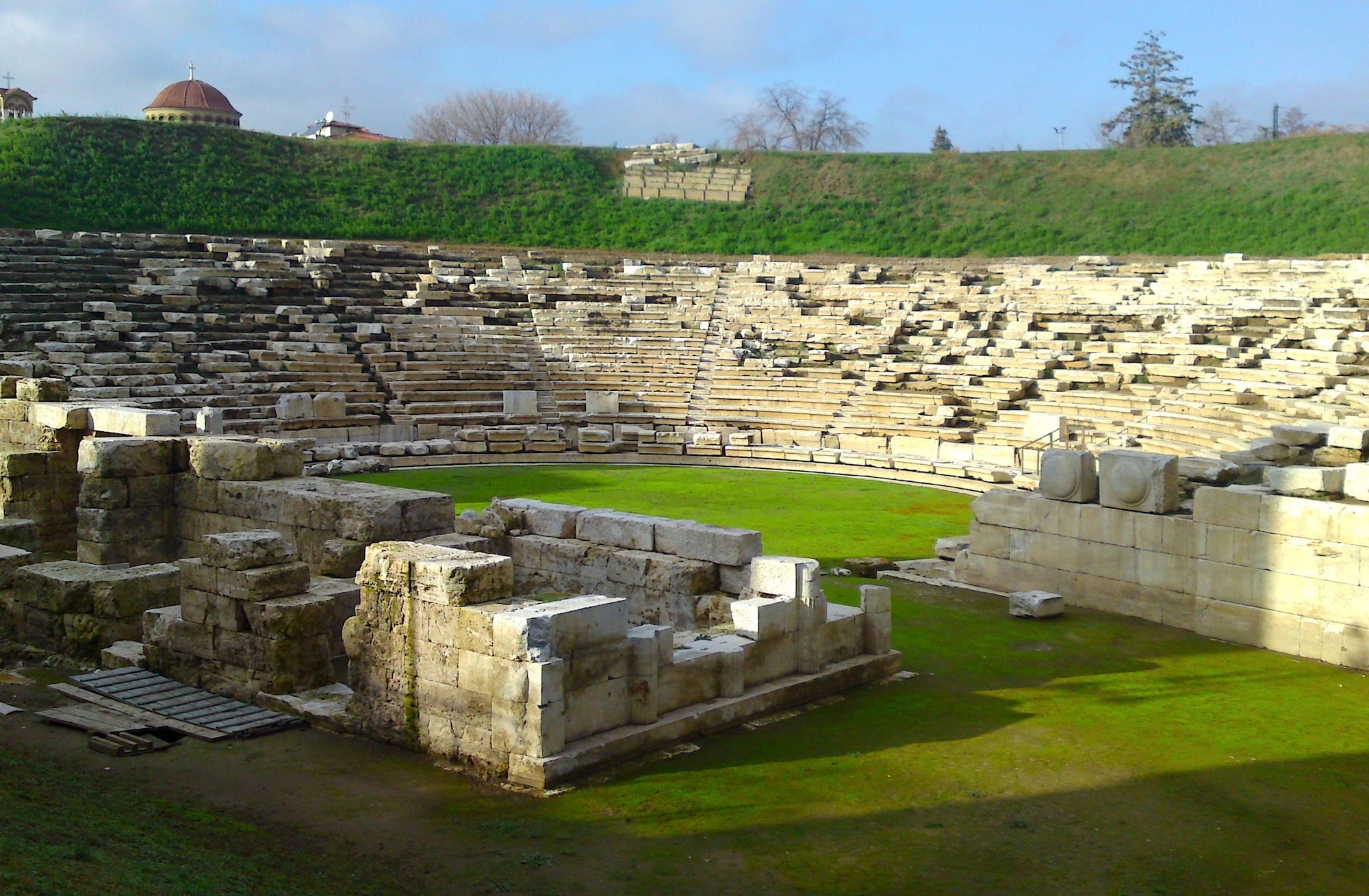
The First Ancient Theatre of Larissa does not stand in a remote valley or on an isolated island. It rises in the center of one of modern Greece’s largest cities.
Constructed during the first half of the third century BC on the slope of Larissa’s fortified acropolis, the theater became one of the principal public monuments of ancient Thessaly. In later centuries, buildings gradually covered or encroached upon it, and much of the structure disappeared beneath the developing city.
Its recovery created one of Greece’s most remarkable urban archaeological landscapes: an ancient civic space exposed amid streets, shops, apartment buildings, and everyday life.
In 2026, the theater hosts The Abduction of Persephone—The Return, a contemporary reinterpretation of the myth of Demeter and Persephone.
The setting gives the story an added dimension. Persephone’s disappearance and return are traditionally associated with cycles of absence, transformation, and renewal. Here, the myth is performed in a theater that itself vanished beneath the city before being brought back into public view.
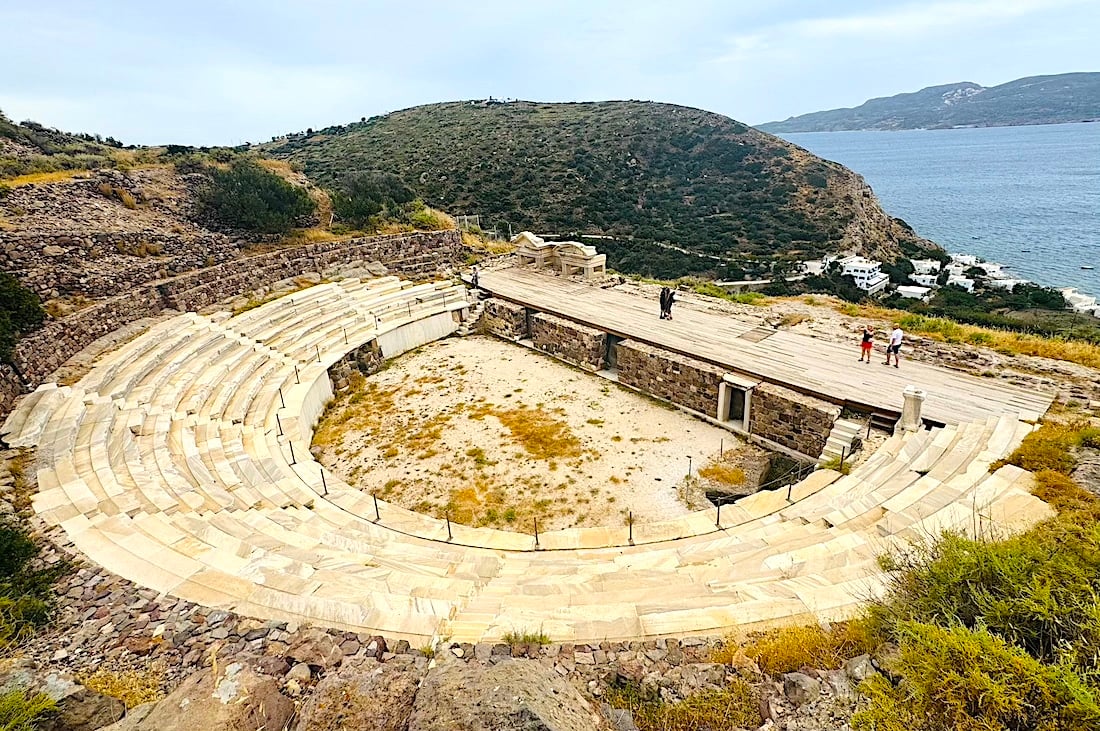
Ancient Theatre of Milos: A Roman Stage Above the Aegean

The Ancient Theatre of Milos occupies one of the most dramatic positions of any performance venue in Greece.
Built into a hillside between the villages of Trypiti and Klima, it overlooks the Gulf of Milos and the island’s volcanic landscape. Although it follows the architectural tradition of Greek theaters, the visible monument is largely a Roman-era structure dating from between the first and fourth centuries AD.
Excavations have revealed its orchestra, parts of the seating area, stage building, and retaining wall. Restoration completed in 2016 allowed the theater to accommodate audiences of approximately 700 people.
Its scale is intimate rather than monumental. The sea and surrounding terrain become part of the experience, particularly during performances scheduled as the harsh afternoon light begins to soften.
The 2026 program brings The Survivors, a theatrical and musical production inspired by the Greek writer George Theotokas, to the theater on July 26 and 27.
Ancient Theatre of Pleuron: Drama Above the Messolonghi Lagoon

The Ancient Theatre of Pleuron occupies a commanding position above the plains and wetlands of western Greece.
Constructed in the late third century BC, the theater may initially have served partly as a council or assembly space. Its location offers sweeping views toward the Messolonghi lagoon, the mouth of the Acheloos River, and, in clear conditions, the mountains of the northern Peloponnese.
The relationship between architecture and landscape is especially powerful near sunset. Unlike an enclosed modern theater, the audience remains aware of the water, sky, and changing light throughout a performance.
In July 2026, the venue hosts The Sea’s Prayer, a work drawing on themes of migration, memory, displacement, and survival.
That subject acquires additional force beside a lagoon shaped by journeys, waterways, fishing communities, and Greece’s long relationship with the sea. The landscape does not merely provide a scenic background; it becomes part of the emotional setting.
For travelers, Pleuron can be combined with Messolonghi, its lagoon, and the wider cultural and natural landscape of Aetolia-Acarnania.
Ancient Messene’s Ecclesiasterion: Public Speech Returns to a Civic Space

Ancient Messene is among the most extensive and best-preserved archaeological sites in Greece. Within it stands the Ecclesiasterion, also described as an odeon, near the sanctuary of Asclepius.
Dating from the late third century BC, the structure includes a semicircular orchestra, a stage, a proscenium, seating areas, and rooms that once stored stage equipment. It was repaired during the Roman period and remains in excellent condition.
Its original role appears to have combined performance with civic or public assembly. That makes it a particularly meaningful setting for The Lysistratas, a 2026 production inspired by Aristophanes’ comedy.
In the ancient play, women attempt to force an end to war by withholding sex from their husbands. Beneath the comedy lies a more serious examination of collective action, political frustration, gender, and public persuasion.
Performed in a space connected with communal gathering and civic speech, the work gains an immediacy that would be difficult to reproduce inside a conventional theater.
Ancient Messene also rewards a longer visit. Its stadium, theater, sanctuaries, fortifications, and public buildings allow travelers to understand the Ecclesiasterion not as an isolated monument, but as one part of a carefully organized ancient city.
Mycenae: Contemporary Theater Beneath the Walls of Agamemnon
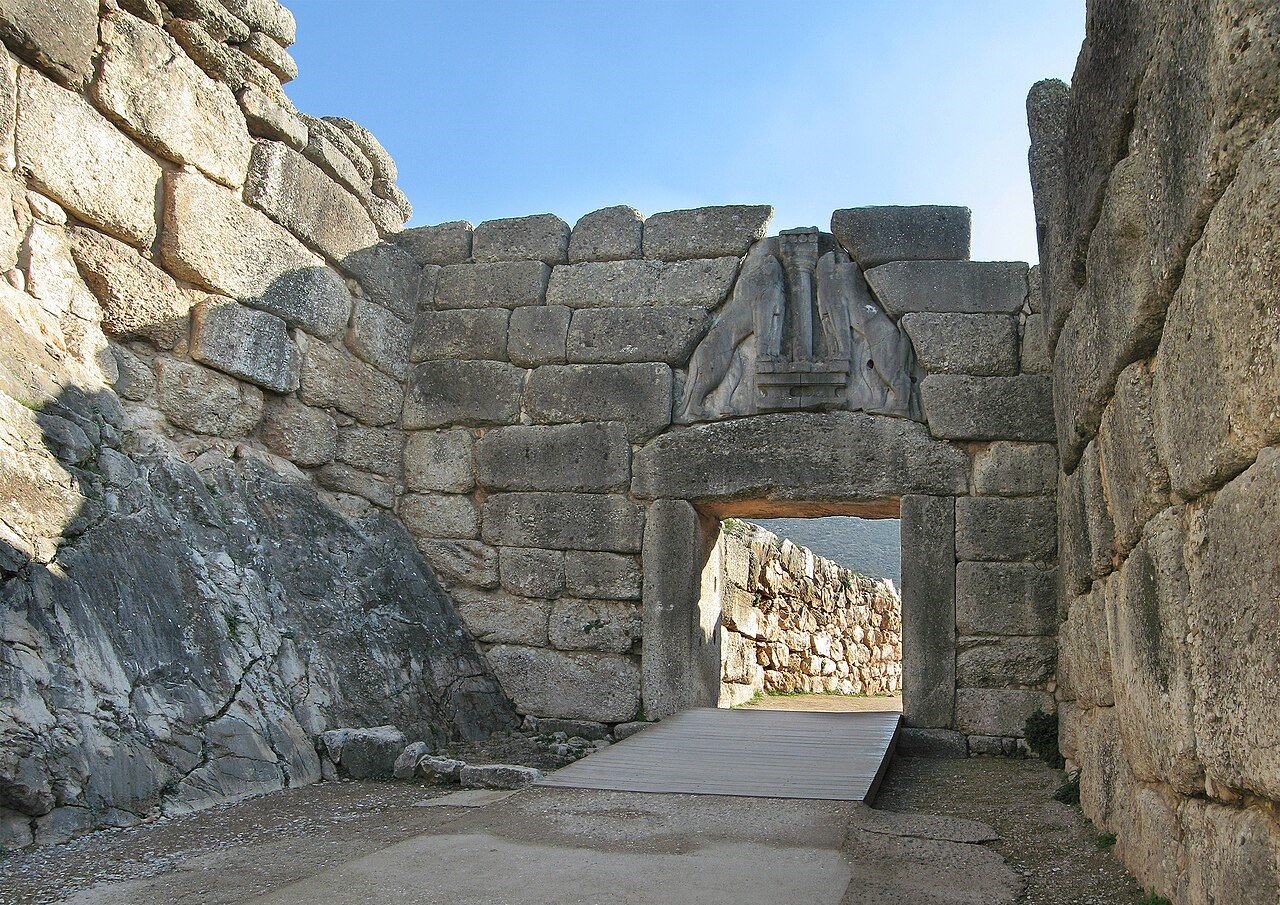
Mycenae is not an ancient theater. It is something even more unusual as a modern performance setting: a Bronze Age citadel associated with power, warfare, wealth, and some of the most enduring stories in Greek mythology.
The fortified center flourished during the second millennium BC and became so influential that an entire civilization is known as Mycenaean. Its Lion Gate, massive Cyclopean walls, grave circles, palace remains, and monumental tholos tombs continue to shape popular images of prehistoric Greece.
Greek tradition later connected Mycenae with King Agamemnon, leader of the Greek expedition against Troy. Archaeology cannot confirm the biographies of Homeric heroes, but the scale and wealth of the site reveal that it was indeed an important political center.
In August 2026, Mycenae becomes a venue for The Professor’s Will, a work based on writing by Dimitris Hatzis and concerned with authority, hypocrisy, and social power.
The contrast is deliberate and potentially powerful. A modern critique of institutions is presented beneath fortifications that have symbolized elite authority for more than three thousand years.
Theatrical productions were not staged at the citadel in antiquity. In August 2026, however, Mycenae will serve as a contemporary cultural venue, with its monumental architecture and associations with ancient power adding another layer of meaning to the performance.
Kabeirion on Lemnos: Philoctetes Returns to His Mythical Island

On the northern Aegean island of Lemnos, the sanctuary of the Kabeiri descends across terraces toward the sea at Cape Chloe.
The sanctuary flourished from approximately the eighth century BC into late antiquity. It was associated with the Kabeiri, mysterious deities linked with fire, metallurgy, and fertility, and stood near the ancient city of Hephaestia.
Its buildings occupy a slope that falls sharply toward the water, giving the site a sense of separation and secrecy appropriate to a sanctuary connected with mystery rites.
In August 2026, the site hosts Heiner Müller’s version of Philoctetes, based on the tragedy by Sophocles.
According to Greek myth, Philoctetes was abandoned on Lemnos by the Greek forces sailing to Troy after a wound became infected. Years later, the Greeks learned that they could not capture Troy without the bow of Heracles, which Philoctetes possessed, and returned to persuade or deceive him into joining them.
The story’s association with Lemnos belongs to mythology and literary tradition rather than independently verifiable history. Yet staging the drama on the island gives audiences a powerful geographical connection with the ancient narrative.
At Kabeirion, the sea, isolated sanctuary, and myth of abandonment combine to produce perhaps the closest relationship between text and place in the 2026 program.
Greece’s Ancient Sites Become Gathering Places Again
Ancient theaters, sanctuaries, assembly spaces, and fortified centers were never intended to be empty ruins. They were places where people gathered, listened, watched, argued, celebrated, worshipped, and confronted stories about themselves.
For a few evenings each summer, that human presence returns.
Travelers planning to attend should reserve places through the official “All of Greece, One Culture” platform and check the individual event page before setting out. Although admission to the performances is free, ordinary archaeological-site tickets may be required, and access as well as starting times vary by venue.