
Behind every great exhibition is a team of dedicated volunteers.
The volunteers from Adelaide’s Greek Museum might be small in number, but their vision is bigger.
The latest exhibition – From the Phoenix to the Drachma and the Euro: The History of Money in Modern Greece – opened on 12 September.
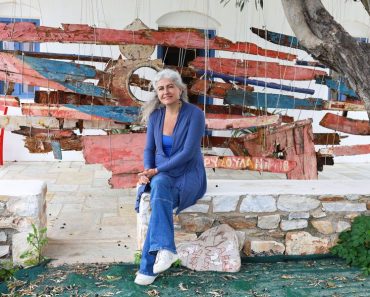
For eight months, the team of volunteers – Chrysoula Melissinaki, President of the Greek Museum of Adelaide; Panagiotis Mavraidis; Andriana Economos; Electra Montiadis; Kay Anastasiathis; Tina Karanastasis; and Sophia Georgiou – worked to create a monetary exhibition featuring original items.


The display includes coins dating from 1863 to 1922, including a diobolon (1882), 20 lepta (1894), five lepta (1900), one drachma (1910), 20 lepta (1912), 10 lepta (1912) and five lepta (1912).
There are also banknotes issued between 1976 and 2002 – the final generation of Greek drachma banknotes before the euro replaced the drachma in 2002.


Many of the items come from the private collections of Mr Mavraidis and Ms Melissinaki, who found or purchased them while living in Greece.
“We found these exhibits through various sources,” Ms Melissinaki said.
“Some were purchased from Greek op shops and antique shops, while others were donated by my father, Antonios Melissinakis.
“Some items also came from Panagiotis Mavraidis’ collection of coins and banknotes.
“In addition, we purchased several exhibits from the Numismatic Museum of Greece and the Bank of Greece.”


The collection featured in the exhibition contains authentic historical documents, including original loan and bond documents from 1924 and 1928, as well as receipts, bank orders and original payment orders dating from the 1950s and 1960s.
There are also authentic payment orders issued to the German and Italian armies in Greece between 1940 and 1944.
“These exhibits are especially precious because they are original historical documents that have survived for many decades,” Ms Melissinaki said.
“Their age, authenticity, and connection to important periods in Greek history make them extremely valuable and significant pieces of our collection.
“They provide a rare and tangible record of the past and help preserve the history and experiences of those who lived through these periods.”


Visitors will learn about the first modern Greek Phoenix, which was introduced by Ioannis Kapodistrias in 1828 when he became the first Governor of the newly independent Greek state. It was named after the mythical phoenix, symbolising the rebirth of Greece after the War of Independence.
The Phoenix was divided into 100 lepta. Coins were issued in denominations including one, five, 10 and 20 lepta, as well as a one-Phoenix coin. The Phoenix was eventually replaced by the drachma in 1832.
Also on display are original documents relating to the Refugee Loan, which refers to the financial assistance and government borrowing associated with the settlement and rehabilitation of Greek refugees.


These refugees arrived in Greece following the Greco-Turkish War and the compulsory population exchange of 1923. The large influx created an enormous need for housing, land, employment, infrastructure and agricultural support.
International financial assistance, including loans arranged through the League of Nations, played an important role in funding refugee rehabilitation. The money helped establish settlements, provide housing and agricultural land, improve infrastructure and support refugees as they rebuilt their lives in Greece.
Original loan documents, bonds, receipts and payment records from this period provide valuable direct evidence of the financial mechanisms used to support one of the most significant population movements in modern Greek history.


Another display features authentic payment orders, bank documents, receipts and related records concerning the occupation loan, which refers to the financial burden imposed on Greece during the German and Italian occupation in the Second World War, from 1941 to 1944.
“The occupying forces required Greece to finance the costs of maintaining their military presence and operations in the country,” Ms Melissinaki said.
“The Greek state and the Bank of Greece were involved in making payments and recording the financial obligations created by the occupation.
“These transactions became part of the wider economic devastation suffered by Greece during the war.
“They provide a direct record of the financial demands placed on Greece by the occupying forces and help document the economic realities of the occupation.
“The original documents in this collection are particularly precious because they have survived for many decades.
“Their authenticity, age, and direct connection to major events in Greek history make them rare and important historical artefacts.”


Through the exhibition, the organisers hope the public will learn about Greece’s complex economic journey through its currencies, financial documents and the institutions that shaped its economic identity from the 19th century to today.
Other documents on display include telegrams, orders, shipping papers and payment records – living testimonies of refugee rehabilitation, institutional resilience, international engagement and the development of trade, culture and diplomacy.


All exhibits are accompanied by bibliographic material, explanatory texts and historical information to help visitors understand not only the evolution of Greek currency, but also its close relationship with the political, social and economic changes of each era.
The exhibition provides a rare opportunity to explore Greece’s history through authentic coins, banknotes and historical documents seldom displayed outside Greece.
The exhibition runs until 17 October at Cowandilla Community Hall.