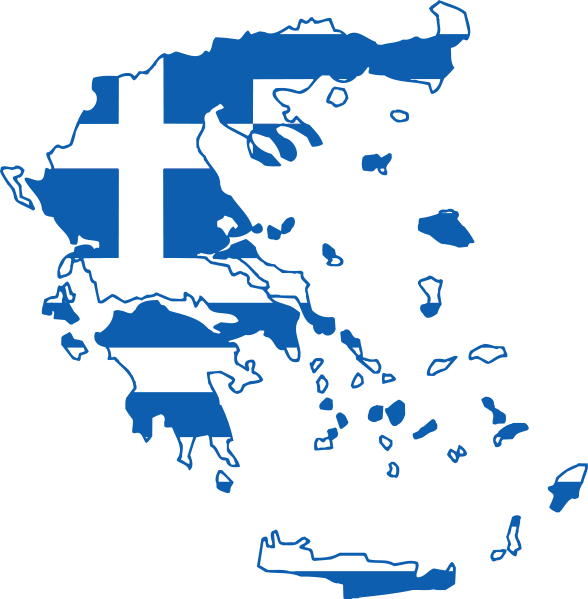

The best way to celebrate International Dance Day is to dance, and that’s exactly what Gen Z and Millennials in Greece are doing. A quick scroll through TikTok or Instagram reveals that traditional Greek dancing is trending, with young people proudly sharing videos of themselves performing age-old steps in village squares, festivals, and even in city flash mobs.
Traditional Greek dances, or “paradosiakoi chori” in Greek, go back centuries and are deeply tied to local identity. Each region of Greece has its own unique style, with different choreography, rhythms, costumes, and musical instruments. More than 10,000 traditional dances have been recorded across Greece, including the very popular island dances. Others include the dynamic dances of Pontos, which stole the show during the Athens 2004 Olympic Games, or of Thrace, Crete, Epirus, and Macedonia.
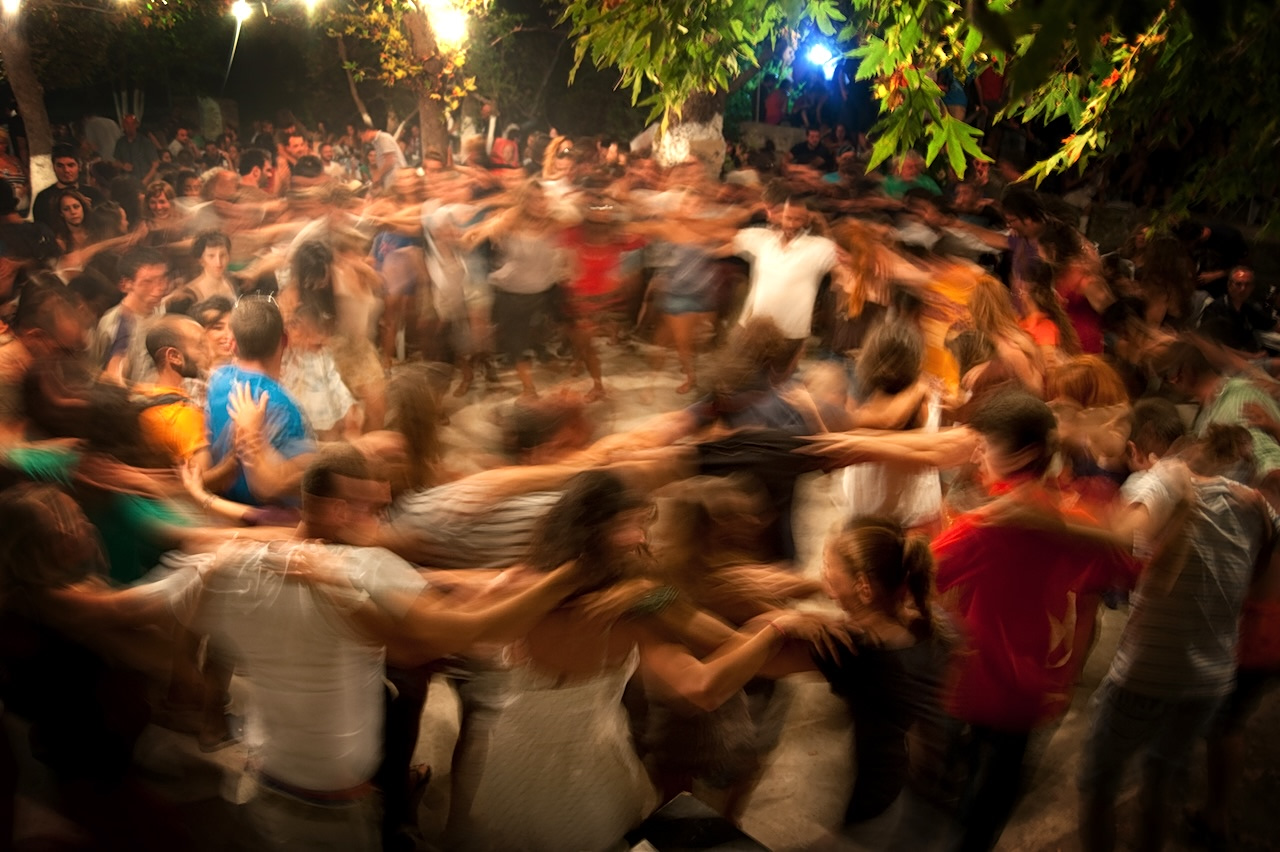
Some of the most popular traditional Greek dances include the Syrtos, Kalamatianos, Pyrrhichios, Ballos, Zeibekiko, and Hasapiko.
Greek dancing came into the international spotlight when Anthony Quinn danced a syrtaki on the beach in the 1964 film Zorba the Greek to the music of Mikis Theodorakis. Since then, the syrtaki and hasapiko have become global symbols of Greek culture, often performed in flash mobs around the world.
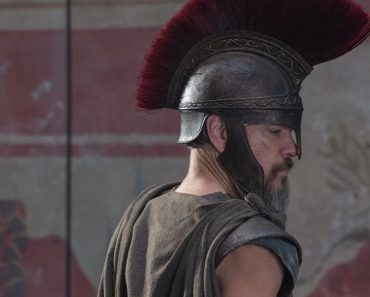
Many of these dances go back to ancient times and are mentioned in the works of Plato, Aristotle and Plutarch. Dancing in circles is central to the Greek experience and an important part of community living. Greeks dance when they are happy… at weddings, during Easter celebrations, grape and olive harvests, village feasts, and religious festivals known as “panegyria”.
The circle is an age-old symbol of sharing, and unity, and of keeping the energy flowing. In addition to the steps of the choreographies, the lead dancer is usually the most skilled and can improvise with impressive acrobatics.
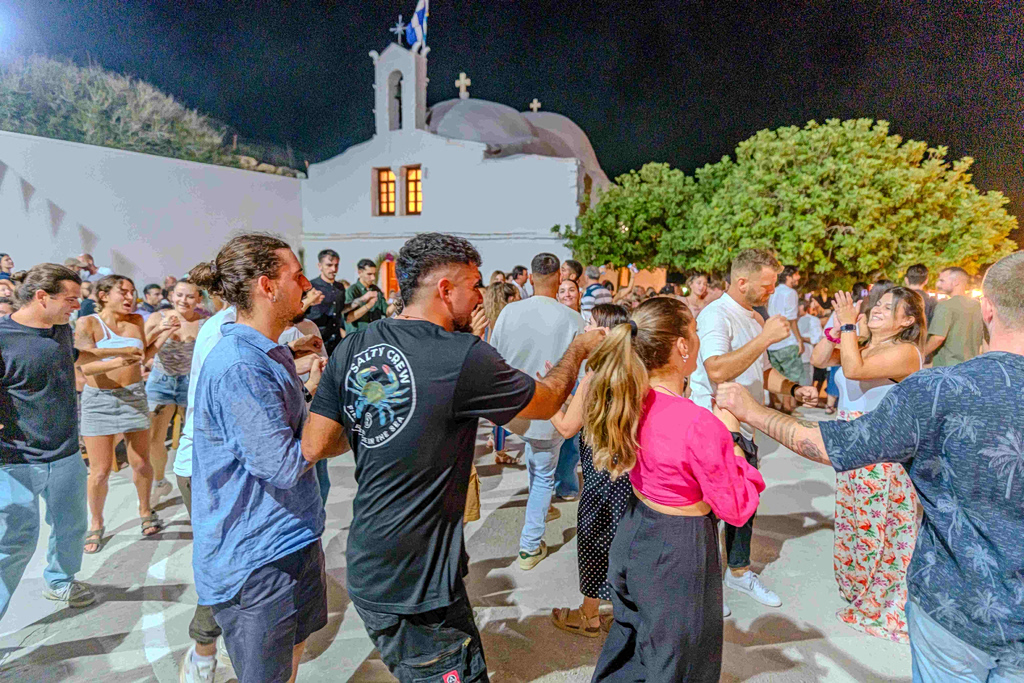
Several traditional Greek dances have been included in the National Register of Intangible Cultural Heritage of Greece. These include the Pontic dance “Serra”, the Zeibekiko, the Tranos Dance of Vlasti, the Maleviziotis of Crete, the Thermiotikos Balos, the Dance of the Mihanikos of Kalymnos, the Kagkelotos, and the August 15th feast dances. The most famous “Kalamatianos” dance has been inscribed on UNESCO’s Intangible Cultural Heritage list.
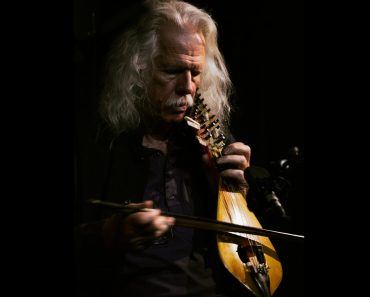
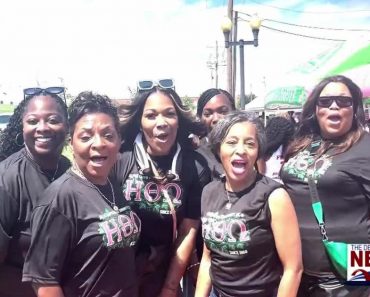
Today, traditional Greek dances are back in style. Young people are taking lessons, joining cultural associations, and performing in traditional costume at festivals and community events. This renewed passion has also sparked a revival among musicians and singers who are turning back to folk traditions for inspiration.
The most beautiful part of traditional Greek dance is that everyone is welcome. That is the whole point after all! To become one, to share in the fun and the joy. The best time and place to join a Greek dance is during the summer on the islands and mainland during the open-air village festivals. Just dare take the first step. It’s easy after that!