
A celebrated traditional ‘laiko’ music singer who found major success across the 1960s, ’70s and ’80s, Dimitris Xanthakis died on Sunday 2 August. His funeral was held the following Tuesday, 4 August. The news was confirmed by his son, Vasilis, in a post on Facebook.
Who was Dimitris Xanthakis?
Xanthakis may be unfamiliar to younger or foreign audiences, but many older listeners across Greece and in the Diaspora grew up loving his songs.
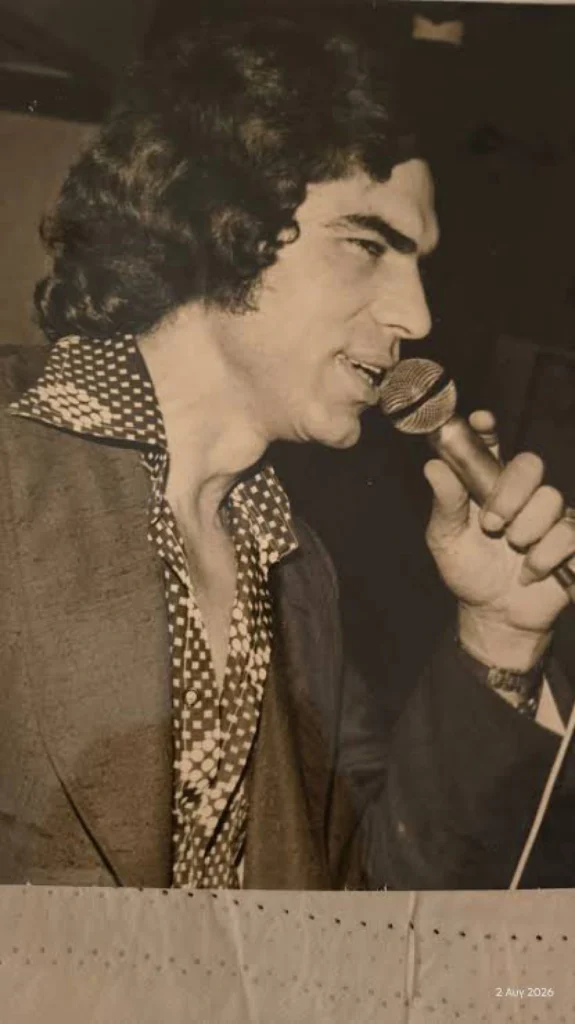
Dimitris Xanthakis was born in Piraeus in 1944. He began his career as a performer in the early 1960s, and in 1968 released his first single (Parlophone, catalogue number GDSP 3288). On one side of the record, Xanthakis and fellow singer Rena Dalma performed “Your Face” (“Το Πρόσωπό σου”), written by Vasilis Vasiliadis and Stelios Papadakos.
Vasiliadis was one of Greece’s greatest composers, responsible for countless hits and credited with introducing the harmonium to Greek music. He was the subject of an earlier feature on this site, titled “The Wizard with the Farfisa”, which prompted a wave of coverage from other outlets and an extensive, previously unpublished account from his wife, Loula Papagiannopoulou, introducing the celebrated composer to a new generation of readers.
Returning to Xanthakis: in 1970 he released another standout song, one of his finest, “And You Still Come to Me in My Sleep” (“Και στον ύπνο μου έρχεσαι ακόμα”), written by P. Livadaros and Ch. Pateli, on Sonata, the label founded by the great singer Panos Gavalas in 1967 and active until 1972. That same year, again on Sonata, Xanthakis released his first single to feature his own vocals on both sides: the bolero “Sorrow Took My Hand” (“Πιάστηκε χέρι ο καημός”), written by P. Livadaros and N. Kekesis, and the zeibekiko “On the Two Pans of the Scales” (“Στα δυο τάσα της μπαλάντζας”), written by P. Livadaros and L. Spilis (the title refers to the pans of a set of scales). In 1970 Xanthakis also worked with the great laïko composer Babis Bakalis, recording his songs “My Hypocrite Life” and “The Zipper”, the latter alongside singer Zoi Stavroulaki.
In 1972 came a single featuring “No More Red Painted Lips” (music and lyrics by Kostas Karageorgis), one of Xanthakis’s best known songs, and “The Bitter Caravan”. In 1973 he collaborated for the first time with the great laïko composer and lyricist Stavros Kaxos (1941 to 2026), recording his song “What Ails Me, Doctor”. In 1975 Kaxos entrusted Xanthakis with another major song, “Faded Glories”, released on the same single as “Maria, the Girl from Korydallos”, also written by Kaxos.
Xanthakis released 20 singles in total. Among them, a Parlophone release issued in Australia holds a special place, featuring songs written by Vasiliadis and Kostas Virvos: “For a Sly Girl”, performed by Thodoros Kanakaris, and the shake number “Goodbye”, performed by Vasiliadis, Xanthakis and Litsa Diamanti. It was one of many shake tracks written by laïko composers in the late 1960s, at a time when Greece’s “modern” bands, playing both original compositions and Greek-language covers of foreign hits, were at the height of their popularity.
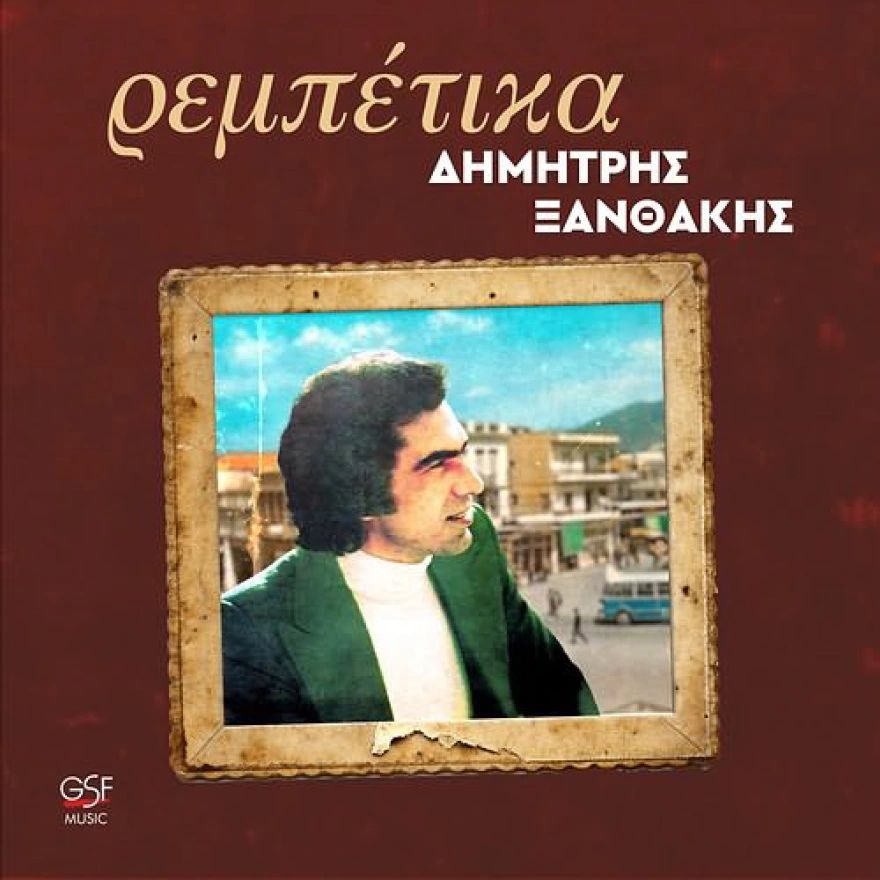
Xanthakis’s first full length album did not appear until 1976, titled “Then and Now”, the same year that saw the release of the LP “Stop”. His final recording was the 2018 CD combining older and newer material, “The Wretched, Foreign Land”. In total he released 16 albums. Counting the five compilation albums of his greatest hits, “The Best” (1981), “Dimitris Xanthakis Cult No. 5”, “I’m a Drunkard, 36 Hits”, the LP “No. 4 and the Popular Songs We Loved”, and the various-artists collection “It’ll Be Mayhem” (1997), which also featured some of his performances, he took part in more than 40 recordings over the course of his career.
Collaborators and other major songs
Beyond those already mentioned, Xanthakis worked with some of Greece’s leading composers and lyricists. His composer collaborators included Nakis Petridis, Thodoros Polykandriotis, Kostas Soukas, Giannis Vasilopoulos, Stelios Vamvakaris, the virtuoso bouzouki player and composer Giannis Palaiologou, Kostas Stamatakis and Giorgos Krimizakis, among others.
His lyricist collaborators included Evangelos Atraidis, Lakis Tsolis, Katerina Panagou, Maro Bizani, Andreas Spyropoulos and Fontas Fileris, among others. Vasilopoulos and Atraidis wrote one of Xanthakis’s finest songs, “Odds or Evens”, featured on the 1980 LP “The Songs of Today”. Other hits included “Two Thunderbolts”, “A Detail”, “Strange Generation”, “My Hypocrite Life”, “I Didn’t Sleep Tonight” and “I’m a Drunkard”.
Xanthakis and the nightclub circuit
Xanthakis was at the height of his fame during the 1970s, performing in the tradition established by the celebrated singer Stelios Kazantzidis, and enjoyed major success headlining well known Athens nightclubs, where he worked alongside some of the biggest names in Greek music. Many still fondly recall his nights performing at Stop, on Petrou Ralli Avenue, once a well known nightclub strip in Athens. Anyone who saw him live will remember the distinctive timbre of his voice and his warmth as a performer. Few singers today interpret songs the way Xanthakis did; his was the classic style of laïko performance from previous decades, yet his songs remain popular to this day. Blessed with an exceptional voice, Xanthakis had the misfortune of performing in an era dominated by giants of Greek music. That is not intended as a slight; he mostly appeared at nightclubs on Thivon Avenue, Iera Odos, Petrou Ralli and the Athens to Lamia National Road, venues that were packed every night, sometimes six or seven nights a week. He had a loyal following, was much loved by his fellow performers, and his distinctive vocal tone set him apart.
Farewell, Dimitris Xanthakis.
Sadly, the era in which singers performed the great songs of major composers has passed for good, and today’s music scene is dominated by manufactured vocal styles and trap. Dedicated to everyone, these are the lyrics of the great Stavros Kaxos, from his song “Faded Glories”:
“Where are the golden moons, the nights we used to dream of
Where are the bohemian hearts, the beautiful old melodies
You left us yesterday, beloved, our hearts will long for you…”
Many thanks to our good friend Vasilis P. for his invaluable information.
Ask me anything
Explore related questions