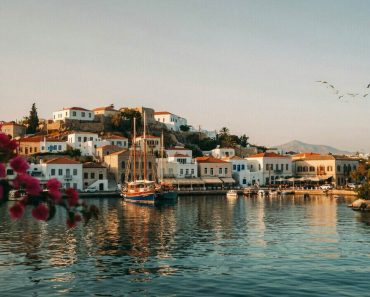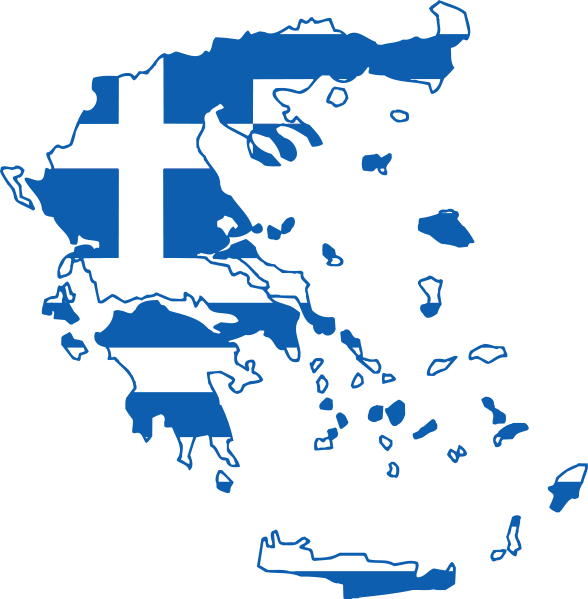

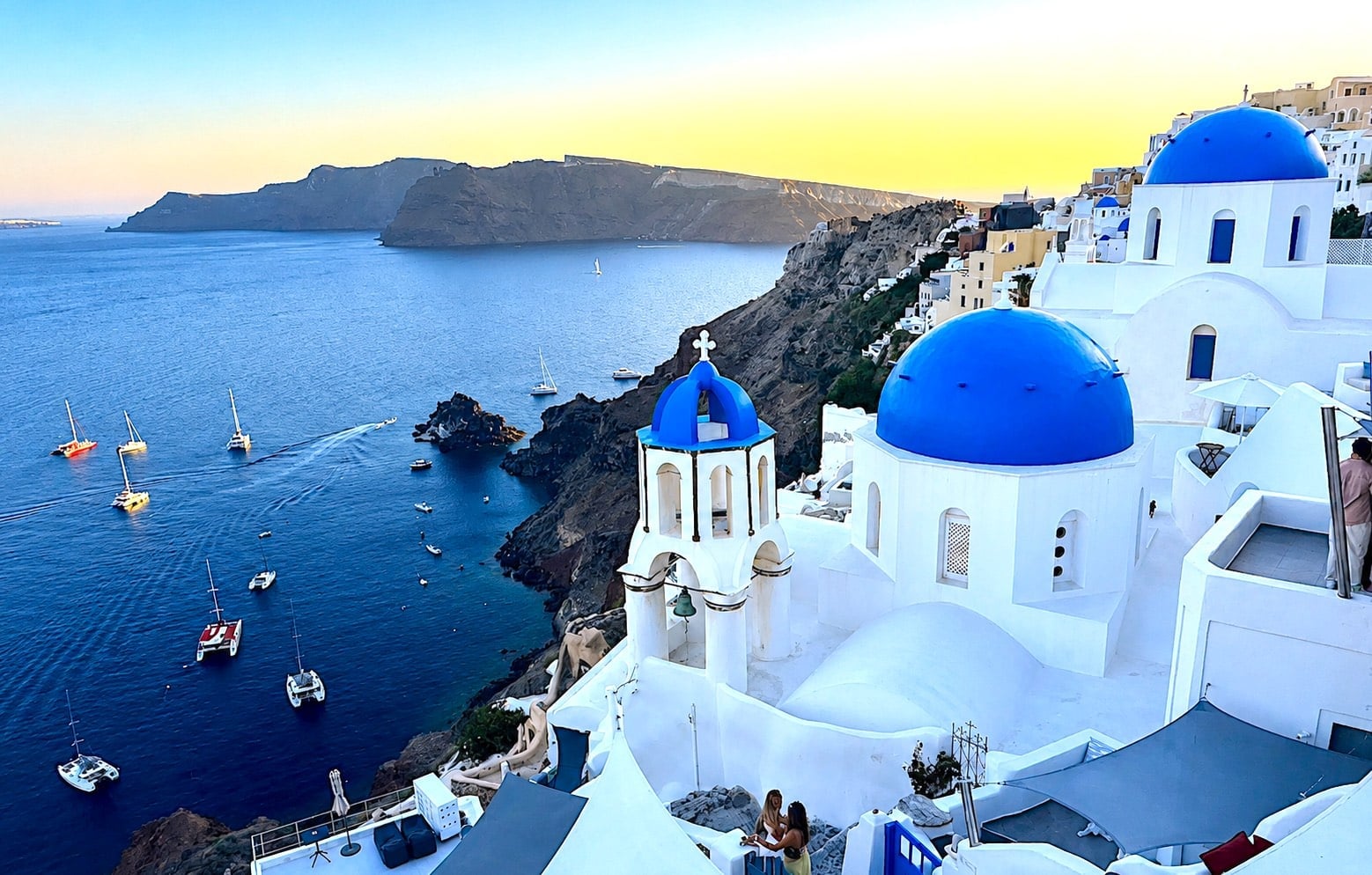
Greece has joined a growing list of nations where visiting tourists outnumber local residents each year. New global data shows Greece welcomes almost 2.7 international tourists for every person who lives there, placing the country among 25 nations where travelers overtake the local population.
Andorra tops the worldwide ranking by a wide margin. The small Pyrenees nation counts just 82,000 residents but receives about 4.2 million visitors a year. That works out to roughly 51 tourists for every resident, more than five times the ratio of Monaco, which sits in second place.
Monaco records about 9 tourists per resident. Malta follows at 6.3, and Iceland comes in at 5.6. Palau, a Pacific island nation, rounds out the top five with 5.3 tourists per resident. Countries like these often depend heavily on foreign visitors to support their economies.
How Greece and other nations see tourists outnumber local residents
Island nations dominate much of the list. The Bahamas leads Caribbean destinations with 4.7 tourists per resident. Antigua and Barbuda follows at 3.5, and Barbados records 2.5. In the Indian Ocean, the Maldives draws 3.2 tourists per resident, while the Seychelles draws 2.8.
Not every country on the list is small. Portugal, Austria and Croatia each hold populations in the millions, yet all three still welcome more tourists than residents every year.
Portugal receives 2.7 tourists per resident, drawing large crowds to Lisbon, Porto and the beaches of the Algarve. Austria posts a similar figure at 2.9, and Croatia climbs higher at 4.0, landing ninth overall.
Tracking tourism numbers across 25 countries
Greece sits close to Portugal, just behind it in the rankings at 19th place. Cyprus edges ahead of Greece at 3.0, and Austria also ranks slightly higher at 2.9. Still, Greece stays well ahead of nations such as Denmark, Slovenia and Ireland, which each report ratios below 2.5.
The rankings draw on “UN Tourism” data collected through “Our World in Data,” combined with population figures from the World Bank. The figures reflect the latest available data for each country, and territories were excluded from the count.
The results point to how deeply some economies lean on travel, even when their populations number in the millions rather than the thousands.