
Greek pop icon Anna Vissi and Nikos Karvelas, one of the most celebrated songwriters in Greek pop, are at the center of a very public dispute that has stunned the music world. After decades of collaboration, during which his songs helped carry Vissi to the top of the Greek music scene, a rift over money between the two has now come into the open.
On Tuesday afternoon, Karvelas posted a four-page press release on his own social media accounts and on those of his partner. In it, he responded to recent reports about his relationship with Vissi and about his absence from her concert at the Athens Olympic Stadium (OAKA). Karvelas pointed to his long personal and creative partnership with Anna Vissi, noting that, with few exceptions, he composed, wrote and arranged most of her recorded work. He said that for years the two had decided together how their songs would be presented, but that he now saw a significant shift in that approach.
He was especially critical of the choice of the Olympic Stadium and of ticket prices that reached 400 euros. He said he views his music as popular and accessible to ordinary people. In a venue that large, and at prices that high, he argued, the audience’s connection to the songs risked being lost in the spectacle.
Karvelas also described how the financial dispute began. He said he learned a few days before the concert that he would not be paid, after the production cited the event’s high costs. In previous concerts, he said, he had received an agreed fee on top of his royalties as the songwriter.
On Wednesday morning, a representative of Vission Music released Vissi’s official response.
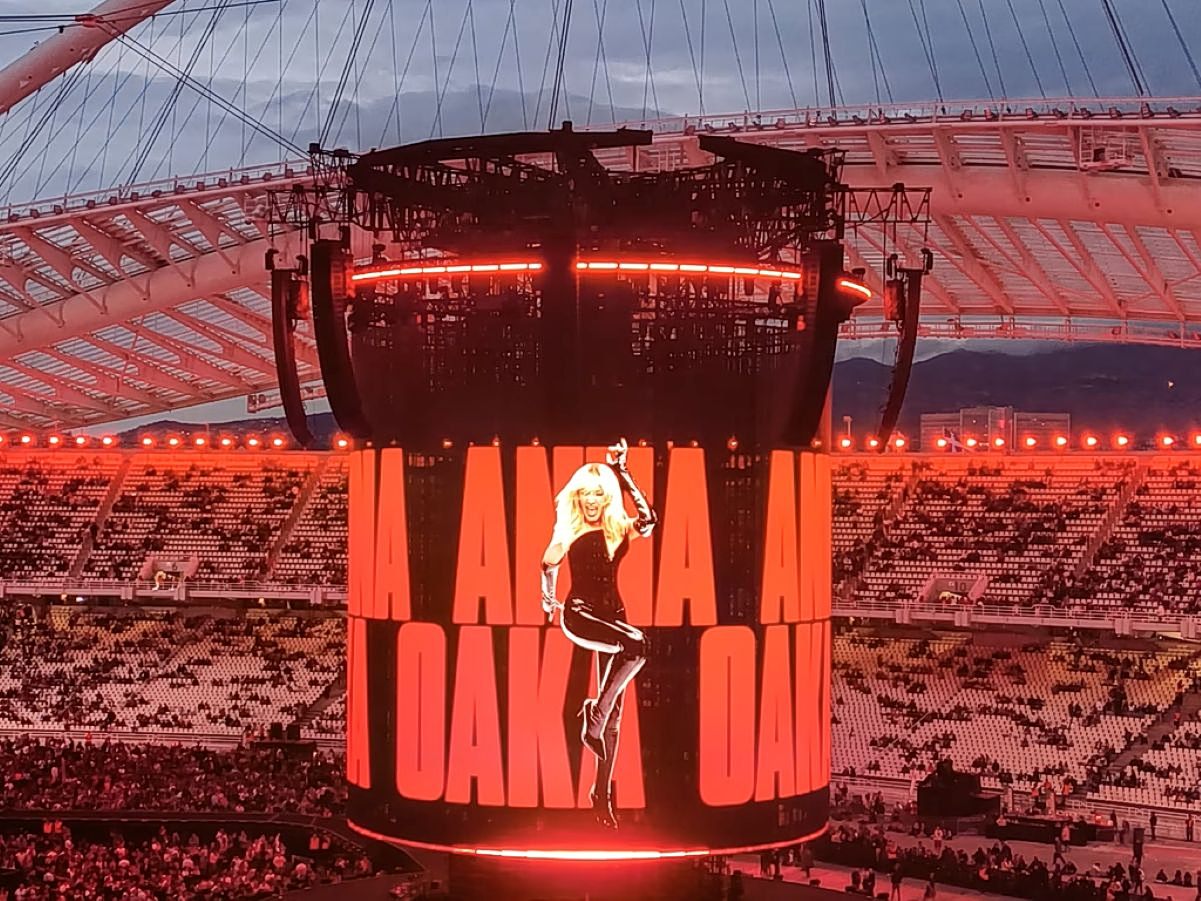
Photo: Εurokinissi
Vissi dismissed Karvelas’s statement as hypocritical and populist. She said that despite his usual eloquence, it failed to persuade her. Where he spoke of being crushed, she said, she saw only shame.
According to Vissi, Karvelas had let everyone, including her, believe that he was proud of the show. She said he saw it as her natural progression after her concerts at the Odeon of Herodes Atticus and the Panathenaic Stadium. She added that he had been fully aware of, and in agreement with, the vision for the OAKA concert, which he now dismisses as a pharaonic extravaganza. She insisted that he had never raised objections with her about the production, the staging of his work or ticket prices. She noted that he had never questioned pricing at her past concerts or at the nightclubs where she performed either.
Throughout that time, she said, he received a share of her profits on top of his royalties, as recognition of their artistic partnership, even though he had not been involved in preparing her shows for many years.

Vissi said she was astonished to learn, three days before the concert, that Karvelas had suddenly demanded 1.5 million euros. She said he warned that if he was not paid within 24 hours, he would use every means available to have the concert stopped. Once he realized he could not block the show, she said, he turned on her personally. According to Vissi, he made direct threats through her sister Niki, in front of witnesses, adding that he threatened to humiliate her in the media and to ruin her personally and professionally, to the point that she would not dare leave her home.
Vissi pointed out that she had come to his aid over the past six months, when he was in financial need, as she said she had done all her life, stressing that the money he has demonstrably received exceeds 500,000 euros. A large part of it, she added, was provided by Giannis Koustas, on Karvelas’s commitment that he would repay it. Given what she described as blackmail and threats, Vissi said it was hardly unreasonable that his seats and those of his guests were moved on the night of the concert. The production, she argued, could not be expected to tolerate the presence of someone who had behaved that way just a day earlier.
Vissi said she was most shaken that a man she had considered a friend, collaborator and family had chosen the eve of the most important undertaking of her career to put her under unbearable psychological pressure. She credited the love and loyalty of her fans with carrying her through what she called the most beautiful musical journey of her life.

Vissi rejected Karvelas’s claim that she had tried to silence him, saying that she had only sought assurance he would not defame her, and had pledged to do the same in return. She noted that she had nothing to hide and would no longer tolerate emotional blackmail and manipulation. Those who wished could believe his version, which she called full of lies and contradictions, while she would hold on to the truth, while saying that what hurt most was not the financial dispute but the realization that she may never have truly known the man she thought she knew for so many years.
Vissi said this would be her last personal public statement on the matter and closed on a defiant note, vowing to stand her ground whatever the outcome.