
Nearly 20 years ago, on a trip home to Jordan, restaurateur Maher Fakhouri bought chicken shawarma from a street vendor and ate it on the sidewalk. Nothing fancy. Just seasoned chicken, garlicky sauce and pickles wrapped in warm flatbread — the kind of food best eaten with your hands and a few napkins nearby.
“It was so simple and delicious,” he recalled. “I had to share it when I came back.”
It took a few years to get the recipe right, but today, that shawarma is tucked into the sandwich section at Crepevine, Fakhouri’s Bay Area brunch chain. It’s an outlier among the Nutella crepes, eggs Benedict and omelets, but also one of the chain’s best sellers. That’s saying something for a restaurant with crepes in its name and 22 varieties on the menu.

But this isn’t a story about Crepevine. It’s about Fakhouri’s newest restaurant, Olives & Agave, in Santa Rosa’s Montgomery Village, just steps from Crepevine. The two restaurants share a general manager, Mond Noor, and a fondness for chicken shawarma.
At Olives & Agave, that simple sandwich is no longer an outlier. It’s part of a broader menu that draws on the cuisines of the Levant — including Jordan, Palestine, Syria, Israel and Lebanon — along with Mediterranean flavors from Spain and Greece to Turkey and Morocco.
For Fakhouri, the restaurant is personal: a chance to showcase the food of his childhood, his family’s traditions, and the recipes he’s carried with him for decades.

“This cuisine is not well represented here,” Fakhouri said of Sonoma County. That’s beginning to change, with a wave of Mediterranean, Middle Eastern and Persian restaurants opening in the area. But musakhan and kibbeh aren’t exactly household words. Yet.
A long time coming
Fakhouri has spent a lifetime in the restaurant business, cooking almost everything except the food he grew up eating. At nearly 70, he was ready to change that.

The former Cascabel, which had been empty for more than a year, seemed the perfect spot. When the Montgomery Village landlord approached him, Fakhouri pitched a Mediterranean restaurant. He opened Olives & Agave in early October with Noor, a friend who serves as general manager, and his partner, Amal Dahdal, who runs the kitchen with an iron garlic press.
As we toured the space, I had to ask about the name. The olives were obvious. The agave, less so.
“Well, we sold a lot of tequila at Cascabel,” Fakhouri said, referring to the Mexican restaurant he helped launch in the same space. “And we use agave in some dishes.”

The new restaurant no longer has a full bar, and tequila drinks aren’t on the menu. The connection felt tenuous.
“I hate that story,” I said, suggesting that the name might instead nod to the agave plants that grow across the Middle East. It was a stretch, but plausible.
Fakhouri smiled.
“I like your idea better,” he said, glancing at Dahdal, who was already heading toward the kitchen, with better things to do than talk to a reporter.
Every dish that leaves the pass must meet her exacting standards. If it doesn’t, it doesn’t go to the table. The agave discussion could wait.

The picky one
On a busy Tuesday afternoon, Dahdal holds a small metal pan of kinafeh over a gas burner, turning it slowly so the shredded phyllo crisps evenly and the two kinds of cheese inside begin to melt. It looks like a good way to burn your fingers, but the sweet-savory dessert has to be just right. Only Dahdal seems to know exactly how to angle the pan to get it there.
Dahdal, who grew up in Syria, is Olives & Agave’s self-appointed quality-control department. Every plate must pass muster; every family recipe must taste as she remembers it. If something is missing, she fixes it on the spot.
“I’m the picky one,” she said, making it clear that although she and Fakhouri share recipes, she has the final say.
“Food is in my blood,” she said.

Dahdal never attended culinary school. Instead, she learned by cooking alongside other chefs, working with Fakhouri and traveling to explore different cuisines.
That attention to detail extends to the chicken shawarma, which is brined for 24 hours, dry-salted for another day, then marinated and grilled. It’s a more labor-intensive recipe than the simpler version at Crepevine. When Dahdal finally got it right, Noor jumped up and down in the kitchen.
She knew it would become a centerpiece of the Olives & Agave menu. Noor enthusiastically agreed.

Tastes like home
Fakhouri takes his spices seriously. In the prep kitchen, airtight containers of sumac, cloves, cardamom, cinnamon, cumin, coriander and Aleppo pepper line the shelves alongside blends such as za’atar and baharat, a Lebanese seven-spice mix. It’s an impressive collection, and one that gets plenty of use.
“We don’t buy anything ready,” Fakhouri said.
Whole spices are roasted and ground in-house, and sauces are made from scratch. “The flavors make all the difference.”

That commitment extends to packages of finely ground yellow spice he imports from Jordan, often tucked into family members’ suitcases. He keeps it out of sight and uses it sparingly. He isn’t sure what it’s called in English. The best we could come up with on Google was “winter spice.”
It’s the taste of home, he said.
For Dahdal and Fakhouri, that matters. The food should taste the way they remember it.
For Dahdal, home tastes like fried kibbeh. When she moved to the United States, she couldn’t find the bulgur wheat balls filled with beef or lamb, onions and spices. Think arancini or croquettes, and you’re close.

Growing up, she ate kibbeh with tabbouleh and a dollop of yogurt to cut the richness. That’s how she serves it at Olives & Agave, too. She’s also making sure the kitchen staff gets every detail right, from the seasoning to the crisp outer shell.
“I don’t want the food to change flavor,” she said.
For Fakhouri, home is mansaf: braised lamb shank smothered in jameed, a tangy fermented yogurt sauce. Jordan’s national dish is more than comfort food. It’s pride on a plate.

Noor, meanwhile, has a special fondness for musakhan.
But making people feel at home takes more than a good plate of lamb or crispy falafel. For Fakhouri, Dahdal and Noor, hospitality matters as much as what comes out of the kitchen.
“One of us is there from opening to close,” Fakhouri said. “Every minute of the operation.”
Now nearly 70, Fakhouri still works the floor alongside Noor, greeting guests and making sure everyone feels welcome. At a time when every dollar counts and dining out can feel like a luxury, an owner who genuinely cares whether you’re enjoying yourself can make the difference between an OK restaurant and one worth returning to.

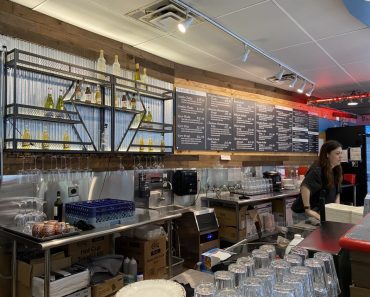
The dining room has burled-wood tables, soft sofas for lounging and a popular covered patio. The expansive main dining room has a little less charm but can accommodate larger groups. Servers are trained to explain not just what’s in each dish, but its meaning and history.
“Our guests need to feel that they are treated like they are at home,” Fakhouri said.
Best bets and staff favorites
Fakhouri and Noor recommend ordering five or six plates to share, as is customary in much of the Middle East. Start with hot and cold maza, the Middle Eastern counterpart to tapas: small plates of dips, vegetables, savory pastries and other bites meant to be passed around the table. Add a few larger dishes, and you have a feast.

Maza trio, $19: Choose three dips from a lineup that includes hummus, smoky baba ghanoush (roasted eggplant), muhammara (roasted red peppers and walnuts), tangy labneh and cooling tzatziki. Served with warm pita, it’s an ideal way to start the meal.
Fried kibbeh, $17: One of Dahdal’s childhood favorites and a good introduction to Middle Eastern cooking. Order a plate for the table, though you may not feel particularly inclined to share.
Chicken shawarma wrap, $19: There’s no rushing this chicken, and the extra effort pays off. The deeply seasoned meat begs for a generous slather of the kitchen’s toum, a fluffy, unapologetically garlicky sauce.
Musakhan rolls, $16: Think Middle Eastern taquitos, filled with shredded chicken, onions, sumac and olive oil, then tucked into thin flatbread and crisped on the griddle. Noor remembers his mother baking bread three times a day over an open fire, drenching it in olive oil and piling it high with chicken. These rolls are the fun, handheld version.

Mansaf, $38: Tender lamb and rice smothered in tangy fermented-yogurt sauce, with almonds for crunch. This Jordanian comfort food is worth venturing beyond your usual order to try.
Falafel, $12: Made with chickpeas and fava beans, fresh herbs, garlic and an in-house blend of eight spices. These vegetarian favorites are fried to order, so there’s no excuse for a tepid, mushy version. Nobody here wants you to get a soggy falafel.
Zarzuela, $36: This Spanish-style seafood stew features fish, prawns and mussels in a tomato-based broth. Think of it as cioppino’s Mediterranean cousin, and save some bread to mop up the sauce. Dinner only.

Lamb shank tagine, $38: A whole lamb shank, tender enough to pull apart with a fork, served with spiced couscous studded with apricots. Fragrant spices and sweet fruit bring classic Moroccan flavors to the plate.
Kebabs, $25 to $28: Go for the mix-and-match skewers, ideally shish tawook (marinated chicken) and kafta (spiced ground meat). They’re tender and nicely charred. Drag them through the dips you ordered earlier — or order another round.

Kinafeh, $12: Fried cheese for dessert? Absolutely. This crispy shredded-phyllo pastry has a warm, melty cheese center and a drizzle of rosewater syrup. Sweet, salty and a must for first-timers.
Olives & Agave is at 909 Village Court, Montgomery Village, Santa Rosa. Open daily from 11 a.m. to 9 p.m. 707-843-7365, olivesandagave.com