
The Costa degli Degli on the Calabrian coast is no ordinary sailing area. The journey is not the destination – the distances are too short for that. In the third part, the programme features the mythical Scylla at the entrance to the Strait of Messina.
This is the third part of the sailing report along the Costa degli Dei in south-western Italy. The first part you can do so here read up on, the second one here. Most charter skippers in the region opt for the north coast of Sicily or the outer Aeolian Islands Whilst the “Coast of the Gods” is a destination renowned for its spectacular volcanic landscape, very few people have it on their radar – and quite wrongly so!
Scilla, a figure from mythology
Our next destination lies ahead of the bow: Scilla. To be more precise, Castello Ruffo, which towers over the fishing quarter of Chianalea. There’s no marina here, but there are moorings with a shuttle service and rubbish collection. And a lovely panoramic view. Danilo has already let us know that we’re expected. Perfect!
Scilla is a small Calabrian village situated right on the Strait of Messina – and is regarded as one of the most romantic and traditional places in southern Italy. Its name derives from Greek mythology. It is said that the sea monster Scylla, who threatened Odysseus in Homer’s *Odyssey*, lived here – whilst directly opposite, on the Sicilian side, the whirlpool Charybdis lay in wait, forcing Odysseus to navigate his way between the two dangers without losing his ship and crew entirely.
In cinemas this summer
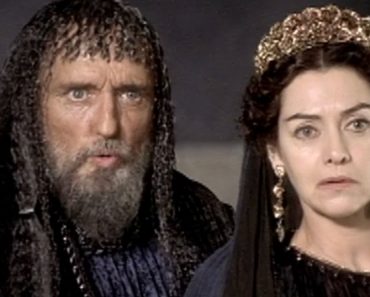
Anyone who’s been to the cinema this summer may well have this scene fresh in their mind: Christopher Nolan’s film *Odysee*, starring Matt Damon as the legendary hero, has only just brought the ancient odyssey back to the big screen, set against the same Mediterranean backdrop through which we are now chugging along comfortably. Nolan opted for real geography rather than a computer-generated fantasy landscape – and indeed, no expensive special effects are needed here to make an impact.

Anyone who gets too close to the cliffs of Scilla in a dinghy at high tide and in strong currents will realise, even without a monster, just how unpredictable the waters of this strait can be. You soon realise that the myth surrounding the Strait of Messina is not merely a dramatic invention, but a translation of real nautical hazards into a gripping story.
The climb up to Castello Ruffo
Compared to better-known places in Calabria or Sicily, Scilla is less overrun by tourists, yet brimming with history, charm and living tradition. The climb up to Castello Ruffo, an ancient fortress perched on the cliff above the sea, is well worth the effort. For around 2,500 years, this spot – so strategically important for maritime trade – has been fortified and has seen many rulers come and go.
A little further on is the Belvedere – the ‘beautiful view’ – from Piazza San Rocco, overlooking the Strait of Messina, with Sicily in the background, and the whole scene set against a sunset at its very finest. As cheesy as it sounds, it simply makes you want to sigh, ‘O sole mio’.
Costa degli Dei sailing log
On our last evening on board, we take stock once more over a glass of Ciró Rosso: we may not have covered many nautical miles this time – at least not compared to other trips – but we have discovered bays, churches, headlands and waiters that we won’t forget in a hurry.
The Costa degli Dei doesn’t require long-distance crossings or endless days under sail. It calls for time to drop anchor, to swim, to pause and reflect. That is precisely what makes it a destination that, precisely because it’s so manageable, you’ll want to book straight away for next summer.
Our unanimous conclusion: what is good enough for the gods is certainly good enough for us. You can’t get much more ‘Bella Italia’ than this.
Part 1 of the feature can be found here.
Part 2 of the feature can be found here.
More about Italy