
Young and old alike are dancing, swaying as if in a trance, to the mesmerizing sound of Greek tradition gone electric. Smoke swirls through the air. Ancient forest spirits emerge from the shadows. Ecstatic maidens whirl beneath sweeping lights in a Dionysian frenzy. On stage at Athens’ Technopolis, Greek tradition is transformed into something primal, theatrical and utterly contemporary.
Ladies and gentlemen, welcome to the mystical world of PAGAN, a band from Greece that is breaking new ground. Following an amazing performance, TO BHMA International Edition sat down with composer and band founder Stavros Tsumanis to discuss PAGAN’s story, philosophy and vision.
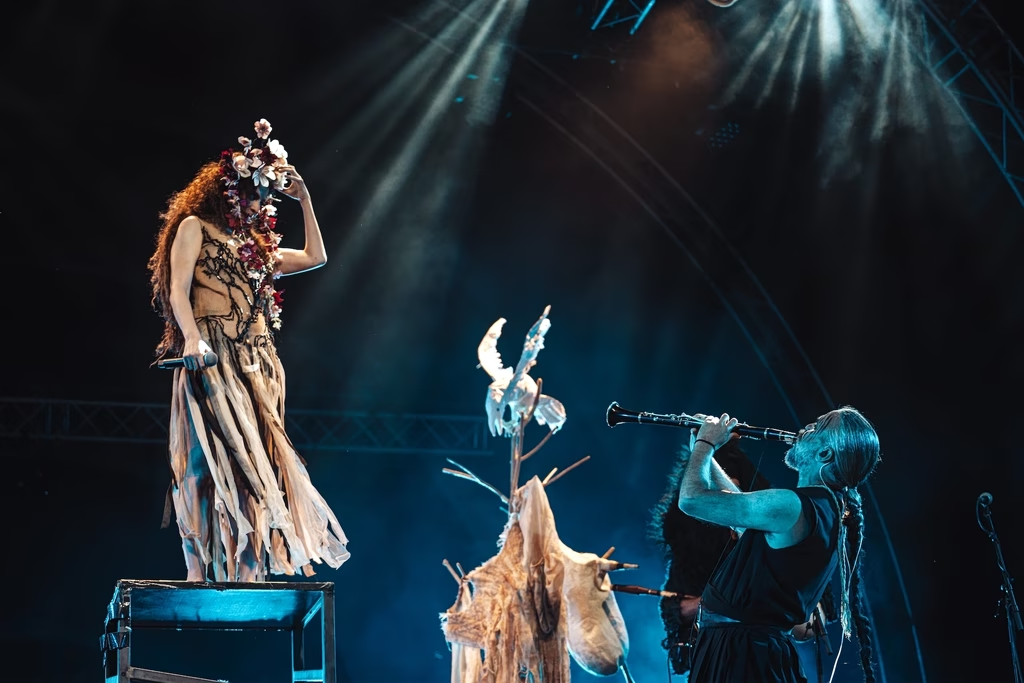
Photo by Marianna Anagnostopoulou
The group features Greek-Syrian actress and vocalist Evelyn Assouad, bassist Pantelis Petrou, guitarist and vocalist Vassilis Prodromou, and guitarists Stavros Tsumanis and Dimitris Bizos. Together they have crafted a captivating spectacle that combines choreography, elaborate costumes, lighting design and storytelling. This is not your usual concert; it’s a rite of passage.
More Than a Name
Although PAGAN officially came together during the pandemic and have been performing for the past four years, the idea behind the project goes back almost two decades, to when Tsumanis embarked on extensive musical research with “strong historical and anthropological dimensions”. That process gradually led to the formation of what he describes as an “artistic movement”, later named PAGAN.
The choice of name, he explains, was totally spontaneous and instinctive.
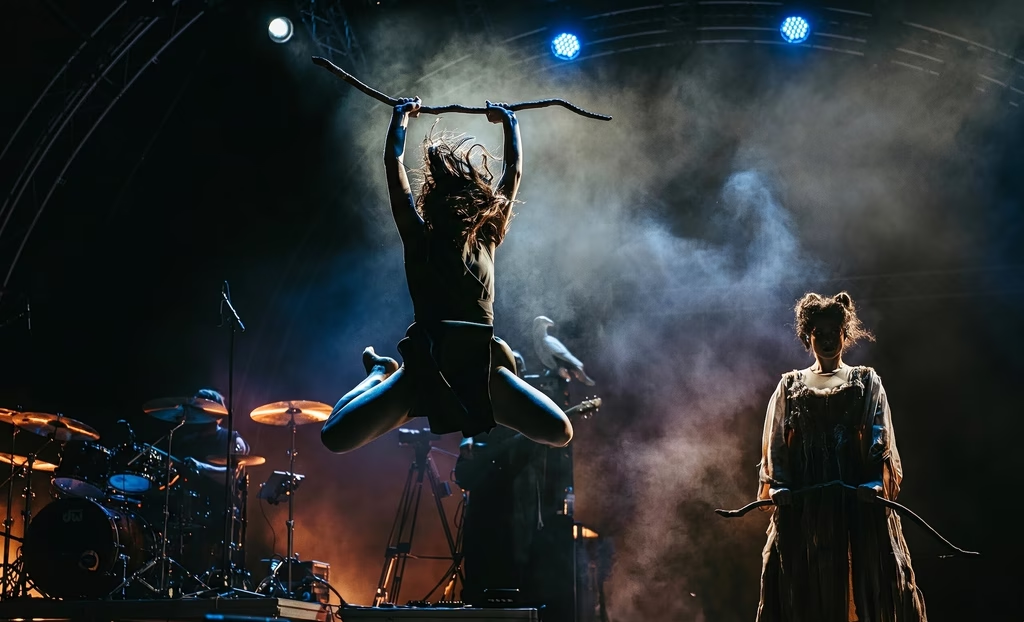
Photo by Marianna Anagnostopoulou
“I came across the Latin word ‘paganus’, which originally referred to someone from the countryside,” he says. Over time, however, the word acquired a dismissive tone. Urban elites used it to describe rural communities as uncultured villagers, disconnected from the sophistication of the cities.
“As someone who grew up in a village before moving to the ‘illustrious city’ to study and work in the arts, I also felt like a ‘paganus’,” Tsumanis says.
“Through music, I wanted to bring the sound of the countryside back into the city. So our name combines both symbolism and satire.”
Unlike Any Folk Band You’ve Ever Heard
Trying to define PAGAN’s sound is almost impossible. Tsumanis resists musical labels but is sure that “many will feel lured into the dark fairy tales and myths of our ancestors’.
When I ask about the band’s connection to Greek tradition, his answer is unexpected.
“I would say something awakened within us, something that connected us to an ancestral memory which we felt a profound need to recall.”
The band’s greatest inspirations, he explains, are the eternal forces that have shaped humanity from the beginning. “The mysteries of human existence and the two great forces of life: love and death.”
These themes, he argues, belong to no single culture. “Set against the crisis of values that defines our era, they can serve as common ground, reminding us of what unites us.”
As for tradition, Tsumanis is quick to point out that it has no need of reproduction. Instead, it invites every generation to translate it into its own era.
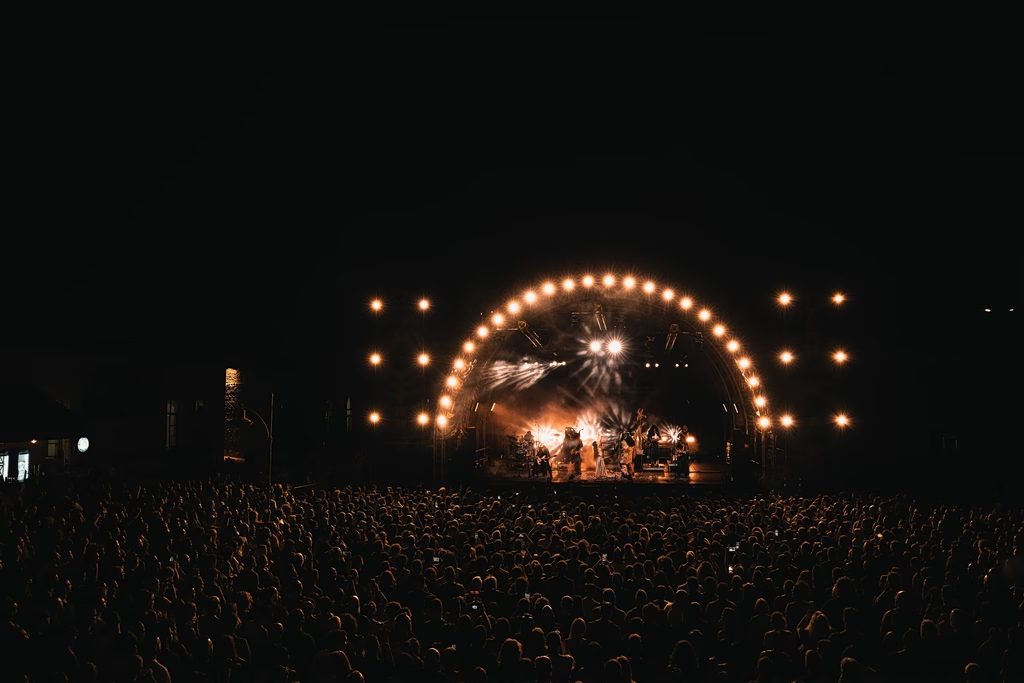
The audience at PAGAN’s concert in Technopolis this June. Photo by Marianna Anagnostopoulou
“Traditions die when they cease to evolve. Tradition is not a museum, but a way of conversing with the timelessly human.”
PAGAN: The Spectacle
Attending a PAGAN concert feels more like taking part in a ritual. The powerful mix of traditional Greek folk song (demotika) electrified by modern instruments and enriched with the sounds of other folk traditions literally forces audiences into a primal state of freedom and connection.
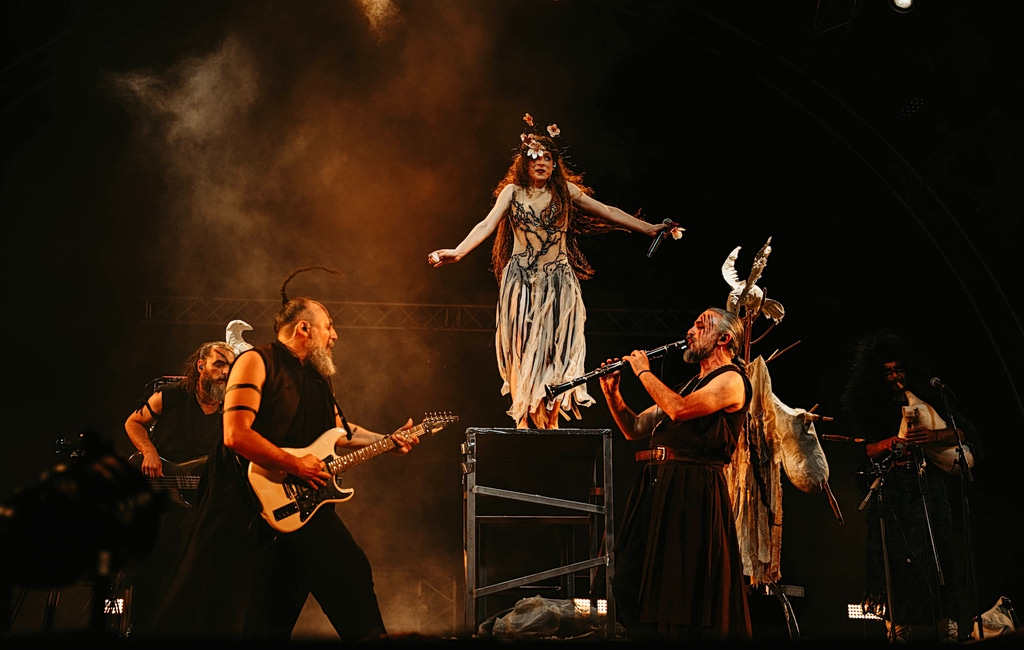
Photo by Marianna Anagnostopoulou
That energy emanates from as much in what audiences see as in what they hear. Every performance unfolds as a carefully choreographed theatrical production in which music, movement, costumes and lighting become inseparable.
“The creative process often begins with an image, an idea or an experience,” Tsumanis explains. “All our influences, conscious and unconscious, stop being references and become the creative material that shapes our artistic identity.”
The theatrical dimension, he says, emerged organically rather than by design. “What happens on stage is the natural development of our music through sound, image, word and physical presence,” Tsumanis tells TO BHMA International Edition.
“I would say the theatrical element connects people more deeply still than simply rousing them.”
Timeless Tradition
In the last few years, there is an evident turn of younger generations in Greece to tradition, whether it’s learning traditional Greek dances that go back centuries, playing folk instruments, or even learning how to make the intricate outfits their great grandmothers wore.
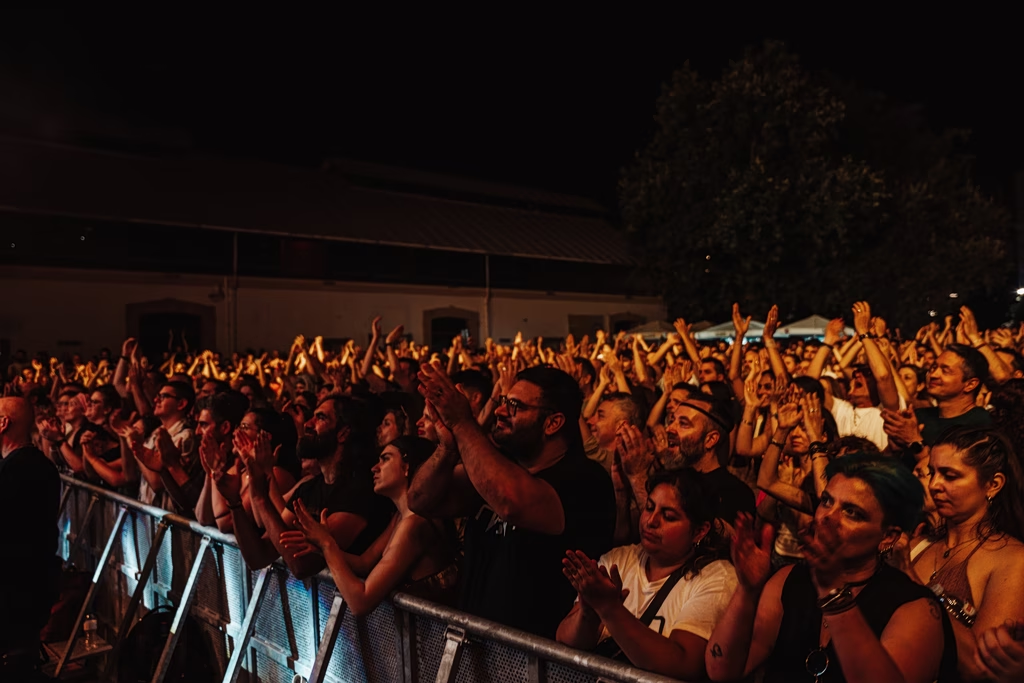
Audience at Technopolis during PAGAN’s concert in June. Photo by Marianna Anagnostopoulou
PAGAN has become part of this wider cultural resurgence, tapping into the songs and tales of yesteryear and sending forth a message.
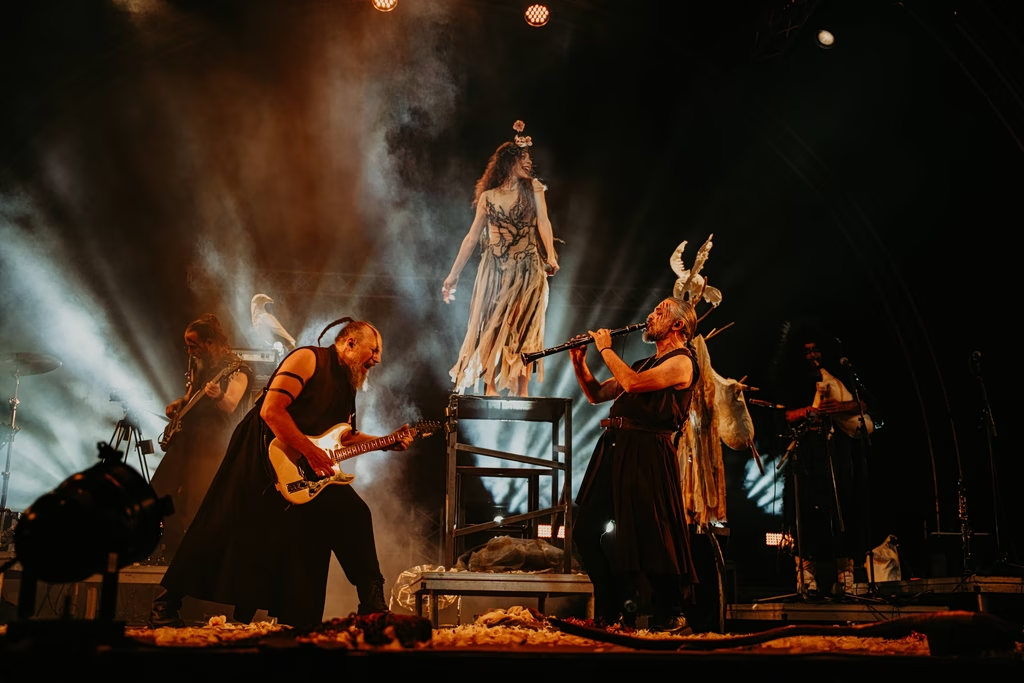
Photo by Marianna Anagnostopoulou
“Each generation receives this inheritance, assimilates it and passes it on, leaving its own unique imprint,” Tsumanis says. “That’s why traditions that have traveled through centuries can never truly be lost.”
Long before recordings existed, he notes, songs survived precisely because they changed. No one knew exactly how a song sounded one or two centuries earlier. Music passed from person to person, constantly evolving through additions, variations, and reinterpretations.
“Evolution is not the exception to tradition; it is tradition’s very nature.”
Today’s recordings of great traditional musicians, he says, provide valuable points of reference, allowing artists to move forward creatively without severing ties to the past.
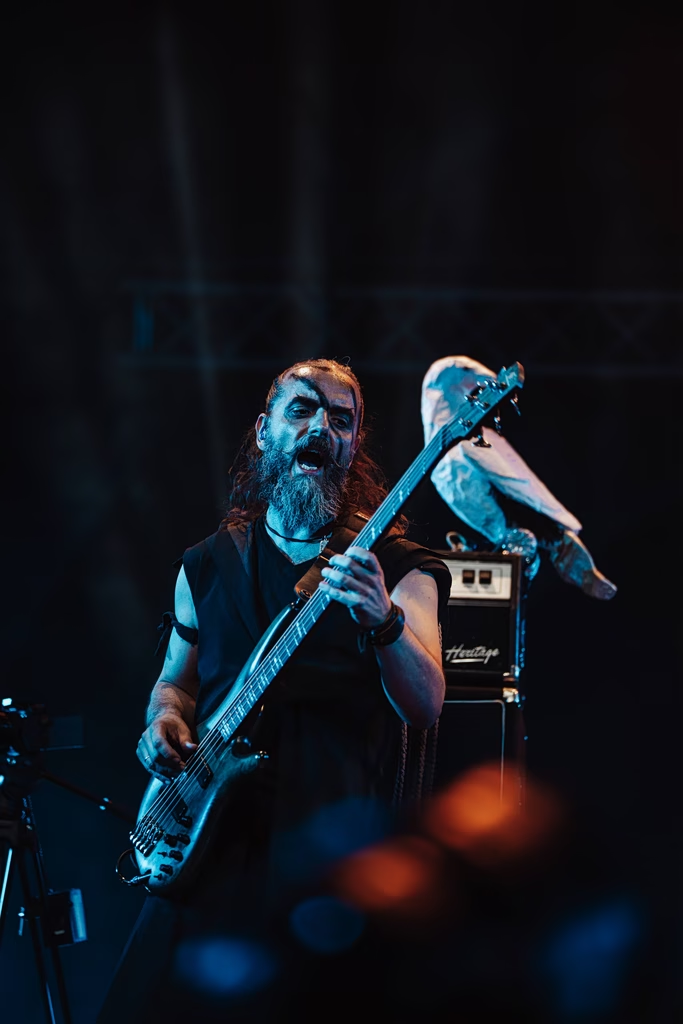
Photo by Marianna Anagnostopoulou
“We don’t impose ourselves on tradition. To the contrary, we continue the discourse.”
Completing the Vision
It took Tsumanis years of research to bring PAGAN to life. The dream came full circle when award-winning actress-singer Evelyn Assouad joined the group.
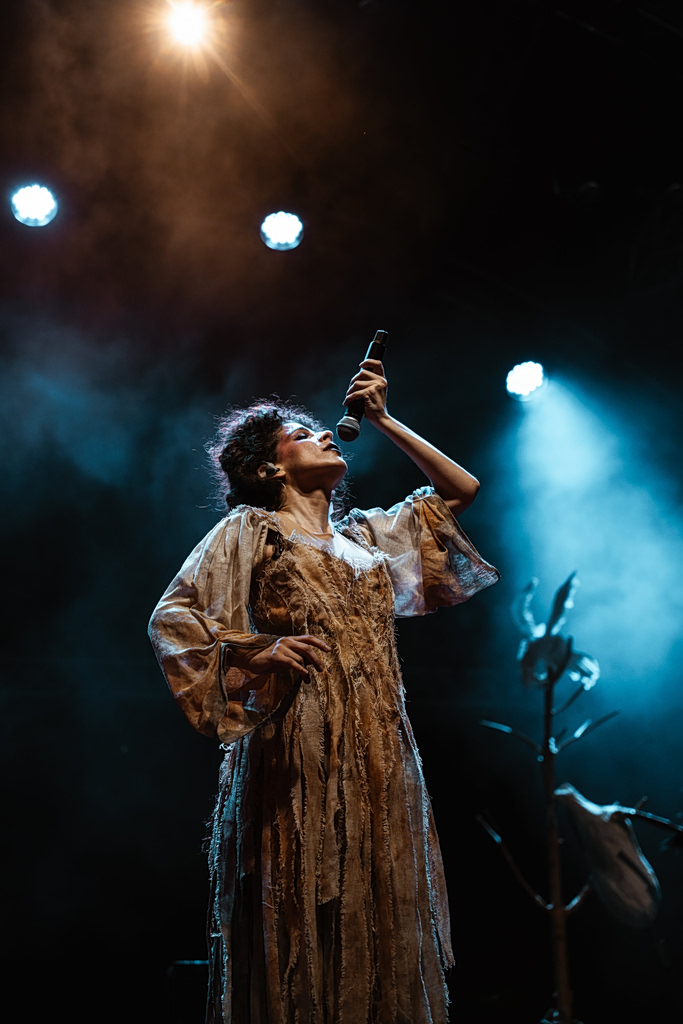
PAGAN’s lead singer Greek-Syrian actress and vocalist Evelyn Assouad: beyond her impressive voice and commanding presence, Assouad brings to the stage a raw, unfiltered passion that is hard to find nowadays. Photo by Marianna Anagnostopoulou
“Evelyn’s deep connection with ancient tragedy played a decisive role in bringing forth the dramaturgy of sound and speech,” Tsumanis says. “That was when we realized our performances should be approached as theatrical productions.”
From that point on, the elements that now define PAGAN’s artistic identity—the costumes, stage design, and lighting—evolved to frame and elevate the music.
Beyond Borders
When I asked how he would describe PAGAN to someone unfamiliar with Greece and its traditions,” Tsumanis hesitates. “This is such a difficult question and one we also ask our audience and fans. So far, no two answers have been the same. Each person perceives our sound through their own lens and through the elements that resonate most with them.”
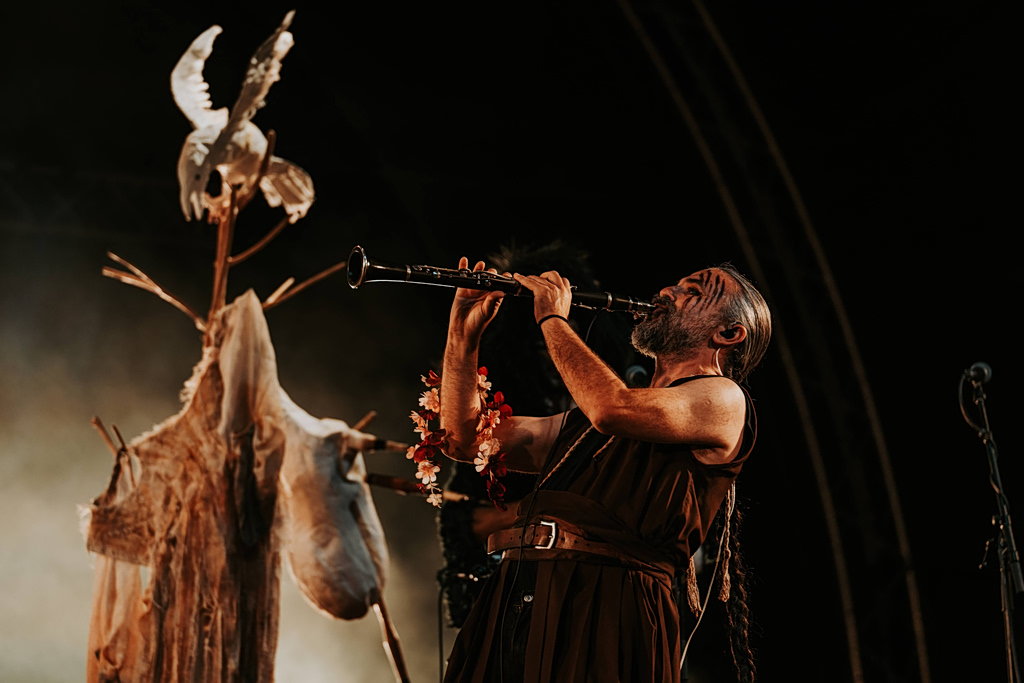
Photo by Marianna Anagnostopoulou
If pressed, he settles on “progressive ethnic” – music rooted firmly in tradition while remaining open to evolution. “The core of our work is tradition,” he says, “but its expression can take different forms depending on what each composition demands.”
For the band members, music is a way to explore shared human experiences beyond cultural boundaries. They see collaboration as an opportunity to discover humanity’s shared roots and build bridges across languages and borders.
A Space for Connection
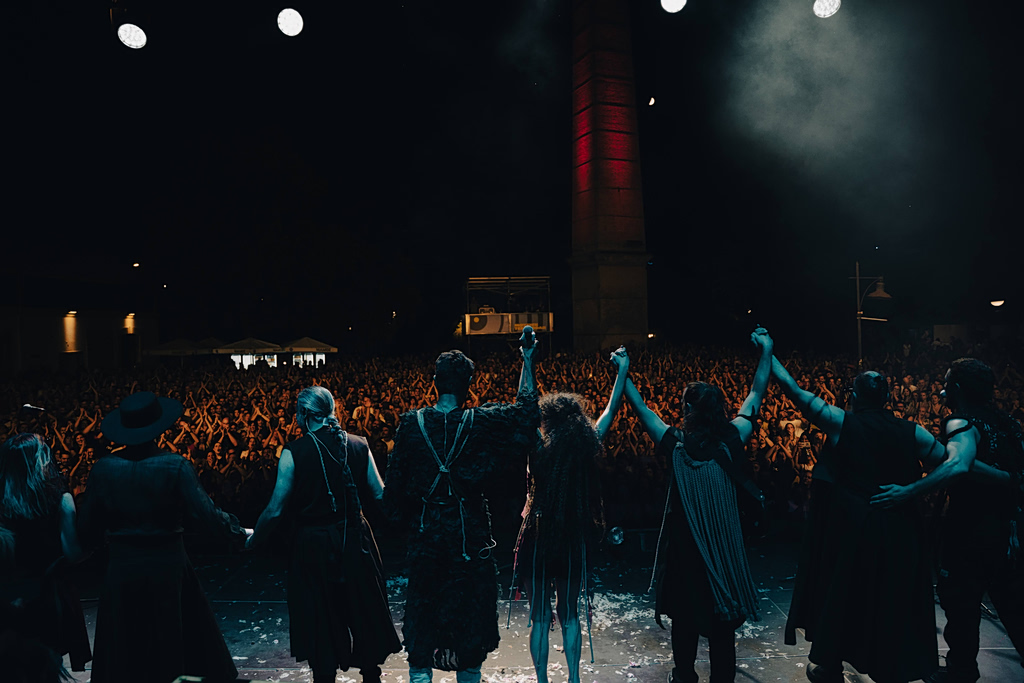
PAGAN’s final bow after their concert in Technopolis. Photo by Marianna Anagnostopoulou
So what does the future hold for PAGAN? Tsumanis says success is not measured by fame or commercial milestones, but by the legacy the group leaves behind. He hopes PAGAN will create music that carries the essence of humanity’s ancestral memory; a body of work that will inspire future generations to create freely, unconstrained by convention.
Ultimately, he says, the journey always matters more than the destination.
“The point is to create a place where human beings connect,” he says. “That, after all, is the very foundation of what it means to be human.”