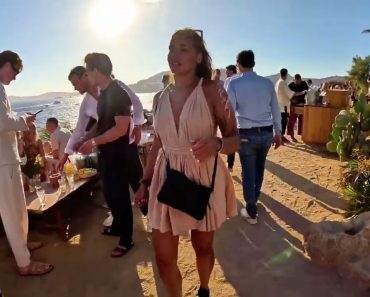
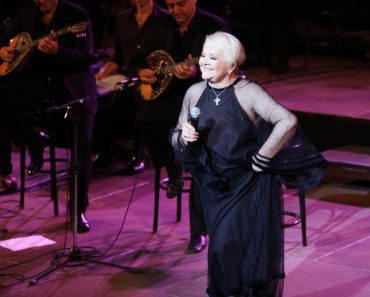
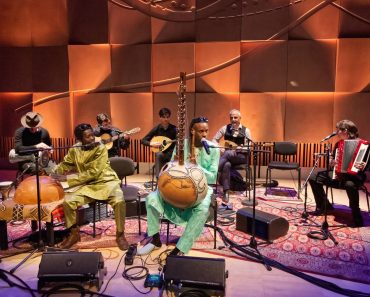
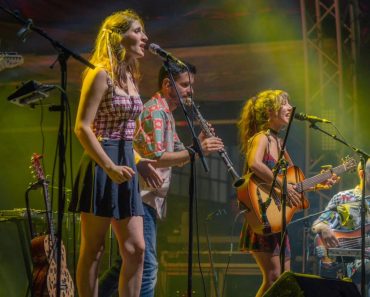
Plastic chairs, endless wine and beer, hands linked in dance, and music turned up to full volume. The panigyri – the quintessential Greek village festival and a one of the defining rituals of the Greek summer – has become cool again. Traditions are finding new audiences, making their way from rural villages to social media feeds and holiday posts. Grandmothers’ woven textiles are emerging from old cedar chests, and protective folk amulets are defining the visual identity of contemporary cultural events. As interest grows, however, so do the questions. Are we witnessing a genuine rediscovery of tradition or simply another lifestyle trend? “There is a sense of nostalgia within us for something we feel we have lost,” says Marianthi Kaplanoglou, Professor of Folklore in the Department of Philology at National and Kapodistrian University of Athens and Director of the university’s Folklore Museum and Archive. “Tradition also has a theatrical and playful dimension, and today people actively choose to engage with it. At times, tradition grows out of unexamined habit; at others, it becomes a politically correct way of constructing local or national heritage.”
From Lefkada to Anogeia and Astypalea, traditional culture has become an increasingly visible part of Greece’s summer cultural events – sometimes at the center of the program, sometimes woven more subtly into it. “ Tradition tends to be embraced – or even celebrated – only after it has been separated from its ‘less desirable’ side: folklore or popular culture,” Kaplanoglou adds. “ It is rebranded, redefined, and transformed into a cultural or tourism product. At the same time, many communities are genuinely committed to preserving and sharing their heritage. Folk culture, in any case, will continue to evolve and endure.” A glance at this summer’s festival calendar suggests exactly that. Across Greece, local communities are introducing a new generation to their traditions, not only through folk music and village festivals, but also beyond them.
The Lefkada International Folklore Festival
It was late August 1962 when the streets of Lefkada first filled with music and dance from around the world. Today, more than six decades later, the Lefkada International Folklore Festival remains one of Greece’s longest-running and most respected celebrations of traditional culture. Conceived by Antonis Tzevelekis, then president of the Association of Lefkadians in Athens, the festival sought to establish the island as a center for culture, artistic exchange, and intellectual life. That vision continues today. This year’s edition brings together more than ten international folk ensembles alongside six groups from Greece. “Centered on peace and coexistence, groups from every corner of the world present their dances, songs, and traditions, showcasing their authentic cultural identity,” says Xenofon Verginis. As the island prepares to welcome more than 300 dancers, musicians, and performers during the final week of August, locals will tell you there’s no better time to visit.
The Hyakinthia Festival
“ One day I realized there was a curious inconsistency in the Orthodox tradition,” recalls acclaimed Cretan musician and write Loudovikos ton Anogeion. “There was a patron saint of the Artillery, but no patron saint of love. When I asked around, I was told it was Saint Hyacinth. That’s how the Hyakinthia Festival began.” With the support of the Metropolis of Rethymno and architect Stavros Vidalis, he succeeded in building a small church on the hills above Anogeia dedicated to Saint Hyacinth. Designed to resemble the traditional shepherds’ stone huts, known as mitata, the chapel became the heart of the festival’s celebrations. “The first year, in 1998, the line outside the chapel stretched for two and a half kilometers. That’s when we knew we had achieved what we set out to do.” The 28th edition of Hyakinthia, titled “Anyfantou“ (“Unwoven”), shines a spotlight on the village’s weaving tradition. The festival will open with 92-year-old Ermioni, one of Anogeia’s last remaining traditional weavers. “It doesn’t matter whether someone loves tradition or not,” Loudovikos says. “Tradition is what has stood the test of time, and our responsibility is to carry it forward. That’s why, with the reopening of the Weaving School and the launch of the Anogeia Weaving Center, we felt there couldn’t be a more fitting theme for this year’s festival.”
Routes in Marpissa
In 2010, a group of volunteers set out to explore the history of Paros – and in the process created what would become Routes in Marpissa. Their aim was to celebrate their village by transforming it, for one weekend each year, into a vibrant meeting place for art, culture, play, and community. “Researching and studying local traditions and cultural heritage is central to the way we design our events,” the organizers explain. “Interviews with the community’s older residents help us better understand its identity and strengthen our connection to both the place and its people. When knowledge is passed on, we become more aware of the values we want to preserve from the past and carry into the future.” Sixteen years later, Routes in Marpissa has received multiple awards for its contribution to sustainable tourism. By placing culture at the heart of social and economic activity, the festival has become one of the highlights of the Greek summer. This year’s program includes educational workshops for children in collaboration with the Herakleidon Museum and the B. & M. Theocharakis Foundation for the Fine Arts and Music, alongside hands-on workshops, musical tributes, and a grand traditional island celebration.
The Tsoula Festival
The Tsoula Festival came about almost by accident. “We happened to be vacationing in Astypalea when someone from our hotel gave us a replica of the tsoula, the island’s traditional protective amulet,” recalls co-founder Valia Zambara. “Months later, as we were discussing the festival’s name and visual identity, we realized it had to become our symbol.” “What appealed to us,” adds Tasos Bibisidis, “was that it’s an object rooted in folklore while also speaking to a very contemporary desire for connection.” This summer, Zambara and Bibisidis will return to the island alongside their third co-founder, Nancy Fafouti, with an expanded program and plenty to say about the reactions sparked by the festival’s provocative name. Behind the headline acts, concerts, and parties lies a deeper thread: a celebration of local tradition that can easily be overlooked amid the flood of social media posts. “Like last year, the festival will open with a panigyri at the harbor, preceded by a traditional dance workshop,” the organizers explain. “It will close with Locals’ Day, a series of events created by the island’s residents.” “Last year, many visitors asked where they could buy a tsoula,” Zambara adds. “That encouraged Astypaleans to start making the traditional amulets again, helping revive a small but meaningful part of the island’s heritage.” So alongside performances by Marina Satti and Kostis Maraveyas, there will also be, as the festival poster puts it, “a tsoula to watch over us.”
This story first appeared in Kathimerini’s K magazine.