
Long before Vasilissis Olgas became a street, it was a person. Specifically, a blue-blooded person: Queen Olga of Greece.
Her roots were the legendary Romanovs, the dynasty that ruled Russia for more than three centuries before being swept away by the October Revolution.
The recent renovation of the avenue, the one connecting the Zappeion with the Temple of Olympian Zeus, turned into something of a never-ending saga, but by an ironic twist of fate, it was completed right on time: just two months before the centenary of the death of Olga Konstantinovna, who passed away on June 18, 1926. That’s what you call an anniversary.
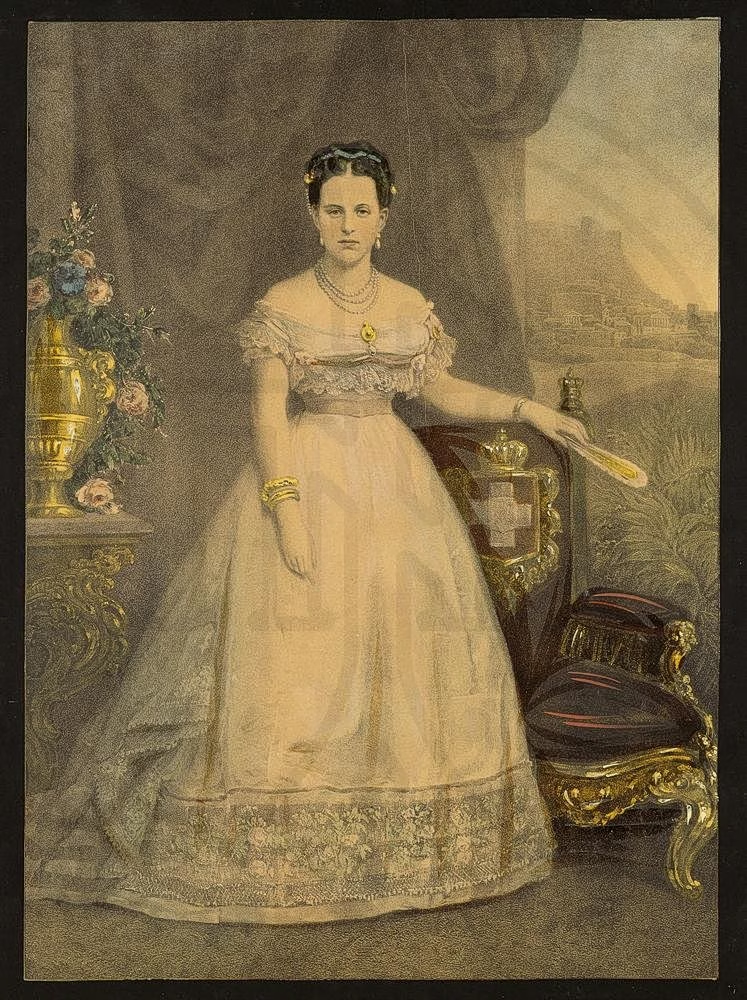
There is also one more almost mysterious coincidence between the person who lent her name to this tiny strip of Athenian asphalt — which in turn generated headlines wildly out of proportion to its size and became the fuse for an epic feud between past and present local power brokers.
Queen Olga’s life was every bit as stormy, dramatic, and novelistic as the renovation of the street that will finally find its peace only once the strutting, the photo ops, and the political grandstanding of the country’s leaders dies down.
In other words, behind the name of an Athenian boulevard lies a story that began in the palaces of Saint Petersburg, passed through revolutions, assassinations, and family tragedies, and ultimately left a deep imprint on the social history of modern Greece.
From Saint Petersburg to the Edges of the Balkans
Olga Konstantinovna was born on September 3, 1851, at the Pavlovsk Palace, just a few miles outside Saint Petersburg.
She was the daughter of Grand Duke Constantine Nikolaevich, the second son of Tsar Nicholas I, and Princess Alexandra of Saxe-Altenburg. Thus, she was the granddaughter of the ruler of the Russian Empire.
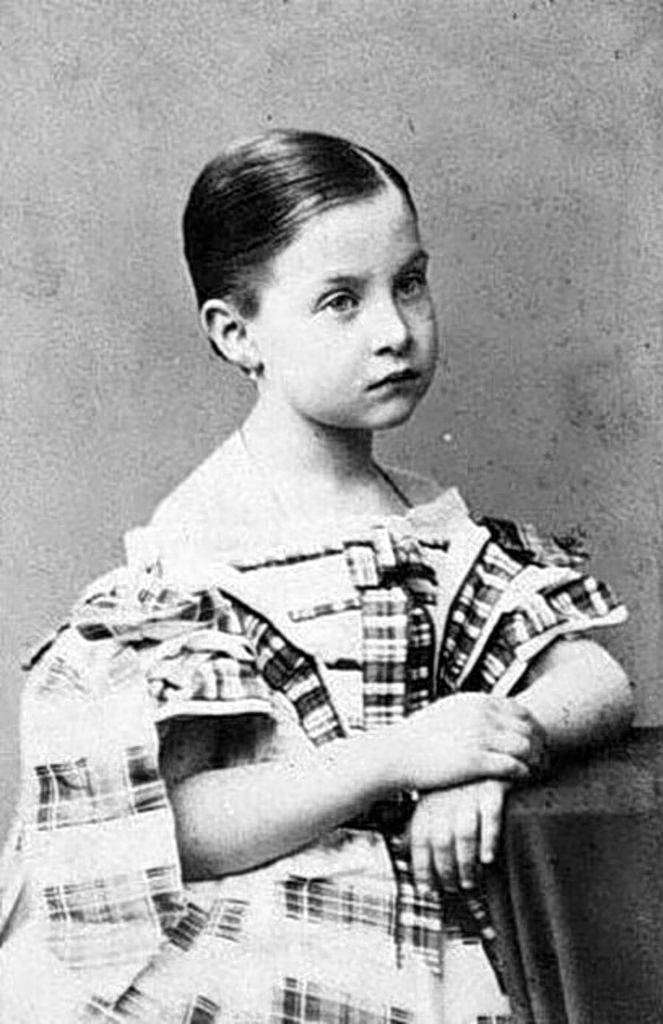
She grew up in a world of strict protocol, where every gesture, every word, and every movement obeyed rules that had been shaped over centuries of Russian imperial tradition.
From childhood she learned discipline, obedience, and the sense of duty that came with being born into an imperial family. At the same time, she enjoyed the luxury of one of the wealthiest courts in Europe.
Yet life at the heart of the Russian Empire was not synonymous only with comfort and splendor.
When Olga was just 11 years old, her father was appointed Viceroy of Poland and the family moved to Warsaw, which was then under Russian rule. The city was in the grip of social unrest.
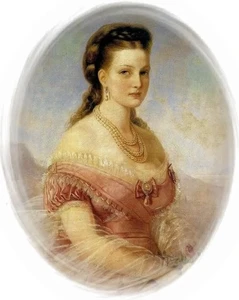
Polish society viewed the Russian presence as an occupation, and tensions between nationalist rebels and the Russian administration were constant.
Assassination attempts against her father were frequent. The family’s daily life was filled with guards, secret services, suspicion, and an invisible but ever-present sense of danger.
Little Olga grew up surrounded by threats, conspiracies, and political tensions. The experience left a permanent mark on her: an almost ice-cold composure in the face of hardship, even the harshest tragedies life had to offer.
That would prove to be more than useful a few years later, when in 1867 she married King George I of Greece.
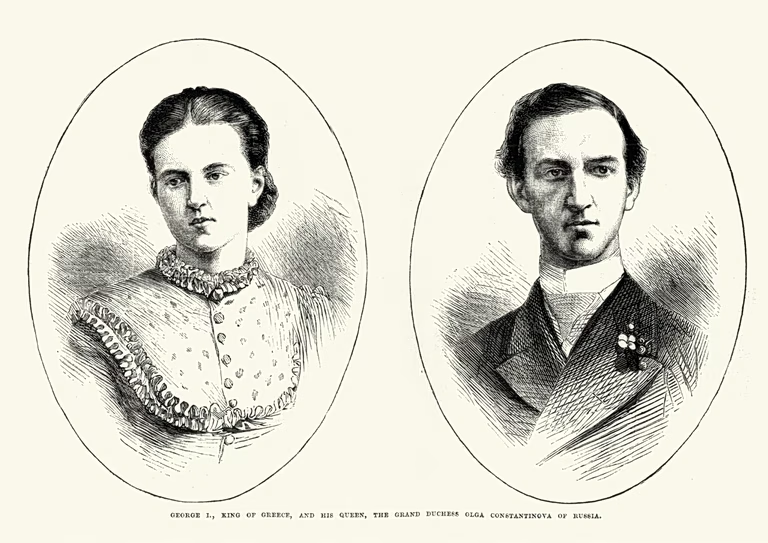
The two had first met four years earlier. At the time, however, Olga was only 12, and the young monarch’s interest had gone right over her head.
In 1867, the Danish prince whom the Great Powers had placed on the Greek throne a few years earlier paid another visit to Saint Petersburg. This time his purpose was clear: he was looking for a wife.
For the European courts of the era, a marriage between the King of Greece and an Orthodox Russian Grand Duchess was an ideal geopolitical formula. Russia would gain a stronger foothold in the Eastern Mediterranean, while the young Greek monarchy would be bolstered by the prestige of one of Europe’s oldest imperial dynasties.
And yet it was not purely a marriage of convenience.
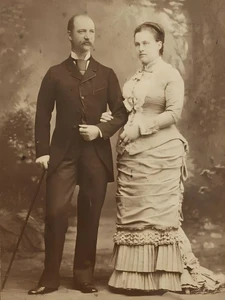
The 16-year-old Queen Olga and the 22-year-old King George appear to have developed, if not romantic love, at least a genuine attraction and affection. In May 1867 they became engaged, and five months later they were married at the Winter Palace in Saint Petersburg, in a ceremony that brought together the cream of European aristocracy.
Years later, she would often tell her children: “I didn’t fall in love with the king. I fell in love with the man.”
Queen Olga: Mother of a Dynasty
Olga and George had eight children in total, that included five boys and three girls, all over a span of roughly twenty years. It is said that she remained devoted to her marriage, despite her royal husband’s occasional romantic affairs.
The Athens palace thus became a small European hub of dynasties, as the marriages of their children connected the Greek royal family to houses spanning nearly the entire continent.
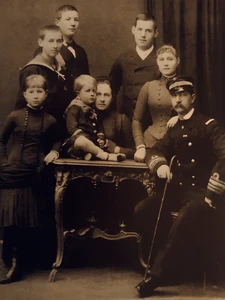
The firstborn was Crown Prince Constantine, the future King Constantine I. Then came Prince George, who would later serve as High Commissioner of Crete; Princess Alexandra, who married Grand Duke Paul of Russia; Prince Nicholas; Prince Andrew — father of Prince Philip and grandfather of the current King of Britain, Charles III — as well as the younger children of the family.
Daily life in the palace was a peculiar multilingual reality. The king and queen spoke mostly German with each other, the language in which they had met and fallen in love. With their children they often communicated in English, the lingua franca of Europe’s royal courts at the time. Greek, though present, was not always the primary language of family life. In fact, according to later accounts, the only one of their children who insisted on speaking exclusively Greek to his parents was Prince Andrew.
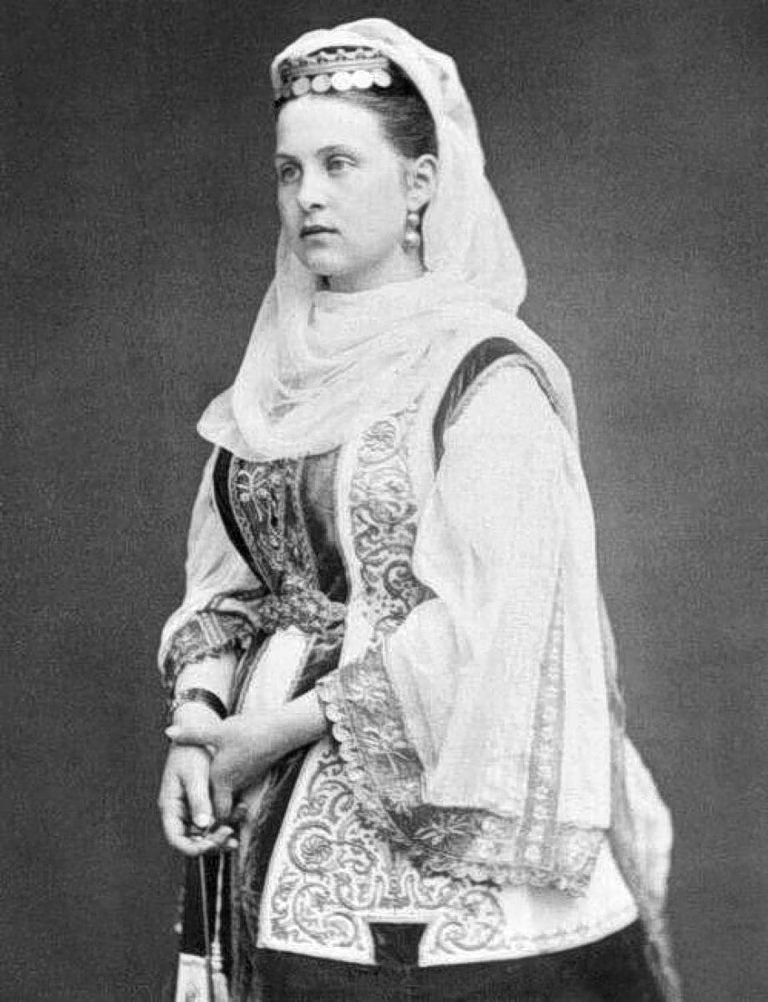
Despite the image of a large and close-knit family, motherhood for Queen Olga was also tied to profound grief.
In 1880, her infant daughter, who had been given her name, died at just six months old. Eleven years later, tragedy struck again in an even crueler way: her daughter Alexandra, by then married into the Russian imperial family, died at only 21 during childbirth in Saint Petersburg.
These losses left deep marks on her. The queen turned increasingly to religion and to the idea of social service, believing that her personal position and wealth had an obligation to be transformed into works for the most vulnerable.
Tatoi: A Piece of Russia in Attica
Seeking a refuge from the rigors of protocol, George purchased the Tatoi estate in 1872 — with Olga’s personal funds.
There, in 1884, a grand villa was built that was an architectural echo of her homeland: a faithful replica of a villa from the Peterhof imperial complex near Saint Petersburg, which belonged to her uncle, Tsar Alexander II.
Tatoi became Queen Olga’s personal paradise. It was the one place where the fog of longing for Russia lifted.
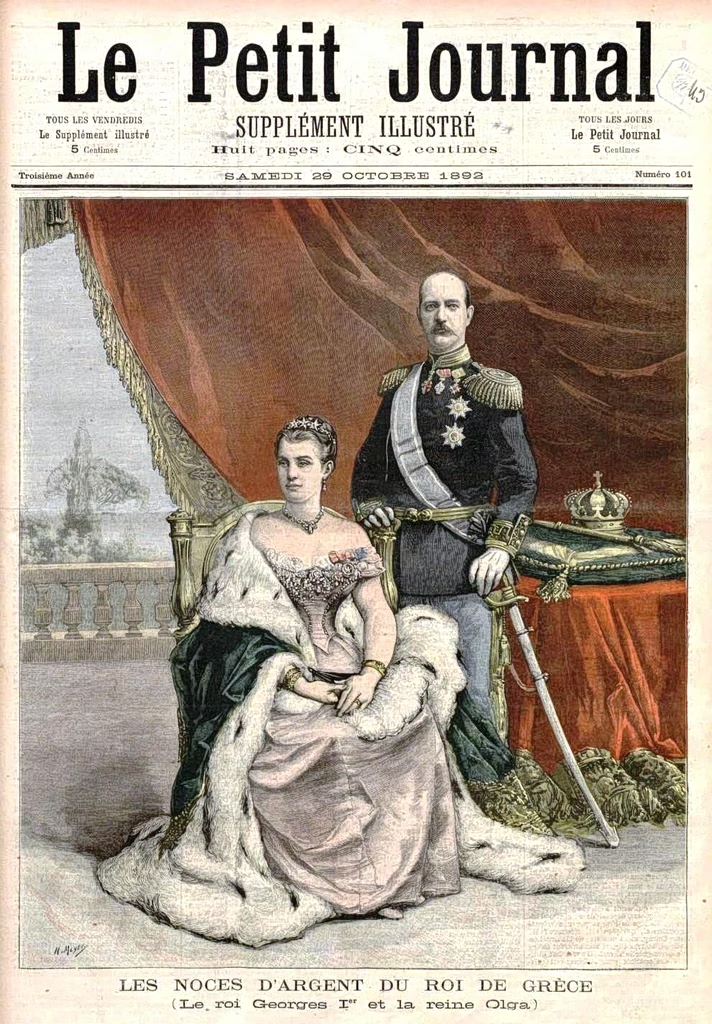
Far from the formalities of European courts, the family lived there with an unprecedented freedom. The children played freely in the gardens, honored guests relaxed without ceremony, and at the top of a nearby hill, the small church she built herself became the spiritual heart where the family worshipped on Sundays and sang, by all accounts, in Russian.
The Founding of Evangelismos Hospital
From her earliest years in Greece, Queen Olga recognized that the newly formed Greek state faced enormous social and public health deficits. Hospitals were few, health infrastructure was rudimentary, and the care of the sick relied more on charity than on any organized state system. She decided to act.
Using part of her substantial personal fortune, the Russian dowry she had brought with her to Greece, which popular legend holds required an entire ship to transport, and by mobilizing donations from wealthy Greeks in the diaspora, she launched an ambitious social welfare initiative.
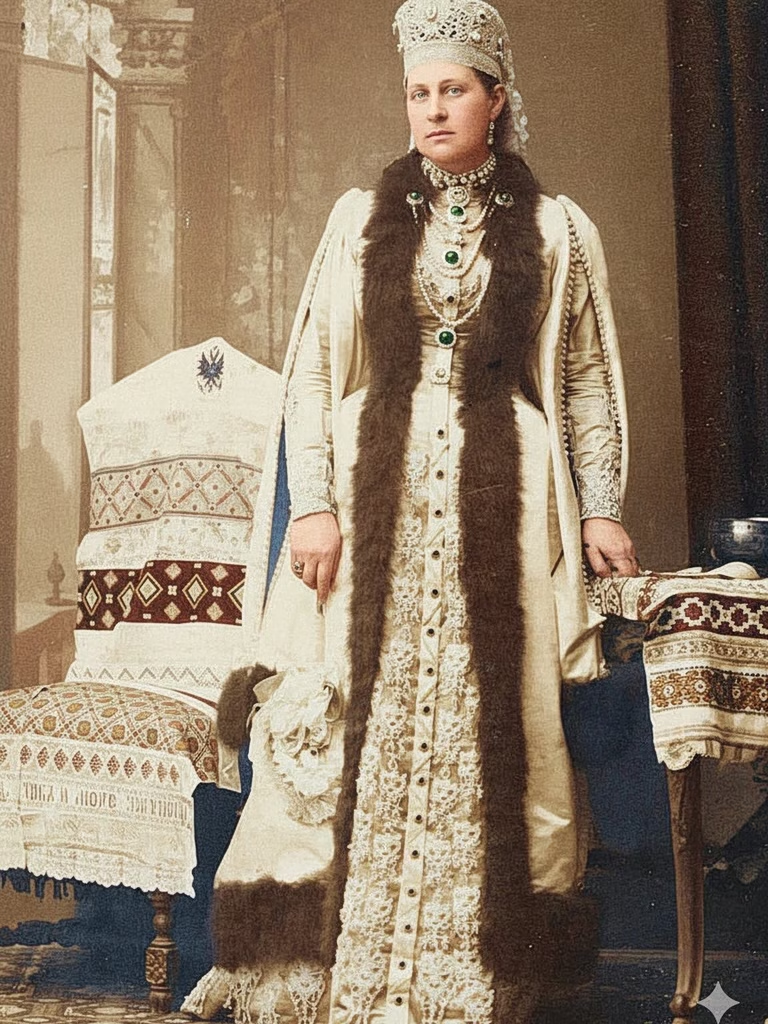
The crowning achievement of that effort was the work she considered her greatest contribution: Evangelismos Hospital. It opened in 1881. Beyond funding its construction and operation, the queen also organized a nursing school there, something extraordinarily pioneering for Greece at the time.
She herself took nursing classes and frequently appeared on the wards in a nurse’s uniform.
During the Greco-Turkish War of 1897 and later during the Balkan Wars, she was often found at the bedside of wounded soldiers. She tended their wounds, fed them, and many times personally took it upon herself to write letters to their families.
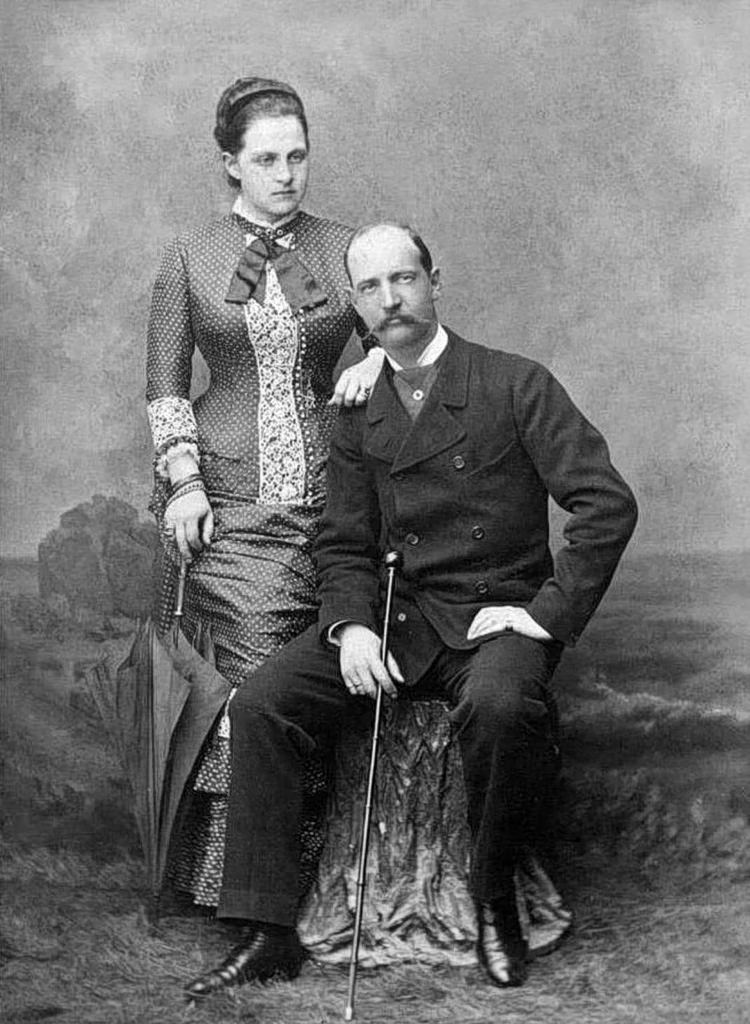
She is also credited with founding the Russian Hospital in Piraeus in 1902, today’s Naval Hospital, built in memory of her daughter Alexandra.
In addition, the queen funded the creation of the first separate women’s prison in Athens on Syngrou Avenue, following a personal visit to the city’s prisons where she discovered that men and women were being held together in the same squalid conditions.
The “Gospel Riots”: An Initiative That Ended in Bloodshed
Queen Olga’s deep religious faith, combined with her direct contact with ordinary soldiers, guided one of her initiatives that triggered one of the most intense crises of the era.
The queen had noticed that many soldiers could not understand the Gospels, because the text was written in Hellenistic Greek, a form of the language quite distant from everyday speech at the time. So in 1898 she decided to fund a translation into the vernacular.
The move, which was simply intended to bring the religious text closer to ordinary people, unleashed enormous political and social upheaval.
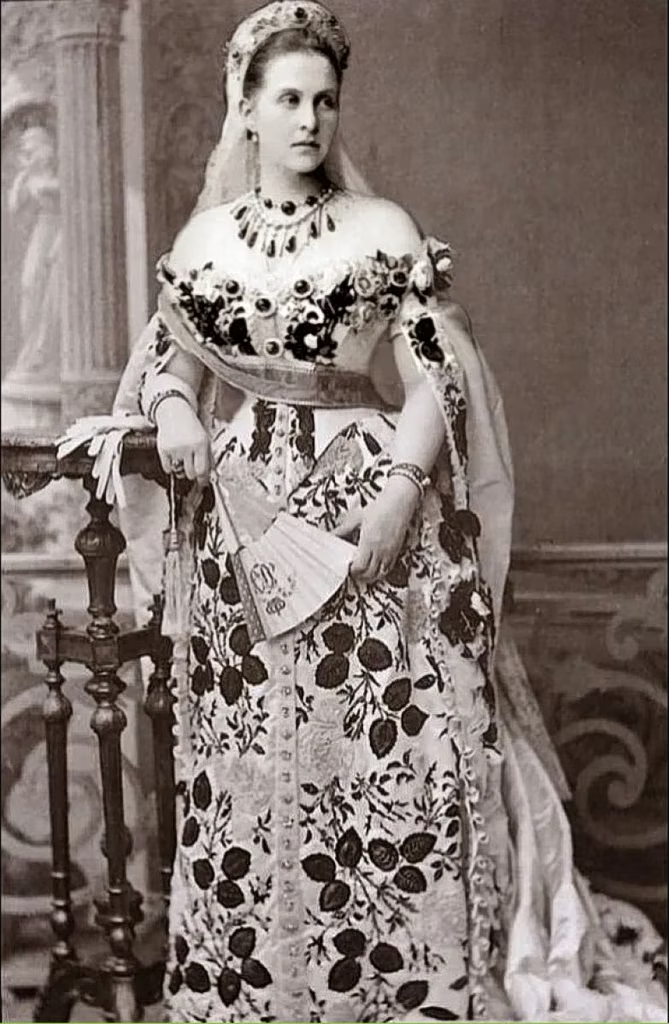
In 1901, an unprecedented crisis erupted. University professors, church circles, and segments of the press accused the translation of “desecrating” the sacred text. Rumors that the initiative concealed Russian political influence, or even a pan-Slavic agenda, lit the fuse.
In November of that year, Athens was rocked by what became known as the “Gospel Riots.” Student demonstrations escalated into violent clashes with the military. The toll was tragic: eight dead and dozens wounded.
The political crisis led to the resignation of the Archbishop of Athens and the fall of the Theotokis government. The book was withdrawn. Queen Olga, deeply wounded, watched the initiative she had believed would bring the Gospel closer to the people turn into a cause of bloodshed.
A Queen at the Great Port
Although she spent the greater part of her life in Greece, and her actions show she came to love her adopted country, the longing for Russia never left her.
Whenever warships of the Russian imperial fleet docked at Piraeus, the queen made a habit of setting protocol aside. She would go down to the harbor, board the ships, and talk with the sailors in her mother tongue.
She would hand out small gifts, ask for news from home, and spend hours listening to stories from faraway Saint Petersburg and the seas the sailors had crossed. She would often drink tea with them, in an atmosphere far more relaxed than the rigid formality of palace life.
Athenian officials watched with surprise as the Queen of Greece mingled freely with ordinary sailors. But in those moments she stepped out of the role of Queen Olga of the Greeks and became Olga from Saint Petersburg.
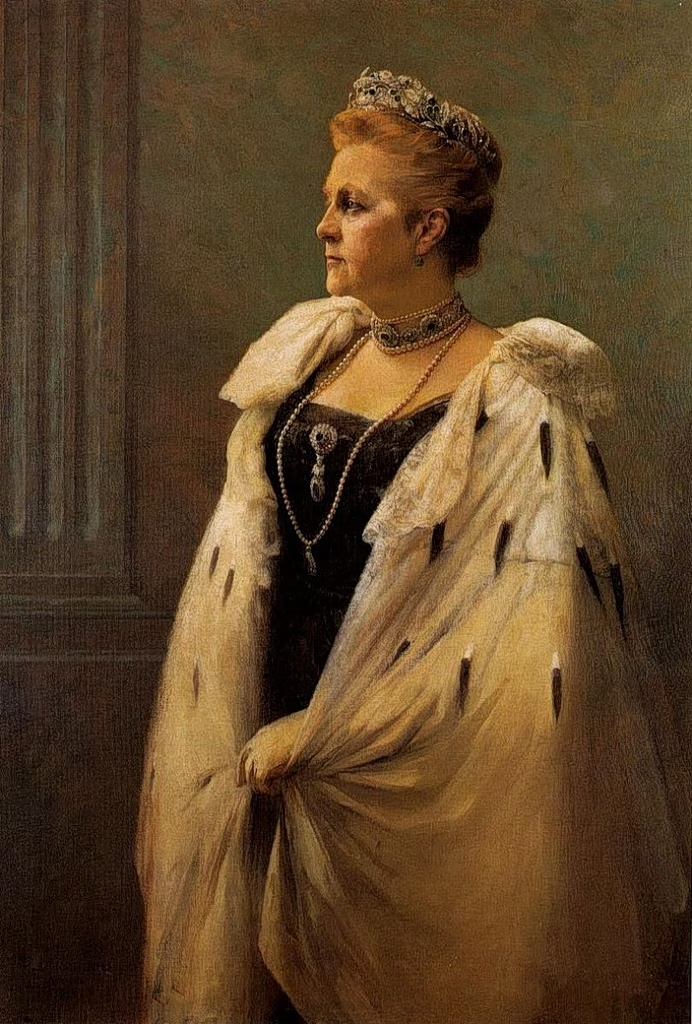
These visits — and particularly the rumors that the gatherings involved not just tea and warm conversation but also vodka with the sailors — gave rise to an episode that kept the press busy for some time.
The satirical poet Georgios Souris published a poem poking fun at the gossip surrounding the queen. The palace’s reaction was furious. Charges were filed against the poet, who reportedly went into hiding for about forty days to avoid arrest.
Ultimately, given the embarrassment the whole affair had caused, the complaint was dropped and the episode ended without further consequences.
The Fall of the Romanovs
The twentieth century brought a succession of blows to Queen Olga’s life.
In March 1913, her husband, King George I, was assassinated in Thessaloniki by a 43-year-old man named Alexandros Schinas. The monarch, who had reigned for nearly half a century and whose name was tied to Greece’s significant territorial expansion, was shot dead during an afternoon walk.
Olga, despite the shock of the news, once again displayed remarkable composure. According to accounts from the time, she asked authorities not to mistreat the perpetrator.
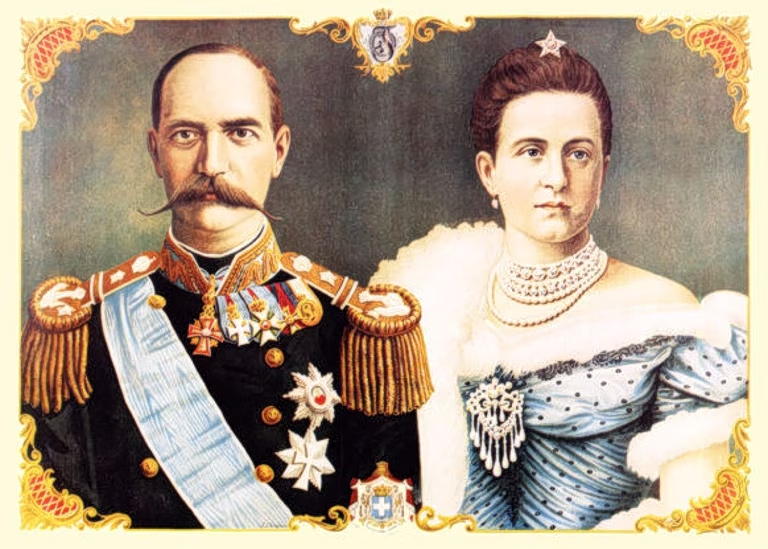
A few years later, the news of the greatest tragedy of her life would come from her homeland.
The Russian Revolution of 1917 marked the end of the world she had been born into. The Romanov dynasty collapsed, and many members of the imperial family — among them her relatives and nephews — were executed by the Bolsheviks.
Queen Olga, then 66, watched the world in which she had grown up vanish forever. She was in Russia at the time but managed to escape. The human toll was devastating: she witnessed the murder of a brother, eleven cousins, and seven nephews.
An Unexpected Regency
Fate called her back to Greece in 1920, under dramatic circumstances. Her grandson, King Alexander I, died suddenly after an infection caused by a monkey bite at the royal estate in Tatoi.
The country found itself abruptly without a monarch, and the political situation was extremely fragile. Until the future of the throne could be determined, Queen Olga was called upon to assume the role of regent on a temporary basis.
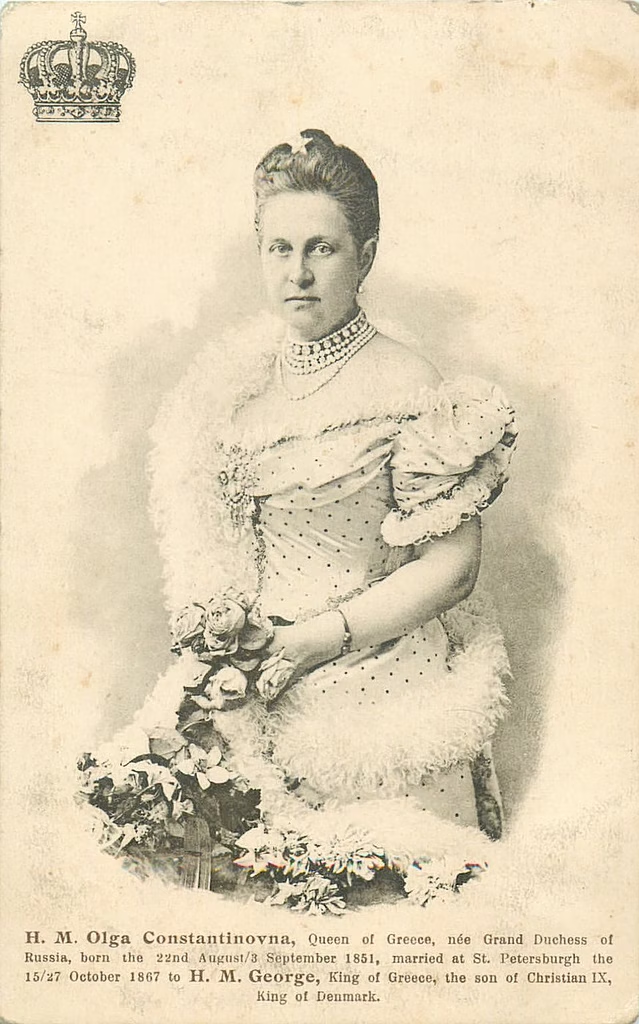
For roughly a month, the now-elderly queen occupied the highest office in the land, becoming the first woman in the history of modern Greece to officially exercise the duties of head of state.
Shortly afterward, a referendum led to the return of her son, Constantine I, to the Greek throne.
In Exile Until the End
The final years of her life were marked by constant movement and political upheaval.
The proclamation of the Greek Republic in 1924 found the royal family once again in exile, and the dynasty’s assets were confiscated.
However, the personal esteem the queen enjoyed for her charitable work led the republican government to make a rare gesture: she was the only member of the royal family to be granted a state pension.
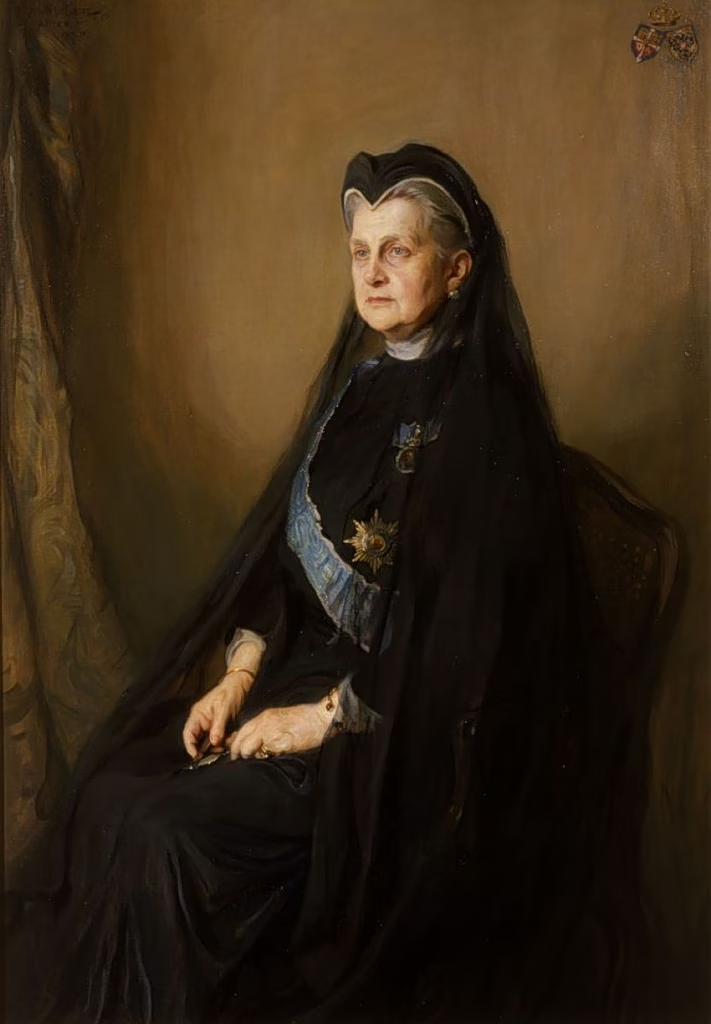
Shortly thereafter, a wooden box stored in the vault of the National Bank was returned to her. Inside were her personal jewels, a collection of great value, appraised at the time at 100,000 British pounds, a sum that would amount to several million dollars today.
She spent her final years primarily between Britain, as a guest of King George V, and Italy. It was there, at the Villa Anastasia, that she drew her last breath on June 18, 1926, at the age of 74, after a brief illness.
Her remains were taken to Florence and placed in the crypt of the city’s Russian Orthodox Church. She rested there for about a decade, until 1936, when the restoration of the monarchy in Greece led to the decision to bring her home for good.
Queen Olga returned one final time to the country where she had spent the greatest part of her life. She was buried at the royal cemetery at Tatoi, beside her husband, King George I.