An Egyptian archaeological mission has uncovered an ancient settlement including tombs, a residential complex, ovens and storage silos at Tell el-Koua in the Wadi Tumilat region of Ismailia Governorate.
The discoveries date to Egypt’s Second Intermediate Period and offer new insight into one of the eastern Nile Delta’s most important ancient settlements.
Discovery sheds light on an ancient settlement

Egypt’s Minister of Tourism and Antiquities, Sherif Fathy, said the findings show that Tell el-Koua was a fully developed community with homes, production areas, storage facilities and burial grounds.
He said the discovery provides a clearer picture of settlement patterns in the eastern Nile Delta and praised the work of Egyptian and international archaeological teams for expanding knowledge of ancient Egypt.
Dr. Hisham El-Leithy, secretary-general of Egypt’s Supreme Council of Antiquities, said the site occupied a strategic position along the Wadi Tumilat corridor, an important route linking the eastern Nile Delta with Egypt’s eastern frontier.
He said the discoveries could help researchers better understand the transition from the Second Intermediate Period to the early New Kingdom, including changes in population, trade and society.
Tombs and settlement reveal community life

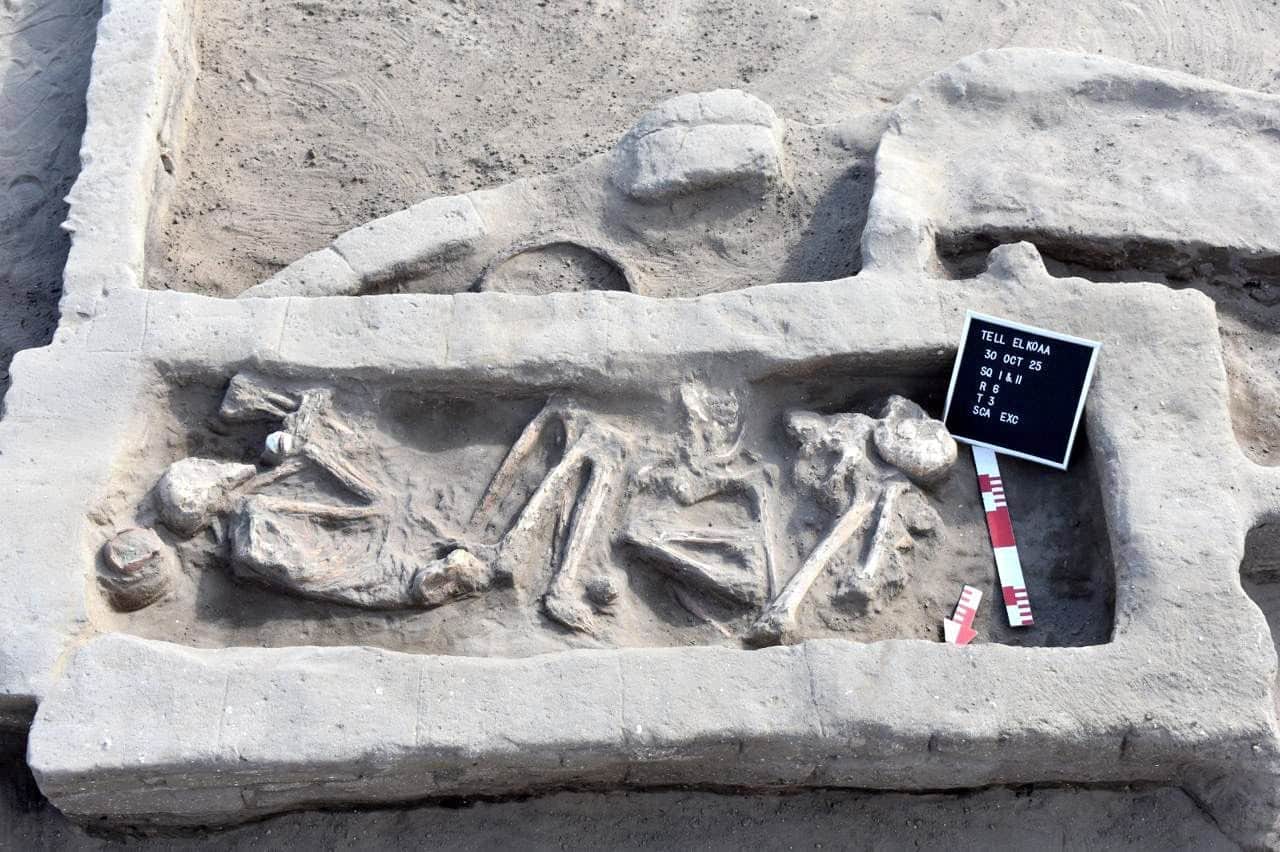
The excavation uncovered 10 mudbrick tombs dating to the 15th Dynasty, according to Mohamed Abdel Badie, head of the Egyptian Antiquities Sector at the Supreme Council of Antiquities. The tombs vary in size and design. Some are rectangular mastaba-style structures, while others feature decorated façades and architectural details.
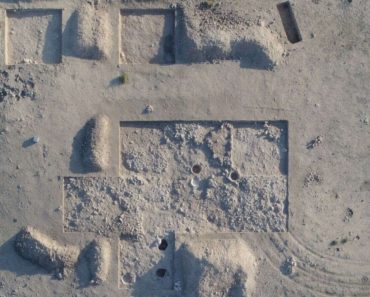
Archaeologists also uncovered a planned residential complex measuring about 30 by 60 meters. The settlement was enclosed by a mudbrick wall about 1.5 meters (5 feet) wide and contained halls and rooms of different sizes. East of the complex, the team found ovens and storage silos that were likely used for preparing and storing food.

Dr. Hisham Hussein, head of the Central Administration for Lower Egypt Antiquities, said the excavation also produced scarabs, bronze tools, pottery vessels, alabaster kohl containers and bottles decorated in the distinctive Tell el-Yahudiya style associated with the period.

Human remains provide new clues

Preliminary analysis of the human remains revealed individuals of different age groups and burial positions. Many are believed to have died between the ages of 25 and 40. Archaeologists also recovered large quantities of animal bones, which were likely connected to food consumption and funerary offerings.
For the first time at Tell el-Koua, the team found graves outside the mudbrick tombs. Some contained individuals buried in a flexed, or crouched, position, an unusual practice that will require further study.

Analysis of the pottery showed that tableware formed the largest share of the ceramic assemblage, followed by cooking vessels, pointing to extensive domestic activity at the site.
Trade links and continued occupation emerge

Mostafa Hassan, director of Ismailia Antiquities and head of the excavation mission, said evidence indicates the settlement remained occupied until the middle of the 18th Dynasty, spanning the transition from Hyksos rule to the New Kingdom.
He added that production marks and seals on several pottery vessels suggest Tell el-Koua was connected to extensive trade networks and may have served as an important regional distribution center.
Located near New Qassasin, Tell el-Koua covers about 55 feddans, or roughly 23 hectares. Previous and ongoing excavations continue to reveal buildings, tombs, and artifacts that are expanding researchers’ understanding of settlement, trade, and burial practices in ancient Egypt.