
By Michelle Edgar
The Valley Greek Festival has become more than a celebration of food and culture for thousands across Los Angeles, but a family tradition across generations in the San Fernando Valley.
What began as a church community gathering has evolved into a multigenerational tradition and one of the Valley’s most enduring cultural celebrations. Celebrating its 50th year, the festival hosted by St. Nicholas Orthodox Church in Northridge draws an estimated 18,000 people over three days, transforming the neighborhood into what organizers call a “staycation to Greece.”
Despite its scale, organizers say the festival’s success continues to be built through something remarkably simple through community. “We are completely volunteer driven,” said Stavros Naltsas, chairman of the Valley Greek Festival. “About 500 people from our community come together to make this happen.”
What may be even more surprising is that the event has grown largely through word of mouth. “We don’t do marketing for the festival, and every year it continues to grow,” Naltsas said. “We always hear people say, ‘I’ve been coming here since I was a child,’ or, ‘I never leave town for Memorial Day because of the festival.’ It’s become a real staple in the community.”
-

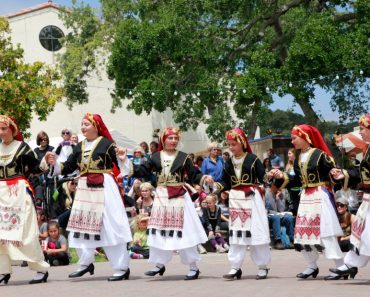
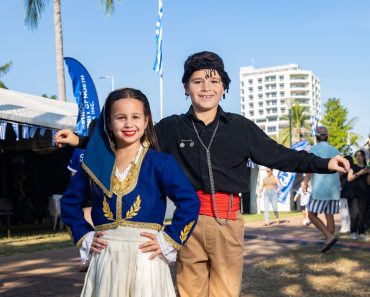
Members of Ellinopoula, a Greek folk dance group consisting of third- through fifth-grade students, perform during the San Fernando Valley’s 50th annual celebration of Greek culture, dance, food and music at St. Nicholas Greek Orthodox Church in Northridge, California, Saturday, May 23, 2026. (Photo by Mark Savage, Contributing Photographer)


1 of 5
Members of Ellinopoula, a Greek folk dance group consisting of third- through fifth-grade students, perform during the San Fernando Valley’s 50th annual celebration of Greek culture, dance, food and music at St. Nicholas Greek Orthodox Church in Northridge, California, Saturday, May 23, 2026. (Photo by Mark Savage, Contributing Photographer)
That sense of loyalty is visible across the grounds, where generations of families return year after year, bringing children who now bring children of their own. For three days, the church campus and surrounding streets become a celebration of Greek life and hospitality. Visitors can sample classic dishes including souvlaki and gyro sandwiches while moving between nine different food stations featuring homemade specialties prepared entirely by volunteers.
That volunteer spirit is evident in the kitchens. Beginning in January, women from the church community gather weekly to prepare for the festival’s culinary centerpiece; Greek pastries and desserts. Organizers estimate volunteers make nearly 50,000 pastries between January and May, producing 13 different varieties of desserts and baked goods. “Everything is homemade,” Naltsas said. “Everything is cooked by volunteers and prepared on site.”
The festival also features live music throughout the weekend, cooking demonstrations, children’s activities, local vendors, shopping areas, and a full Greek marketplace featuring imported products and goods.
A centerpiece of the celebration is the dance performances, where church youth ranging from young children through college students perform traditional Greek folk dances, carrying cultural traditions from one generation to the next.
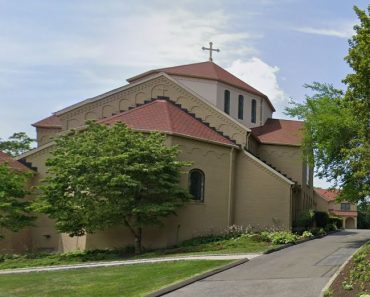
The church itself also opens its doors throughout the festival, giving visitors an opportunity to experience its architecture and traditions, while choir performances add another cultural element to the weekend experience.
Organizers say the biggest reward is not the attendance numbers or growth over five decades, but hearing stories from families who have made the festival part of their own traditions.