
A guide to the gorges, ruins, villages, and harbors that make the island more than a coastline
Crete is large and interesting enough that treating it as a beach destination sells it short. Between three mountain ranges, four thousand years of history, and a food culture still rooted in the villages of the interior, the island can fill two weeks without ever repeating itself. The trick is knowing what to build the trip around.
The single most impressive day of walking in Greece is probably the Samaria Gorge, one of the longest gorges in Europe at sixteen kilometers, a descent through the heart of the White Mountains that ends at the Libyan Sea in the village of Agia Roumeli. Plan on five to seven hours, wear real hiking shoes, and check ahead: the park operates from May 1 through the end of October, and closes on extreme heat or fire-risk days. Admission runs about ten euros, and from Agia Roumeli, a ferry takes hikers on to Hora Sfakion or Sougia.
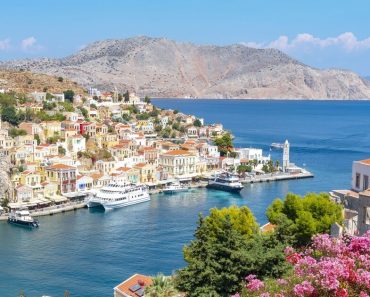
For a different kind of walk, the old town of Chania is the single most photographed setting on the island, a car-free maze of alleyways running behind the Venetian harbor and its emblematic lighthouse, through centuries of Venetian and Ottoman architecture. The tavernas directly on the harbor are convenient, the ones a few streets inland are better, and the picturesque Mosque of Kioutsouk Hasan at the waterfront is a reminder that Crete spent two hundred years under Ottoman rule.

Visitors at the archaeological site of Knossos in Crete. (EUROKINISSI / Ministry of Culture)
For history on a grander scale, ten minutes outside Heraklion sits the Palace of Knossos, the center of the Minoan civilization and the largest archaeological site on the island. The frescoes, the throne room, and the labyrinthine lower levels give some sense of what a four-thousand-year-old European capital actually felt like, and the visit is best paired with the Archaeological Museum in Heraklion, which holds the original frescoes pulled from the walls. Go early, because by eleven the heat and the crowds both take a toll. Further east, off the coast near Elounda, the small fortified island of Spinalonga served as a leper colony until 1957, and the Venetian fortress and ruins have become one of the most visited sites in eastern Crete, helped along by Victoria Hislop’s novel ‘The Island’. Boats run frequently from Elounda and Plaka in season. Read the book first.
What most visitors underestimate is the food, and specifically what the food looks like when it is prepared in the places it comes from. Cretan cuisine is widely considered the healthiest in Greece, and the villages in the interior, Archanes south of Heraklion, Anogeia in the Psiloritis foothills, Spili between Rethymno and the south coast, are where it still gets cooked properly.
Expect lamb, wild greens, fresh cheeses – and raki after lunch whether you ordered it or not. The wineries around Archanes and Peza run tastings of indigenous grapes like Vidiano, Vilana, Liatiko, and Kotsifali, several of them paired with cooking classes in Cretan homes, and booking a day of this early in the trip tends to change the way you eat for the rest of it.
When the mountain roads on the south coast start to feel notorious, which they will, the ferry is the answer. From May through September, local boats run a rolling shuttle between Hora Sfakion, Loutro, Agia Roumeli, Paleochora, and Sougia, letting you hop from one beach town to the next without getting behind the wheel. Loutro, accessible only by foot or boat, is the one most people regret missing. And one last piece of advice: Crete rewards a slower pace. Pick one or two bases, Chania for the west, Heraklion or Rethymno for the center, Agios Nikolaos for the east, and build from there. Trying to see the whole island in a week is the surest way to see none of it.