

Romanian indie studio Techadise released its official gameplay trailer for The Shadow Beneath on August 31, 2026, offering the clearest look yet at an action roguelike built to take the genre’s mythology obsession somewhere it has rarely gone: ancient Egypt. The release arrives as mythology-themed action roguelikes dominate the Steam charts, a space largely defined by Supergiant Games’ Hades and its Greek-pantheon franchise — making The Shadow Beneath‘s Egyptian setting one of the more strategically interesting bets in the crowded genre right now.
Amon, Akhenaten, and the Most Erased Pharaoh in History
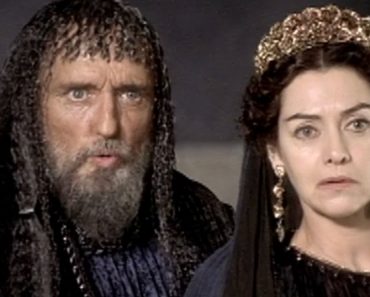
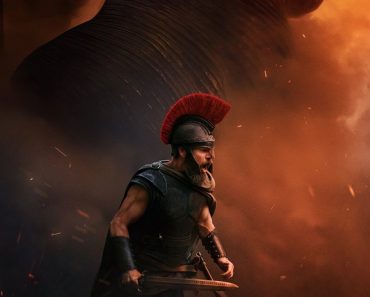
Play as Amon, the half-demon savior on a mission to free Akhenaten — the “banished pharaoh” — from an eternity imprisoned beneath the sands of Egypt. To do so, Amon must descend through cursed pyramids, fight waves of undead mummies, venomous scorpions, and the forgotten servants of the gods, and ultimately face the demon lord Apophis, the eternal chaos serpent of Egyptian cosmology, as confirmed in the Techadise press release.
The game’s mythology choices are more deliberate than they first appear. Akhenaten — known to Egyptologists as the “heretic king” — was the 18th Dynasty pharaoh who abolished Egypt’s traditional polytheism around 1353 BC, imposed a monotheistic solar religion centered on the sun-disk Aten, and was subsequently purged from official history after his death: his monuments dismantled, his name scratched from the king lists, his city abandoned. He is, in a literal sense, one of the most erased figures in the historical record. The Shadow Beneath takes that real historical suppression and maps it onto a fantasy curse: the heretic pharaoh is not merely forgotten — he is imprisoned, and freeing him is the mission.
The protagonist’s name adds another layer. In Egyptian theology, Amun (also rendered as Amon) was the king of the gods during the New Kingdom period — precisely the deity whose priests Akhenaten tried to destroy by banning Amun worship and seizing the temples. A player character named Amon — who the Steam page describes as wielding Aten’s last disciples — entering the underworld to rescue Akhenaten creates a mythological inversion: the champion of the god Akhenaten suppressed is the one fighting to free him. Whether that irony is intentional design or a happy naming coincidence, it gives the premise more texture than a generic undead-Egypt aesthetic.
Opposing Amon is Apophis — in Egyptian cosmology, the primordial chaos serpent and eternal enemy of Ra, the sun god. Using Apophis as the demon lord rather than a generic dark pharaoh or tomb guardian is another considered choice: Apophis is the Egyptian analog for what roguelikes formally encode — the endless, recurring cycle of descent and failure, chaos that can be pushed back but never permanently defeated.
What the Trailer Shows — and What Makes It Different
The gameplay trailer reveals a top-down 3D action game with a combat loop built around an ever-changing ability hand: each run deals Amon a different selection of active skills, which players combine into combos that can be tuned to wildly different approaches. The studio explicitly supports two ends of the spectrum — a glass-cannon build that dashes headlong into enemy clusters, and a control-focused approach that uses traps and positioning to thin crowds from a distance, as detailed in the game features on IndieDB. That mechanical range, while not unique to the genre, is a design signal: the game is not asking players to master a single optimal approach, but to experiment with what the run gives them.
The dungeon structure behind those runs involves more than 40 handcrafted room layouts — each built to include specific combinations of traps, ambushes, and environmental hazards — that shuffle between attempts to sustain variety. The handcrafted room approach on Steam is distinct from fully procedurally generated layouts: the rooms are authored, not algorithmic, which preserves intentional design while still making each run feel structurally different. The trade-off is finite variety — 40+ rooms is a substantial catalog, but procedural generation scales indefinitely. The studio’s bet is that room quality and atmospheric consistency outweigh raw permutation count, which is the same bet Hades made with its authored room design.
How Does the Trailer Look So Good With Seven Developers?
The short answer is Unreal Engine 5. The Shadow Beneath is built on UE5, as the IndieDB engine listing confirms — Epic Games’ engine that introduced two systems particularly relevant to how this game looks: Nanite (a virtualized geometry renderer that allows artists to import high-resolution 3D models without manually creating simplified versions for performance) and Lumen (a fully dynamic global illumination system that calculates how light bounces off surfaces in real time, without pre-baking static lightmaps).
For a studio of seven globally distributed developers working with no external budget, Nanite and Lumen matter because they reduce production labor. A seven-person team cannot hand-optimize every asset’s polygon count or light every room individually. UE5’s systems handle those tasks automatically, which allows a small team to achieve the flickering-torchlight, shadow-heavy atmosphere the trailer demonstrates without a dedicated lighting artist or technical art department.
UE5’s business model makes this possible for a zero-budget studio: developers pay nothing until a game grosses more than one million dollars, at which point Epic takes a five percent royalty on revenue above that threshold, per the UE5 royalty model. A studio that does not yet have a published title and is still in development owes Epic nothing.
The minimum system requirements reflect this optimization approach. The Shadow Beneath requires a GTX 760 minimum requirement — a 2013 GPU from a mid-range tier that has long since left mainstream support — and an Intel i5 third-generation processor at minimum. For a UE5 game, this is an unusually accessible lower bound; most UE5 titles require DirectX 12-capable hardware as a baseline. The GTX 970 recommended spec (a 2014 card) confirms a consistent push toward accessibility that distinguishes this from the hardware-intensive UE5 norm. Whether the final game maintains these targets through a full dungeon run remains to be confirmed through independent testing.
Does Egyptian Mythology Have Room to Compete in This Genre?
The roguelike genre is not short on mythology. Hades and its sequel have made Greek mythology synonymous with the high end of the action roguelike market — and the genre itself, based on roguelike market valuation 2025 data, is valued at roughly $3.8 billion globally and forecast to expand toward $9.6 billion by 2034, with PC gaming as the dominant platform segment. The commercial ceiling for mythology-themed roguelikes is high, but the Greek-mythology niche is dense.
Egyptian mythology has appeared in the genre — Utterance is a roguelike deckbuilder set in the Egyptian afterlife, and Age of Mythology: Retold (2024) covers the Egyptian pantheon alongside Greek and Norse — but a top-down 3D action roguelike specifically built around Akhenaten, Apophis, and the Amarna Period’s singular theological drama has no direct competitor. The genre space is available, which is a meaningful advantage for a studio without a marketing budget.
The Alternate History tag on Steam is also worth noting: The Shadow Beneath is not presenting itself as a faithful mythology retelling. Akhenaten and Apophis existing in the same narrative requires departing from Egyptian cosmology — Apophis was a cosmic force, not a specific ruler’s villain. The game is using the mythology as a setting and emotional register, not as a theological document, which gives the studio creative freedom without the expectation of accuracy that stricter mythology games carry.
What Does Not Yet Have Answers
The Shadow Beneath currently has no release date more specific than 2027, and no price has been announced. The game appears on the Shadow Beneath on Steam page as a PC-only title listed as “coming soon” for wishlist purposes, but the IndieDB lists planned console platforms including Xbox Series X, Xbox One, PlayStation 5, and Nintendo Switch as planned targets — suggesting console development is in progress, though no official announcement has been made for console releases. A Steam Playtest has been opened, meaning interested players can request early access directly on the Steam page.
The 40-room figure is the studio’s stated design goal; whether those rooms achieve the density and variety the announcement implies depends on the build quality of individual encounters, which no independent reviewer has tested. The system requirement claims — particularly the GTX 760 minimum — will similarly need verification in the actual shipped game. For a studio making its debut title with a global distributed team and no external funding, these are the normal unknowns of pre-release coverage.
The Shadow Beneath is available to wishlist on Steam now and supports 12 languages at launch: English (with full audio), plus interface and subtitle support for French, German, Spanish (Spain), Korean, Japanese, Russian, Ukrainian, Portuguese (Brazil), Simplified Chinese, Traditional Chinese, and Romanian, per the Steam page language support.
The Shadow Beneath is coming in 2027 to PC via Steam. Wishlist The Shadow Beneath on Steam now. Platforms beyond PC are listed as planned but have not been officially announced.
Frequently Asked Questions
How is The Shadow Beneath different from Hades?
Both are top-down action roguelikes, but the comparison is primarily cosmetic. Where Hades used Greek mythology as the frame for a deeply narrative game built around relationships between named characters, The Shadow Beneath uses Egyptian mythology as an atmospheric and enemy-design engine, with the story told primarily through environmental details rather than voiced character dialogue. The specific Egyptian hook — Akhenaten as a historically persecuted figure, Apophis as the chaos god — gives The Shadow Beneath different mythological texture. Mechanically, The Shadow Beneath‘s build system deals players a random hand of active abilities each run, a design closer to deckbuilder randomization than Hades’ Boon selection. No direct performance comparison can be made before the game ships.
What is the “Akhenaten” hook and why does it matter for the game’s premise?
Akhenaten was the real 18th Dynasty Egyptian pharaoh who abolished polytheism, imposed a monotheistic sun cult around the god Aten, and was subsequently erased from official Egyptian history after his death — his name literally removed from the king lists by his successors. The Shadow Beneath takes that historical erasure and translates it into a fantasy premise: Akhenaten is not forgotten but imprisoned by demons, and freeing him is the player’s mission. The game’s protagonist, Amon, bears the name of Amun — the deity whose worship Akhenaten suppressed. That inversion gives the story premise deeper mythological resonance than generic undead-Egypt dungeon crawlers, whether or not a player recognizes the history behind it.
When will The Shadow Beneath launch, and on what platforms?
The Steam page currently lists 2027 as the release window for PC via Steam, with no specific date. IndieDB’s platform records also list Xbox Series X, Xbox One, PlayStation 5, and Nintendo Switch as planned targets, though no official console announcement has been made. A Steam Playtest is available for players who want to request early access ahead of the full launch.
What makes action roguelikes distinct from traditional roguelikes?
Traditional roguelikes (defined by the Berlin Interpretation of 2008) require turn-based gameplay, grid-based movement, and permadeath. Action roguelikes retain permadeath and run-based structure but use real-time combat — players control characters in real time through dungeons with randomized elements. The Shadow Beneath falls into this action category: real-time hack-and-slash combat, top-down 3D perspective, with ability selection randomized per run. The genre has been commercially validated by Hades, Dead Cells, and Enter the Gungeon, and the global roguelike market was valued at approximately $3.8 billion in 2025, according to roguelike market valuation 2025.