
Medieval Greek was once spoken across the Byzantine world, but it is vanishingly rare to hear it now.
This afternoon, in this city near Ukraine’s advancing eastern front, local police officer Mykola Akhbash is giving a lesson in Roumean, one of the derivative languages of Medieval Greek. Outside the café where the session is taking place, soldiers stretch anti-drone netting across the boulevard. Inside, the vocabulary starts with numbers: ena, dyia, triya, tesyra, pendy.
Mr. Akhbash belongs to the North Azovian Greek community, whose ancestors were among the Orthodox Christian communities resettled from Crimea by Russian Empress Catherine II during the 18th century. They founded villages around Mariupol, carrying with them their culture and the names of the places they had left behind: Yalta, Urzuf, and Staryi Krym. Roumean was one of their main tongues.
Why We Wrote This
The Kremlin has maintained that its invasion of Ukraine was, in part, about preserving the rights of Russian speakers. But the war has displaced other minority-language communities, like Mariupol’s North Azovian Greeks.
But since Russia’s full-scale invasion in 2022, nearly all of the historic North Azov Greek villages are now under Russian occupation, cutting researchers off from the communities where the language survived for generations. Mr. Akhbash and others like him represent the first generation in decades to make the preservation of Roumean central to their identity as they try to rebuild outside their ancestral home.
“As I was moved farther and farther from the Sea of Azov [while serving as a police officer], I began translating Ukrainian poetry into Roumean,” says Mr. Akhbash. “It was my way of saving a part of my culture that the war destroyed.”
A culture “intact for centuries”
When Mr. Akhbash was growing up in Yalta, his parents didn’t speak Roumean to each other. He learned it from the older generation – especially his grandmother. Born in 1942, she came from a household in which Roumean was used every day. But when she started school, she was discouraged from speaking anything other than Russian.
Roumean, however, didn’t disappear completely. “As a child, I took it for granted that words from another language appeared in our conversations,” Mr. Akhbash says. “I thought that was simply how everyone lived. Only later did I realize what an exceptional experience it was to be surrounded by a culture that had remained intact for centuries.”
According to the 2001 census, the North Azovian Greek community numbered some 77,500 people in the Donetsk region where Yalta and its neighboring villages lie. Mr. Akhbash remembers long family feasts and religious holidays, with dishes such as chirchir, tiny fried pies filled with meat, and kubite, delicate layered pastries prepared for celebrations.
He is one of the leaders of the North Azovian Greeks organization, which took shape over the last four years. While the group is not the only one devoted to the preservation of Greek traditions, it’s singular in its focus on the Indigenous culture that developed on Ukraine’s territory.
“Despite our history of displacement, we have retained two distinct languages,” says Olga Tsuprykova, the organization’s chair. “Roumean descends from Medieval Greek, while Urum belongs to the Turkic language family. Whatever they spoke, people lived side by side and shared traditions, faith, and a common history.”
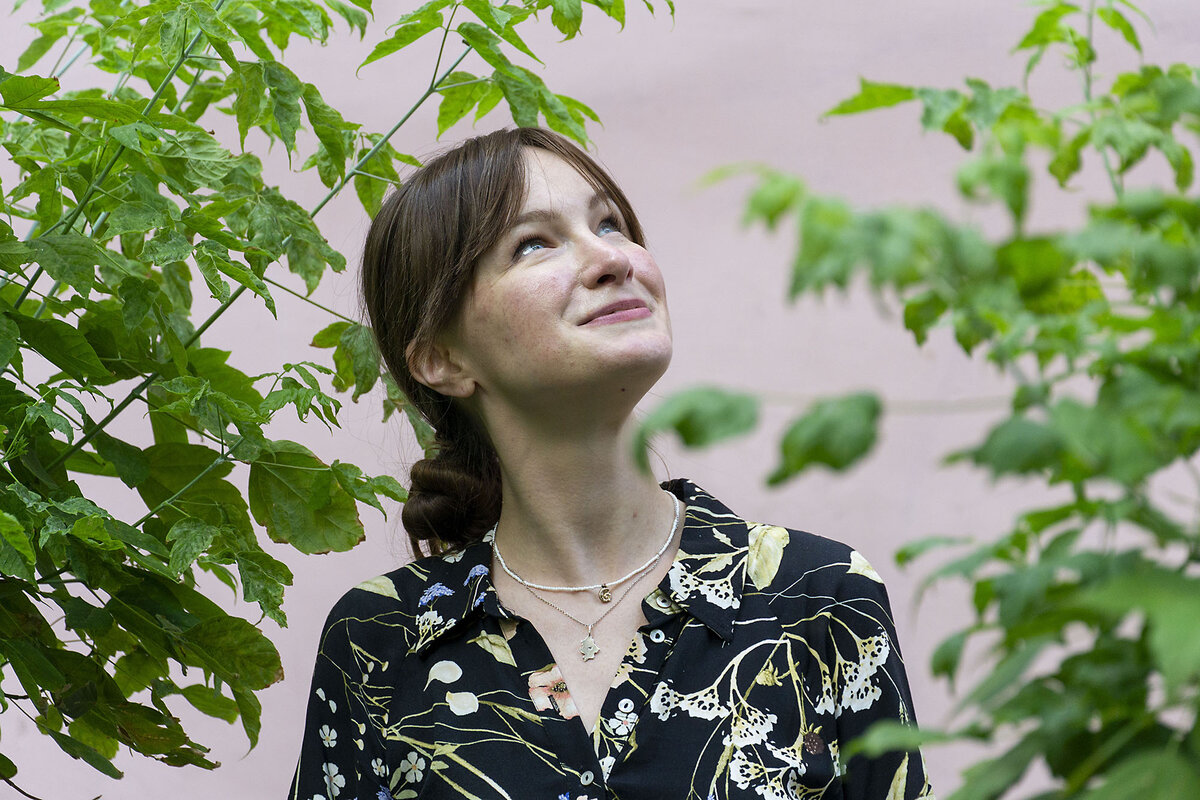
Ms. Tsuprykova had to flee Mariupol in 2022. She knows what it means to leave home with little hope of returning. “The grave danger for any language is losing the environment where it naturally lived,” she says from her new home in Kyiv. “Many of our historical villages now exist as little more than names on the map. They survived the calamities of the preceding centuries only to be obliterated in this war.”
As the villages disappear, so does the context that explains who their inhabitants were. “‘Greek’ was the label the Russian Empire gave to the Orthodox Christian communities [that] it resettled from Crimea,” explains Yurii Halla, co-founder of the North Azovian Greeks, where he works alongside Ms. Tsuprykova and Mr. Akhbash. “We called ourselves Roumeans and Urums, depending on the language we spoke.”
Roumean, for instance, has a grammatical structure similar to that of Modern Greek, but the two languages are not mutually intelligible. As Mr. Halla notes, “It’s misleading to conflate our culture with that of Greece, as our ethnic background and customs are a complex amalgam.”
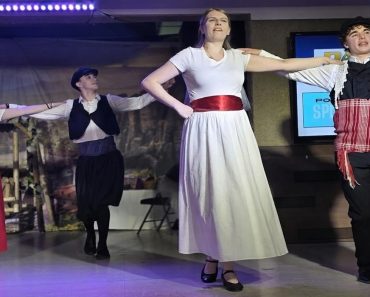
One example is Panair, a festival combining Orthodox prayer with kuresh, a Turkic-style wrestling. It’s a reminder that North Azovian culture has always blended different traditions.
A heritage from Ukraine’s east
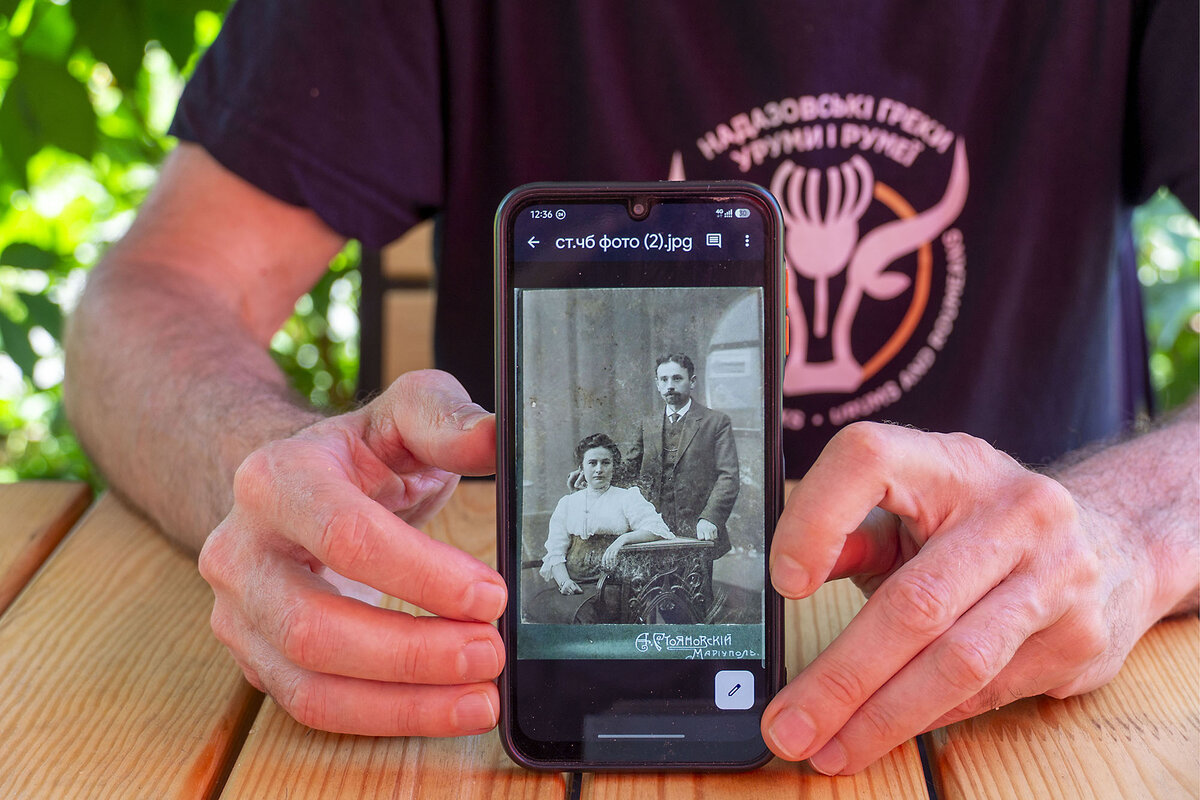
Mr. Halla was born in Maloyanisol near the Sea of Azov. As a young man in the 1970s, he learned that his grandfather, Roumean poet Vasyl Halla, had been executed during Josef Stalin’s political purge of 1936-38, known as the Great Terror. This discovery inspired Mr. Halla to document traditional music and collect family photographs, most of which remained in his village under Russian occupation.
The full-scale invasion prompted many Ukrainians to reclaim the heritage that previous generations had forgotten. In eastern Ukraine, where events on the battlefield determine the course of the war, these efforts have become more urgent.
“The idea of a multicultural eastern Ukraine undermines the myth of a uniformly Russian Donbas,” Mr. Halla says, citing one of the Kremlin’s publicly stated rationales for invading and annexing the Donetsk and Luhansk regions of eastern Ukraine. He observes that, for centuries, these lands were home to many different communities and provided an environment tolerant enough for local traditions and languages to survive despite official repression.
On Dec. 3, 2025, the Ukrainian parliament added Roumean and Urum to the protected list under the European Charter for Regional or Minority Languages. But Ms. Tsuprykova worries that without a concerted effort on the part of the community, the legislation alone won’t be enough.
“Home is no longer a place for many of us,” she says. “So, we have to recreate it any way we can.”
The work is already bearing fruit. Museums host exhibits on North Azovian Greek culture. Ukrainian poetry now exists in Roumean. Textbooks in Urum circulate among families scattered across Europe. The organization is planning to standardize the dialects of Roumean and publish its first textbook.
Today in Kramatorsk, one of the few ways to hear Roumean is via the audio recordings Mr. Akhbash made before he was transferred farther west to Cherkasy. Yet as long as someone is willing to teach another person to say ena, dyia, triya, tesyra, pendy, Roumean doesn’t remain silent.