
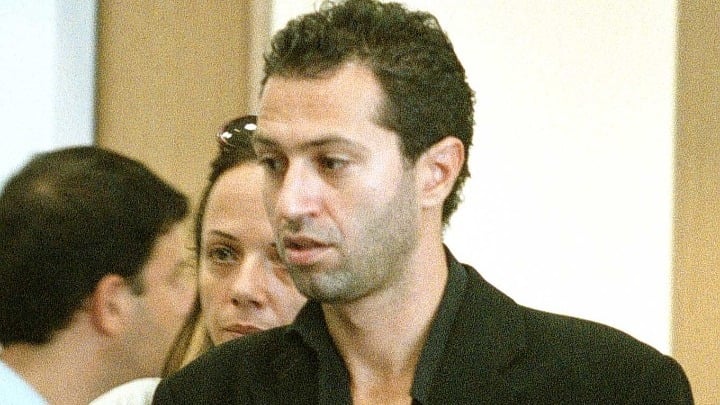
Greek singer Dimitris Kokotas, one of the prominent voices of Greece’s popular music scene in the 1990s and the son of legendary singer Stamatis Kokotas, has died at the age of 57. Kokotas died on Tuesday at G. Gennimatas General Hospital in Athens, where he had remained hospitalized for more than two years following a severe cardiac episode in March 2024.
His prolonged health struggle began on March 28, 2024, when he suffered an acute myocardial infarction and cardiac arrest while rehearsing for a Greek television entertainment show. He was rushed to Gennimatas Hospital and remained under continuous medical care from that point onward. His condition was closely followed in Greece throughout the lengthy hospitalization, with relatives and people close to him periodically providing updates.
Greek singer Dimitris Kokotas followed his father into music
Born in Athens on December 14, 1968, Kokotas grew up immersed in Greek music. His father, Stamatis Kokotas, was one of the country’s best-known popular singers, with a career spanning several decades. Rather than remaining in his father’s shadow, Dimitris Kokotas went on to build a successful recording career of his own, particularly during the 1990s.
His first solo album, Rumors, was released in February 1994, with music and lyrics by prominent Greek songwriter Phoebus. The album sold around 30,000 copies in Greece and Cyprus and achieved gold status. Its success established Kokotas as an emerging name in the Greek music industry and paved the way for an even more successful second album.
His 1995 release, Conscience, became one of the defining records of his early career. The album reportedly sold about 60,000 copies and went platinum, producing songs that remained closely associated with Kokotas throughout his career.
A successful career in the 1990s
Kokotas consolidated his popularity with his third solo album, released in 1997. The record achieved platinum status in Greece and Cyprus and became his most commercially successful album, with reported sales of at least 80,000 copies. A year later, he collaborated with another major figure in Greek popular music, songwriter Nikos Karvelas. The resulting album also proved commercially successful, reaching platinum status shortly after its release.
Over the course of his career, Kokotas worked with a wide range of leading Greek performers, including Marinella, Kaiti Garbi, Angela Dimitriou, Antypas, Vassilis Karras, Konstantina and Litsa Giagkousi. He also performed alongside his father. His discography continued into the following decade with albums including “Against the Current” and “I Have Left”, further strengthening a body of work that made him especially recognizable to Greek audiences in the 1990s and early 2000s.
Greek singer Dimitris Kokotas took his music abroad
In 2013, Kokotas joined singers Haris Varthakouris, Grigoris Bithikotsis and Stelios Dionysiou for an international concert tour titled A Tribute to the Legends. The project brought together the sons of celebrated Greek singers to perform some of the best-known songs associated with their fathers.
The tour reportedly traveled to countries including Germany, the Netherlands, Britain, Sweden, Belgium, Brazil, Argentina, Canada, the United States, Australia and Israel, connecting the performers with Greek diaspora communities around the world.
For Kokotas, the concerts also highlighted a connection to the musical tradition in which he had grown up. Although he was the son of one of Greece’s most recognizable singers, he succeeded in developing a distinct artistic identity of his own.
More Than Two Years in the Hospital
Kokotas’ life changed abruptly during the March 2024 television rehearsal. After suffering the cardiac emergency, he was admitted to Gennimatas Hospital in Athens. His condition remained the subject of considerable public interest during his long hospitalization.
For more than two years, his family remained at his side while doctors continued to monitor his condition. Kokotas is survived by his wife, Katerina, and their daughter, Riana, who was born in 2011. His death marks the end of a career closely associated with a successful era of modern Greek popular music and with one of the country’s best-known musical families.