
Dr. Sarah Linn has been bringing the world of The Odyssey to life through extraordinary objects maintained in the Penn Museum collections.
As an expert in Ancient Mediterranean archaeology, Dr. Linn has traced the origins of this ancient epic and its evolution from heroic songs and manuscript to the silver screen.
Amidst the craze created by the mid-July debut of Christopher Nolan’s ‘reception’ of The Odyssey, numerous questions have arisen by young and old alike, and by amateur Classicists and scholars.
What was the actual style of helmet worn by Odysseus? How was metalworking accomplished? What were the capacity and functionality of ships?
The Penn Museum’s Greece Galleries can explore the answers.
To note, one of the oldest surviving physical fragments of the poem resides at Penn Museum.
Serving as inspiration for Nolan’s film adaptation, The Odyssey is a definitive legend.
The episodes of encounters with sea monsters and gods, and the improbable journeys described were shaped by centuries of oral tradition based on tales of Mycenaean warriors, and real encounters with unfamiliar peoples and landscapes as the Greeks explored the Mediterranean world.
Dr. Linn has been the consummate guide in the galleries, sharing the stories behind:
The armor, weapons, statues, and painted vessels dating to the era when the episodes of The Odyssey first took shape.
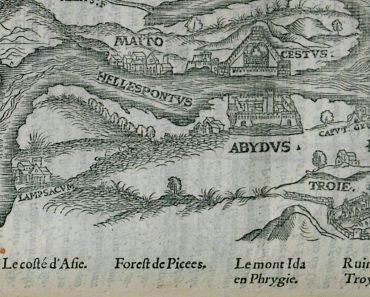
The Uluburun shipwreck, a Late Bronze Age vessel, discovered off the coast of Turkey, ancient Asia Minor, which was loaded with luxury goods from across the known world.
The Greek exploration and colonization of the Ancient Mediterranean as inspiration for the poem’s ‘monster’ tales, and the revelations about how ancient peoples understood, imagined, and feared the unfamiliar on the seas and in coastal regions and islands.
In the Collections Study Room, participants in Dr. Linn’s guided tours have had the rare opportunity to examine objects seldom seen by Penn Museum visitors, including:
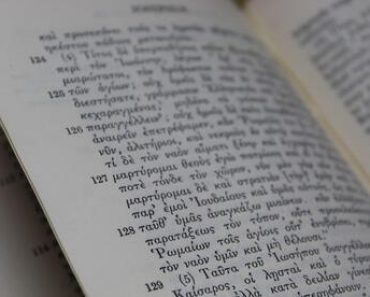
A nearly 2,000-year-old papyrus fragment inscribed with a segment of The Odyssey in ancient Greek, among the oldest surviving physical copies in existence.
Original and replica Bronze Age objects, including gold and bronze daggers, swords, cups, and masks, all of which illuminate the material world of the Homeric epic.
Home to over a million extraordinary artifacts and archaeological finds, the Penn Museum has been uncovering our shared humanity across continents and millennia since 1887.
In bridging archaeology (the study of objects) with anthropology, (the science of humanity), researchers chart a course for exploring the arc of human history, dedicated to telling powerful stories emerging from Penn Museum’s excavations and research across the world.
The Penn Museum sparks curiosity, wonder, and endless exploration. Everyone is invited to join this incredible journey of discovery and to dig deeply.
The Penn Museum mission is to be a center for inquiry and the ongoing exploration of humanity for the University of Pennsylvania, regional, national, and global communities, and following ethical standards and practices.
Penn Museum does this by conducting research, stewarding collections, creating learning opportunities, contextualizing and telling stories, and creating experiences for people to contribute to and engage with these stories.
Yearly, over 180,000 visitors experience the Penn Museum galleries, exhibitions, and the extensive range of public programs, engaging with curated exhibits onsite, online, in local communities, and around the world.
For Penn undergraduate and graduate students, the Academic Engagement Department offers myriad academic and professional learning opportunities, including intensive classes, and summer fieldwork support.
Penn students can also receive teaching and mentorship in archeological science through our Center for the Analysis of Archaeological Materials (CAAM).
Beyond campus, as a leading international archaeology teaching center, Penn Museum connects with classrooms in our communities and around the world through onsite and online learning programs.
In the flagship partnership with the School District of Philadelphia, Penn Museum delivers ‘Unpacking the Past,’ an up-close, hands-on series of lessons sparking middle school students’ curiosity about ancient history.
Mary Brown, a Penn Museum Docent in the Mediterranean galleries, teaches Latin at Saint Joseph’s University and served as Executive Director of The Classical Association of the Atlantic States from 2009-2025.