As somebody who has never read “The Odyssey” by Homer, nor ever took particular interest in Greek mythology, I went into my movie-watching experience of Christopher Nolan’s adaptation completely blind. After finishing the movie, watching interviews of the cast and learning from my peers, I feel there is essential background knowledge to have prior to watching this long-awaited film.
I’m not saying you need to read the entire work of literature to understand or enjoy the film. However, there is some important character background and general knowledge that would be useful to understand all the nuances of this movie.
First, the basics: “The Odyssey” is a film adaptation of a well-known epic poem by Homer with numerous editions, translations and adaptations. Christopher Nolan, the director and screenwriter of the movie, is known for award-winning works such as “Interstellar,” “Inception,” and “Oppenheimer.” He specifically modeled this version of “The Odyssey” from a 2017 translation by Emily Wilson.
Before getting into character specifics, let’s discuss the physical movie theater experience. Something unique about “The Odyssey” is that it is the first feature film shot entirely on IMAX cameras, meaning viewers experience the movie on a larger viewing frame. This medium allows for only a maximum of three minutes to be shot at a time, meaning actors had to be precise. If you’re into film specifics, this version of IMAX has a full 1.43:1 aspect ratio shot by Nolan. There are only so many copies of “The Odyssey” in the world, as it has to be projected using a physical film reel. In fact, only about 40 theaters worldwide are showing this special IMAX 70mm viewing experience. What’s even cooler is Nashville, Tennessee, is home to one of these locations: the Regal Opry Mills theater. If you are looking to see the film as Nolan intended, be sure to check for IMAX 70mm.
IMAX GT Laser is the next best option, but it also has very limited viewing locations. They still show the movie at the full view frame, but it’s a digital version instead of the physical film.
If there is no accessible theater near you, there are other great options for watching. I myself struggled to find tickets for the 70mm version, so I saw the movie in standard digital IMAX. Although the screen is not as large and some frames are cropped, I still found it to be an experience well worth my time. The movie is also being shown in more standard ways if IMAX is not your preference or not available, but just know you’re losing a significant amount of the original frame.
Something to be aware of, no matter what viewing experience you choose, is the volume of the film. Based on my own experience, as well as my online research, the consensus is that the film is loud — like very loud. With dramatic fight scenes, war cries, expressive dialogue and a unique film score, the volume is all the way up in the theater. In fact, the film score forgoes a traditional orchestra and instead relies on instruments, including bronze gongs. If you have sensitivity to loud sounds and vibrations, maybe go for the standard viewing experience instead of the IMAX.
I believe I would be doing a disservice if I did not comment on my next point. Being an R-rated movie, there are movie ads placed before the film that may or may not be your cup of tea. For example, I personally cannot stand horror films. I don’t enjoy being on the edge of my chair about to jump whenever a spirit or psychotic murderer appears on screen.
My theater must have agreed because I have never heard a theater so loud as it was after the advertisement for the new film, “Other Mommy,” was shown on screen. I also saw all over the internet a chorus of agreement about the frightening contents of this trailer. If horror does not suit you either, I recommend taking your pre-film bathroom break before Jessica Chastain appears on screen.
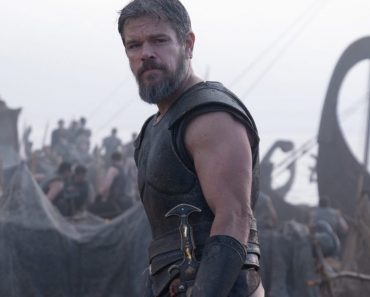
As for “The Odyssey,” the general premise of the film surrounds King Odysseus on his journey back home to Ithaca following the Trojan War. Matt Damon, who has starred in multiple Nolan movies, plays this lead role and easily has the most screen time. Other major characters include his wife, Penelope, played by Anne Hathaway, and son, Telemachus, played by Tom Holland. I could go more in depth on the supporting characters, but you get to know all of them very well throughout the movie.
The trickier part is understanding more background characters and their role in the original epic, as well as Greek mythology. To understand the characters, you must first understand the circumstances. In “The Odyssey,” Odysseus leaves his home of Ithaca to help lead the Achaeans (the Greeks) against Troy in the Trojan War. The war began as Helen, played by Lupita Nyong’o, who was considered the most beautiful woman, was kidnapped. Her husband, Menelaus, played by Jon Bernthal, enlisted his brother, Agamemnon, played by Benny Safdie, to lead the army to attack Troy. The war ends after 10 years by a Trojan Horse trick, which I won’t spoil further. The issue is, following the conclusion of the war, Odysseus still hasn’t returned home. The movie utilizes flashbacks, as well as the current time, to tell the story of Odysseus’ journey.
To understand his journey completely, there are some elements to be aware of. First of all, Zeus’ Law: Ancient Greeks believed that anybody who came to your door could be a god in disguise. This belief means everyone was treated with respect, granted entry and fed. Often in the movie, they refer to the importance of this law. It is also important to know some Greek gods and goddesses. Zeus, god of the sky and thunder, is the king of all gods while his brother, Poseidon, rules the ocean. It is important to note that whenever ships encounter angry oceans, they believe they have angered Poseidon.
Poseidon’s son, Polyphemus, is a Cyclops, a giant one-eyed creature encountered early in the movie. Laestrygonians, who appear as large silver soldiers on screen, are a race of giants as well. Relevant goddesses include Calypso, who lives on the island of Ogygia and has the power to grant immortality. Circe has a special ability that I won’t reveal. Lastly, Athena, who serves as a sort of spiritual guide in the movie, is the goddess of wisdom and war.
This movie has so many nuances that make more sense with knowledge of the characters, circumstances and film design. This article, however, cannot fully convey the depth behind these aspects without revealing the plot. After watching the movie, I recommend doing some more research, or at the very least, watching some cast interviews, to fully understand what you have watched. That way, you can fully complete your journey of “The Odyssey.”