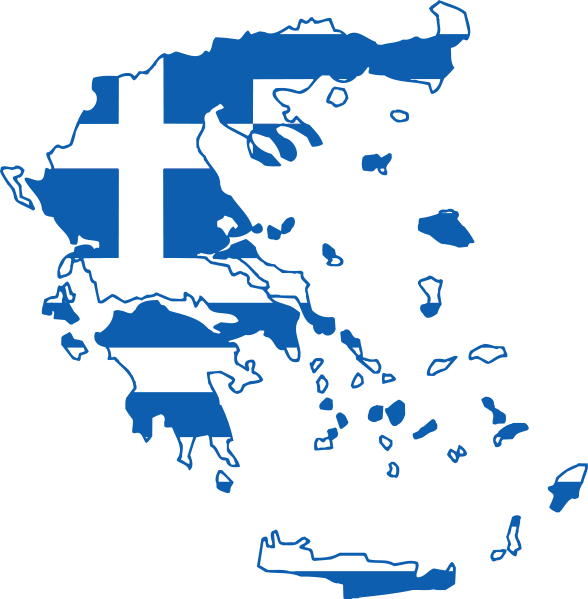

I knew I was in Kastellorizo because I could hear Australian accents all around me. Kastellorizo is that tiny island which is the easternmost point of Greece’s territory and a-mile-and-a-half off Turkey’s southern coast. The quickest way to get there from Athens is to fly to the island of Rhodes, which takes an hour. From there you hop on a 37-passenger dash 8 turboprop aircraft – in plain English, a small plane with two propellers – and fly for another 40 minutes east to Kastellorizo. It is a trip well worth making.
Kastellorizo is one of those Greek islands that witnessed massive emigration after World War II, primarily to Australia. One of the reasons was that many had already emigrated to Egypt and in the 1950s there was a regular passenger ship service through the Suez Canal to Australia. The first stop in Australia was the port of Freemantle near the city of Perth on the western edge of the country. Having had enough of the three-plus weeks sea journey, most Kastellorizians disembarked rather than stay on for the extra week to Melbourne. They became so visible in Perth that they earned their own nickname: ‘Cazzies’. Many return to the island every summer. Not all of them, because they would not fit. The local population is under 600 persons who all live in the small port of Megisti. The Kastellorizian diaspora is estimated as being as much as 80,000.
Megisti is a stunningly picturesque row of bright-colored buildings arranged around a narrow horseshoe-shaped bay with shimmering green-blue waters. Many of those buildings are bars, coffee shops, and tavernas and when I visited in late June, the conversational hub-bub under the awnings on the waterfront was mostly in Australian English accents. The table I was looking for was one of the few where Greek was being spoken. Sitting around it was a group of musicians, including singer and songwriter Andriana Babali and Krystalia Gaitanou, who plays the viola in the Greek National Opera Orchestra. They were all there to perform as part of the Pericles Kanaris Quartet in the ‘Near and Far’ music festival.
Musician and songwriter Pericles Kanaris conceived and organized the Near and Far festival last year. This year it became a 4-day open air music event devoted to the diaspora. It was addressed to the people of Kastellorizo, and its diaspora who were visiting and featured musicians with a diaspora connection themselves. Kanaris himself spent several years in New York before returning to Greece, so he was well aware of the need to connect Greek musicians abroad with the homeland. Kanaris had been invited to perform in Kastellorizo, and this led him to organize the festival last year, and its success led to this year’s event. In his mind Near and Far is a phrase that embodies both Kastellorizo’s and the diaspora’s connection to Greece, being far away but feeling very Greek. But aware of its symbolism as Greece’s most eastern outpost, Kastellorizo is wary of persons trying to capitalize on its status by organizing events with no real connection to the island. In contrast, as the deputy minister of Culture Jason Fotilas said in his brief remarks, Kanaris wanted to give back to Kastellorizo and involve the local population as well as the diaspora. Proof came when a choir of local children came on stage to perform songs while he played the piano. In the mornings of the festival days the children attended specially designed drawing and music workshops. Also, local musicians played traditional Kastellorizian songs.
The rest of the festival featured the wonderful coming together of the locals, the visiting diaspora Greeks from Australia mainly but also the United States and elsewhere, and a number of diaspora artists. They included Eirini, a vocalist who was born in Crete and is now based in New York. She opened the festival with a moving performance of the song ‘Light: A Story from Asia Minor’. A former New Yorker, Marios Toumbas performed with his Jazz trio. On the last day, Berlin-based tenor Costa Latsos featured. With a maternal grandfather who was born on the island he returned to his ancestral home to share the drama and romance of Italian opera, Broadway, German operetta, and popular melodies.
I too was part of the proceedings, with a brief lecture on the history of the Kastellorizian diaspora, why and how they went to Egypt when the Suez Canal was being built, and how they ended up in Australia. I thought it would feel odd, making a history presentation amidst a number of musical performances. Quite the opposite though, I felt the enjoyment the diaspora audience was experiencing back in their homeland, and their appreciation for the talented fellow diaspora musicians. I left wondering whether other places in Greece can organize similar richly evocative homecomings.