
By Peter Mousaferiadis
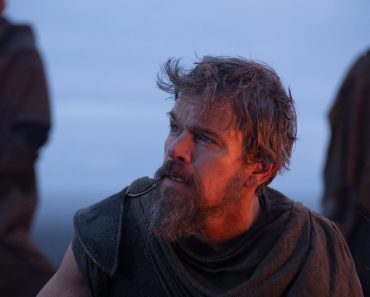
The recent controversy surrounding Christopher Nolan’s retelling of The Odyssey around casting and questions of historical and cultural authenticity misses the point for me. My concern is when the historical, cultural or philosophical foundations of those stories are altered so significantly that audiences walk away with a distorted understanding of who the Greeks were and what they contributed.
One of the biggest misunderstandings about Greek civilisation is the belief that its greatness came from inventing everything. The more accurate reading is that Greek civilisation became extraordinary because it was willing to learn from everyone and then question, test, refine and expand on new knowledge.
The Greeks travelled and observed. They learned from Egyptians, Mesopotamians, Phoenicians, Persians and countless others. They even made it to South Asia.
Pythagoras travelled extensively through Egypt and Babylon. Hippocrates shifted medicine from superstition towards observation. Aristotle attempted nothing less than organising all human knowledge into a coherent framework.

The Greek alphabet was adapted from the Phoenician script. Greek architecture, famous for its harmony, symmetry and proportion in buildings and amphitheatres, drew heavily from Egyptian engineering and Near Eastern influences. Babylonian astronomy informed Greek astronomy. Egyptian mathematics influenced early Greek mathematicians, who transformed it into an intellectual discipline concerned not only with practical problems but also with fully exploring the underlying principles of mathematics. Democracy did not emerge in a vacuum. Earlier societies, from Mesopotamian city-states to Phoenician communities and other Greek poleis, experimented with civic participation. The Athenians used these experiments to develop a political philosophy and system.
These innovations were the result of synthesis, a process that often requires compromise. It meant engaging with different peoples, customs and ways of thinking. Progress came through dialogue rather than isolation. The Greeks recognised that wisdom could come from anywhere and that philotimo was found not in claiming ownership of knowledge but in expanding it and passing it on. A uniquely Greek concept often translated as the love of honour, philotimo is far deeper than this translation captures.
Innovation is almost always the convergence of many ideas that creates something entirely new. Modern medicine demonstrates this beautifully. Breakthroughs such as the bionic eye represent the combined work of neuroscientists, engineers, surgeons, physicists, computer scientists and patients working together. Even money tells this story. The bilingual coins of the ancient world, particularly those that spread throughout the Hellenistic period after Alexander the Great, became the means of exchange not only for commerce but also language, ideas and culture.

The earliest bilingual coins from South Asia bear Greek on one side and Kharosthi on the other. To me, this represents a civilisation confident enough to embrace more than one language, more than one culture and more than one way of seeing the world.
Philotimo includes the idea that you should strive for excellence not for your own glory but to benefit humanity and those around you. Life was never meant to be just about the individual. If you serve your community well, society flourishes. If you pursue excellence for the benefit of others, everyone rises with you. This spirit became deeply embedded in the Greek psyche and, I believe, explains much of why Greek civilisation flourished across philosophy, science, mathematics, medicine, politics, literature and the arts.
This lesson feels particularly relevant today. Around the world, multiculturalism has become one of the most contested ideas of our time. Critics of multiculturalism see cultural diversity as a source of fragmentation, competing identities or weakened national cohesion. Those concerns have some substance. Diversity produces the conditions for innovation, but misunderstood and mismanaged, it can produce mistrust and conflict. The missing ingredient is our ability to create environments where differences can be understood, synthesised and directed towards a common purpose.
Therefore, diversity itself is not an objective worth striving for. Cultural capability is. The Greeks understood that flourishing came not from isolation but from engaging confidently with the wider world, learning from others while remaining grounded in their own values. That lesson remains just as relevant today.
This is why I have little interest in joining the voices calling out cultural appropriation and questioning details of accuracy in Nolan’s Odyssey. I don’t object because a film about Greece employs non-Greek actors or filmmakers. Art crosses borders. Stories belong to humanity once they are told.
I had the privilege of holding one of the ancient bilingual coins from Pakistan in the palm of my hand in 2016 while serving as Chair of the Lahore International Conference in Pakistan. It was a profoundly moving moment. Here was an object more than two thousand years old, quietly reminding us that cultural exchange is not a modern invention. Long before globalisation or diversity, equity and inclusion programs, people have been building bridges across languages, identities and traditions.
That small coin teaches a profound lesson. Rather than forcing one culture to replace another, it created a shared space where both could coexist with dignity. It reminds us that what may initially appear to be incommensurate cultural differences can become the foundation for something richer, something stronger and something entirely new. That, to me, is what genuine inclusion looks like. It is not the erasure of difference. It is the creation of settings where our differences can be brought together, synthesised and transformed into new knowledge, new understanding and new possibilities.

Perhaps one of the most extraordinary well-studied examples of cultural synthesis is found in the meeting of the Greek and Buddhist worlds. Following Alexander the Great’s campaigns and the emergence of the Greco Bactrian and later Indo Greek kingdoms, Greek ideas travelled deep into Central and South Asia, reaching communities that stretched towards what is now western China. One of the most remarkable outcomes of this encounter was Greco Buddhism. In the ancient region of Gandhara, Hellenistic artistic traditions merged with Buddhist philosophy. Many scholars believe it was here that the Buddha was first consistently represented in human form. Draped in robes resembling the Greek himation or toga, with naturalistic proportions inspired by Greek sculpture, the image became one of history’s great examples of artistic and philosophical fusion. It was not Greek culture replacing Buddhism, nor Buddhism replacing Greek culture. It was something entirely new emerging from the meeting of two great civilisations.
Language itself demonstrates that sharing is humanity’s natural state. English has borrowed words from Old Norse, French, Latin, Greek, Arabic, Hindi and countless other languages. No language has remained pure. No civilisation has remained isolated.
If there is something worth elevating about Greek civilisation, it is not the claim that every great idea originated in Greece but the belief embodied in philotimo: that excellence carries responsibility, honour comes through service, and our greatest achievements occur when we dedicate our talents to something larger than ourselves.
The Greeks understood that even their own knowledge was not exclusively theirs. They recognised that truth grows when it is shared. That, to me, is the real Greek legacy. We do not thrive by building walls around knowledge. We thrive by sharing it.
Divided we fall, united we stand, diversified, we grow.