

By: Markos Papadatos, Senior Editor
Katerina Papacostas chatted with HNA’s Markos Papadatos about her Greek heritage and starring in the musical “Chess” on Broadway, where she is a part of the ensemble and she understudies Lea Michele, who plays Florence Vassy.
First Lady Eleanor Roosevelt once said: “The future belongs to those who believe in the beauty of their dreams.” This quote applies to Katerina Papacostas.
How has your experience been in “Chess”?
My experience in “Chess” has been a profound, once-in-a-lifetime, once-in-a-career gift. To get to dance in this ensemble performing the legendary Lorin Latarro’s choreography, and to step in and play one of the greatest female leads ever written, with epic music that has been beloved for forty years and has this incredible cult following, and to do it at the hands of this insane creative team with Michael Mayer, Benny and Bjorn from ABBA, Danny Strong it’s truly surreal.
The show also allows me to use every single tool in my toolbox. As a dancer, I’m operating at the highest level. As a singer, I get to leverage every corner of my voice, from my classical opera training to a pop rock chest belt at the top of my range.
To do all this in service of a female character who is both brilliant and messy, powerful and vulnerable, fierce and imperfect, is and is also the center of the story is just a rare and precious opportunity that I don’t take for granted. It’s been a dream come true in every single way.
What do you love most about understudying Lea Michele?
It’s hard to say what I love most because there are so many things. As a leader of our cast, she is so grounded and generous, incredibly consistent and reliable at the helm, both in her performance and in her steadfast encouragement and faith in our piece and in us as a team.
She never takes for granted the work of the ensemble, which does not go unnoticed. To have someone in that position acknowledge your contribution as an ensemble member means so much.
When I went on for the first time, she sent me a beautiful bouquet of flowers and a really lovely note of encouragement. And then to watch her as a producer and as a leading lady help craft this character, making sure she is honest and grounded and real while still being strong and vulnerable, it’s been a privilege to witness.
It’s her kindness, her intellect, her talent, and her leadership that make it such a pleasure to witness and work with her.
Can you tell us about Broadway Bakes/Broadway Cares?
“Broadway Bakes” is a beautiful effort by the amazing cookie company Schmackery’s, the official cookie of Broadway, to help raise money for Broadway Cares, which is an extraordinary organization that provides housing, financial support, healthcare access, advocacy, and a myriad of other incredible resources for our artistic community, both in New York and around the country.
“Broadway Bakes” is a fundraiser where Broadway actors get to come work behind the counter and bring a little insanity and levity, offering selfies and chitchat to any and all patrons and fans who want to come hang out, buy some cookies, and donate to a fantastic cause.
What motivates you each day as a performer?
There are so many things that motivate me. There’s the higher calling, the sense that we need to keep telling stories to mine the depths of the human experience and make sense of the silly, the absurd, the euphoria and the profound grief.
Not to be too existential, but art is a critical part of a functioning society, so I feel honored to participate in a small way in making that happen.
There’s my little childhood self and that dream she had, tapping back into that desire and letting it keep me going is a huge factor. There’s also the experiences from each role I’ve been fortunate to play helping remind me of how much I love getting to tell stories for a living and the richness of the community it brings.
Then honestly, there’s always the financial reality. Eventually, you need to keep working. I was also able to step away for a while and work full time as a software engineer, and I loved that work deeply but it just didn’t quite fill me all the way up.
So you always have that little itch as an artist, that need to stimulate your curious mind, to tell a story and to use all of your faculties at once to do it. It’s a combination of all these things and then on the days when I can’t motivate myself and none of those work, I’m so so lucky to have a massive army of friends and family at my back, and this incredible community helps carry me forward and encourage me to keep going.
What do your plans for the future include?
There are a few different layers to my plans for the future. On the artistic side, I’d love to play more roles in New York, on tour, and on Broadway, and to do more TV and film. I also want to write more and continue developing work both on stage and screen.
But I also really want to find a way to give back more consistently and more regularly to our community. I’m not entirely sure yet what that looks like, but I’m hoping to find a way to meld my seven years of experience working in tech as a software engineer with my twenty years of performing experience into something I can genuinely offer back. I’ve taught in many different capacities and I’d love to do more of that.
And then there’s the producing and writing side, creating opportunities for other artists I know and love to perform and showcase their work. So it’s really some combination of service, community development, creating new work and performing more roles both on stage and on screen while somehow still finding a work life balance.
How does it feel to be an artist in the digital age?
It feels both liberating and extremely pressure-filled. The digital age gives us so many ways to produce our own work, showcase it, and demonstrate what we do to a wide audience.
At the same time, there’s enormous pressure to create content, to be clickable, to go viral and adhere to current trends.
And I do worry sometimes that AI, TikTok, and social media in general have pulled us all toward the same, or very similar, taste levels, to one universal aesthetic. It doesn’t always reward newness, or keeping things strange and innovative.
Even though there are beautiful breakout moments, the platforms can also be a strong deterrent against anything truly different, because there is such a dominant common look and feel in art, tone, comedy, and perspective.
So I think the digital age is an incredible tool, and the goal is to use it to our advantage without compromising our own personal and creative voice, and certainly not our mental health.
Finding that balance is the best way to participate as an artist. Come to the conversation with your digital tools, but come to it with a very strong opinion of your own.
Whenever that balance tips too far in one direction, make sure you take time away so you can get back in touch with yourself as a person and as an artist. Just don’t become such a recluse that you reject all of the amazing opportunities it affords.
What is your advice for young and aspiring performers?
My advice is twofold. First, never stop learning, both as a technician and as a human being. Find ways to reflect on your own personal experience and how it makes you a special artist.
Whenever the business starts to feel desperate, whenever it starts to feel like you’re not being seen, make sure you’re taking the time to see yourself. Because at the end of the day, you are the only one who can give yourself that high five.
That can be a really hard thing to find, and sometimes it feels almost impossible. But when you come back to your relationship with your own work, when you make sure that you like what you’re doing, that you think what you’re doing is funny and smart and good, the rest will fall into place.
The right things will come to you, and the people who are drawn to that energy are the ones you want to be working with anyway.
Second: find your people. Find your fellow creatives, and never stop looking for them. Find the ones who keep their feet on the ground and help keep yours there too, who don’t let the competitive nature of this business chip away at your humanity or your friendships.
Find the people whose work you respect and that genuinely excites and inspires you. Don’t be afraid to offer compliments. Don’t be afraid to collaborate. Those relationships are what make this whole thing worth it. Your creative community is never, ever to be taken for granted or underestimated.
Can you tell us about your Greek heritage?
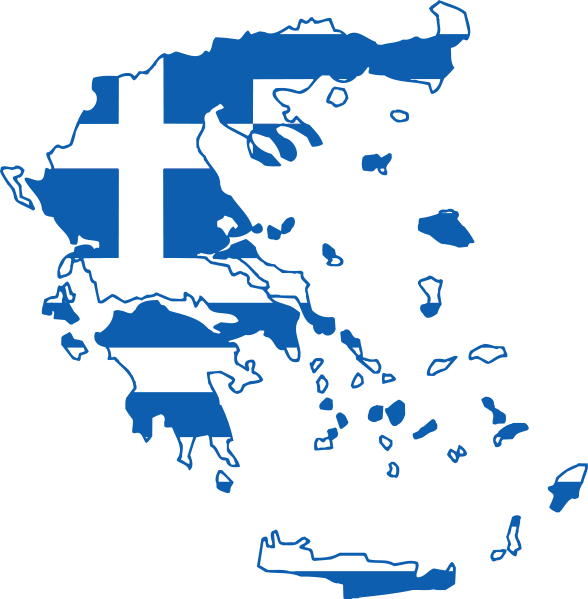
My dad was born in Greece in a little village about five and a half hours northwest of Athens called Arahova, not to be confused with the more famous Arahova known for its feta cheese. This is the much smaller version: Arahova Nafpaktias.
He came to the States when he was nine or ten, and most of his siblings have since moved back. Growing up, I went to Greece every other summer.
My mother is not Greek, she’s from Yonkers, New York, but she learned the language and reads and writes it, and she is considered an honorary Greek.
My Greek heritage is incredibly important to me and a big part of my identity. I feel so lucky to have grown up with a rich sense of culture, a deep history, and a connection to the arts and theater, thank you, Thespis.
It is a through line in my sense of self, in my creative work, and in my understanding of what it means to build community and family.
It lives in my relationship to food, in how much I love cooking, and in how sacred I believe it is to commune, period. That is such a core tenet of Greek culture, and it’s been one of the most beautiful pieces of muscle memory my parents instilled in me by example. It has served me both in and out of my work in the arts.
What does the word success mean to you?
Success is such a complicated and sometimes daunting word, and honestly my definition changes daily.
Sometimes success feels like a specific job I’m waiting to book, a callback I’m hoping for, or a specific award I someday hope to accept, and may or may not have practiced an acceptance speech for in the mirror. Just kidding.
But ultimately, when success feels like a fully embodied experience, when I am doing work that I’m proud of, with people I care about and have the opportunity to show care for, and we get to share that work with those we love and respect both in our lives and in the industry, that’s when it feels real.
When I’m able to maintain a rich life outside of my professional work and still show up for the people I care about beyond my professional existence, that is true success to me.
It’s a hard thing to maintain, and something I have to constantly come back to. This business will lure you into chasing the brass ring.
When you come back down to your own opinion of your work, of yourself, and of the life you’re living as a whole, when all of those things feel full of kindness and community and creative stimulation, that is the true marker of success for me.