
Mary Argyropoulos can’t be categorised, which is exactly the point. The Sydney-based fashion designer moves between the mythological and the material, the dramatic and the wearable, sitting somewhere between fashion-forward and fine craft. She’s very much within her own orbit.
Her Honours collection, Three Fates, presented at UTS Fashion Runway last November, drew on the vibrancy of Greek culture—its mythology, its chaos, its ancient energy—and the golden era of 1980s Athens and hours spent at a loom in India where, she says, “your mind just goes”. The collection incorporated tactile textile work, dramatic silhouettes, and personal relics.
Growing up with fabric scraps on the floor, dollar bags of lace and sequins from Spotlight, and a mother who dreamt of designing clothes herself, Argyropoulos’s fashion path was destined. After four years studying and working in the industry—including time spent alongside designer Jordan Gogos—Argyropoulos has developed a practice that moves between discipline and instinct. She disappears into the studio for weeks, emerges with something new, steps back out into the world, and starts again.
Three Fates was the culmination of that process: research trips to Greece and India, two extra suitcases of sourced textiles, and a creative block so consuming it required a full Game of Thrones rewatch to survive (among other remedies, of course). It worked and thank god for that.
Claudia Checketts sat down with Argyropoulos over BLTs in Manly to talk about building a fashion identity outside the traditional capitals, being young and creative, and why Sydney (Harbour Bridge and all) will always be home.

CLAUDIA CHECKETTS What have you been up to lately?
MARY ARGYROPOULOS I’ve been trying to rest, which is something I’m very, very bad at. I ended up getting two extra jobs, which is very naughty of me. But it actually feels good to be out of the studio and earning money in that way, and I’m looking forward to funnelling that energy back into my creative work.
I’ve also been doing a lot of test shoots with different creatives around Sydney, which has been amazing, because I feel like my collection has had a huge second wind. I spent a whole year by myself, isolated, making it and not really being able to share it with anyone. Then it suddenly went from being mine to being public, and now it almost feels like a different collection. I’m trying to give it as much space and life as I can.
CC What does a typical week look like for you, especially while you’re balancing your creative work alongside other jobs and commitments?
MA That’s a really good question. It’s actually a very disciplined thing, which people maybe don’t always expect fashion to be, but it really is. That’s one of the things I’m really thankful for in Sydney fashion. It makes trying to be a “brand,” whatever that means, a bit easier. I’m a creative through-and-through. If I could, I would just make things and hibernate. But I am learning that there are bits of the other side I enjoy. In moderation. I like admin because it breaks up the day, but I definitely can’t do too much of it.
CC Can you tell me about your early beginnings and what drew you to fashion?
MA I was always interested in fashion. My mum actually started studying fashion design, but she never finished her degree because she got ill. Later, after she had me and my sister, she started doing community-centre pattern-making courses with my auntie. She also tried to start a kidswear brand called Vintage Mary around the time I was in preschool.
CC So you were the influence on the name?
MA Well, yes, obviously. Ultimate muse over here.
We always had fabric scraps around the house. That’s one of my earliest memories. My mum used to take me to Spotlight, and they sold these little plastic bags for a dollar that were full of scraps and swatches. I’d play with them for hours—lace, sequins, all of it.
And then I found this kids’ book the other day where I’d written what I wanted to be when I grew up. I must have been so young. It said, “I want to make cloths,” not clothes—cloths. I don’t know what power was in that little manifestation journal, but I made one spelling mistake and the universe said, okay babe, stick to it.


CC Were there any designers, iconic collections, or runway moments that really shaped your early interest in fashion?
MA One that comes to mind is that when I was finishing high school, Ottolinger was just starting to really come onto the scene. I bought my first dress from them. It was made in Greece, and the textile was so beautiful. Then I started researching the designers, and what really interested me was how they started.
Before they became this high-end name showing at Paris Fashion Week and all of that, they were just building something in a much smaller way.
And then more recently, the Fall 2024 Marni collection by Francesco Risso completely changed everything for me. There was this structured shift dress made out of fur, then painted over with this thick acrylic paint. From what I understood, the set was like an igloo. It was amazing. It was super fashion-forward, not just wearable art for the sake of it, but very fashion-focused, while still having absolutely insane, tactile textiles.
CC What is the difference between fashion-forward and wearable art?
MA Especially at the university I went to, there were very clear distinctions around what counted as fashion. To me, something is very fashionable when it’s contextual. When it has to do with the body, with identity, with personality, with where we are right now, and with what people want to wear and how they want to feel.
Wearable art can be this beautiful object to look at, but it’s not necessarily about identity in the same way. It might tell a story, but you don’t necessarily look at that person and think, I want to be her. I want to wear that.
I saw Paloma Elsesser wearing a shift dress, and I was like, ‘Yes, the dress itself is an artwork, and the textile is an artwork, but I also want to be her.’ I want to wear that and run around Greece drinking wine and smoking cigarettes with bleached eyebrows, getting people to take photos of me because I look good on the street. That’s fashion.
*BLTs arrive*

CC Do you feel like you’re always creating? Or do you have periods where you’re off?
MA I don’t think I’m always creating, but I’m always thinking about what I want to create next.
I already have like five different designs sitting in my head waiting to come out. But I’m such a Gemini, so I go through phases of being organisational, managerial, doing test shoots, styling, all of that. And then I can feel it creeping up on me. I’m about to hibernate the fuck out, and no one’s going to hear from me, no one’s going to see me, and those five designs are going to come into fruition. That’s kind of how I work.
CC Do you find it hard sometimes to feel inspired?
MA Yes, definitely. Before my Honours collection, I was absolutely in the worst rut of my life.
I tried everything to get out of it. I tried recreating what I did the last time I felt inspired, because when I’m inspired I become obsessed. It’s all I can think about. The ideas just flow and flow and flow. But this time everything felt stale.
So I did everything. I went to Pilates more. I went on hot girl walks. I tried going out more. I tried staying in more. I tried sketching differently. I tried changing up my design process. I even tried rewatching Game of Thrones.
All the designs in the collection that you see now were only really done about five weeks before I presented them. I had this huge spike. My teachers had gone from seeing me every day thinking, we don’t know how to help her, to me disappearing for six weeks and then coming back with this beautiful collection.
CC Everyone has such different ways of working. Something can look non-linear from the outside but make total sense to you.
MA Exactly. It’s very non-linear. Or maybe it looks non-linear to other people, but then I look back and think, no, I actually started in the same place I ended.


CC Are there any designers working today whose work you feel particularly connected to or really admire?
MA: Yes. I love Kiko Kostadinov womenswear by Laura and Deanna Fanning because obviously they’re Aussie girls in the UK doing the absolute most. I love their silhouettes. They feel very feminine but also not feminine at the same time. And it’s all very fashion-forward, with really considered textile work.
I was also super inspired by the latest Chanel collection that was presented at the subway. Again, the way they were deconstructing the Chanel textile and the silhouettes was so interesting to me.
And I’ve been obsessed with the accessory design in the recent Saint Laurent show—those huge crystallised earrings and really oversized aviators. I only wear really big aviators, and I love a big fucking clip-on earring. That’s definitely the 80s in me again. I don’t know if that little 80s itch is ever going to leave.
CC Moving into the Australian fashion community and working closely with Jordan Gogos, how has that experience shaped or influenced your own ideas about fashion, work ethic, creative process, or the way you approach design?
MA Jordan is so generous with his time and space in the studio. Nothing is ever gatekept. I was 19 when I started, so I’ve just learnt and absorbed so much information from always being in the room with him.
He’s always really open about his process—about going from emerging to becoming such a prolific designer—and just being around that, hearing those conversations, I learnt so much about how the industry actually operates. And that’s such a valuable thing because if you’re not working in it, it’s very hard to know what’s worth your time and what isn’t.
And in terms of working and practice, he can literally lock himself in the studio for hours and hours and hours. Not in a competitive way, just in a very self-driven way. And when the person at the top sets that tone, the whole studio feels it.
He really set the precedent for just constantly making things. Being alongside that changed something in me. I feel like making is easier for me now, which sounds silly, but I think it’s really hard for young creatives to just sit down and get the job done. People fiddle too much.
You just have to get in and start making. Let your hands do the rest. That’s what got me out of my creative rut. I stopped thinking and just let my hands do it, and it always works out. Being in that space—the studio in the Powerhouse Museum—I’ve spent countless hours, countless nights just making and making and making. There’s always more energy for it.
CC Sydney isn’t always seen as a global fashion city, but there’s such a strong artistic community here. Do you feel connected to the Sydney creative scene?
MA Yes and no. I feel connected to Sydney. I wouldn’t say I feel connected to the “creative scene.” It feels too closed off, too clicky. Creative is anything—it doesn’t need to be a scene. I actually feel less connected to the creative scene than I do to Sydney itself. I love Sydney. I’m that girl—I go to Melbourne for two days, get back on the plane, see the Harbour Bridge, and I’m like, ‘Thank God.’ I could cry. This is my place. I want to be prime minister. For me, community is broader. It’s the Powerhouse security helping me and Jordan with loan requests. It’s the people at the Vogue loading dock saying, “Oh Mary, here you are again.” That’s my community. It’s everyone along the way who helps out. It extends so far beyond just “creatives”.

CC What was the initial motivation behind starting your own collection?
MA My Honours collection, which I presented at UTS Fashion Runway last November, was called Three Fates. The concept really started taking shape when I was in India at the end of 2024 doing a weaving workshop. I was spending so much time on the loom, and I’m convinced looms have some kind of spiritual significance. There’s something about the repetitive motion—it’s so meditative; your mind just goes.
Earlier that year I’d been in Greece, and they have such a rich textile history—looming, mythology, all of it. I started researching the Greek myth of the Three Fates. One weaves the cloth of life, one spins and adorns the thread—like the little moments that shape you—and the last one carries these massive shears and cuts the thread. I started imagining what these goddesses would look like in the 80s in Athens. The 1980s come from my upbringing—every family photo is from the ‘80s. For me, being a woman, going out, having fun—that’s the 80s. And for Greek families in Australia, that was kind of the golden era. They were established, they had jobs, they owned homes, they were going out and living. Then Athens—because it’s so sexy, chaotic, ancient and full of energy. The youth are angry but inspired. It became this world-building thing: mythology, 80s Athens, and that energy all together.
CC Where does the collection actually begin for you… sketching, textiles, research?
MA Mood boards. I love a mood board. I use my own photos—from Greece and from my life—and this app called Freeform. I’m an iPad baby. I don’t know what Adobe is. It’s just Freeform in my brain. I dump everything in there and start connecting dots that make sense to me, even if they don’t to anyone else. Then I refine it—what is the world? Who lives there? What does it feel like? Then I narrow it down to what they’re wearing. I’ll sketch a bit on paper, but it’s chaotic. My notebook is insane—you can’t read anything. It’s just for me to think with my hand. Then I go digital—collaging, drawing over mannequin figures. It’s kind of like Stardoll, which I was obsessed with as a kid, and now I realise all my illustrations look like Stardoll. Then I move to draping on the mannequin, playing with textiles, silhouettes, and colour and just jamming things together.
CC Your work seems very tactile and hands-on. There’s a lot of fabric manipulation, reconstruction, and weaving. What draws you to that kind of material-driven process, and how do you source those fabrics?
MA I’m starting to realise that I’m just really obsessed with touching and feeling things with my hands. It’s so funny—in Greece with my grandma and her sister, and we were all sitting at the table with a piece of paper or a straw, all fiddling with it or folding it. I think it’s just a generational thing I’ve inherited: this need to touch, fold, or manipulate something with my hands. Fabric is basically my evolved fidget spinner. And I love taking a little idea and trying to abstract it. That gives me so much pleasure.
CC We touched on this a bit before, but when you’re creating garments, do you see them primarily as artistic expressions or as pieces designed to be worn and experienced by people?
MA That’s a good question. Recently I’ve become more interested in making pieces that are worn because I love watching something be worn and connecting with people in that way. But I think there’ll always be a side of me that wants to execute things at a very dramatic level. In my recent collection, there’s a good mix of both. It might be a very normal 1980s-style dress, but the shoulders are huge. Or it’s a normal silhouette, but then the bolero couldn’t really be worn, or the hem of the skirt is so extreme you wouldn’t leave the house in it. I’m playing between those two things. I’m really impressed by designers who can execute dramatic work, and I want to show that I can do that too. I don’t want to exist in a world of safe, glossy, normal clothes. It’s easy, at least for me, to just make something wearable and conventional, so I want to challenge myself. And that, in turn, challenges the people around me too.
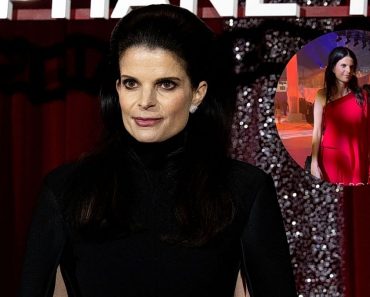
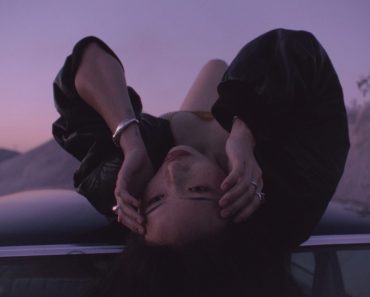
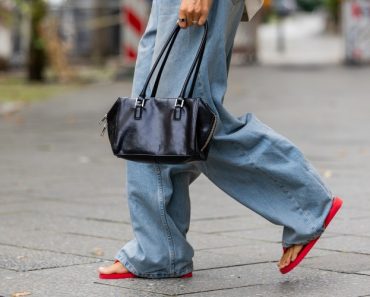
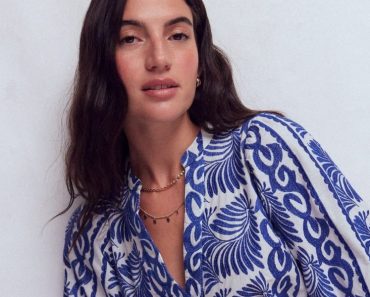
photography and styling KIMBERLY JONJII
direction and collage MARY ARGYROPOULOS