
Two new steles discovered in the sanctuary of Dionysus reveal the existence of a network of Roman traders organized as “conventus” and their relationship with local authorities
Excavations in the ancient Greek city of Teos, in present-day Turkey, have brought to light two inscriptions from the 1st century BC that document for the first time the organized presence of Roman merchants in this Greek polis. The texts, carved in local gray marble, show how these businessmen – called negotiatores – honored with gold crowns a local magistrate named Menophantos, son of Apollonides, who served as agoranomos, that is, market supervisor.
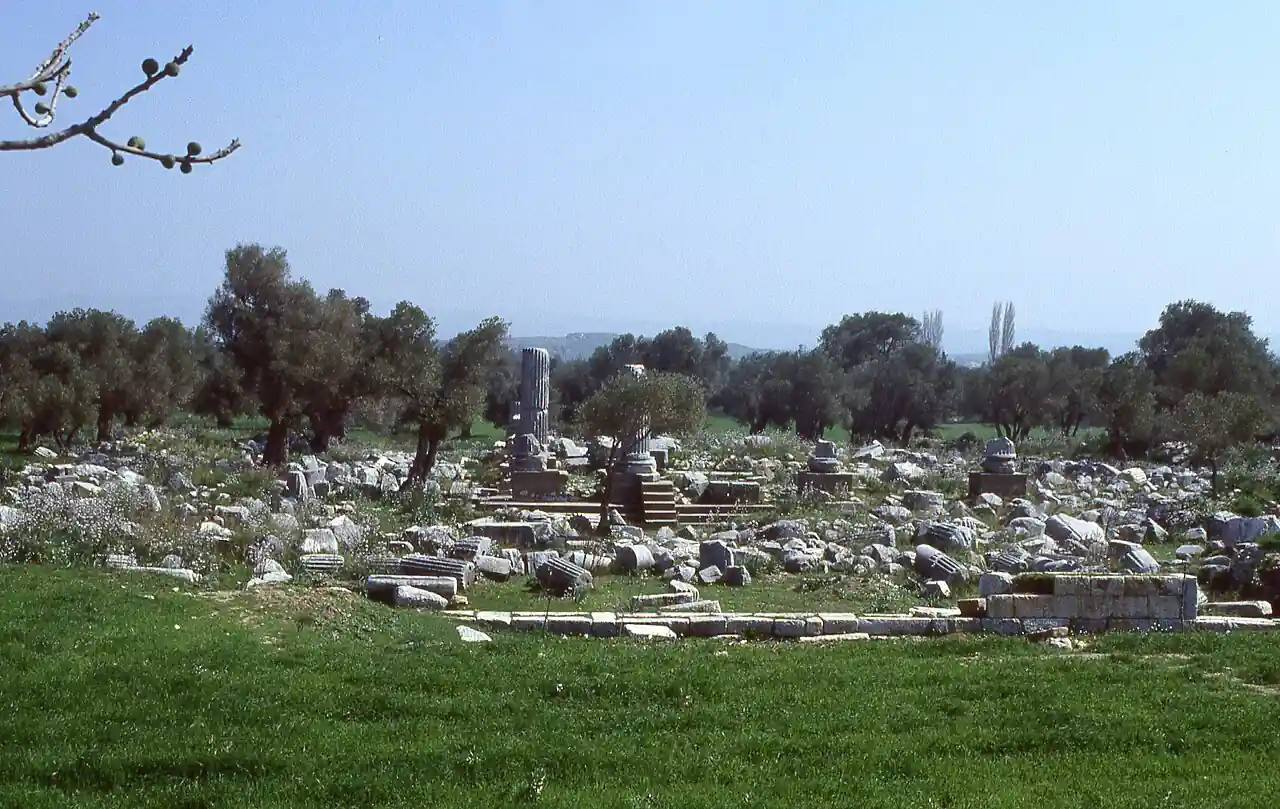
A team of archaeologists from the University of Ankara, belonging to the Department of Classical Archaeology of the Faculty of Languages, History, and Geography, discovered these pieces during the 2021 excavation campaigns in the sanctuary of Dionysus of Teos. The findings have been analyzed by researcher Tolga Uzun, who has just published his conclusions in the journal Belleten, corresponding to April 2026.
The inscriptions, which were found fragmented and have been reassembled by the archaeologists, formed part of the facing of a wall in one of the colonnades of the sacred area. The first of these, called Yazıt No. 1a, measures 37.5 centimeters high by 31 wide and features at its lower part a relief with an olive crown. The text, written in Greek, reads as follows:
The Roman merchants who are here crown with a gold crown Menophantos, son of Apollonides, who has exercised the agoranomy with honor and glory.
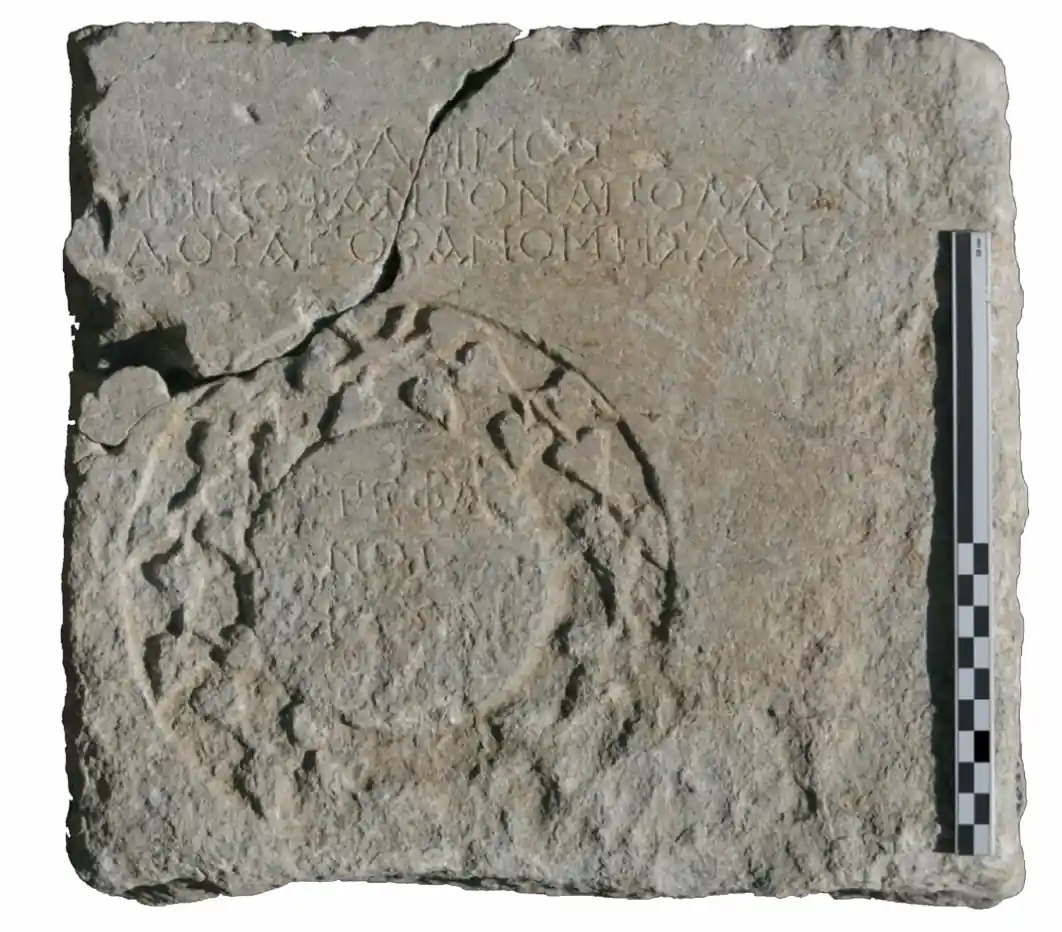
The second inscription, Yazıt No. 1b, somewhat smaller, also includes a crown – in this case of ivy – and was probably placed next to the previous one. Its message complements the first:
The people (demos) crown with a gold crown Menophantos, son of Apollonides, who has been agoranomos.
As Uzun explains in his article, these two steles demonstrate that both the Roman merchants and the civic assembly of Teos agreed to honor the same local magistrate. The researcher maintains that Menophantos must have provided some kind of relevant assistance to the foreign traders, very likely related to the extraction and transport of the famous Marmor Luculleum or Africano, a luxury marble obtained in the quarries of Teos and highly prized in Rome.
The author of the study recalls that Pliny the Elder, in his Natural History, mentions this marble as originating from Chios, although current research confirms that it came from Teos. During the 1st century BC, these quarries were controlled by the city itself, and their management could generate significant profits. The Roman merchants, interested in acquiring and transporting this material to Italy, required the collaboration of the local authorities who regulated the market. This is where the figure of the agoranomos came in.
Who Were These “Roman Merchants” and How Were They Organized?
Uzun’s article delves into the meaning of the term that appears in the inscription: pragmateuómenoi, which the Romans translated as negotiatores. They were not simple vendors or shopkeepers. The author, based on previous works by scholars such as Claire Feuvrier-Prévotat, establishes a key distinction between two types of trade professionals.
On the one hand were the mercatores, a term referring to retail merchants, sellers working on a small scale and operating preferably within large cities such as Rome or the Italian capitals. On the other hand, the negotiatores were businessmen of much greater scope. They invested large capitals, granted loans, managed maritime transport, and controlled the flow of money in the provinces. They were, in essence, bankers, shipowners, and major entrepreneurs who operated outside Italy, in territories such as Greece, Macedonia, or Asia Minor.
Researcher Tolga Uzun cites Jean Hatzfeld, a pioneer in this field, who suggested that the population of negotiatores in the province of Asia during the 1st century BC could not have been less than 100,000 people. This estimate is based on accounts from ancient historians Valerius Maximus, Plutarch, and Memnon, who described the massacres of Roman and Italic merchants ordered by King Mithridates VI of Pontus around 88 BC. Although Uzun notes that it is not possible to give an exact figure, the fact is that the number of these businessmen was very high and their presence widespread.
One of the most novel contributions of the study is the confirmation that these negotiatores did not act individually, but grouped into collective entities called conventus. The term, which in the Roman administrative language referred to the judicial districts of the provinces, acquired a different meaning in this context: that of an association of Roman citizens residing in a foreign city, united by commercial interests and by bonds of friendship and mutual trust.
Uzun explains that this word has its root in the Latin verb convenio, which means “to meet” or “to come together.” In Greek, these groups were known as koubentos or synedrion. In some inscriptions found in Ephesus, Thyatira, or Hierapolis, the word conventus appears directly. What the new steles of Teos demonstrate is that this form of organization was much more widespread than previously thought, and that it was not limited to the major provincial capitals such as Ephesus, Smyrna, or Pergamum, but also reached smaller cities with intense economic activity, such as Teos.
Roman Expansion and the Birth of a New Economic Order
The historical context that allows us to understand these findings is that of the accelerated expansion of the Roman Republic during the 2nd and 1st centuries BC. As Rome extended its dominion over the eastern Mediterranean, Italic businessmen followed the legions – or sometimes preceded them – in search of new markets and investment opportunities. Already in the 2nd century BC, there is epigraphic evidence of groups of Italics and Romans in places such as Paphos (in Cyprus), Amorgos, Eretria, Amyzon, Claros, Pergamum, and Chios.
The researcher highlights a particularly revealing document: a funerary inscription belonging to a woman named Ambivia Myrias, also dated to the 1st century BC, in which the Romans appear, alongside the natives of Lebedos and Clazomenae, as active participants in the expressions of mourning. This proves, according to Uzun, that the Romans played an active role in the social life of Greek cities, not only in the economic sphere.
But not all was peaceful business. Appian, Pliny, and other ancient authors recount how during the Mithridatic wars many Romans and Italics were massacred. Appian specifically mentions the sufferings endured by the Romans and Italics in the city of Tralles. However, some managed to escape and take refuge on islands such as the Calamineae, in Lydia. After the final defeat of Mithridates, Roman commercial activity in Anatolia resumed more strongly than ever.
The Relationship with Local Authorities: The Case of Menophantos
The figure of the agoranomos was fundamental in any Greek city. Aristotle, in his Politics, had already noted that one of the main functions of this magistrate was to ensure the proper functioning of the market. In Teos, Menophantos was recognized for his ability to resolve disputes, facilitate loading and unloading permits, and very likely mediate in conflicts over prices or transportation.
The article hypothesizes that the agoranomos may have helped the negotiatores in the complex operation of extracting and shipping the Lucullean marble. Pliny the Elder, although he confused its origin, noted that this material was highly valued. Recent archaeometric studies, such as those by Carlo Beltrame and Lorenzo Lazzarini in 2020, have identified shipments of this marble in Roman shipwrecks, and its use became widespread in public buildings of the Augustan era. It is highly likely that the Roman merchants of Teos were the first to introduce this stone in Rome, before the quarries came under direct imperial control.
The fact that both the demos (popular assembly) and the pragmateuómenoi (merchants) honored the same figure with gold crowns suggests smooth and mutually beneficial collaboration. The merchants obtained logistical facilities and legal security; the city, for its part, collected taxes and increased its prestige by associating with Rome’s powerful businessmen.
Negotiatores and Mercatores: Two Worlds Within Roman Commerce
Tolga Uzun’s article devotes a special section to clarifying the terminological confusion between negotiator and mercator, drawing on the work of the great Roman orator and politician Cicero. In his letters and speeches, Cicero uses much more respectful language when speaking of the negotiatores than when referring to the mercatores. The reason? Roman social hierarchy granted very different status to these activities.
The negotiatores were investors and moneylenders, men who could acquire land and, thanks to their fortune, access positions of political power. Cicero considered them representatives of Roman values. In contrast, the mercatores, engaged in daily trade and immediate profit, were viewed with suspicion by the elites, who considered them morally inferior.
In a letter to his brother Quintus, Cicero warns him to confront the insolent demands of the negotiatores and to beware of their possible frauds. This warning shows that these powerful businessmen did not hesitate to pressure provincial governors to obtain favors or advantages.
In another letter to his friend Atticus, Cicero mentions a conflict related to port taxes involving the publicani (tax collectors), the negotiatores, and the allies. Notably, Cicero clearly distinguishes the negotiatores from the simple “allies,” reinforcing the idea that these men constituted a socio-economic group with its own identity.
Romans and Greeks: The Spread of Roman Identity
Another relevant aspect addressed by the study is how the presence of these merchants contributed to spreading the idea of Romanness outside the Italian peninsula. The researcher notes that in Greek inscriptions it is very common to find the term Rhomaioi (Ρωμαῖοι) to refer to the Romans, regardless of whether they held full Roman citizenship or not. The Greeks tended to call all those arriving from Italy “Romans,” without worrying too much about their exact legal status.
Similarly, the Romans usually called all Greek-speaking and Greek-cultured inhabitants “Greeks” (Graeci), without distinguishing between free, allied, or subject cities. This mutual simplification was a way of constructing collective identities in an increasingly interconnected world.
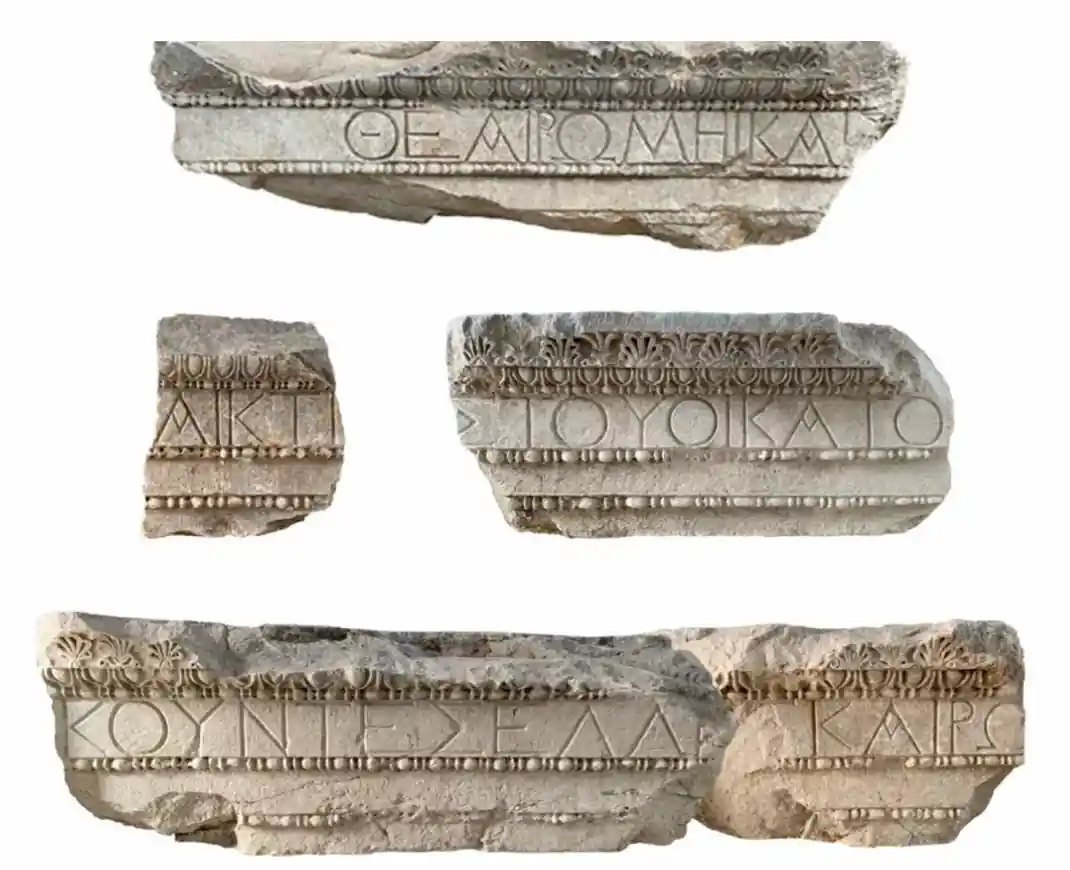
An example of the integration of the Romans into the civic life of Teos is found in a third inscription, discovered during the excavations of the public square (agora) in 2024. This is a construction text belonging to a temple dedicated to the goddess Roma and Emperor Augustus. The inscription, reconstructed by epigrapher Mustafa Adak, reads as follows:
To the goddess Roma and to Augustus, savior and founder, and to the house of Augustus, the Hellenes and the Romans who reside here (dedicate this temple).
This joint dedication, dated to the late 1st century BC or early 1st century AD, shows that the Romans settled in Teos were not only doing business but also actively participating in the religious and public life of the city. The temple of Roma and Augustus was financed by the local Greco-Roman community, a clear sign of the integration and economic power of the negotiatores.
Tolga Uzun’s article concludes that the inscription from the sanctuary of Dionysus in Teos sheds light on the presence of Roman merchants in Teos and on their interactions with the local community. The term πραγματευόμενοι that appears in the inscription allows the establishment of a cultural link between the Latin negotium and the Greek πάθημα. This reveals the existence of a shared understanding of economic and social relations in both cultures.
The author also states that the stele shows that the conventus – that is, the associations of merchants – had a much broader reach than previously assumed. They were no longer limited to the major capitals but were present in medium-sized cities like Teos, as long as there were sufficiently attractive economic interests.
Additionally, he emphasizes the importance of the agoranomos as a facilitator of international trade. Menophantos was honored because he solved problems for the merchants, probably related to the famous Teos marble. This kind of dual recognition (by the people and by foreigners) is not frequent in Greek epigraphy, which gives exceptional value to the findings.
Finally, Uzun recalls that, although the term pragmateuómenoi would change meaning over time – in the 2nd century AD, in Ephesus, it came to designate blanket sellers and fishermen – in the 1st century BC it had a very precise sense: it designated the great Roman capitalists who operated in the provinces and who, through their activity, decisively contributed to the economic and cultural integration of the Mediterranean under Rome’s hegemony.
SOURCES
Uzun, T. (2026). Teos’taki Romalı Tüccarlar. BELLETEN, 90(317), 99-126. izlik.org/JA38UT86ZX