
My buddy Dave had a running joke during our friend group’s epic four-nation odyssey from Venice to Athens over two weeks: “You’ve seen one dusty old rock, you’ve seen them all.”
Funny, but, of course, not at all true.
The trip took us to palaces, ancient ruins and towns that thrived millennia before this nation was a twinkle in our Founding Fathers’ eyes, or anyone could imagine being mad about who played Helen of Troy in a telling of “The Odyssey.”
We were more than 5,000 miles away, staring at some of the dustiest and oldest “rocks” I’ve ever seen, the day our nation celebrated its 250th birthday.
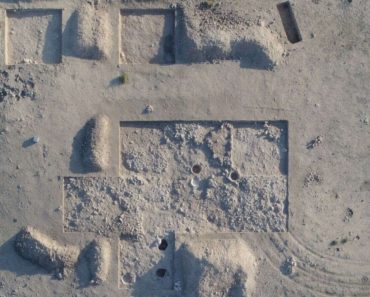
I was awed that day by Akrotiri of Thera (Santorini), the remains of a female-centric city founded roughly 7,000 years ago and abandoned after a volcanic eruption around 1600 BC. Ash helped preserve the frescoes, including the remarkable Akrotiri Boxing Boys, which we later saw at the National Archaeological Museum in Athens.
It was ironic to be in places where layers and layers of dust have been brushed away in the pursuit of understanding, considering the intellectual darkness enveloping our nation due to the push to bury the sins that still haunt us.
Racism, misogyny and other forms of intolerance are being fueled by those attempting to erase or rewrite recent history. And aside from the rich and often dismissed legacy of Indigenous people, everything about U.S. history is recent history.
As a result of the seemingly endless culture war, far too much energy is spent on the absurd in America. Lately, that includes fretting about the race and gender of actors playing the mythical characters in Christopher Nolan’s new blockbuster version of “The Odyssey.”
“The whole movie is a woke mess,” one Instagram user wrote – mind you, before the movie was released – on a post about multiracial actress Zendaya playing Athena, instead of an actress of purely European descent.
“Guess you haven’t read the book,” another retorted.
Back in January, trillionaire Elon Musk tweeted that Nolan “lost his integrity” when he cast Lupita Nyong’o, a Black Oscar winner, as Helen of Troy. A lot of racism and counterarguments followed.
Christopher Nolan got his Helen of Troy casting exactly right | Opinion
Black characters existed in Greek mythology, ancient art
Cast member Lupita Nyong’o attends the “The Odyssey” world premiere in London on July 6, 2026.
The teeth-grinding – oddly, no one is all bothered that Matt Damon (Odysseus) and Robert Pattinson (Antinous) are, demonstrably, not Greek – is not about ancient Greeks or historical representation, as has sometimes been claimed.
Nolan’s film is based on an 8th or 7th-century BC epic poem attributed to Homer, and written for people who traded with everyone from the Phoenicians and Egyptians to the Carthaginians and the Etruscans.
Scholars note that ancient Greeks were concerned about culture, but did not care about skin color or race the way our society, tragically, does today.
There were Black characters in Greek mythology and other ancient Greek art.
Opinion alerts: Get columns from your favorite columnists + expert analysis on top issues, delivered straight to your device through the USA TODAY app. Don’t have the app? Download it for free from your app store.
Take Princess Andromeda. The legendary, beautiful mythological damsel in distress, saved by the Greek hero Perseus, was an African from Aethiopia, or Ethiopia (“land of the burnt-faced people” in ancient Greek). Scholars say the area represented Nubia – modern-day Sudan.
In works attributed to him, Homer describes the Aithiopes as pious, blameless and favored by the gods.
Odysseus (Matt Damon) is visited by the goddess Athena (Zendaya) in “The Odyssey,” Christopher Nolan’s adaptation of Homer’s classic epic.
Despite the predictable backlash (dare I say, “blacklash”?), Nolan’s nearly three-hour saga opened to a massive $124.5 million in North American theaters, according to studio estimates released July 19.
It is partly a testament to this nation’s interest in the stories of the “old gods.” No longer widely worshiped, but their legend continues.
Tell us: Is going to the movies still worth it? | Opinion Forum
In Greece, Christians honor their pagan ancestors
The Parthenon on the Acropolis in Athens, Greece.
A dusty old rock paying tribute to Athena, the goddess of wisdom and warfare and an important character in “The Odyssey,” looms over the city named in her honor. You can’t miss the Parthenon on the Acropolis, built on the site after the Persian army burned the first one down, and still standing nearly 2,500 years later.
The sound of ongoing conservation was in the air during our visit, but the awe-inspiring wonder of the ancient world is all but free of scaffolding for the first time in decades.
We were told repeatedly how lucky we were to see the masterpiece unobstructed. We felt it.
The history and the scars it left on the monuments are on display for public discussion.
Defaced and repurposed throughout time (it was the site of a Christian church dedicated to the Virgin Mary and a mosque), the Parthenon and the history it invokes remain a symbol of Greece’s resistance, pride and artistic achievement long after Christ replaced the old gods – their king Zeus included.
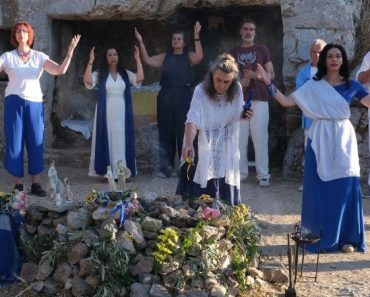
Most of the population of Greece is Greek Orthodox, yet the Christian conquerors now preserve and celebrate the history of their pagan ancestors.
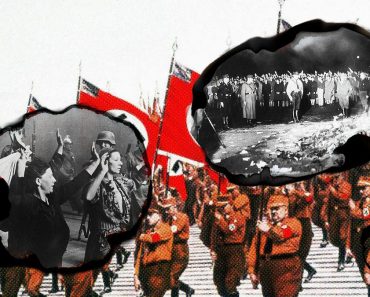
As our tour guide proudly said, the two teen boys who climbed the Acropolis to take down the Nazi flag during World War II are still celebrated as heroes. Replanting the Greek flag over the ancient citadel was among the first things done after Athens was liberated.
Gen Z’s obsession with the movies makes perfect sense | Opinion
To survive as a society, we must dig for truth
In 2019, then-Athens Mayor Kostas Bakoyannis offered remarks about the importance of history during the 75th anniversary of the city’s liberation.
“Above all, we must not forget. We must not forget what happened then and afterwards,” Bakoyannis said, according to news reports. “We must keep in our memory the parts of our history that wanted us to become divided, separated and to turn on ourselves. … We forgot the common enemy. Fascism, intolerance, racism and all that stems from fascism.”
He was talking about Nazis, but there is a lesson there for our nation.
Not only must we not forget our past, we must also turn over every rock – dusty or not – to make sure our true history is told.
To be a society that lasts, we must dig for truth, study it, debate and pass it on.
If Europe’s dusty old rocks can survive volcanoes, fires and wars to tell stories thousands of years after they were part of fully formed structures, we can confront even the murky and moldy parts of 250 years of American history honestly.
Amelia Robinson at the Parthenon in Athens, Greece.
Amelia Robinson is the opinion and community engagement editor for The Columbus Dispatch, where this column originally appeared.
You can read diverse opinions from our USA TODAY columnists and other writers on the Opinion front page, on X, formerly Twitter, @usatodayopinion and in our Opinion newsletter.
This article originally appeared on The Columbus Dispatch: Why Zendaya, Nyong’o make perfect sense in ‘The Odyssey’ | Opinion