Angelo Chrisohoides / Unsplash
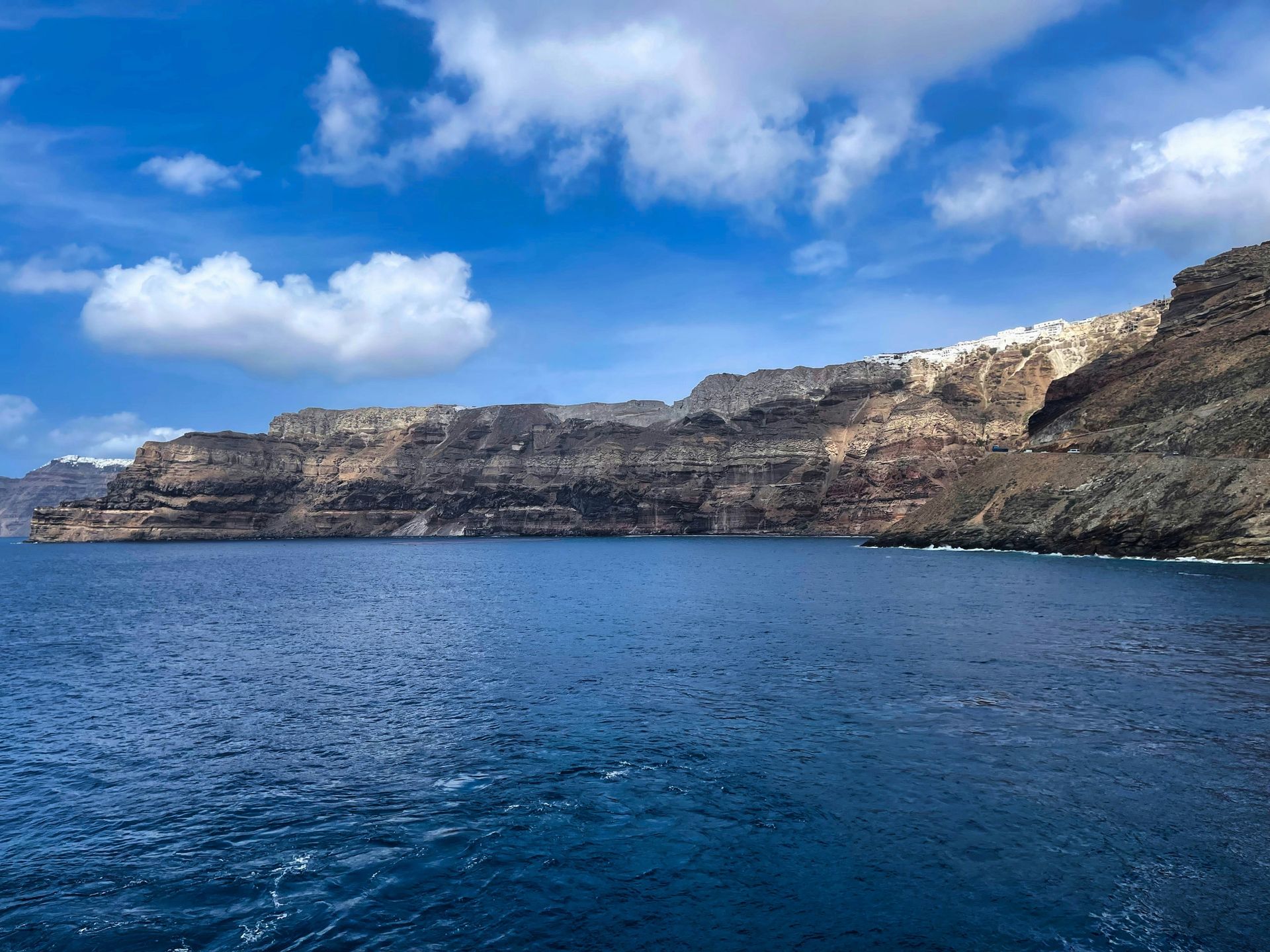
More than 3,000 years ago, a catastrophic volcanic eruption, among the worst in recorded history, consumed Santorini, collapsing the island’s center and eventually flooding it with seawater from the surrounding Aegean. The scale of that eruption reshaped the island’s entire geography, and the Bronze Age settlements caught in its path vanished beneath layers of ash for millennia before excavation began to reveal what had actually happened here so long ago.
Ancient writings from the Greek philosopher Plato have long fueled speculation that the Minoan settlements destroyed in this eruption inspired the legend of Atlantis, the fabled lost city swallowed by the sea in a single catastrophic day. Whether or not that connection holds up historically, the archaeological site of Ancient Akrotiri, on the island’s southern tip, gives visitors direct physical access to the actual Bronze Age city that vanished during the eruption, a site substantial enough to have earned the nickname the Pompeii of Greece.
Covered wooden walkways guide visitors through the excavated site, protecting the ruins while still allowing close viewing of the ancient buildings, storage vessels and other remnants of daily Bronze Age life preserved beneath the ash. The site’s layout makes it genuinely accessible to casual visitors, though the experience works considerably better with some historical context in hand instead of wandering through without any framework for what visitors are actually looking at.
Placards and explanatory materials remain sparse throughout the site, which means visitors hoping to understand the full significance of what they’re seeing should strongly consider booking a guided tour in advance instead of exploring entirely on their own. A knowledgeable guide can connect the physical ruins to the broader story of the eruption, the settlement’s daily life and the ongoing archaeological work still uncovering new details about this remarkable site, transforming what might otherwise be a walk past unexplained rubble into a genuinely illuminating historical experience that puts the entire eruption and its lasting aftermath into proper context for a first-time visitor.