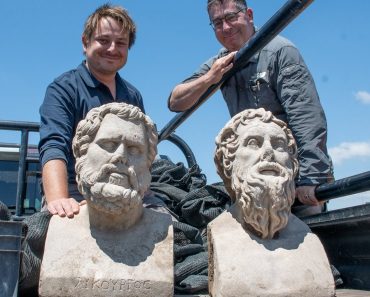
A study reveals that rigid Spartan society had flexible mechanisms to integrate those born out of wedlock and maintain its military power for centuries
The image of Sparta that has come down to us is that of a closed, militarized, and extremely rigid society, where only true-born citizens — the so-called homoioi or “equals” — had rights, and where any deviation from the norm was ruthlessly punished.
However, a study recently published by the National Pedagogical University of Kharkiv, in Ukraine, comes to dismantle part of this traditional narrative. Historian S. V. Miroshnichenko has thoroughly analyzed the status of illegitimate children in ancient Sparta and concludes that they were not a marginal group, but played a structural role in the social and military organization of the polis.
The work reviews ancient sources and modern historiography to trace the evolution of two little-known social categories: the partheniai and the mothakes. Both included children born out of formal marriage, but their treatment by the Spartan state varied drastically depending on historical circumstances, revealing an adaptability that contradicts the image of immobility usually associated with the city of the Eurotas.
The Myth of Spartan Rigidity
For centuries, Sparta has been presented as a model of conservative stability. The laws attributed to the semi-legendary Lycurgus supposedly froze the social structure around a core of warrior citizens who lived in equal conditions, shared communal meals (sisitiai), and dedicated their lives exclusively to war. This “community of equals” was sustained by the exploitation of the subjugated population — the helots — and by strict control of birth and education.
But reality, according to the study, was much more complex. The author points out that Lycurgus himself not only socialized land ownership, but also made marital relations “open.” Spartan women enjoyed unusual freedom for Greek standards: they practiced sports, could own land, and, above all, their main function was to bear healthy children to fill the ranks of the army.
What mattered was not so much legal marriage as the ability to produce future warriors. This pragmatic mindset created a fertile environment where extramarital births were not stigmatized, as long as they served the collective interest.
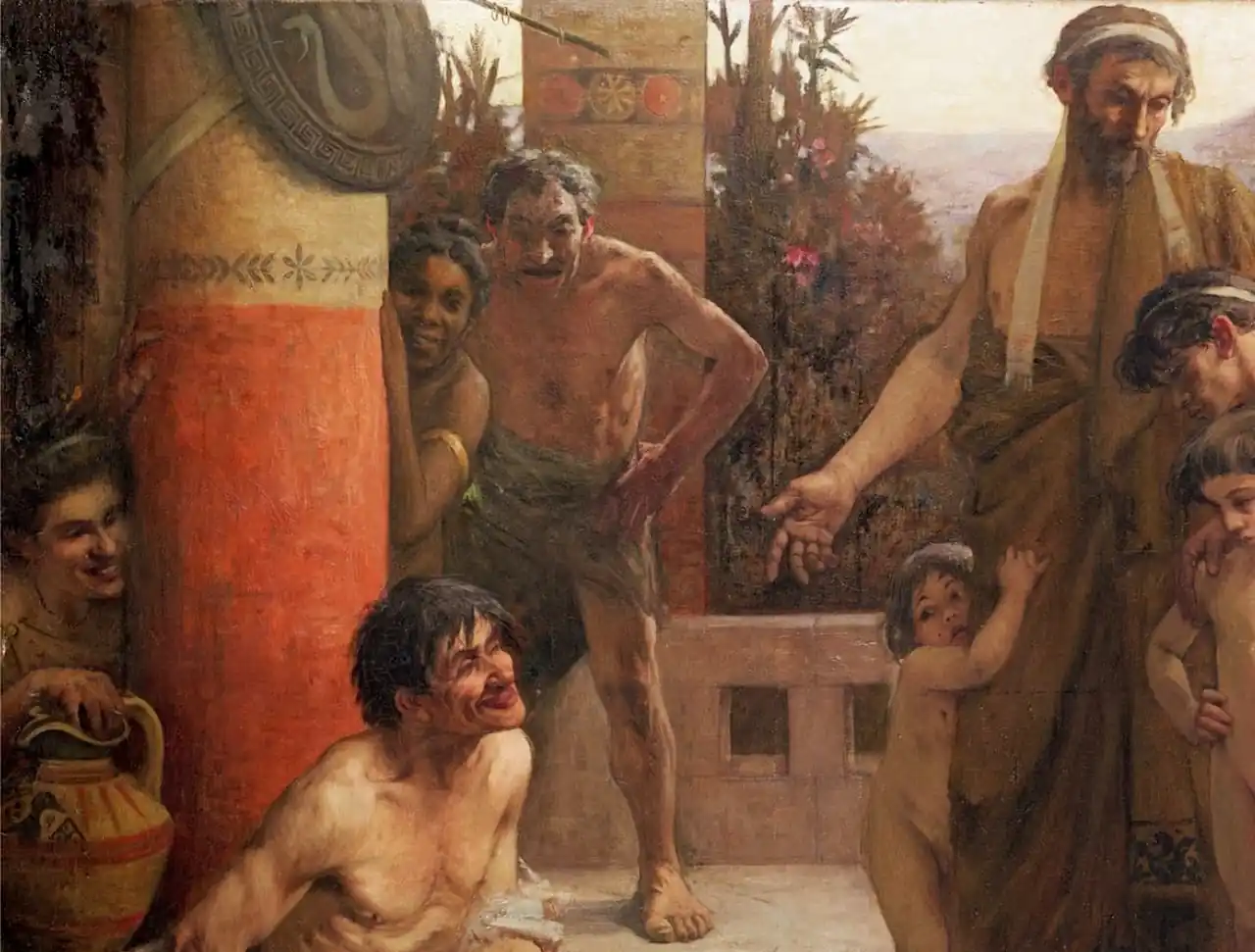
The primary criterion was the benefit to the State, not adherence to conventional family morality, the research explains. In this way, numerous groups of illegitimate children emerged who, depending on political and economic circumstances, could end up forming part of the partheniai or the mothakes.
The Partheniai: The Conflict That Led to the Founding of Tarentum
The first major category analyzed is that of the partheniai, whose origin dates back to the First Messenian War, a conflict that pitted Sparta against neighboring Messenia at the end of the 8th century BC and lasted about twenty years. During this long siege, Spartan warriors had sworn not to return home until victory. But after a decade, Spartan women, concerned about the continuity of the population, demanded the presence of young men who were not bound by that oath. From the unions of these soldiers with unmarried women were born children called partheniai, literally “born of virgins.”
However, at the end of the war and the distribution of Messenian lands, these illegitimate children were excluded from the allocation of lots (kleroi). This judicial decision denied them access to property, which meant the loss of any possibility of obtaining full citizenship. According to the historian Ephorus — cited by Strabo — the partheniai then attempted to conspire with the helots and the epenactae (concubines) to change their situation. The conspiracy was discovered and, as punishment, they were sent to found a colony in southern Italy: Tarentum, founded around 706 BC.
Other sources, such as the historian Antiochus of Syracuse, offer a different version: the partheniai were children of those citizens who refused to participate in the war and were downgraded to the condition of helots. In any case, the research highlights that the partheniai conflict marked a turning point: Sparta ceased to be a permeable society and consolidated into a closed oligarchy. The forced emigration of this group signaled the end of upward social mobility and the triumph of the corporate model of the “equals.”
The Mothakes: A Mechanism to Repopulate Citizenship
If the partheniai represent exclusion, the mothakes symbolize partial integration. The term mothakes appears for the first time in sources from the 3rd century BC, although the phenomenon seems to date back to the mid-4th century BC. It refers to a heterogeneous group that included children of foreigners and helots, and most likely, illegitimate children of Spartiates and non-citizen mothers.
The research describes the mothakes as a kind of social “buffer” between full citizens and the rest of the population. Raised alongside Spartiate children in the public educational system (agoge), they shared military training and warrior values with them. However, achieving full citizenship required more than education: it was necessary to own a plot of land (kleros), which in practice limited access for most of them. Those who failed to achieve this goal remained on an intermediate level, the hypomeiones or “inferiors.”
But the study highlights that mothakes of illegitimate origin had an additional path: formal adoption. The Spartiate father could legitimize his bastard son through a public procedure, supervised by the kings, which granted the adoptee inheritance rights and, with them, access to a kleros. This practice intensified after the approval, at the beginning of the 4th century BC, of the law of Epitadeus, which allowed the sale of land and thus facilitated the transfer of lots to children not born in marriage.
Adoption was carried out publicly in the presence of the kings, who had to ensure the legality of this legal act, the article notes. In this way, the Spartan system showed considerable flexibility in incorporating new members whenever demographic or military needs demanded it.

Two Famous Examples: Gylippus and Lysander
The work mentions two historical cases that illustrate the role that mothakes could play: the general Gylippus and the admiral Lysander.
Gylippus, who led the defense of Syracuse against the Athenians during the Sicilian expedition (415–413 BC), was of mothax origin. His peripheral status, far from being an obstacle, granted him greater tactical freedom to act outside the rigid Spartan canons, which contributed decisively to victory.
Lysander, for his part, was one of Sparta’s most famous commanders, the architect of the final defeat of Athens in the Peloponnesian War. His illegitimate birth and his connection to the mothakes circle fueled his political ambitions and his desire to concentrate power, challenging his city’s egalitarian traditions. Both cases demonstrate that social mobility, though limited, existed and could produce first-rate leaders.
The Turning Point: The Reforms of Nabis
The study devotes a special chapter to the Hellenistic period, when Sparta faced a severe demographic crisis. The number of full citizens had drastically decreased, and the traditional system was at risk of collapse.
It was then that the tyrant Nabis (who ruled between 201 and 192 BC) carried out the most radical reforms in Spartan history. According to the historian Polybius, Nabis granted citizenship rights to large groups of the population who had previously been excluded, including the descendants of extramarital unions and other disadvantaged groups.
For the first time, the Spartan state officially recognized equal rights for illegitimate children and the wards of the Spartiates, thus completing a long process in the evolution of the mothakes status.
The author concludes that this decision was not an isolated gesture, but the culmination of a trend that had been developing for centuries: the institution of the mothakes went from being a marginal category to becoming an instrument to recompose the “community of equals” in a new format.
A More Flexible Society Than Previously Believed
Miroshnichenko’s work offers a renewed vision of Spartan social organization. Far from being a monolithic and immutable block, Sparta emerges as a dynamic system that developed institutional mechanisms to adapt to demographic, military, and political challenges.
The evolution of the policy toward illegitimate children is divided into three clear phases: until the 7th century BC, they could be incorporated into the civic body; between the 7th and 4th centuries BC, social segregation predominated; from the 4th century BC onward, mechanisms of partial integration were set in motion. The partheniai marked the end of social mobility and the consolidation of a closed oligarchic model, while the mothakes became a resource to mitigate the shortage of citizens.
According to the researcher, the study shows that the illegitimate children of Spartiates did not constitute a peripheral or socially isolated stratum, but played a structural role in the social and military organization of Sparta. She adds that the results indicate that Spartan society was more flexible than traditionally believed and demonstrated structural adaptability in the regulation of citizenship.
This research, published in a Ukrainian academic journal, joins a revisionist trend that in recent decades has questioned the clichés about Sparta. Authors such as Paul Cartledge, Stephen Hodkinson, and Andrew Bayliss had already pointed in this direction, but Miroshnichenko’s work systematizes the analysis of the two illegitimate groups and presents them as parts of the same machinery.
The author uses an interdisciplinary methodology that combines historical-genetic analysis, comparative law, demography, and systems theory. This allows her not only to trace the legal evolution of these children’s status but also their function as stabilizers of a system that, paradoxically, was based on inequality.
The study also takes into account the context of Greek colonization: the founding of Tarentum was not an isolated event, but a safety valve for a Sparta that needed to dispose of disruptive elements without endangering internal cohesion.
Although the analysis focuses on a civilization that disappeared more than two thousand years ago, the conclusions invite reflection on the nature of human societies. The rigidity of norms is not incompatible with the existence of mechanisms of exception that allow the system to survive. In Sparta’s case, the integration of illegitimate children through adoption or shared training was not a concession to social justice, but a pragmatic strategy to maintain the number of warriors and avoid collapse.
SOURCES
S. V. Miroshnichenko, Illegitimate children in Sparta: origin, social status, role in society. Studies in History and Philosophy of Science and Technology, vol. 35 No.1 (2026), doi.org/10.15421/272612