

New genetic research reveals a striking Etruscan paradox: the ancient civilization’s genes shifted dramatically over the centuries, but its language did not. The findings come from a large study of ancient DNA led by Cosimo Posth of the Department of Archaeogenetics at the Max Planck Institute for the Science of Human History in Jena, Germany.
The study appears in the journal Science Advances. The Etruscans lived in central regions now known as Tuscany, Lazio, and Umbria, starting around the eighth century BC.
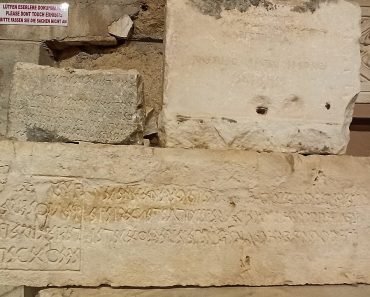
They spoke a language unrelated to any other tongue in the area, setting them apart from their Latin-speaking neighbors. Historians have argued for centuries over where the Etruscans came from.
Some ancient writers claimed they arrived from Anatolia, in what is now Turkey. Others insisted they grew locally out of earlier Bronze Age cultures.
Ancient genes expose an Etruscan language paradox
The study examined genetic material from 82 ancient individuals spanning nearly 2,000 years, from 800 BC to 1000 CE. Researchers found no evidence of a recent migration from the Near East.
Instead, the Etruscans carried a large share of ancestry linked to Bronze Age herders from the Pontic-Caspian steppe, the same ancestry that helped spread Indo-European languages across Europe.

Yet the Etruscans kept their non-Indo-European language alive for centuries, a pattern researchers call the clearest sign of the Etruscan paradox: genes on the move, language standing still. Researchers suggest the language survived because early Italic-speaking newcomers were absorbed into Etruscan society, rather than the reverse.
That genetic picture remained stable for almost 800 years, through the rise of Etruscan civilization and its later absorption into the Roman Republic. Everything changed sharply during the Roman Imperial period.
Researchers found that roughly half the local gene pool was replaced by ancestry from the eastern Mediterranean, a shift linked to the movement of slaves, soldiers, and free citizens across the expanding empire.
Longobards and time reshaped modern Italian ancestry
Centuries later, another shift followed. Ancestry linked to northern Europe entered the region during the Early Middle Ages, lining up with the arrival of the Longobards, a Germanic people who ruled parts of the peninsula after Rome’s fall.
By the end of the first millennium CE, the genetic makeup of the region closely resembled that of people living there today. Researchers say the core ancestry of modern central and southern populations was largely in place by then, roughly 1,000 years ago.
Posth and his colleagues say the findings show that language and genetics do not always move together.
The Etruscan case, according to the study, stands as one of the clearest examples of a community holding onto its language despite big genetic change, a pattern echoed today by the Basque language surviving in northern Spain.