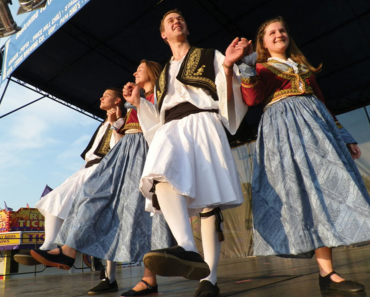
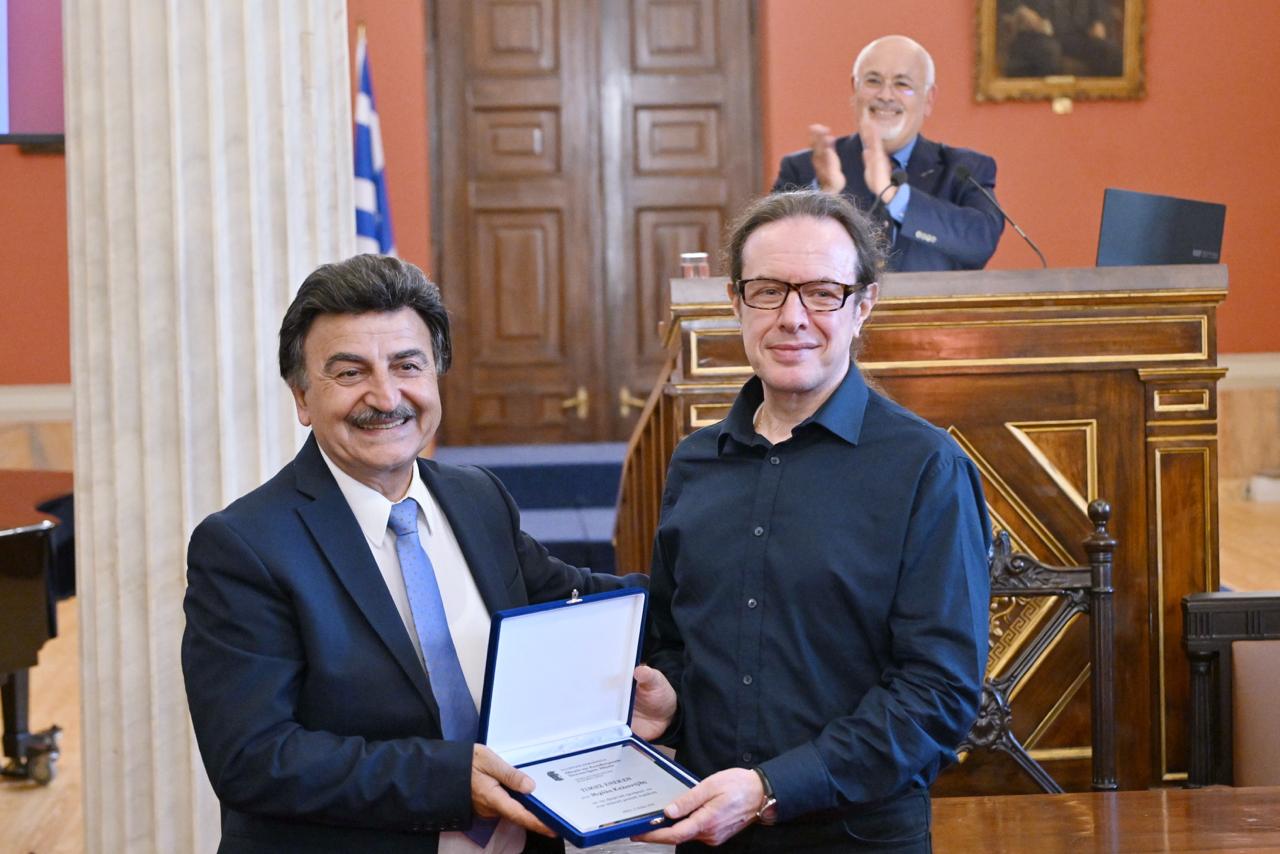
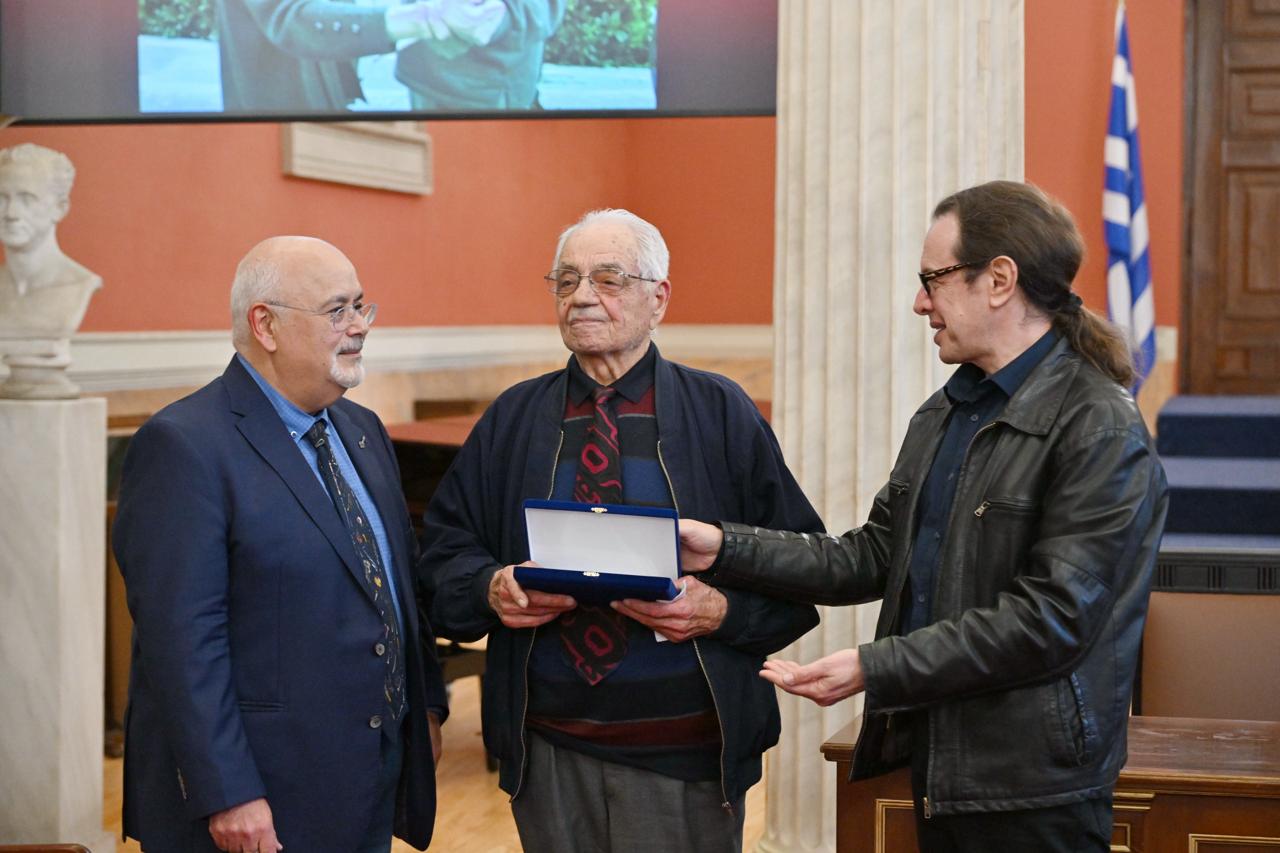
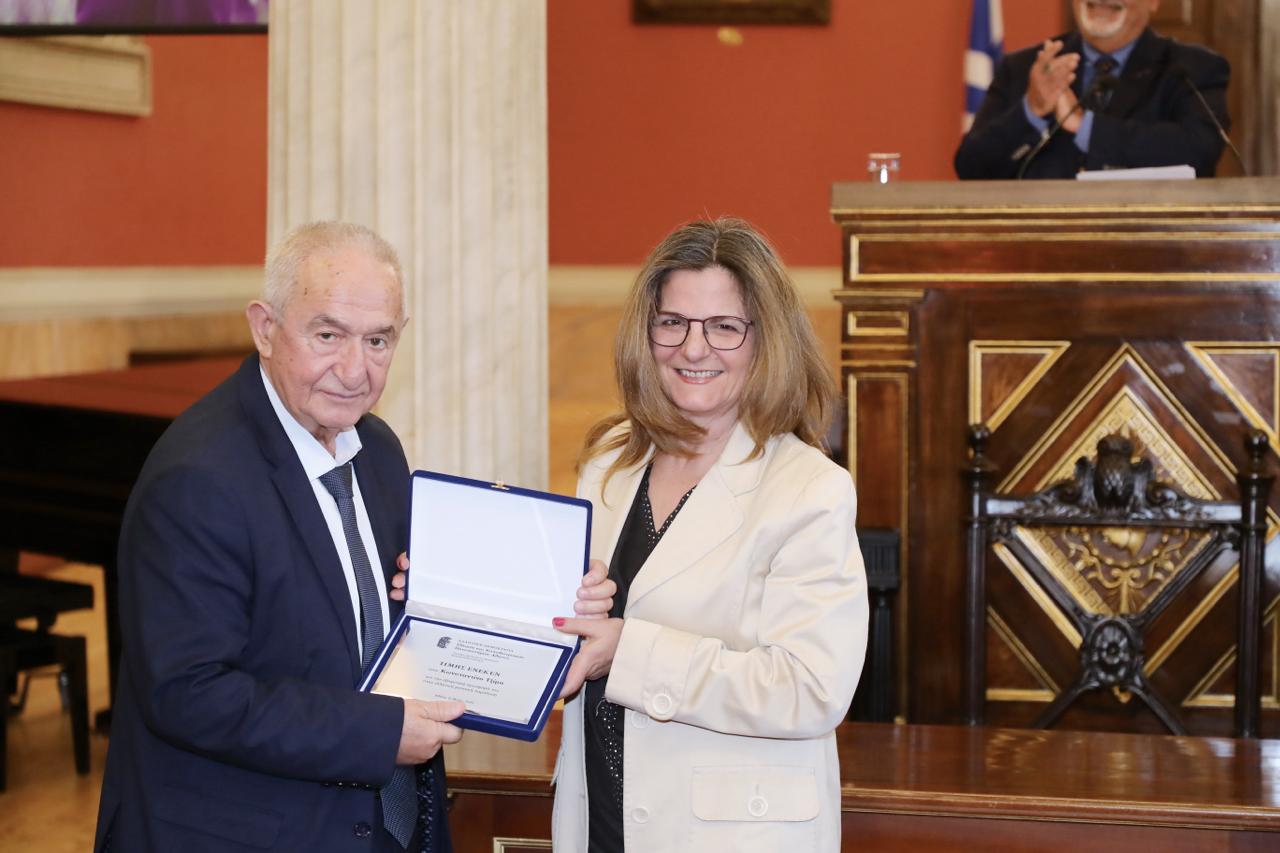
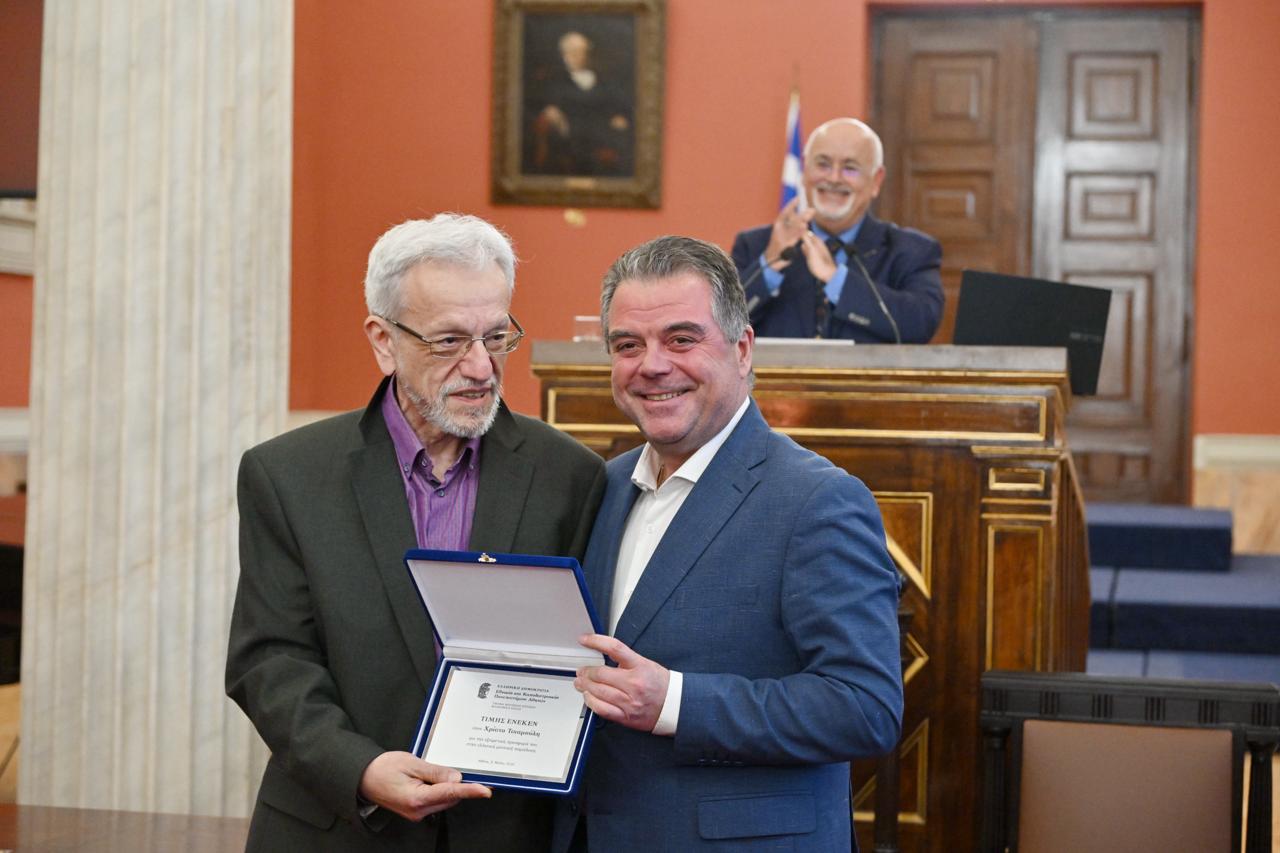
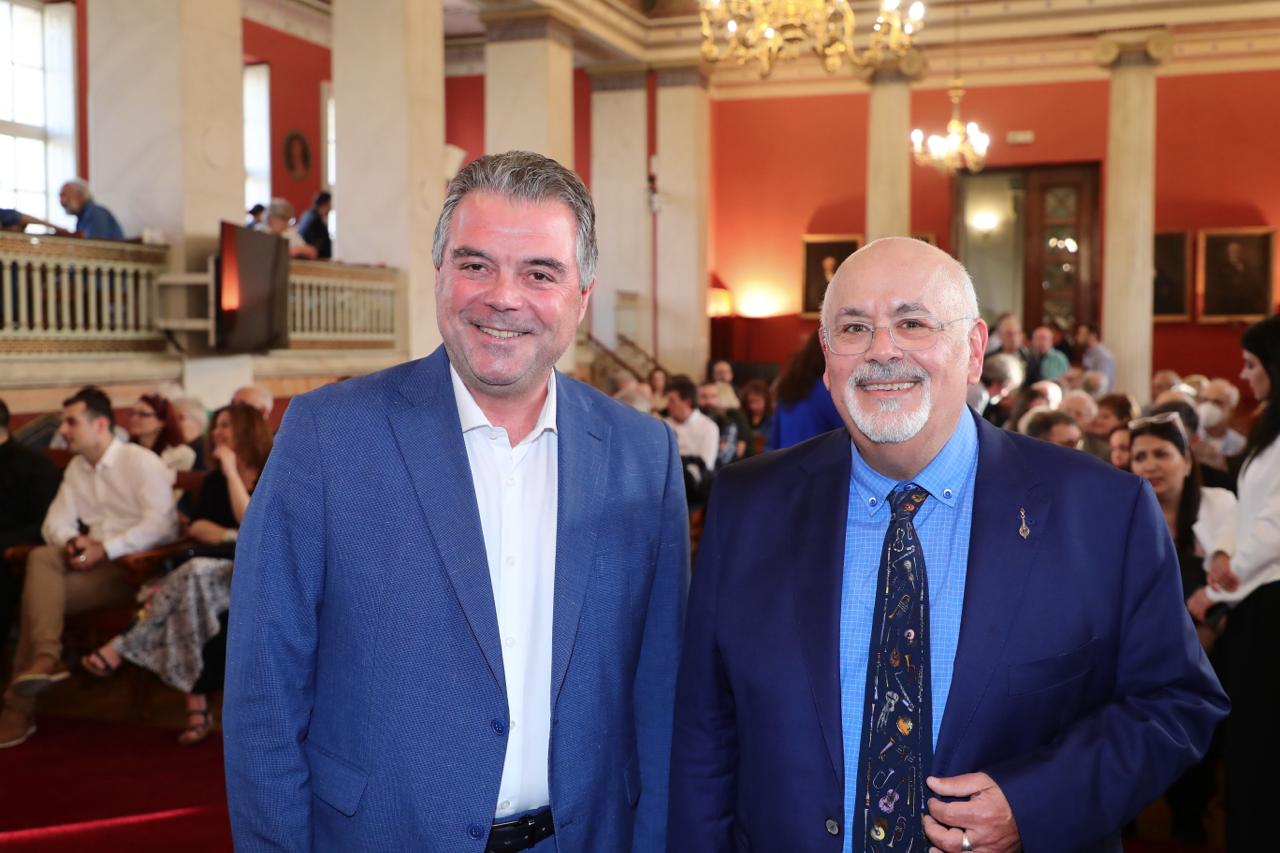
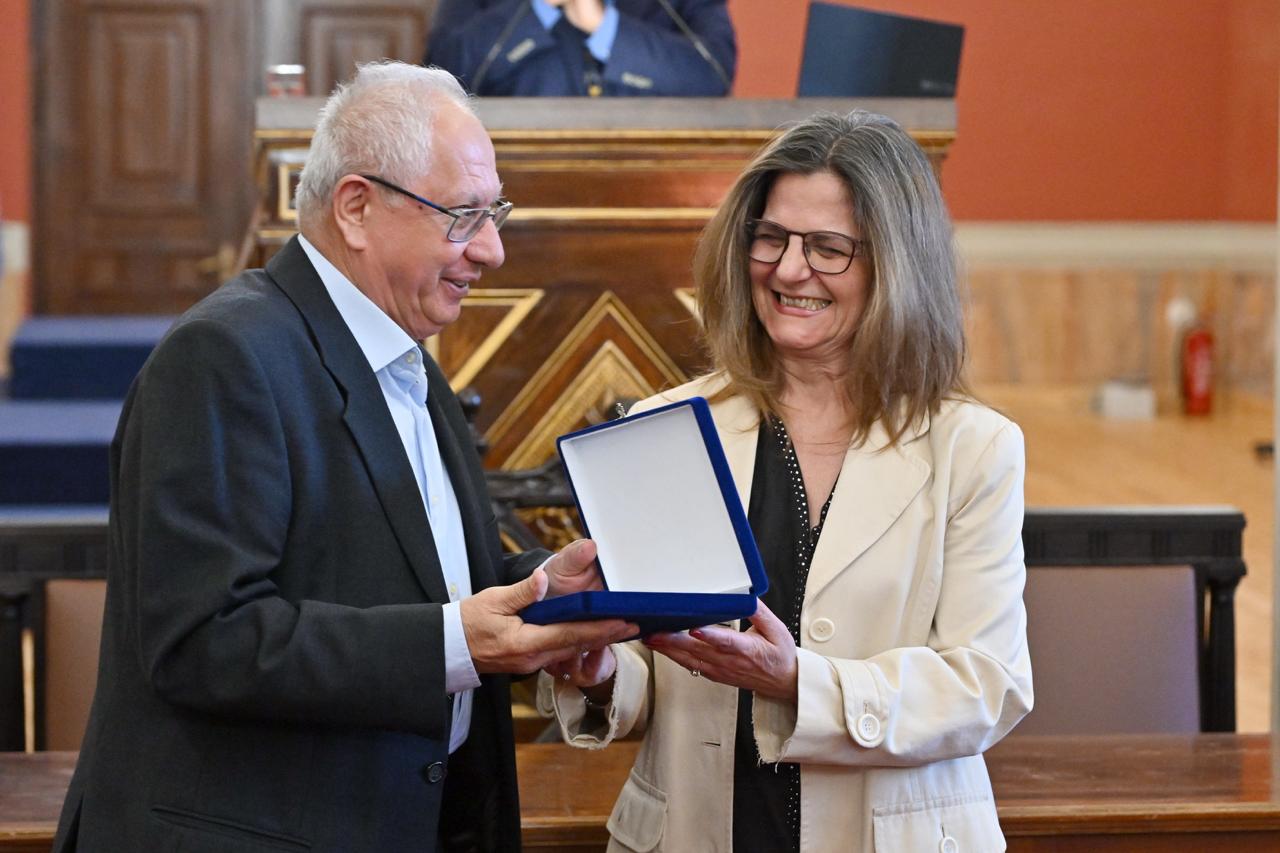
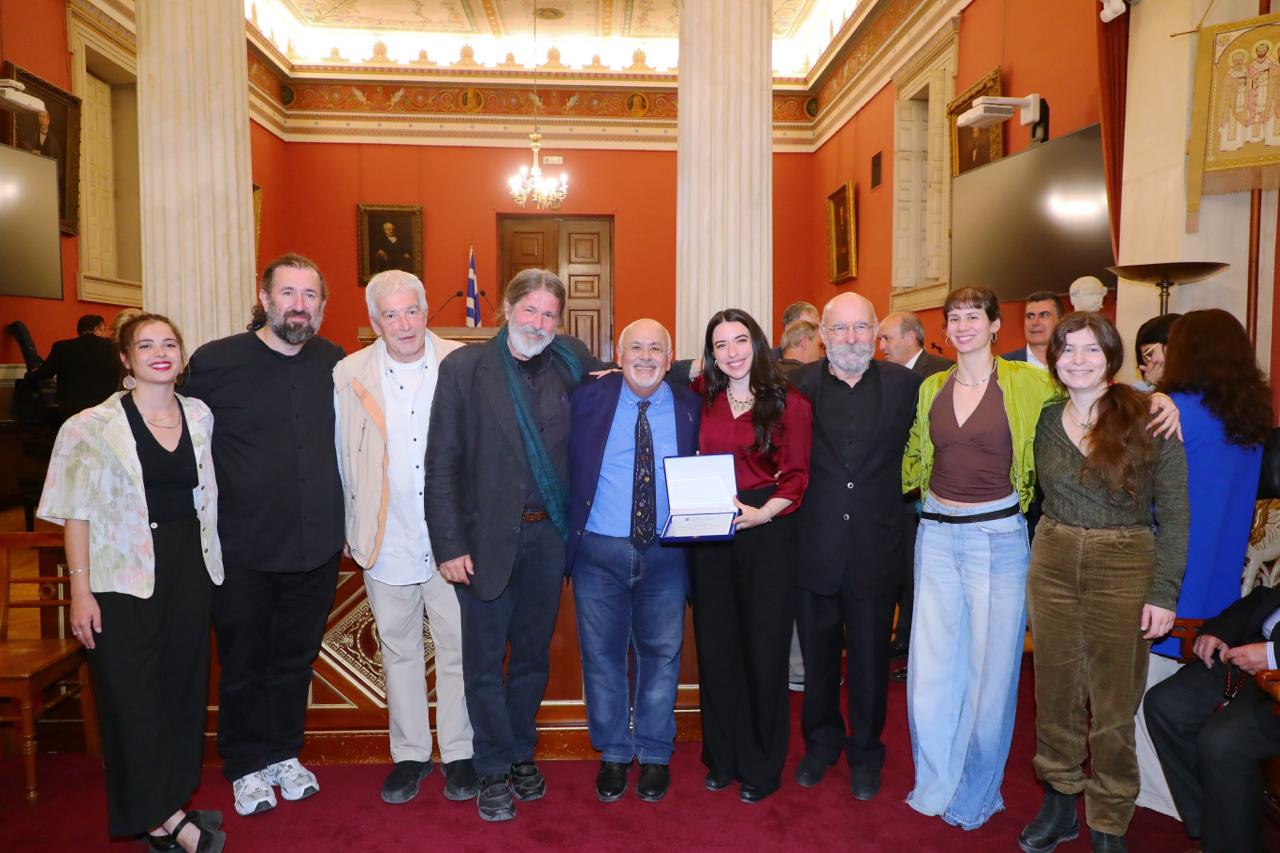
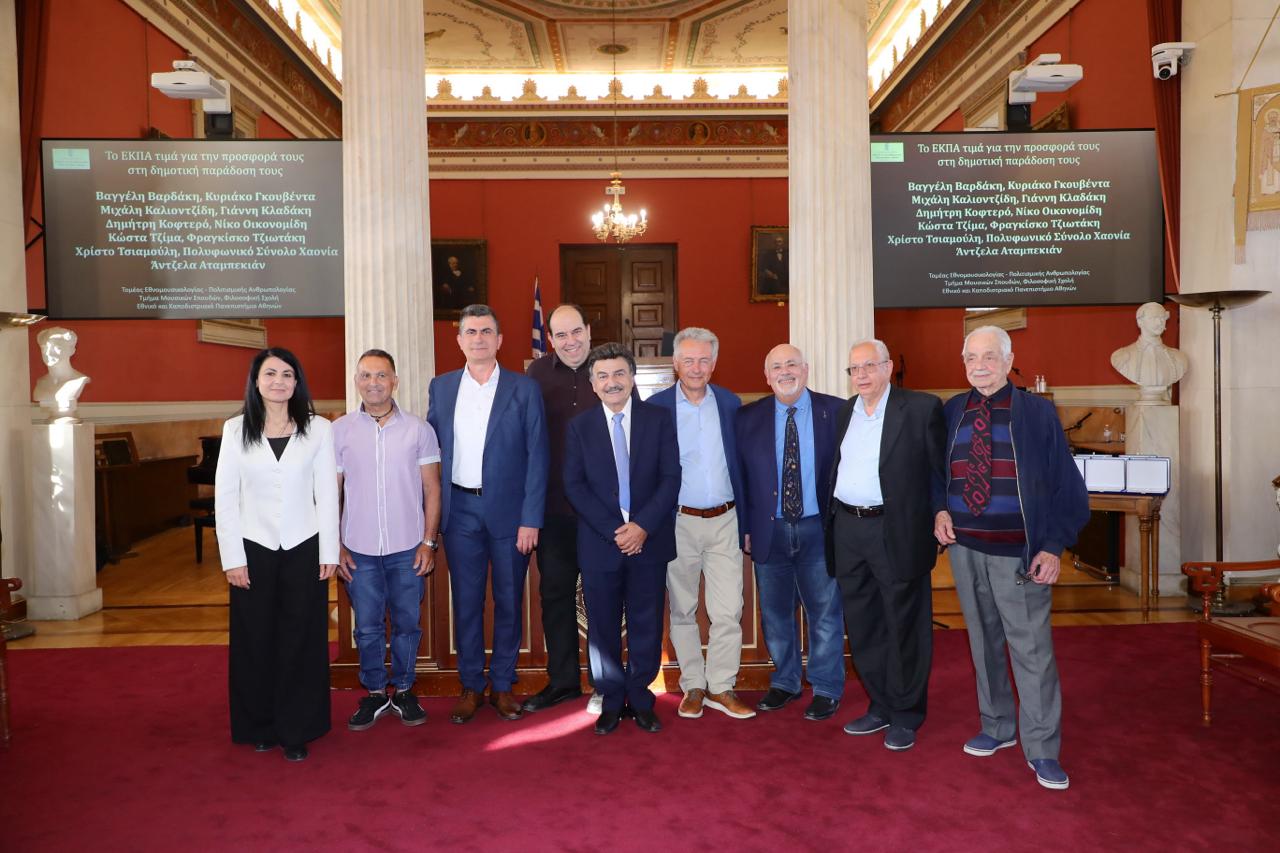
The National and Kapodistrian University of Athens honoured prominent performers and practitioners of Greek traditional music at a special event organised by the Department of Music Studies’ Section of Ethnomusicology and Cultural Anthropology.
The tribute recognised their long-standing contribution to Greece’s musical heritage.
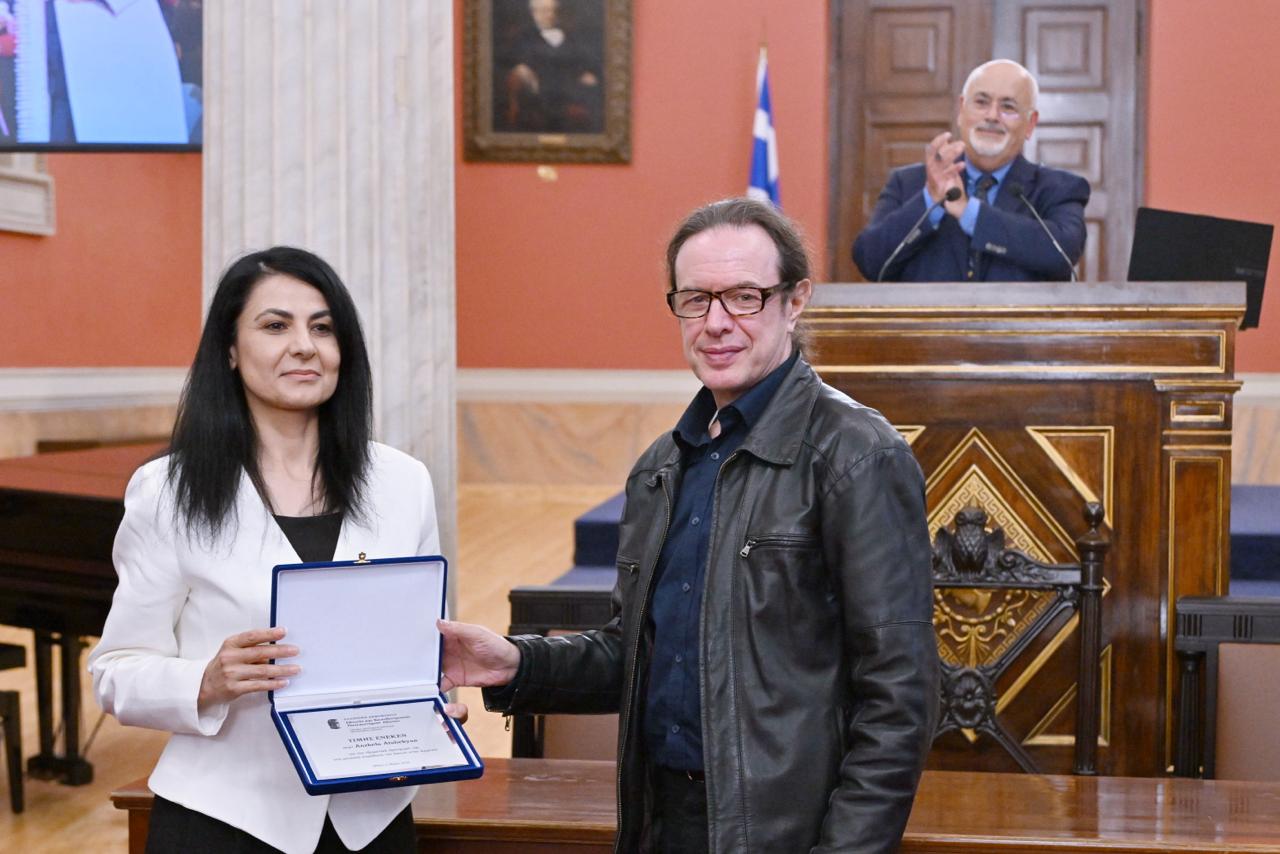
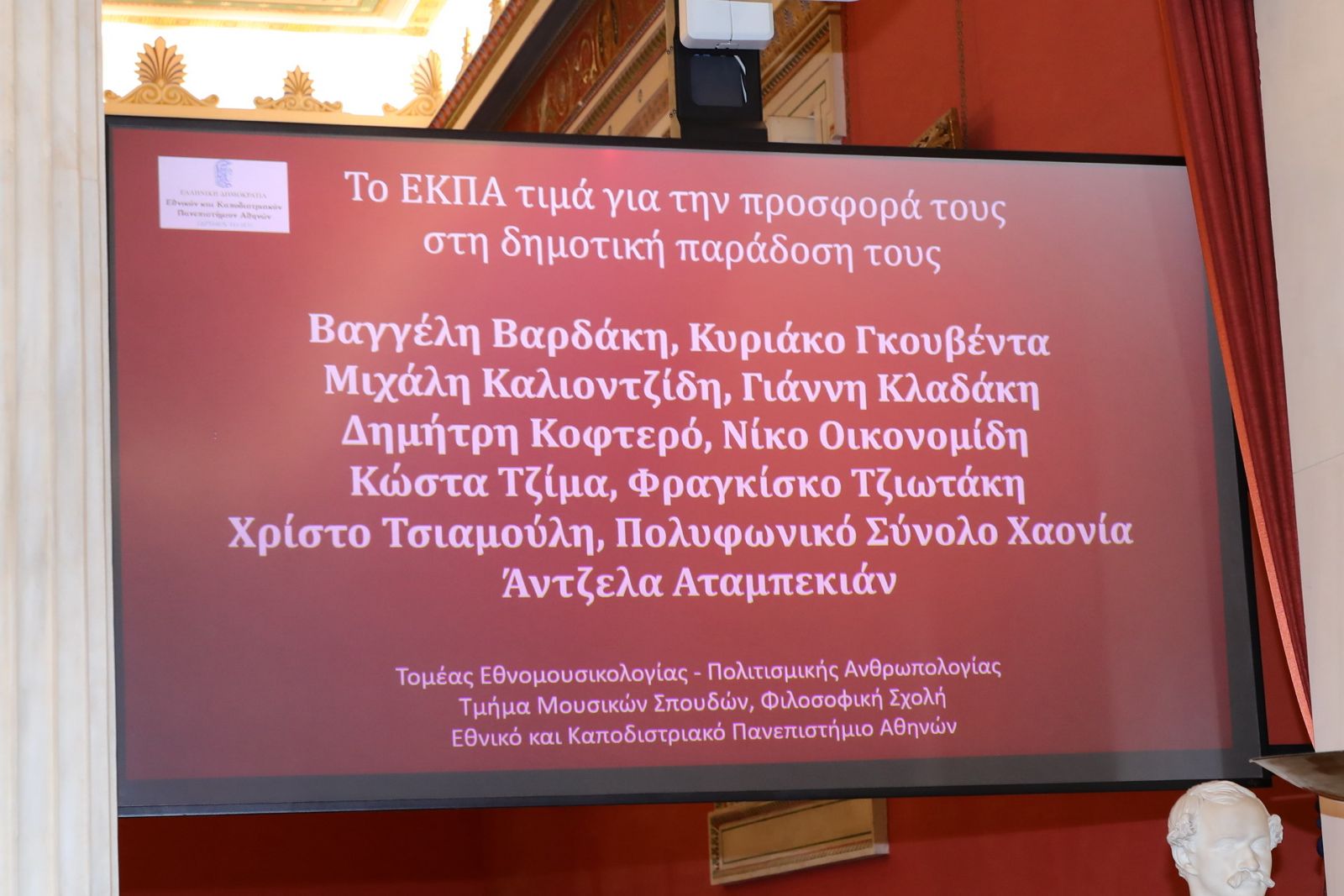
Those honoured were Vangelis Vardakis (folk violin), Kyriakos Gouventas (folk violin), Michalis Kaliontzidis (Pontic lyra), Yannis Kladakis (Dodecanese lyra), Dimitris Kofteros (santur), Nikos Oikonomidis (folk violin), Kostas Tzimas (Epirote singing), Fragiskos Tziotakis (tsambouna and folk violin), and Christos Tsiamoulis (oud and music theory). The vocal ensemble Chaonia was also recognised for its work in preserving Epirote polyphonic singing. Greek-Armenian kanun virtuoso Anzhela Atabekyan was likewise honoured.

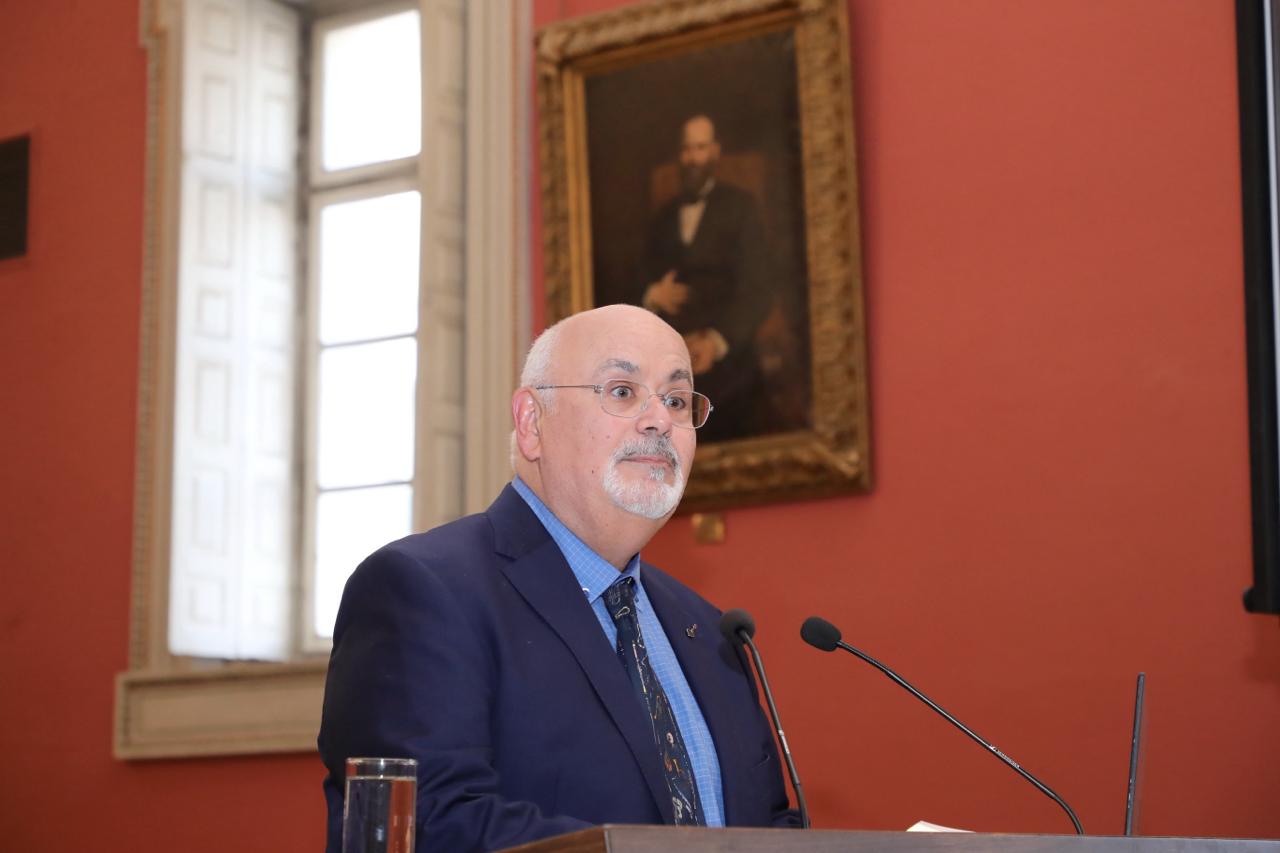
Opening remarks were delivered by Professor Achilleas Chaldaeakes, a member of the University’s Administration Council.
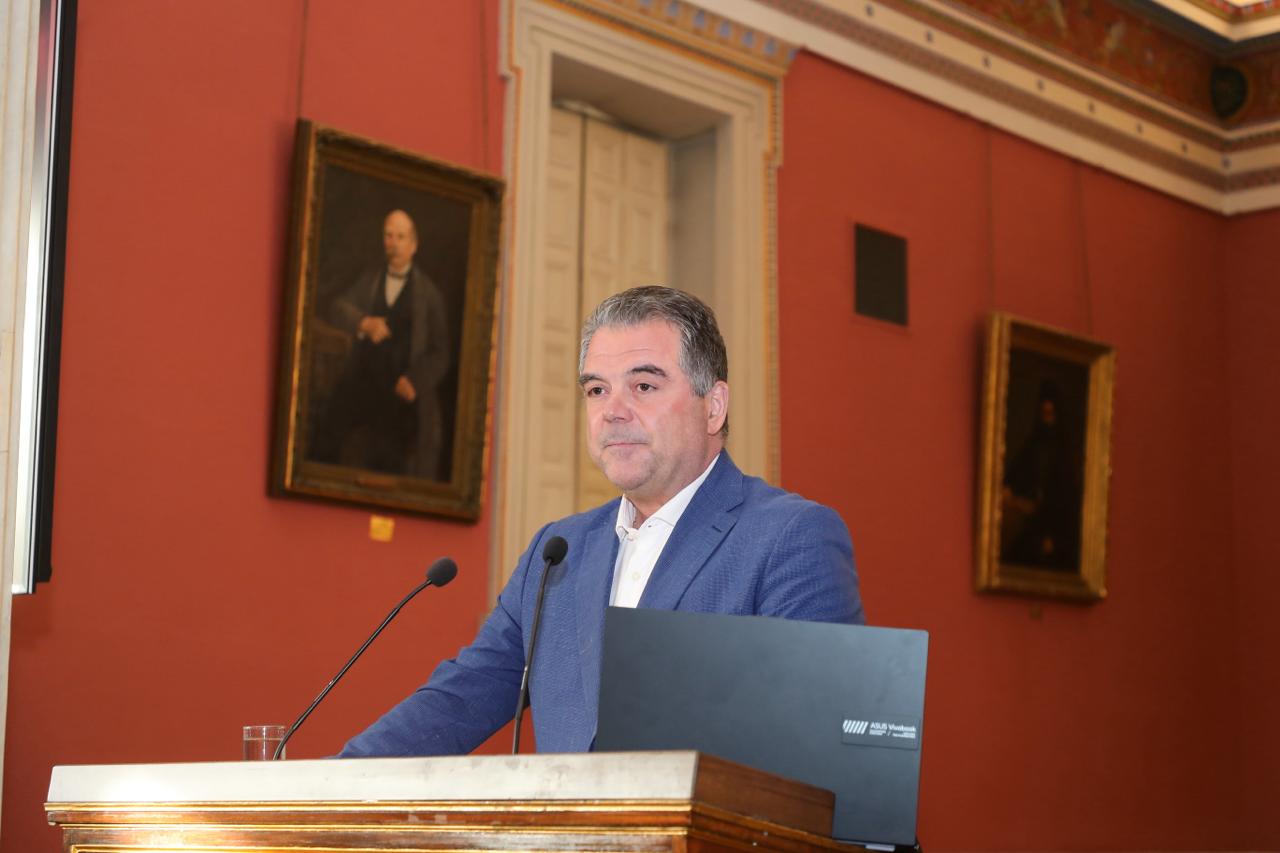
Professor Anastasios Hapsoulas, Chair of the Department of Music Studies, also addressed the audience.
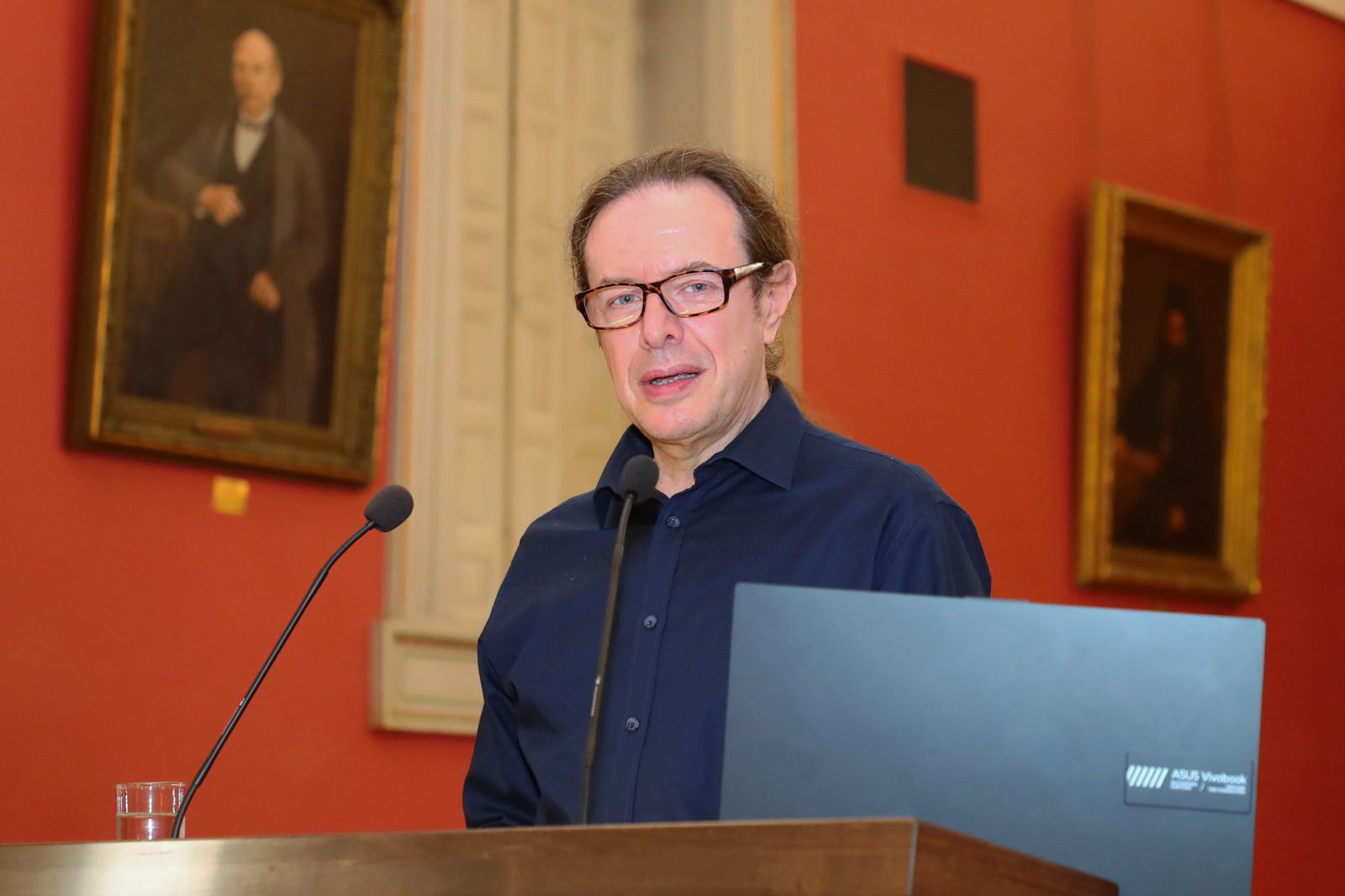
Professor Lambros Liavas presented the honourees and spoke about the importance of safeguarding and transmitting Greece’s diverse musical traditions.
The event concluded with a performance by students of the MA programme in Ethnomusicology and Musical Practice, directed by Alexandros Kapsokavadis.
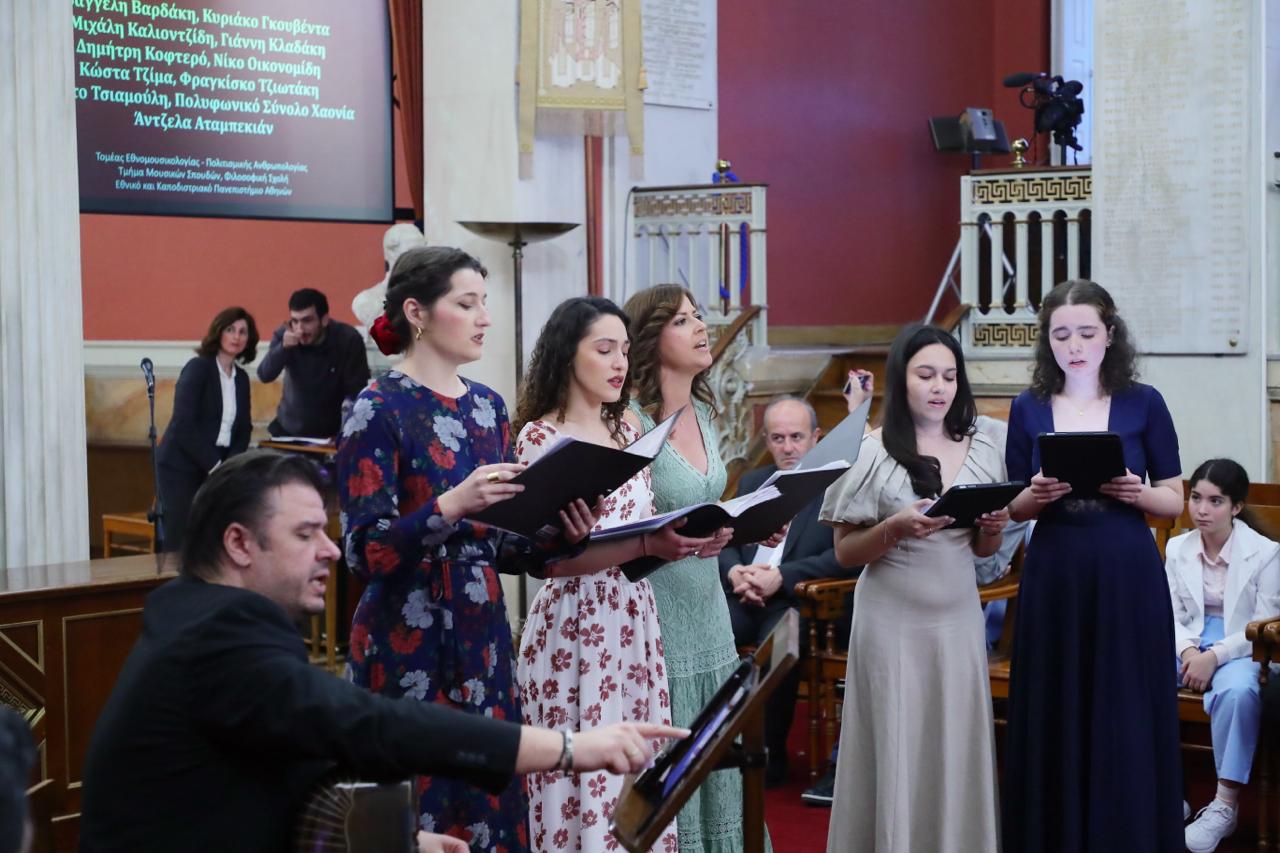

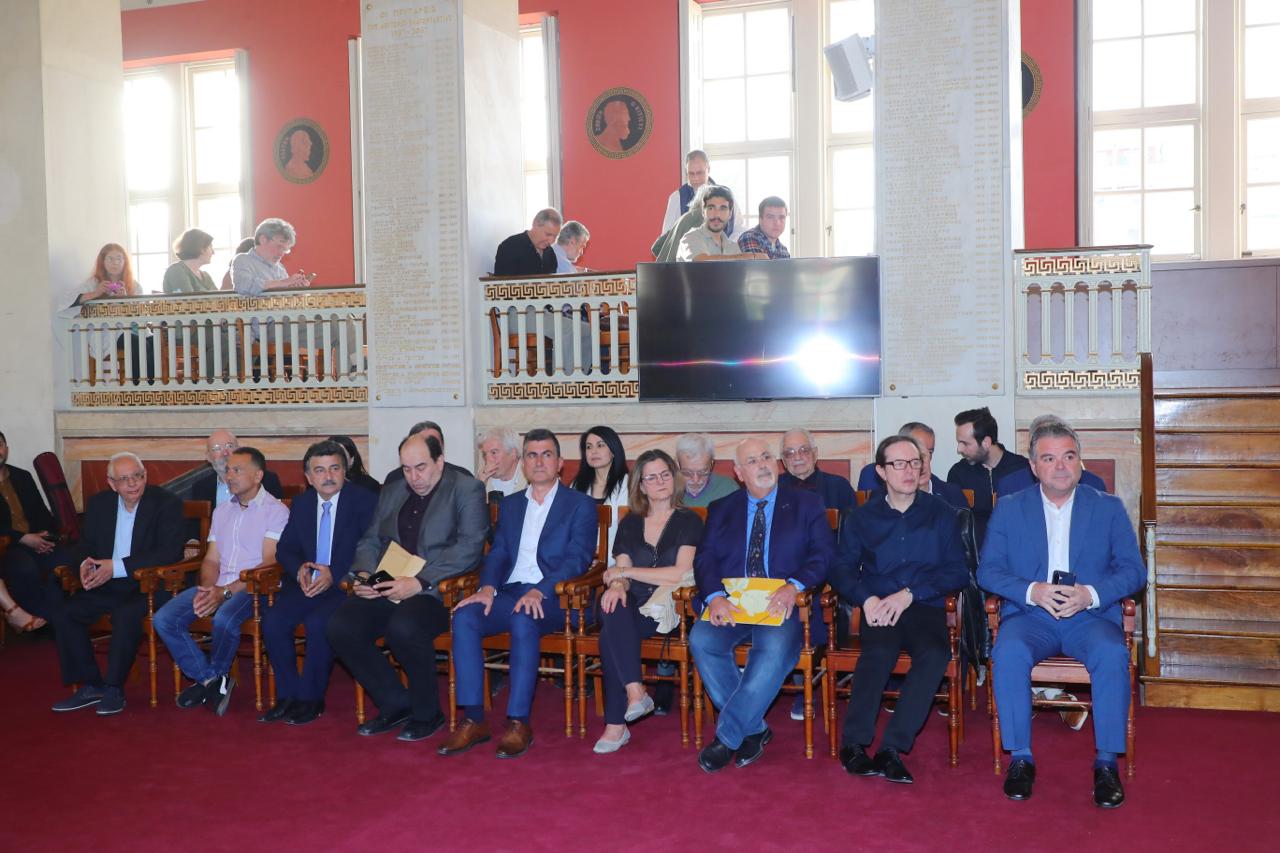
Speaking to Ta Nea, Professor Liavas described the honourees as representatives of living traditions, noting that each carries a distinct regional musical heritage. He added that their work continues to shape musical expression through repertoire, performance practice, and vocal tradition. He also emphasised the university’s responsibility not only to document and study these traditions, but to ensure they remain visible and relevant for future generations, highlighting both well-known artists and the many individuals who have contributed to preserving Greece’s musical heritage over time.
Referring to the criteria behind the selection of the honourees, Professor Liavas said: ‘These are outstanding and widely respected musicians whose work has become emblematic of the regions and musical traditions they represent. Their artistry reflects not only the authenticity and ethos of those traditions but also the personal values and lifelong commitment that have shaped their careers. In addition to their long-standing contribution and recognition – both within their local communities and across Greece – an important consideration was their active role in researching, documenting, promoting and passing on Greece’s musical heritage. Although they belong to three different generations, each has built a remarkable body of work and earned the respect of fellow musicians and students, the admiration of audiences, and the esteem of their friends. As an academic community devoted to music, we believe it is our responsibility to publicly acknowledge their contribution and to pay tribute to their lasting impact.’
Professor Liavas also noted that the dialogue between traditional music and academia began a decade ago, when the Department of Music Studies launched the MA programme in Ethnomusicology and Musical Practice. Since last year, the undergraduate curriculum has also included a dedicated pathway in traditional singing and folk instruments.

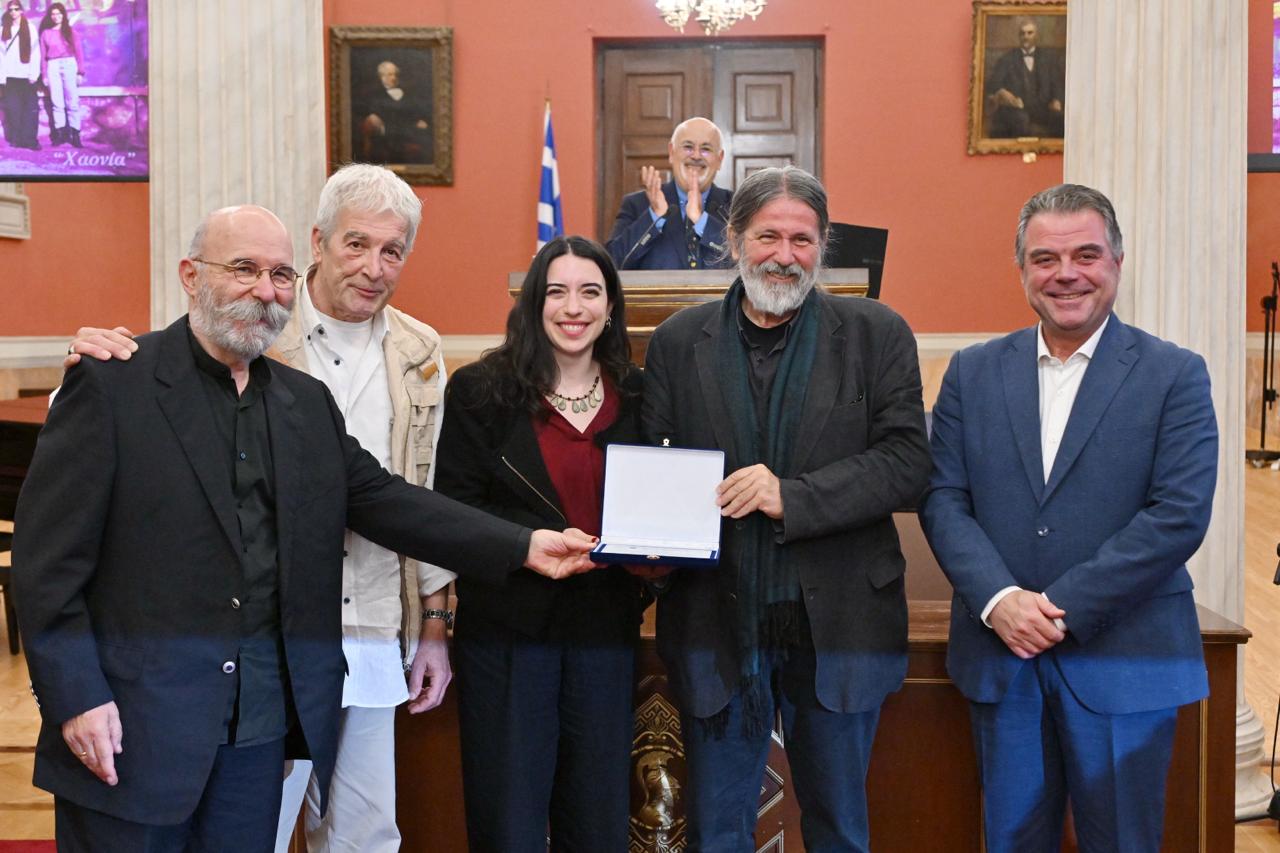
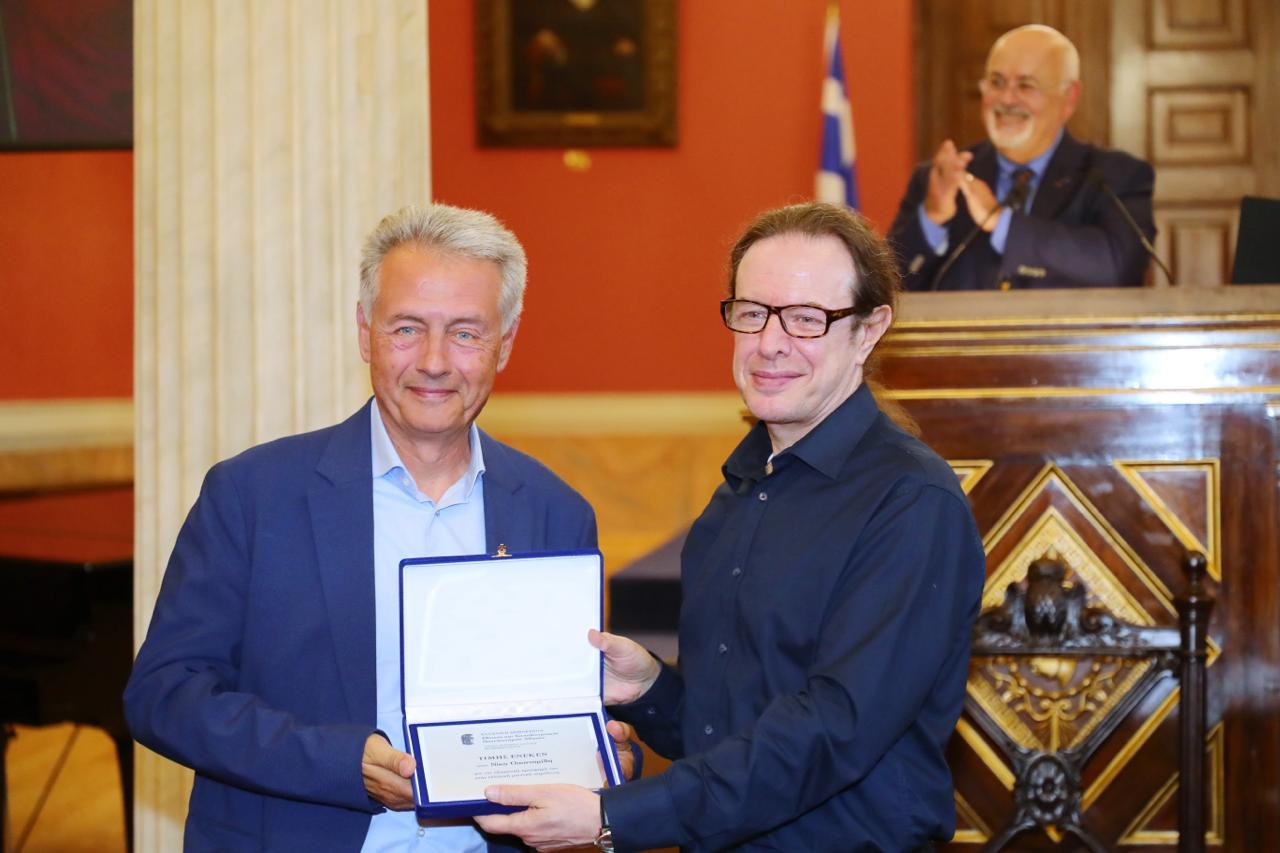



Photos: Dimitris Konstantinidis