Turkey’s Foreign Ministry criticized Greek officials and public events marking what Greece officially describes as Pontic Greek Genocide Remembrance Day, accusing Athens of using history for political purposes and reviving a dispute that has long strained Turkish-Greek relations.
The statement was issued Tuesday, May 19, the date Turkey commemorates to mark the landing of Turkey’s founding father in Anatolia to start a war of independence against allied forces that occupied the country after the end of World War I and Greece marks as a day of remembrance for what it calls the genocide of Pontic Greeks, an Orthodox Christian community from the Black Sea region of what is now northeastern Turkey.
The Turkish ministry said Greece had advanced what it called “Pontus” allegations through legislation adopted in 1994 and had incorporated them into school curricula. It said the claims “lack any legal foundation” and accused Greece of using them to cover up its own conduct during the Greco-Turkish War of 1919 to 1922.
“We call on Greece to adopt an approach that will foster the development of our bilateral relations on the basis of peace and cooperation, rather than using history to incite animosity,” the ministry said.
The statement came after Greek officials marked the annual remembrance day. Greek President Konstantinos Tasoulas said Greece honored the victims of what he called the Pontic genocide, describing it as a crime against humanity under the Ottoman Empire and calling for its international recognition.
Greek Prime Minister Kyriakos Mitsotakis said in a social media message cited by Greek media that the day recalled “the systematic extermination of 353,000 of our compatriots.” He referred to persecutions, executions, death marches, forced labor battalions and the destruction of villages, churches and monasteries.
Greece officially established May 19 as the Day of Remembrance of the Genocide of the Greeks of Pontus under Law 2193/1994. A Greek Foreign Ministry text from a 2017 parliamentary session says the law was adopted unanimously and entered into force after a parliamentary resolution.
The International Association of Genocide Scholars lists a 2007 resolution on the Assyrian and Greek genocides among its official resolutions. Greek officials and Pontic organizations cite the resolution in their campaign for international recognition.
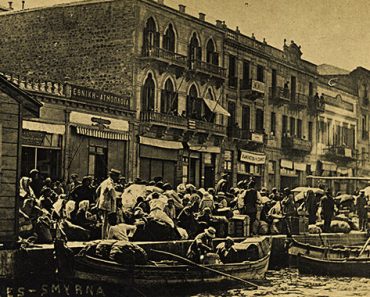
Turkey denies that the events amounted to genocide and says the Greek position distorts the history of the period. Ankara’s statement said Greece should acknowledge crimes against Turks and other ethnic groups, citing the 1821 Tripolitsa massacre and the conduct of the Greek army in Western Anatolia after Greek forces landed in İzmir on May 15, 1919.
The ministry also cited Article 59 of the 1923 Treaty of Lausanne. The article says Greece recognized an obligation to make reparation for damage caused in Anatolia by acts of the Greek army or administration that were contrary to the laws of war, while Turkey waived claims for reparation because of Greece’s financial situation after the war.
The exchange comes during a period in which Ankara and Athens have tried to maintain dialogue despite disputes over the Aegean, Cyprus, migration and maritime jurisdiction.
The dispute remains one of several historical issues that can interrupt the efforts to improve bilateral relations.