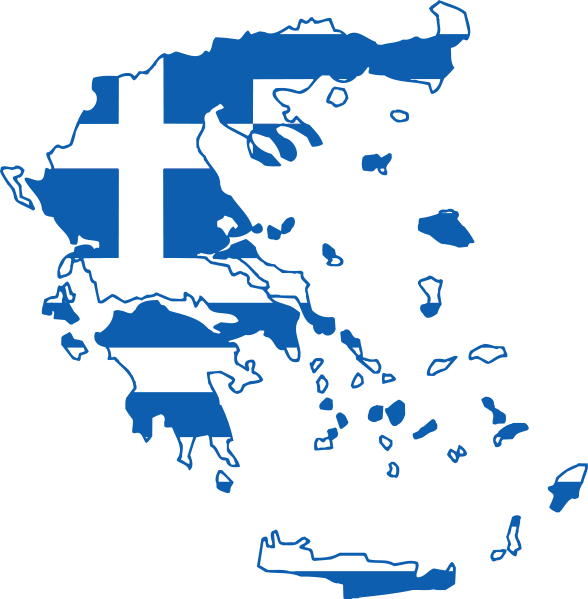

The Battle of Crete has been widely written about.
It was an important geostrategic WWII battle (May – June 1941), to secure Crete; a regionally crucial area for both German (Axis) and British (Allies) interests, in which the Cretan people became unwillingly embroiled.
The Germans aimed to secure Crete as part of their southern flank before invading the Soviet Union. They wanted to prevent British forces from establishing air bases in Crete, lest they bomb the Romanian oilfields (which provided Germany’s war machine fuel). The Allies (British, ANZAC and Greek forces) aimed to secure Crete’s geographically significant port in Suda, to prevent Germany from procuring a base there, as it could threaten British interests in Egypt, the Suez Canal and oil supplies in the Middle East.
A primarily airborne invasion was decided upon by the Germans – including dropping elite paratroopers at strategic points throughout Crete to secure the island’s three airbases (Maleme, Rethymno and Heraklio). Due in large part to miscalculations by Lieutenant-General Freyberg of the Allied forces, the battle was won by the Germans who ended up occupying Crete for four years until 1945.
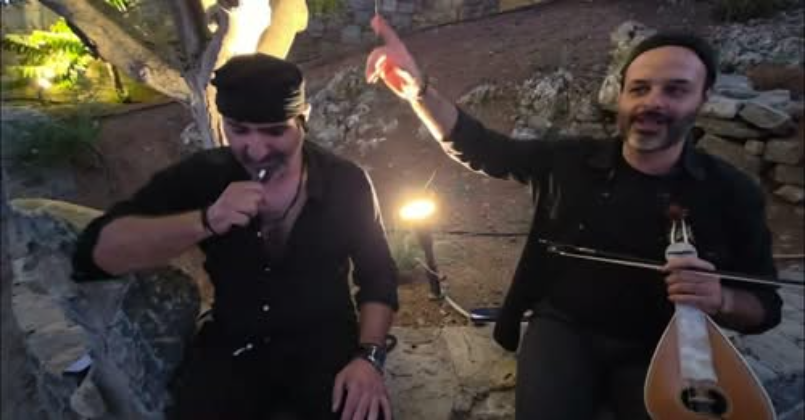
The Germans thought taking Crete would be an easy win lasting for a few days Two major factors though, acknowledging both our Greek and Australian cultures played a part in daunting the enemy: a) The bravery and sacrifice of the ANZACS (and other Allies), but especially b) the tenacity of the local Cretan people, overwhelming the German invaders, both physically (using their farming implements and/or old rifles), and mentally (refusing to surrender, fighting courageously to defend their land and people).
Furthermore, obviously under-estimated by the Germans, was the Cretans long history of defending themselves against invaders such as Romans, Byzantines, Arabs,Venetians and Ottomans.
Important military history and academic references aside, several ‘Battle of Crete’ homages and /or expressions celebrating the bravery of the Cretan people appear through specific Greek songs, with poignant lyrics and music.
Through song, this important historical event is encapsulated on a deep and heartfelt level; more so perhaps than the purely written word, and even theatre or film. Music tends to resonate on a primal human level and it is with this in mind that I decided to speak with the creator of the latest Greek song I discovered, literally titled (from Greek to English) ‘The Battle of Crete’ (2024), by Menelaos Ntagiantas. He is a Cretan musician and teacher, who plays and teaches traditional Cretan instruments such as the lyra and mandolin.
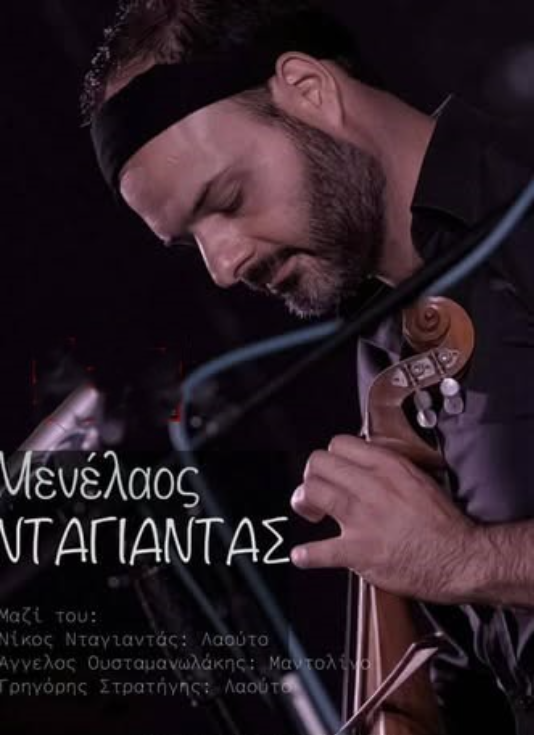
Menelaos Ntagiantas hails from a mountainous region of Crete -Anogeia, Rethymno, bordering Heraklio; an area famed for its heroic resistance against the Germans in The Battle of Crete. Anogeia is also known for its rich music culture.
The famous Cretan musicians – the Xylouris brothers, Nikos (Psaronikos), Antonis (Psarantonis), Giannis (Psarogiannis) and Giorgos Xylouris (Psarogiorgis) are also from Anogeia, The latter – Giorgos (who passed away this year), is a renowned Cretan laouto player with deep ties to Australia. He lived in Melbourne for eight years and recorded albums there, while his children also perform Cretan folk music.
‘The Battle of Crete’ song’s producer / musician and vocalist, Menelaos Ntagiantas has actually performed with Xylouri brother – Giannis (Psarogiannis), considering him a master musician and inspiration for his own Cretan instrument playing and teaching techniques.
Music wise, ‘The Battle of Crete’ is melodic and slow paced – haunting and beautiful, with Menelaos Ntagiantas stating “a very personal story” as his main inspiration for this song:
“It is the story of my grandmother who at age 7, lost her father – my great grandfather, in the actual Battle of Crete. It happened on the 2nd day of the Battle, 21st May 1941. My great grandfather was not just an unarmed civilian but a simple, peace-loving shepherd. The Germans executed him in cold blood on the spot, as part of their vicious reprisals.”
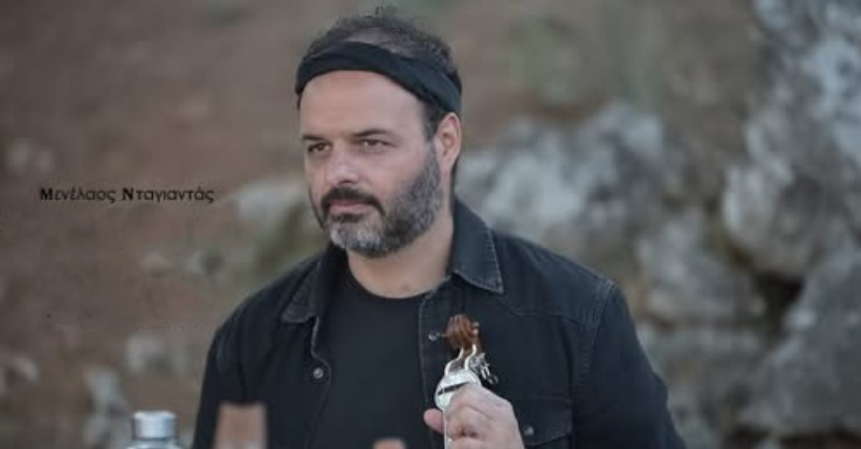
With his voice drowning in emotion, he continues: “The German paratroopers didn’t even fall in my great grandfather’s area which was on flat grazing land in Agako, Anogeia. They landed in Malame, over 100kms away. So why kill my innocent great grandfather, a young man then, when he had nothing to do with attacking Germans?”
The words in Menelaos Ntagiantas’ song, (written by friend and writer Stefanos Rodousakis) pay homage to the bravery of all Cretans during the Battle of Crete; to the fighters and martyrs, who have “forever left their names sealed in blood in Crete’s soil.”
The song also acknowledges the elderly, the women and children who fought courageously without guns beside the men. Included in the lyrics are odes to the Cretan people’s conviction of self-determination and love of homeland, through analogies to eagles and lions: symbols of strength and pride.
“Whoever walks the Cretan earth should always recall the bravery of our ancestors. Our enemies do not scare us, barbarians we do not fear.”