

The construction works for a bypass road on the northern edge of the city of Cholpon-Ata, on the western shore of Lake Issyk-Kul in Kyrgyzstan, have uncovered a first-rate archaeological site that promises to provide new data on the peoples who inhabited the steppes of Central Asia during the Iron Age.
Since last April 5, a team of Kyrgyz archaeologists, led by PhD candidate in History A. Abdykanova, has been immersed in an emergency excavation in the area designated for the new road variant. The work is being carried out in compliance with the legislation of the Kyrgyz Republic regarding the protection of historical and cultural heritage, given the area’s potential to contain traces of millennia-old human settlements.
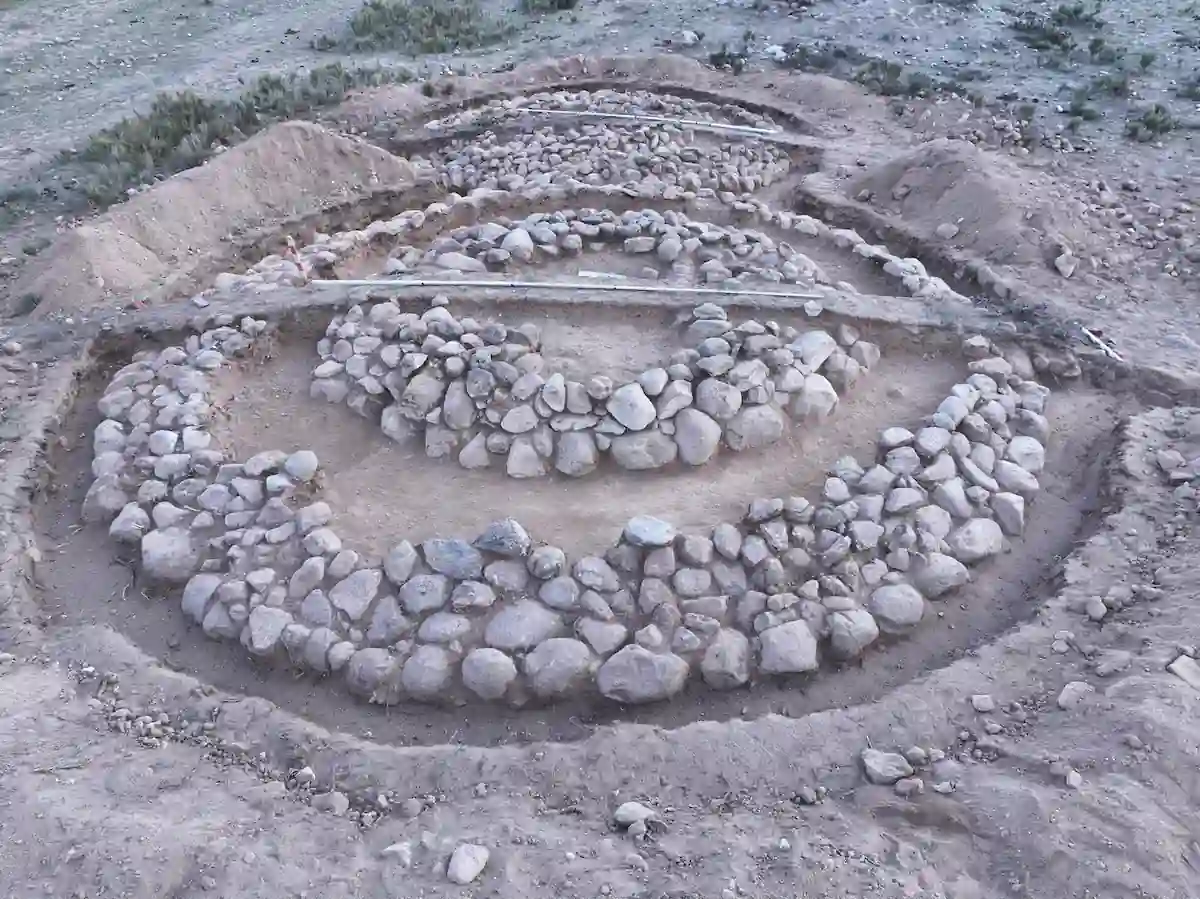
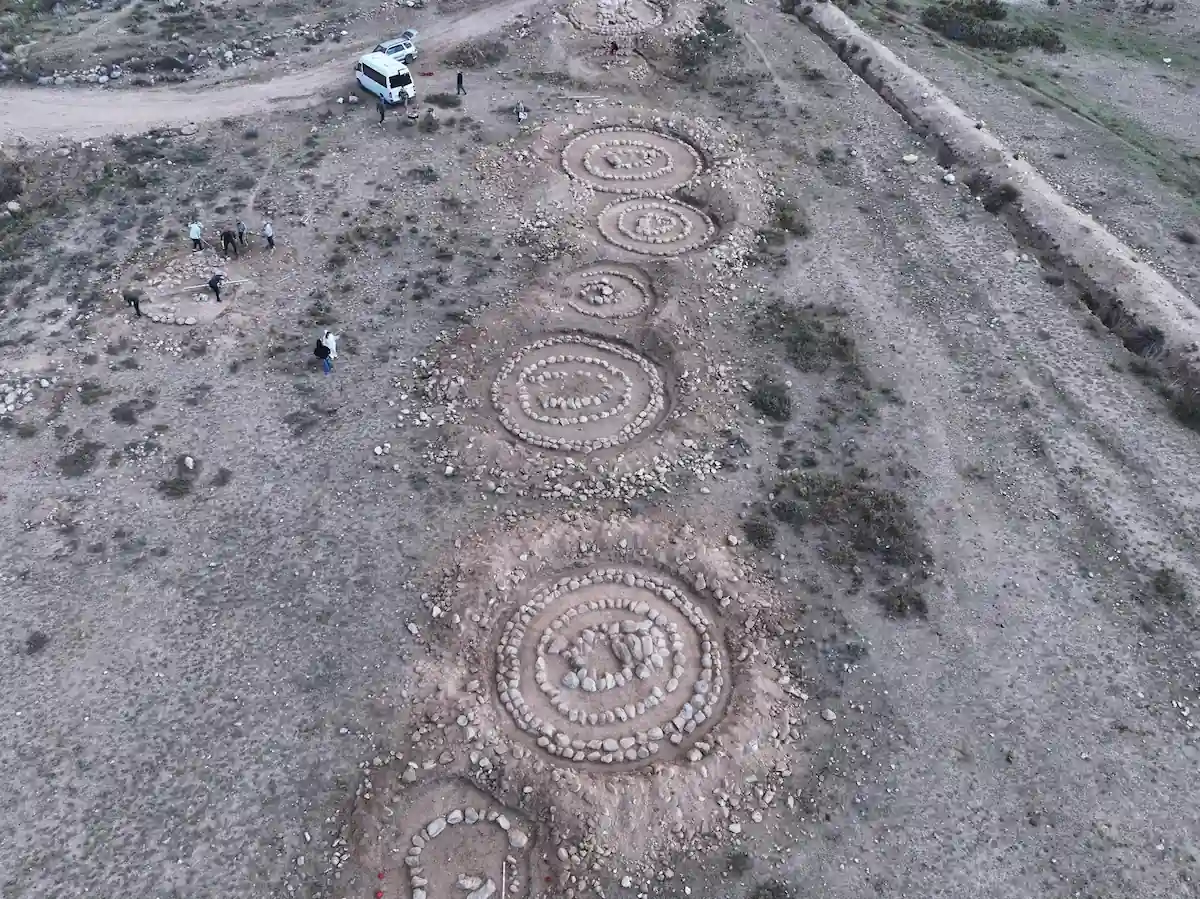
The preliminary results have only confirmed the initial suspicions. Out of the 30 archaeological units planned for study, specialists have already completed the analysis of 22. Among these findings is a set of 21 kurgan or burial mound tombs, a typology characteristic of ancient nomadic populations.
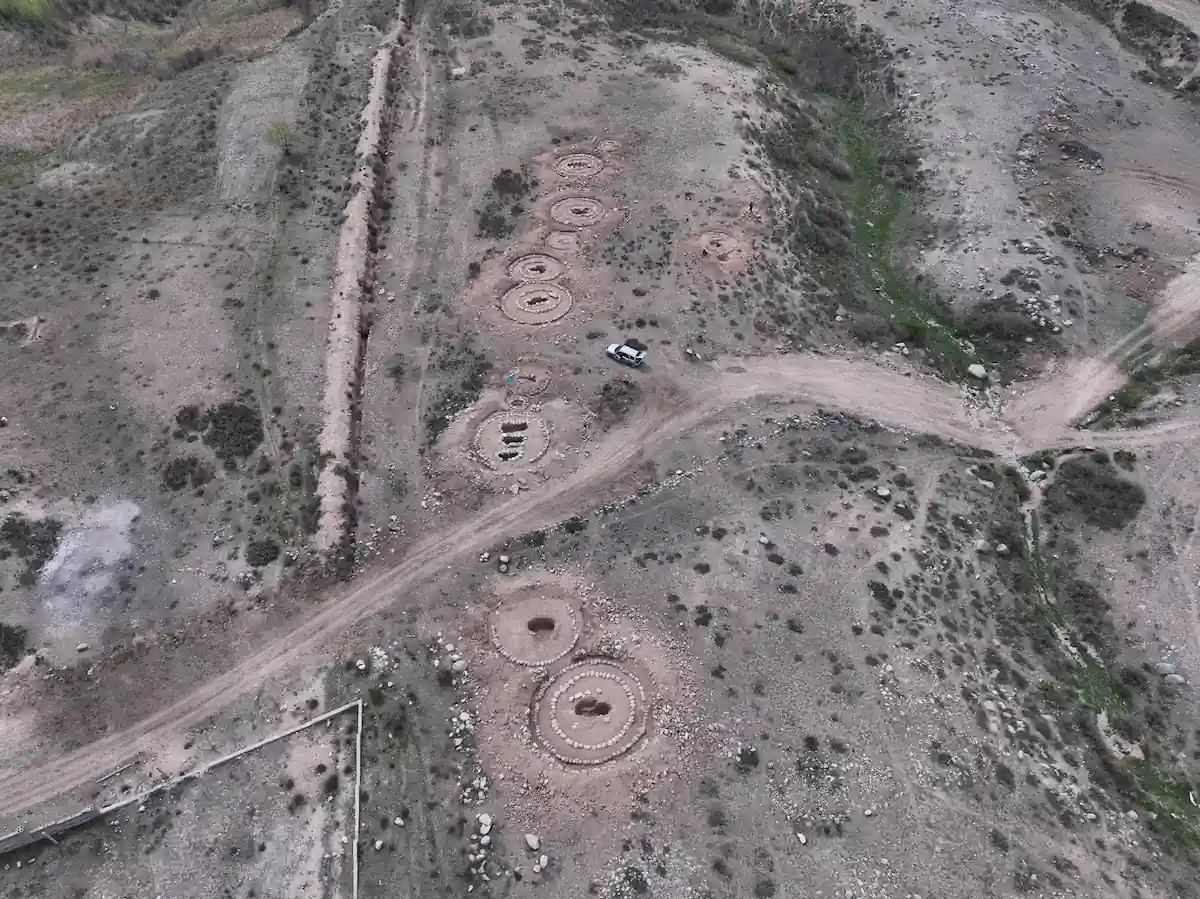
In addition to these burials, there is a larger structure, identified as a large stone enclosure, whose exact function and meaning within the territorial organization are still under investigation.
The material culture recovered has already allowed for an initial chronological attribution. The objects unearthed, including handmade ceramic vessels, a bronze hairpin, and a sandstone spheroid presumably used as a sharpener (an osselek or whetstone), point to an early Saka period dating.
The archaeologists emphasize the importance of context in their conclusions, and the stratigraphic analysis and funerary goods reinforce the hypothesis that we are facing a cultural manifestation of those ancient herders.
To understand the significance of these findings, it is worth remembering that they correspond to an Iranian-speaking population that the Achaemenid Persians referred to with the generic term Saka, and that the Greeks, centuries later, would identify as the Scythians.
They were nomadic horsemen and transhumant herders whose presence extended across the vast plains that today include Kazakhstan, Uzbekistan, Tajikistan, and the western edge of the Tarim Basin in China, as well as territories of European Russia and Ukraine.

Subscribe to our newsletter
Receive our news and articles in your email for free. You can also support us with a monthly subscription and receive exclusive (occasional) content.
The historical and archaeological evidence available, including Achaemenid-era inscriptions in Persepolis, attests to their presence in the Eurasian landscape from approximately the 8th century BCE.
The coastal region of Issyk-Kul, where Cholpon-Ata is located, was a central area for these groups. Chinese historical sources, such as the Book of Han, referred to this area as the Land of the Sak, explicitly referencing the tribe.
The most recent research has located around thirty Saka burials in the Tian Shan area itself, which dominates the lake’s horizon, with a dating range spanning from 550 to 250 BCE, evidencing a prolonged and systematic occupation of these interior valleys by those people.
The archaeological mission’s work will continue in the coming weeks, focusing on the exhaustive excavation and study of the large circular stone structure. The main objective of this phase, according to official sources, is to determine its absolute dating with maximum precision and define its specific cultural characteristics, in order to properly place it within the known historical sequence of the Saka in the region.
The researchers note that these efforts represent a significant contribution to the knowledge of the ancient history of the Issyk-Kul province and to obtaining new scientific information about a period that still holds many unanswered questions.
The recovered pieces, once their thorough study is completed, will become part of the collections of the country’s museum institutions, as a silent witness to an equestrian civilization that mastered the steppe routes millennia ago.