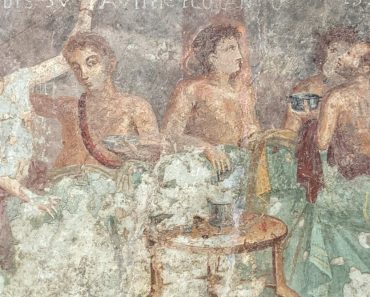

The long-held notion that democratic administration originated only in the classical Mediterranean world of Greece and Rome has been called into question by a recent study. Researchers have found that shared, inclusive government was significantly more prevalent and extensive than previously believed by examining historical and archeological data from 31 ancient communities in Europe, Asia, and the Americas.
The results imply that the origins of ancient democracy are deeper and more expansive than Western tradition has long believed, and that many ancient communities around the world devised ingenious strategies to restrict the power of kings and allow common people a voice in decision-making.
Dr. Gary Feinman, principal author of the study and MacArthur Curator of Mesoamerican and Central American Anthropology at the Field Museum’s Negaunee Integrative Research Center, stated, “People often assume that democratic practices started in Greece and Rome.” “But our research shows that many societies around the world developed ways to limit the power of rulers and give ordinary people a voice.”
Examining the Autocracy Index Again
The researchers looked at 40 cases from 31 distinct political groups throughout thousands of years, and their findings were published in the journal Science Advances on March 18, 2026. The group created an “autocracy index” based on archaeological hints to rank each society on a scale from very collaborative to highly autocratic because many of these tribes left no written records.
The scale and arrangement of monumental architecture, artwork portraying rulers, city planning, administrative procedures, and indicators of wealth disparity were among the 27 proxies included in the index to represent important aspects of governance.
The use of urban space is especially illuminating, says Dr. Feinman. “When you find urban areas with broad, open spaces, or when you see public buildings that have wide spaces where people can get together and exchange information, those societies tend to be more democratic,” he said.
On the other hand, societies with tiny areas at the summit of pyramids or urban layouts where every road leads to a ruler’s home are indicative of a more authoritarian concentration of power. While broad plazas and infrequent depictions of monarchs were signs of less concentrated power, artwork that portrayed kings as larger than life and grandiose gravesites also suggested more autocracy.
Iroquois, Teotihuacan, and Mohenjo-daro: Democracies Outside of the Mediterranean
The geographical scope of the study’s findings is remarkable. There are similarities in unexpected parts of the ancient world, even if Athens and Republican Rome do rank as relatively democratic on the autocracy index. Significant democratic characteristics similar to those of the classical Mediterranean were present in the early urban center of Mohenjo-daro in the Indus Valley, which is now in Pakistan’s Sindh province.
Strong community government was demonstrated in the Americas by the Aztec rival state of Tlaxcallan and the early highland Mesoamerican towns of Teotihuacan and Monte Albán. It was also discovered that the Protohistoric Zuni in North America and the Haudenosaunee (Iroquois Confederacy) preserved extremely inclusive governmental structures.
“Among archaeologists, there’s an entrenched thought that Athens and Republican Rome were the only two democracies in the ancient world, and that in Asia and the Americas, governance was tyrannical or autocratic,” stated Feinman. “In our analysis, we saw societies in other parts of the world that were equally democratic to Athens and Rome.”
Early democracies were neither transient nor unstable, as demonstrated by the fact that several of these sites, such as Teotihuacan and Monte Albán, preserved their jointly governed institutions for centuries—in Monte Albán’s case, for over a millennium. According to co-author David Stasavage of New York University, “these findings show that both democracy and autocracy were widespread in the ancient world.”
The Real Causes of Autocracy and Today’s Lessons
One of the study’s most important conclusions is that a society’s potential for autocracy was independent of both its population size and degree of hierarchical complexity. This obviously contradicts the well-established neoevolutionary view, which has its roots in social theory from the 19th century and holds that political complexity and population increase inevitably produce powerful, centralized rulers.
Rather, the way in which rulers funded their authority was the most powerful factor influencing the consolidation of power. Societies that relied significantly on sources of income that leaders controlled or monopolized, such as mining, long-distance trading routes, slave labor, or war booty, tended to grow more autocratic.
On the other hand, civilizations that were primarily supported by widespread internal taxes on communal work or agricultural goods were more likely to sustain shared governance structures and disperse authority.
The idea that hierarchy and wealth concentration are unavoidable characteristics of large, organized societies is further undermined by the research, which also shows that cultures with more inclusive political systems typically had lower levels of economic inequality.
The authors of the study are adamant that their conclusions have immediate application in the current era. A clearer comprehension of the historical characteristics of autocracy can help society recognize warning signs and take appropriate action when concentrations of wealth and power among a very small number of people continue to rise globally.
Gary M. Feinman, David Stasavage, David M. Carballo, Sarah B. Barber, Adam Green, Jacob Holland-Lulewicz, Dan Lawrence, Jessica Munson, Linda M. Nicholas, Francesca Fulminante, Sarah Klassen, Keith W. Kintigh, and John Douglass all contributed to the study. Professor Dan Lawrence of Durham University’s Department of Archaeology was included to highlight the research’s global reach, which is based on decades of archaeological fieldwork on several continents.