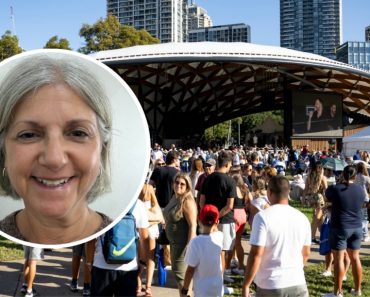
Tilda Sikes, seasoned arts administrator, has been on the job as director of the Sydney Greek Festival for just under a month. Her 30-plus years of arts management will be used to elevate Sydney’s Greek Festival at Darling Harbour to even greater prominence.
“The Greek Festival has always been committed to producing interesting artistic events. It brings out international arts, presents emerging artists, and community cultural activities. However, we go beyond programming for the ‘cool kids in town’ and seek to encompass all expressions of modern Greek-Australian culture,” Sikes says.
I joke about her name; ‘Tilda Sikes’ sounds as if it were tailored for a bestselling author.
“It’s my grandmother’s name, Matthilde Xiki,” she says, “a French interpretation of the old German, Matilde.”
Sikes’s father arrived in Australia in 1954; her mother was born here, while her maternal grandfather arrived in 1927 from Lemnos.
“He was one of the very first Lemnians in Sydney and supported more Lemnians in arriving here. Older Lemnians spoke very highly of him because he sponsored a lot of people here.”
The festival director, like many, represents two distinct periods of Greek migration: those who arrived before World War II and those after.
“We have met in the past,” Sikes says over the phone.
She pegged me faster than my brain could process from my time in that halcyon and often frustrating Australian arts industry.
“I was the chair of the then-Multicultural Arts Alliance and also worked at Belvoir Street Theatre and the Carnivale.”
Sikes is keen to point out how the festival engages with culture, community, and business to assist artists in growing.
“Darling Harbour, while on the first level, it is about providing a kind of a day of celebration of culture, heritage, community and art – it is also a day to showcase Greek-Australian businesses.”
Sikes says that the “deep relationship with Melbourne’s Antipodes Greek Festival” also assists in bringing overseas talent and curating local artists.
Antipodes, at the apex of ethno-cultural festivals in Australia, represents a deft melding of entertainment, community representation and engagement, and art.
“The network with Antipodes Festival is fantastic,” Sikes says.
“It’s a strong network, and now, with a period of transition in the Greek Orthodox Community of NSW [the festival’s auspice], it is an interesting time to be involved in the Sydney Greek Festival and help it grow its position as a serious arts and community festival.”
The festival, she says, “punches above its weight.”
Sikes exalts the volunteers who have been part of the festival for years.
“I did not walk into an empty shell; I’m walking into a room full of experienced people. We’ve got volunteers here who have been associated with the festival from its start.”

Honouring heritage and migration
She is ever diplomatic when I suggest that the commonwealth and state arts funding bodies have consciously ignored Greek festivals, and other ethnic festivals, which rely on funding from multicultural affairs and premiers’ offices—regardless of the major role they play in Australia’s cultural ecology.
“I can’t comment on that, it’s beyond my scope. All I can say is that we are very grateful for the support of the NSW government as they recognise that these festivals offer great comfort to established communities, like us.”
The Sydney Greek Festival and Antipodes in Melbourne honour intangible cultural traditions extending waves of migration from Greece and the global diaspora—from the late 19th century to the 1970s—the largest occurring in the post-war period—while embracing contemporary art and entertainment.
The proof is in the crowds: audiences that are large, socially and culturally diverse, yet linked by a complex and intangible sense of Hellenic identity. It is a reach and resonance that Australia’s arts funding and presenting institutions have largely ignored across the nation’s diverse cultures.
Festival highlights: Music, dance, comedy, and conversation
The panegyric affair opens with its expansive public celebration at Greek Fest@Darling Harbour on Sunday 1 March, which transforms the waterfront into an all-day, free glendi from 10am to 10pm.
“It is where families and festivalgoers of all ages come, celebrate their Hellenism with food, dance and live performances, and it sets the tone for a program that blends popular celebrations with cultural breadth and accessibility.”
The big event is the live performance of Greek singer Ioulia Karapataki on March 1, who is celebrated for her smooth voice, high-energy live performances, and her unique fusion of contemporary Greek music with folk traditions. Karapataki’s style has garnered a large following across Greece and throughout Europe’s contemporary folk scene.
Beyond Darling Harbour, on Friday 6 March, controversial economist and former Greek finance minister Yanis Varoufakis, known his controversial short-lived role as Greek finance minister for Syriza, during the height of Greece’s economic collapse, will appear in conversation with Dr Helen Vatsikopoulos for an evening examining democracy, Europe, and global politics.

Sikes then shifts to comedy where on on Sunday March 8, the Greek Comedy Gala at the Comedy Store will be led by Anthony Locascio and feature a new generation of Greek-Australian comedians, alongside favourites.
I asked if the festival and its network may challenge the audiences even more by inviting the Greek rapper Negros Tou Moria, the pioneering voice in Greece’s hip-hop scene and an African-Greek artist, who melds rebetiko with trap and socially charged lyrics and has earned international recognition beyond Greek borders.
“I have seen him online, he’s very cool, but my job is not challenging for people. My job is really to find things that are interesting and to be curious about the world.”
So, given that, surely the performative Varoufakis is here to be challenging to so many.
“I’ll leave it to others to determine; there was a call from many of the community to have him and we responded.”
As Sikes says, “Come on, let’s all have fun!”
Tilda Sikes, seasoned arts administrator, has been on the job as director of the Sydney Greek Festival for just under a month. Her 30-plus years of arts management will be used to elevate Sydney’s Greek Festival at Darling Harbour to even greater prominence.
“The Greek Festival has always been committed to producing interesting artistic events. It brings out international arts, presents emerging artists, and community cultural activities. We go beyond programming for the ‘cool kids in town’ and seek to encompass all expressions of modern Greek-Australian culture,” Sikes says.
I joke about her name; ‘Tilda Sikes’ sounds as if it were tailored for a bestselling author.
“It’s my grandmother’s name, Matthilde Xiki,” she says, “a French interpretation of the old German, Matilde.”
Sikes’s father arrived in Australia in 1954; her mother was born here, while her maternal grandfather arrived in 1927 from Lemnos.
“He was one of the very first Lemnians in Sydney and supported more Lemnians in arriving here. Older Lemnians spoke very highly of him because he sponsored a lot of people here.”
The festival director, like many, represents two distinct periods of Greek migration: those who arrived before World War II and those after.
“We have met in the past,” Sikes says over the phone.

She pegged me faster than my brain could process from my time in that halcyon and often frustrating Australian arts industry.
“I was the chair of the then-Multicultural Arts Alliance and also worked at Belvoir Street Theatre and the Carnivale.”
Sikes is keen to point out how the festival engages with culture, community, and business to assist artists in growing.
“Darling Harbour, while on the first level, it is about providing a kind of a day of celebration of culture, heritage, community and art – it is also a day to showcase Greek-Australian businesses.”
Sikes says that the “deep relationship with Melbourne’s Antipodes Greek Festival” also assists in bringing overseas talent and curating local artists.
Antipodes, at the apex of ethno-cultural festivals in Australia, represents a deft melding of entertainment, community representation and engagement, and art.
“The network with Antipodes Festival is fantastic,” Sikes says.
“It’s a strong network, and now, with a period of transition in the Greek Orthodox Community of NSW [the festival’s auspice], it is an interesting time to be involved in the Sydney Greek Festival and help it grow its position as a serious arts and community festival.”
The festival, she says, “punches above its weight.”
Sikes exalts the volunteers who have been part of the festival for years.
“I did not walk into an empty shell; I’m walking into a room full of experienced people. We’ve got volunteers here who have been associated with the festival from its start.”
Honouring heritage and migration
She is ever diplomatic when I suggest that the Australian Commonwealth and state arts funding bodies have consciously ignored Greek festivals, and other ethnic festivals, which rely on funding from multicultural affairs and premiers’ offices—regardless of the major role they play in Australia’s cultural ecology.
“I can’t comment on that, it’s beyond my scope. All I can say is that we are very grateful for the support of the NSW government as they recognise that these festivals offer great comfort to established communities, like us.”
The Sydney Greek Festival and Antipodes in Melbourne honour intangible cultural traditions extending waves of migration from Greece and the global diaspora—from the late 19th century to the 1970s—the largest occurring in the post-war period—while embracing contemporary art and entertainment.
The proof is in the crowds: audiences that are large, socially and culturally diverse, yet linked by a complex and intangible sense of Hellenic identity. It is a reach and resonance that Australia’s arts funding and presenting institutions have largely ignored across the nation’s diverse cultures.
Festival highlights: Music, dance, comedy, and conversation
The panegyric affair opens with its expansive public celebration at Greek Fest@Darling Harbour on Sunday 1 March, which transforms the waterfront into an all-day, free Glendi from 10am to 10pm.
“It is where families and festivalgoers of all ages come, celebrate their Hellenism with food, dance and live performances, and it sets the tone for a program that blends popular celebrations with cultural breadth and accessibility.”
The big event is the live performance of Greek singer Ioulia Karapataki on 1 March, who is celebrated for her smooth voice, high-energy live performances, and her unique fusion of contemporary Greek music with folk traditions. Karapataki’s style has garnered a large following across Greece and throughout Europe’s contemporary folk scene.
Beyond Darling Harbour, on Friday 6 March, controversial economist and former Greek finance minister Yanis Varoufakis, known for short-lived and controversial role as Greek finance minister for Syriza, during the height of Greece’s economic collapse, will appear in conversation with Dr Helen Vatsikopoulos for an evening examining democracy, Europe, and global politics.
Sikes shifts to comedy, on Sunday 8 March, when the Greek Comedy Gala at the Comedy Store will be led by Anthony Locascio and feature a new generation of Greek-Australian comedians, alongside favourites.
I asked if the festival and its network may challenge the audiences even more by inviting the Greek rapper Negros Tou Moria, the pioneering voice in Greece’s hip-hop scene and an African-Greek artist, who melds rebetiko with trap and socially charged lyrics and has earned international recognition beyond Greek borders.
“I have seen him online, he’s very cool, but my job is not challenging for people. My job is really to find things that are interesting and to be curious about the world.”
So, given that, surely the performative Varoufakis is here to be challenging to so many.
“I’ll leave it to others to determine; there was a call from the community to have him and we responded.”
As Sikes says, “Come on, let’s all have fun!”