The year 2025 has been remarkable for archaeological discoveries. Across the globe, researchers have unearthed ancient cities, royal tombs, and artifacts that are reshaping our understanding of history. Some finds offer insight into the lives of past civilizations, while others reveal their ingenuity, ritual practices, and symbolic expression. From Egypt to the Americas, archaeology continues to shed light on humanity’s shared story.
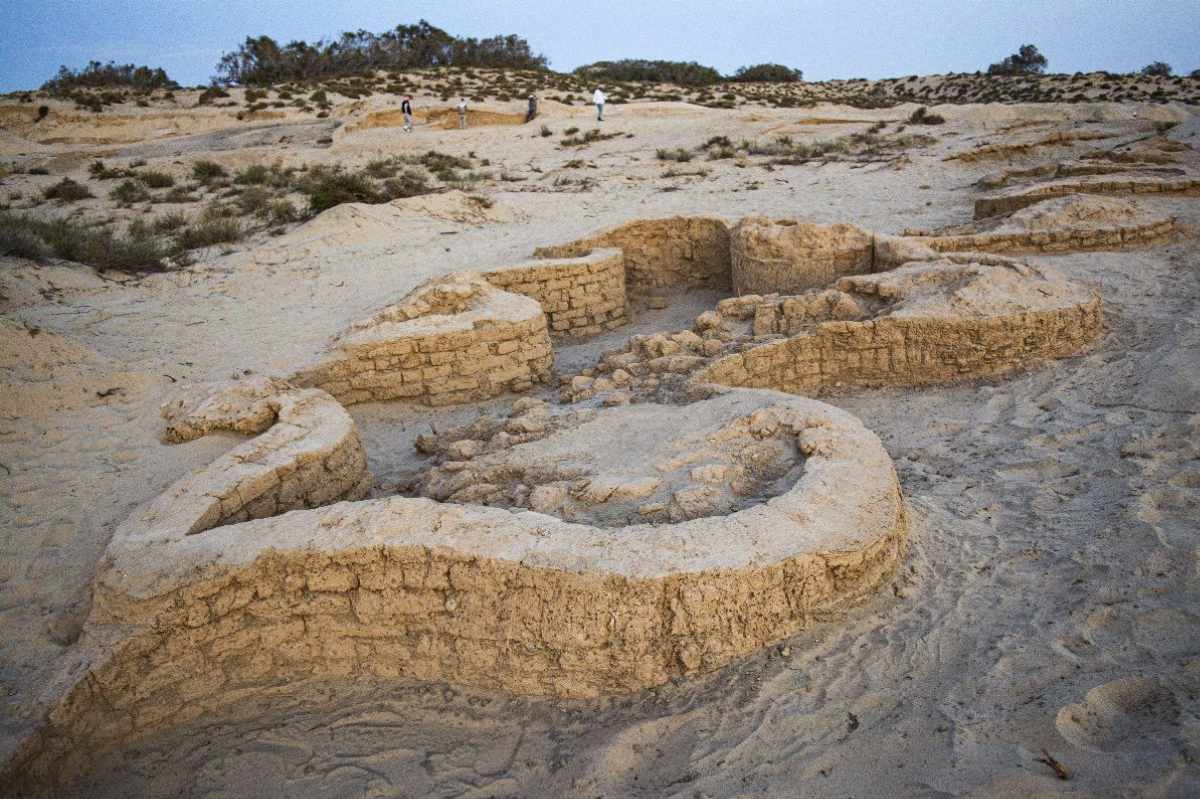
New Kingdom fortress, Sinai, Egypt, among the most significant 2025 archaeological discoveries
In North Sinai, Egypt, a team of archaeologists led by Hesham Hussein uncovered a massive New Kingdom fortress. Dating to roughly 3,400 years ago, it features thick walls, towers, and internal chambers. Scholars James K. Hoffmeier and Stephen O. Moshier suggest it was designed to protect trade routes and secure borders against invaders. Its scale indicates that Egypt invested heavily in military infrastructure during the height of the pharaohs’ power.
Within the fortress, researchers discovered inscriptions and small artifacts. Pottery fragments offer glimpses into the daily lives of soldiers, while hieroglyphic texts detail logistics and supply chains, revealing how military and administrative systems were organized. The fortress also provides valuable context for understanding Egypt’s political strategies in border regions.
This discovery complements earlier finds in Sinai, illustrating a network of fortifications that maintained Egyptian control over trade and migration routes. It also enriches our understanding of writing, administration, and statecraft in the ancient Near East.
Tomb of Pharaoh Thutmose II, Valley of the Kings
The Valley of the Kings has yielded a new royal tomb, attributed to Pharaoh Thutmose II, marking the first such discovery in the valley in decades. Its wall paintings remain remarkably well preserved, depicting funeral rituals and divine symbolism. Funerary artifacts, including jewelry and ceremonial items, provide historians with insights into the wealth and status of ancient dynasty rulers.
The tomb offers fresh perspectives on Egyptian mortuary culture. Its layout demonstrates innovations in burial practices compared with earlier and later tombs, allowing scholars to trace connections more clearly between Thutmose II, Hatshepsut, and Thutmose III.
Inscriptions within the tomb further illuminate Egypt’s writing systems of the period. These hieroglyphs constitute some of the richest textual evidence of royal ideology, administration, and religious belief. They also underscore the enduring role of writing as a tool of power and ritual.

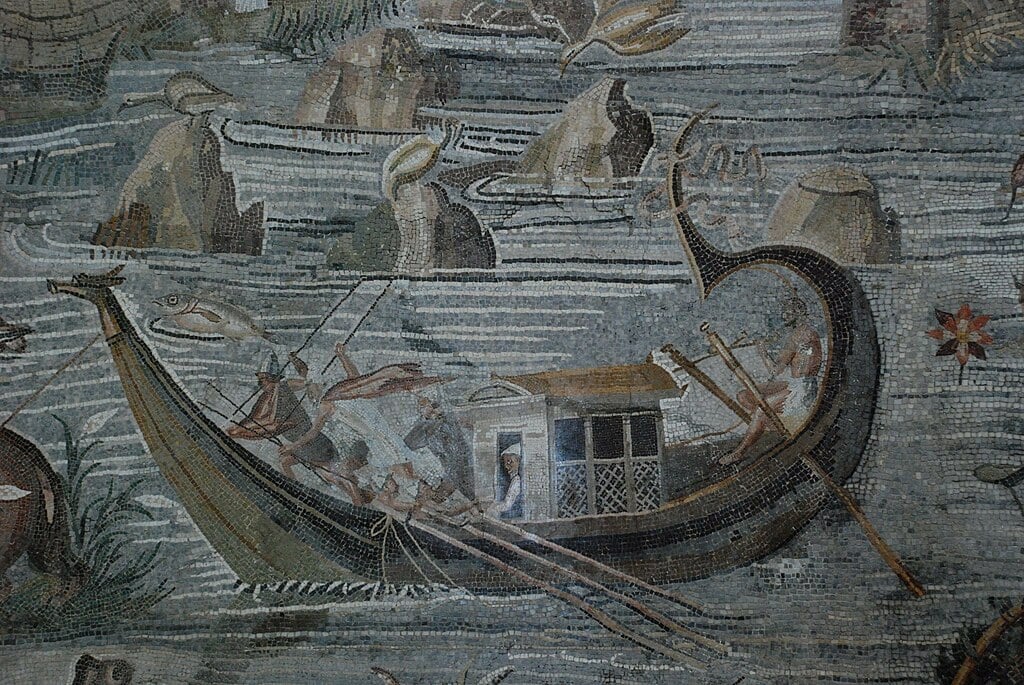
Ancient Egyptian pleasure boat off Alexandria also among biggest archaeological discoveries of 2025
Marine archaeologists led by the European Institute for Underwater Archaeology (IEASM) under Franck Goddio discovered an ancient pleasure boat off the coast of Alexandria. Measuring 35 meters long, it likely belonged to elite Egyptians during Roman rule. Greek inscriptions on the vessel indicate cultural exchange between Egyptians and Greeks.
Graffiti in Greek was found on the central carling but has not yet been deciphered. Goddio said that although research is still at an early stage, the wreck promises to reveal new information about life, religion, luxury, and pleasure on Egypt’s waterways during the early Roman period.
Marine archaeologists from the European Institute for Underwater Archaeology (IEASM), led by Franck Goddio, have discovered an ancient pleasure boat off the coast of Alexandria. Measuring about 115 feet in length, the vessel likely belonged to elite Egyptians during Roman rule. Greek inscriptions on the boat highlight the cultural exchange between Egyptians and Greeks.
The design of the boat suggests ceremonial use along the Nile rather than practical transport. One theory proposes that it may have served as a sacred barge during the navigium Isidis ceremony. Goddio noted that the richly decorated vessel could have symbolized the solar barque of Isis, mistress of the sea.
Greek graffiti was found on the central carling, though it has not yet been deciphered. Goddio emphasized that, while research remains in its early stages, the wreck promises to reveal new insights into life, religion, luxury, and leisure on Egypt’s waterways during the early Roman period.
The Mayan tomb of Te’ K’ab Chaak, Caracol, Belize
In Belize, archaeologists led by Diane Chase have revealed the tomb of Te’ K’ab Chaak, an early Mayan ruler. Dating to around 350 AD, the tomb contains jade ornaments, ceremonial masks, and shell fragments, offering valuable insight into early Maya religious and political practices.
Artifacts such as green obsidian blades and a spear-thrower tip suggest early contact with Teotihuacán, the vast central Mexican metropolis located nearly 750 miles away.
“This discovery is unprecedented,” said Melissa Badillo, director of Belize’s Institute of Archaeology. “We are looking at a founder or early ruler, exceptionally ancient and remarkably well preserved, especially given the region’s humid climate.” Authorities plan to exhibit select objects from the tomb at Caracol, which is now more accessible thanks to recent infrastructure improvements.

3,500-Year-old city in Barranca, Peru
Archaeologists led by Ruth Shady have uncovered a 3,500-year-old city in Barranca, Peru, making it one of the oldest known urban centers in South America. This 2025 discovery reveals residential areas, public spaces, and trade hubs that connected coastal and inland communities.
Excavations have also unearthed clay sculptures of people and animals, ceremonial artifacts, and necklaces crafted from beads and seashells. These findings indicate a society rich in spiritual and cultural practices. The city likely served as both a commercial and ceremonial center.
Overall, the Barranca settlement illustrates how humans used symbols, objects, and structured spaces to communicate and organize society. It also demonstrates that urbanization, administration, and symbolic culture developed simultaneously across diverse regions.

Preserving the past
Many archaeological sites remain vulnerable to development and conflict, highlighting the fragility of our shared heritage. Protecting these discoveries is essential to ensuring that future generations can connect with their past.
The remarkable finds of 2025 underscore archaeology’s enduring significance. Each tomb, city, and artifact offers a window into human history, while also inspiring curiosity, scholarship, and a deeper appreciation for the civilizations that have shaped our world.