
All too often, I feel like academic and artistic culture tends to devalue the intersection of ancient Greek art and early videogame history. I’m not saying there’s a deliberate plan to do this, but I’m also not saying that. Sit in on any collegiate-level Art History class and I can all but guarantee you that you will hear essentially zero attempts to connect, say, Athenian red-figure pottery painting with Intellivision sprite rendering, for example. It feels like a focused and cruel attempt to devalue these sorts of comparisons, and I intend to push back on this academic tyranny today, by comparing the first image of a wrecked car on the Atari VCS/2600 with a very famous ancient Greek sculpture.
That first wrecked car shows up in an extremely early Atari 2600 game called Street Racer. This was one of the first batch of nine games released in the same year the console itself, then known as the Atari VCS, in 1977. The full list is Air-Sea Battle, Basic Math, Blackjack, Combat, Indy 500, Star Ship, Street Racer, Surround and Video Olympics, if you’re curious.


Look, here’s some pages of a really early ad for the Atari VCS; this ad ran early enough in 1977 that only six of the nine launch games were actually released, and one of those is Street Racer:
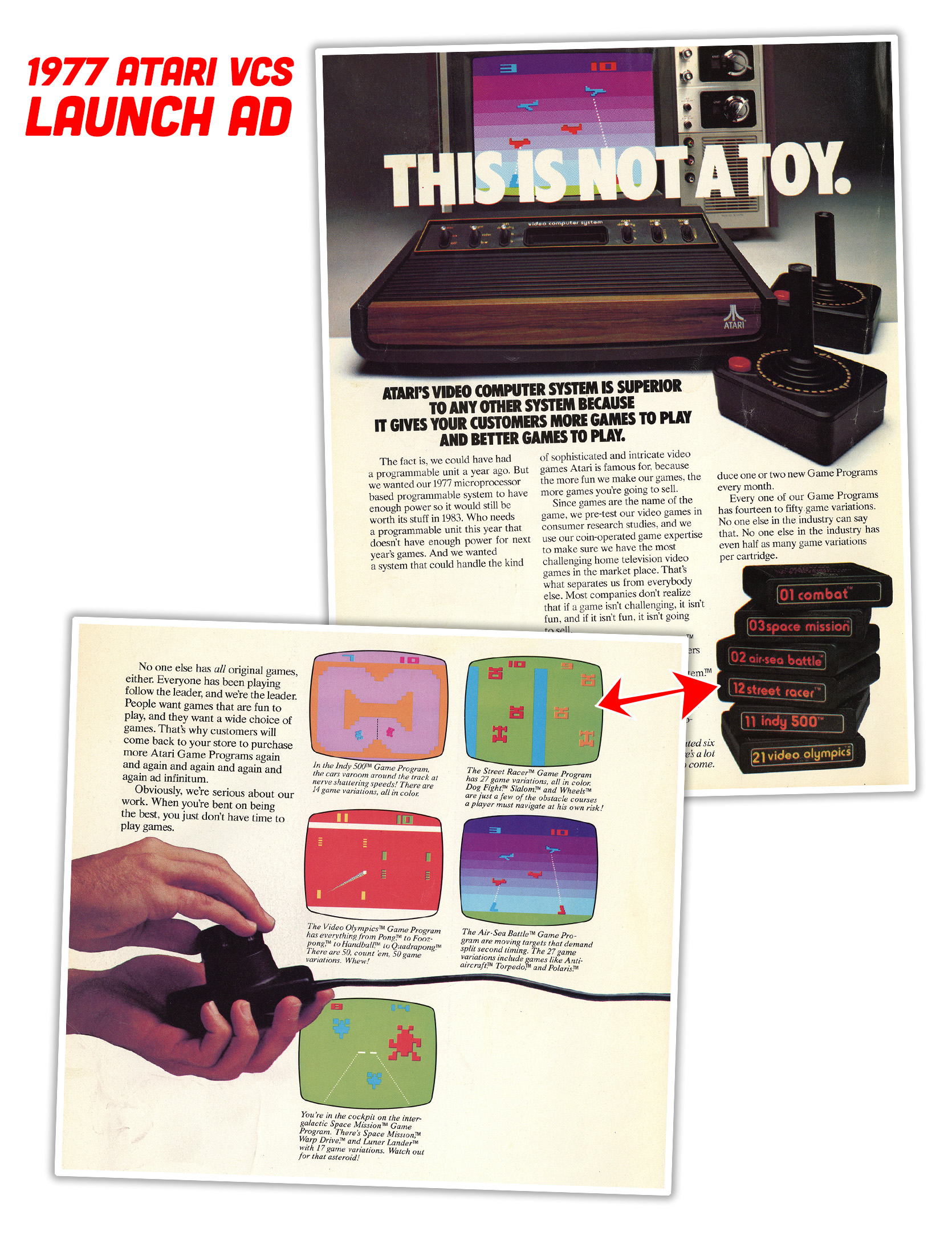
Street Racer is, by pretty much any standards, a very crude game. Indy 500, the other racing game that launched with the Atari in 1977, is a vastly better racing game by pretty much every metric. Where Indy 500 has cars racing around a track, Street Racer is one of those side-to-side dodge things kind of racing game. Those can be fun, sure, but they’re not the same as a game with an actual track.
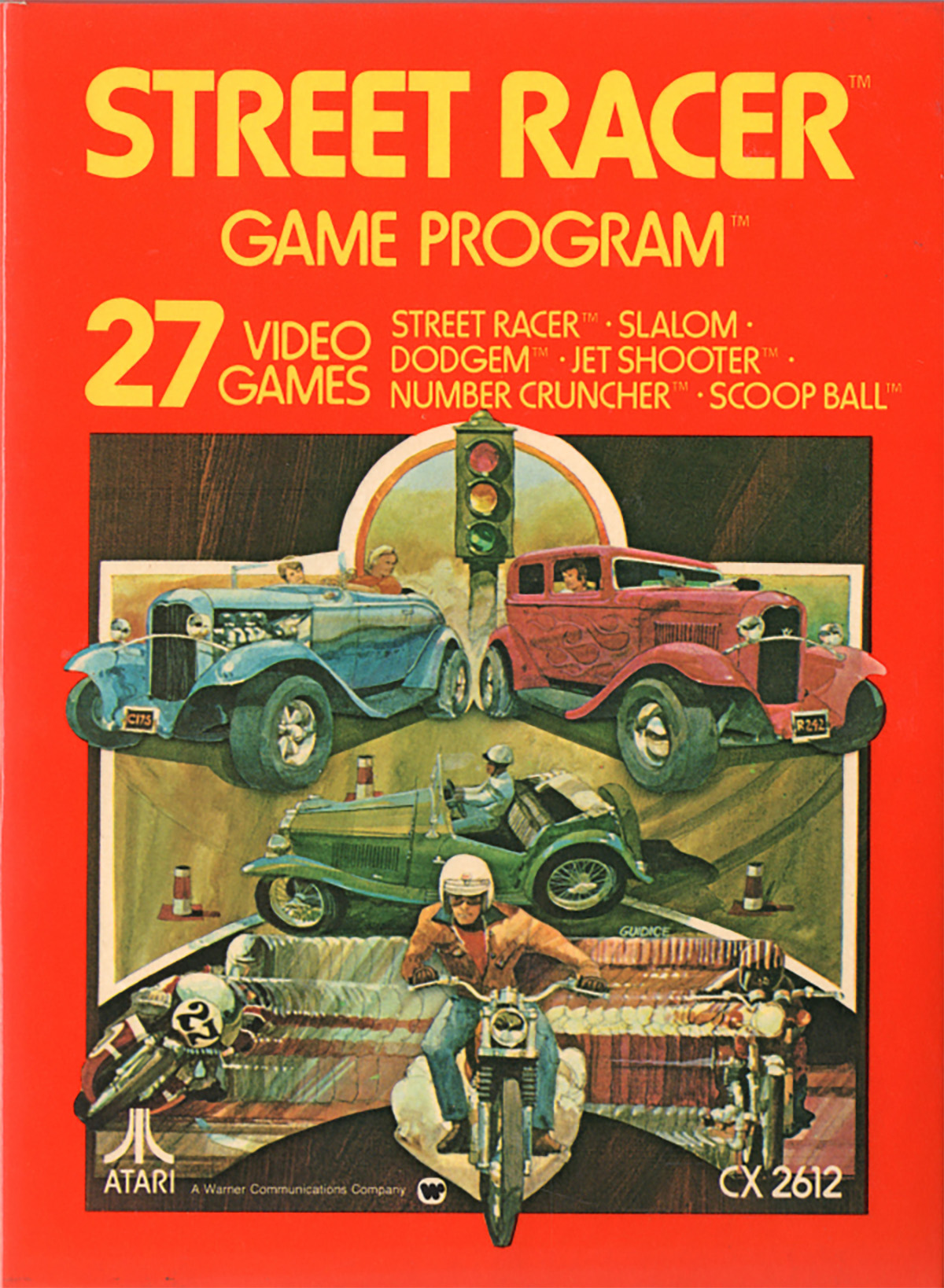
The box cover, like most Atari games, conveys a much richer experience than the actual onscreen graphics ever could, but that’s to be expected. There’s some good cars on here, with what looks like a pair of ’32 Ford-based hot rods and then what looks like an MG TC below them. I can’t ID the motorcycles, though.

Graphically, Street Racer was about as bare-bones as you could get. The player’s car sprites are rendered extremely simply, representing what seems to be a dragster-like car with wider rear tires. The mock-up screenshot in the manual (above) isn’t entirely accurate, as the computer-controlled cars are actually drawn with wide “playfield” pixels (that are more like dashes) normally used for background graphics. The tell is how the wheels are the same width.
You can see the gameplay in action here:
Note the wrecked cars in that video; we’ll be getting back to that soon, and, yes, it’s the first representation of a wrecked car on the system. The game did have other, stranger representations of car-like objects, as well as skiers and aircraft, as you can see in this video that shows more of the game’s options:
Again, the programmers were just barely learning what this machine could do; we can forgive the crudeness, I think. It was 1977!
Okay, but let’s get to my main point, finally. Here’s what the player’s car (orange) looks like when wrecked:
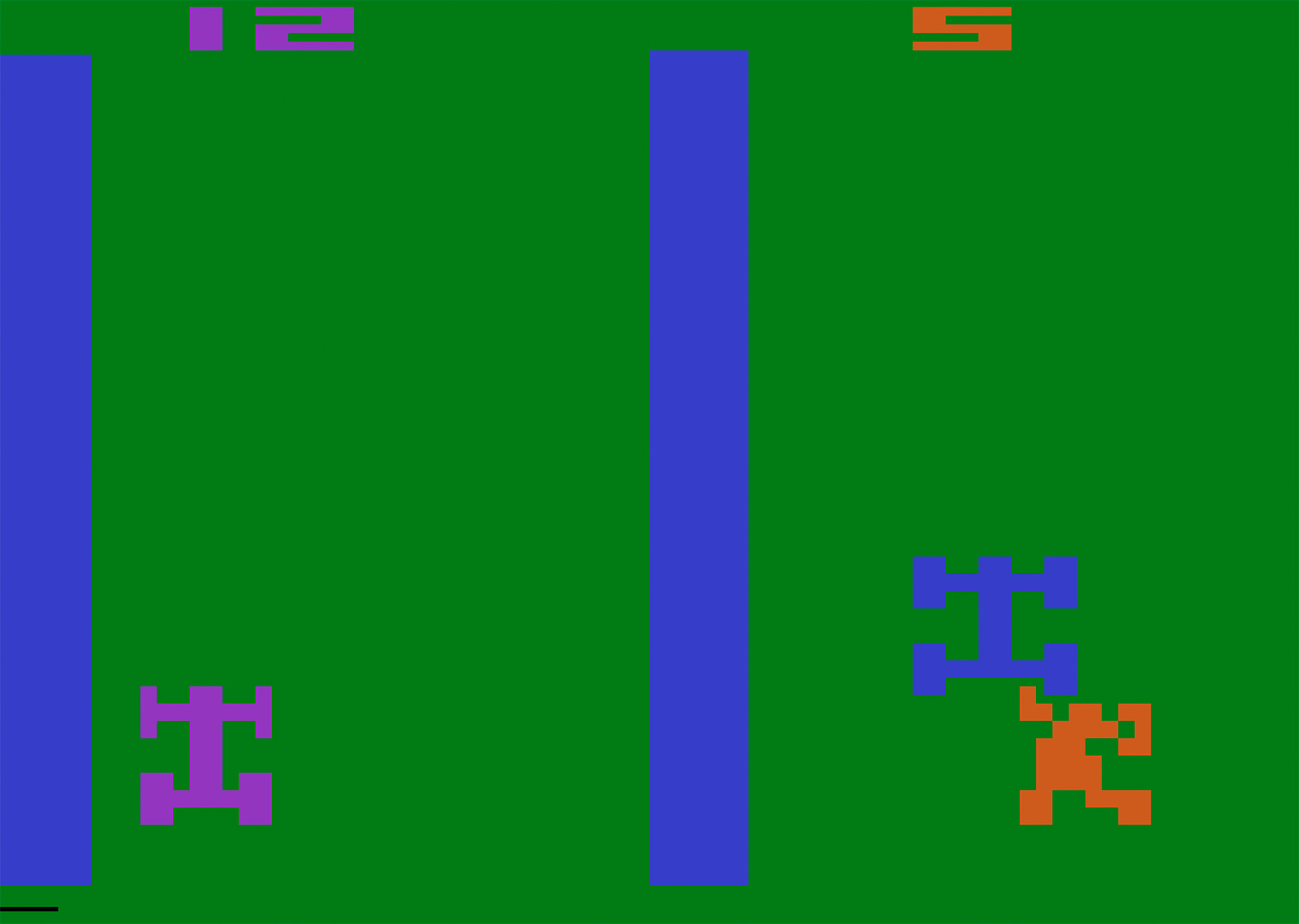
I’ve always thought that wrecked car doesn’t really look like a car. It looks like a person, contorted and writhing in pain and agony. It’s reminded me of something specific, but until this morning, I couldn’t really place exactly what was firing those neurons. Then it, like a computer-controlled car, hit me. It reminds me of this:
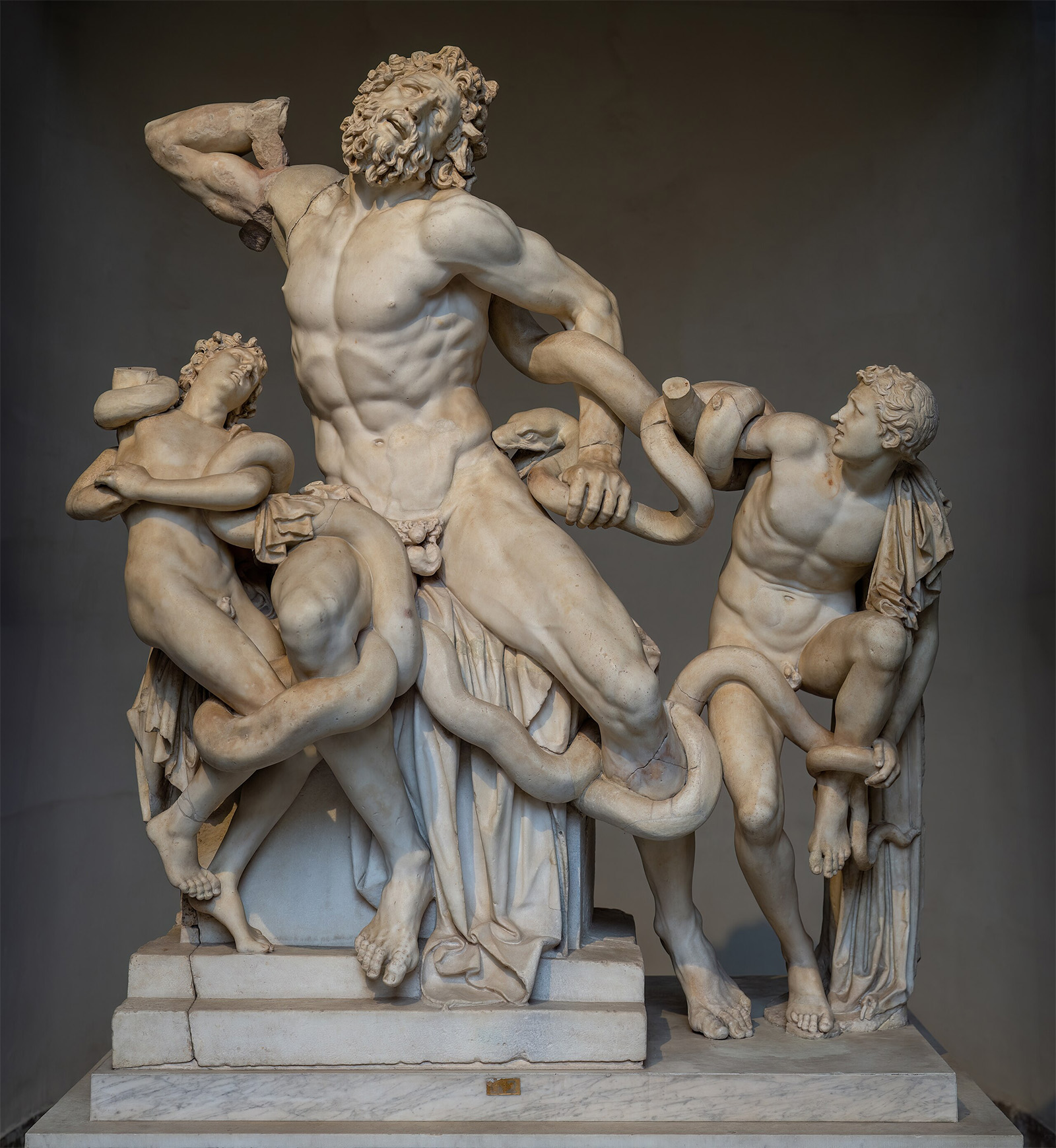
I remember this from my art history days: it’s an ancient Greek sculpture called the Laocoön Group or Laocoön and His Sons, and is a depiction of a Trojan priest, Laocoön, and his two sons being brutally attacked by sea serpents.
It’s a powerful sculpture, masterfully depicted, and the original sculpture and when it was made aren’t really known. It was described by ancient Roman historian Pliny the Elder who suggested it was Greek. It may have been a copy of a bronze original, but no one really knows. It’s a great example of the more exuberant Hellenistic style, and likely dates from between 200 BCE to 70 CE. It was found in 1506 and put in the Vatican, which is how we know of it today.
Anyway, that main figure of Laocoön has been called “the prototypical icon of human agony” and you can absolutely see why. He’s positively writhing in pain and fear, his face a contorted mask of despair and agony. It’s powerful. And it reminds me of the wrecked car in Street Racer:
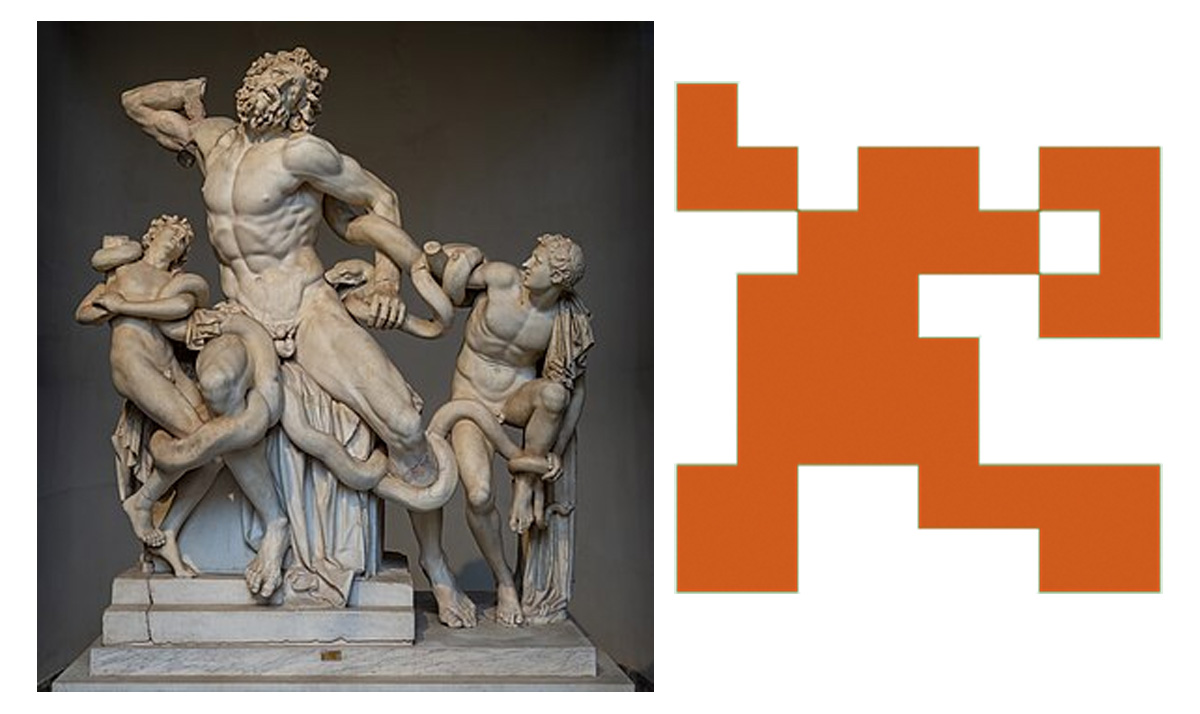
Somehow, in a mere 8×8 grid of 64 pixels, the same as a chessboard, Atari programmer and later Activision founder Larry Kaplan managed to convey the profound agony of a human in fear and pain, in danger of losing his life and the life of his children in the most horrific way possible.
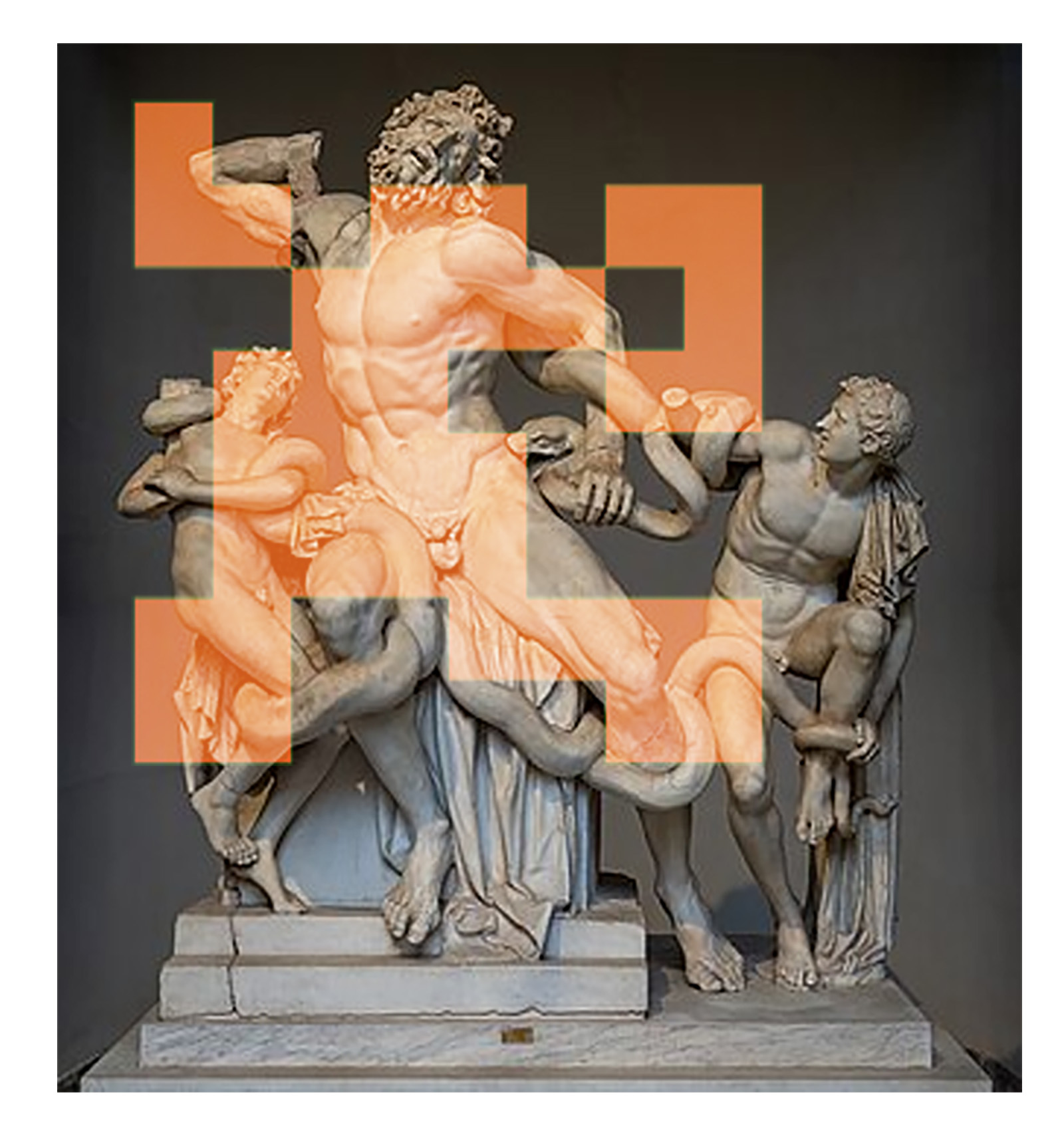
It’s not exact, but it’s pretty damn close. Especially given the context of a 1977 video game about racing cars. Why aren’t Art History classes teaching this? I’d like to believe Larry Kaplan was seeking out a way to truly convey the miserable agony of a car wreck, and looked to one of the most iconic sources of the visual portrayal of such a feeling.
How else can we explain this remarkable visual link?