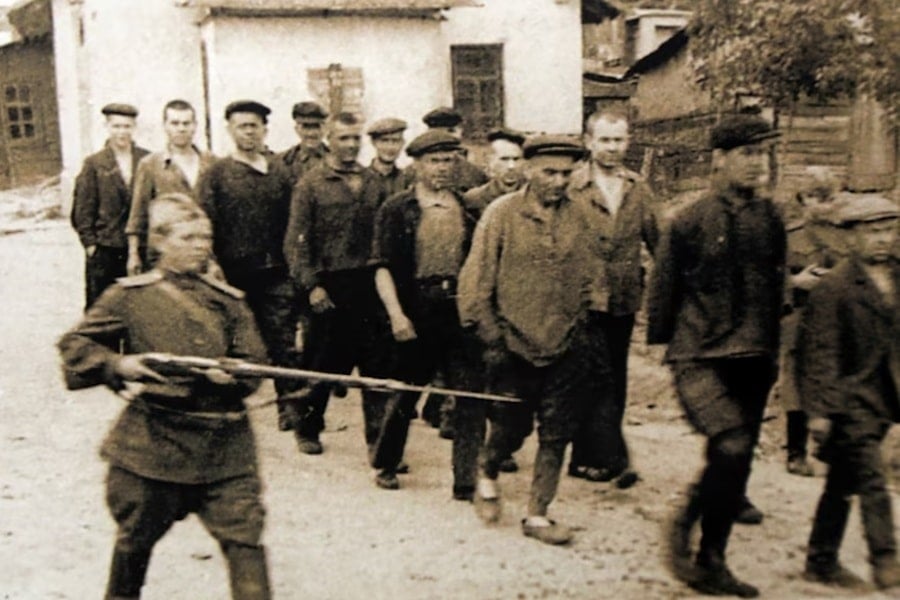
On December 15, 1937, at the height of the Great Terror in Stalin’s Soviet Union, the ethnic cleansing of thousands of Greeks began.
It was the day when the NKVD (People’s Commissariat for Internal Affairs) issued Decree No. 50215, marking the official beginning of the organized persecution of the Greek minority in the USSR.
The signature of Nikolai Yezhov, the man who personified the machinery of the Great Purges, formalized a process that treated ethnic origin as prima facie evidence of guilt.
This administrative act ushered in a policy that placed Greeks across the Soviet territory under the same umbrella of suspicion as other ethnic groups already targeted. The accusation required no individualized evidence; the mere existence of ties to Greece and the centuries-long presence of Greek communities around the Black Sea were deemed sufficient.
The prelude to the ethnic cleansing of Greeks
Even before the decree was issued, the atmosphere was already tense. Greek schools, with a long tradition in areas such as Georgia, Abkhazia, Krasnodar, and Crimea, had begun to close in the mid-1930s. Greek-language newspapers circulating in the Soviet territory were systematically withdrawn, while theatrical troupes and cultural clubs ceased their activities.
This gradual deprivation of education and public use of the Greek language prepared the ground for what would follow: an ethnic campaign intended to violently and systematically dismantle institutions, communities, and families.
The arrests and summary justice
The activation of the decree initiated the main phase of arrests. Police detachments moved into Greek settlements in the Azov region, Mariupol, and Tbilisi, apprehending men of all ages under the charge of “espionage for a foreign state.”
Interrogations often took place at night, utilizing methods aimed at immediately extracting confessions. The majority of cases were tried by three-person “troikas”—special non-judicial bodies empowered to impose death sentences without legal counsel or procedural guarantees.
Those not immediately executed were sent to forced labor camps in Kazakhstan, Siberia, or the Soviet Far East. The journey to the Gulags, as well as the daily life within them, left minimal chance of survival.
Scale and lasting impact

Estimates for the number of victims vary. The most reliable figures, based on archival evidence, suggest approximately 15,000 arrests by March 1938. However, indirect losses and the total number of executions are difficult to determine, as many archives are lost or remain fragmentary.
The persecutions were certainly not limited to the months of the official operation. Many Greek families were kept under close surveillance for years, and sporadic arrests continued even after the war, until the early 1950s, particularly in regions considered “sensitive” due to their geopolitical location.
The targeting of the Greek minority had a clear administrative and political rationale. In the eyes of the Soviet authorities, Greeks represented a group with historic foreign connections, commercial ties, diaspora, and networks that were difficult to control.
The presence of Greek communists who had taken refuge in the USSR following the Civil War in Greece did not alleviate but intensified the authorities’ suspicion, as they viewed every non-Soviet connection as a potential source of instability. The result was the application of a policy where origin superseded action, and collective guilt replaced any notion of individual assessment.
Greek communities in the Soviet Union were destroyed
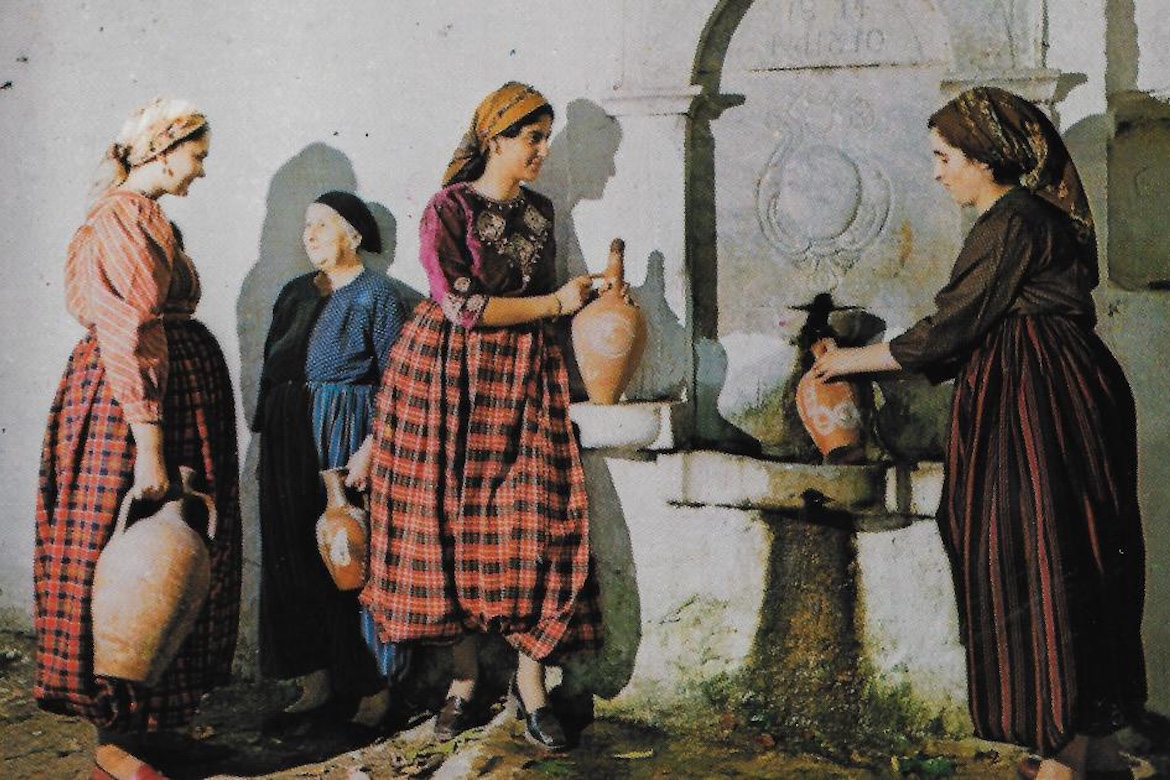
The consequences for Greek communities were profound. Beyond the human losses, the dissolution of institutions—schools, newspapers, theaters, and cultural centers—destroyed the social cohesion that had been maintained for centuries.
Communities dating back to the 18th and 19th centuries vanished within months. The Greek language often survived only in homes and whispered conversations. The lack of records, the fear, and the deliberate silence imposed after the operation made the processing of this tragic memory difficult for decades.
December 15, 1937, marks the starting point of a tragic sequence of events. It serves as a stark reminder of how a state, wielding complete control over its administrative and security apparatus, could fundamentally reshape the life of an entire ethnic group.
Related: What Has Russia Ever Done For Greece?