Crete is an island shaped by mountains, sea, and myth – but its soul lives in its people. Beyond beaches and archaeological wonders, what makes Crete unforgettable is an unmistakable sense of identity: a culture woven from music, dance, hospitality, pride, and the quiet resilience that has carried the island through millennia. To understand Crete is to encounter this living heritage firsthand, whether in a village square during a summer festival or in the warmth of a stranger offering homemade raki. This spirit – the Cretan soul – is what keeps visitors returning year after year.
Music That Echoes Through Generations
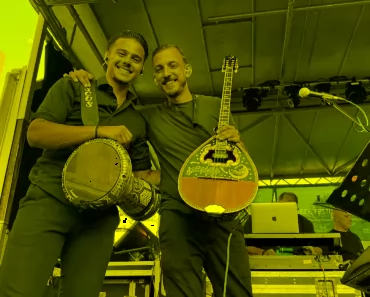
Music in Crete is not simply entertainment; it is the heartbeat of the island. The sound of the lyra, the pear-shaped bowed instrument central to Cretan tradition, can still be heard in cafés, family homes, and village celebrations. Accompanied by the laouto, its deep, expressive tone carries both joy and longing – echoes of stories passed from one generation to the next.
For many travelers, a first encounter with Cretan music is transformative. A single melody can evoke the island’s rugged mountains, its battles for freedom, and its enduring optimism. In places like Anogeia, where legendary musicians such as Nikos Xylouris were born, music is woven into daily life. Old men still gather to sing ‘mantinades’, the improvised rhyming couplets that express love, humor, wisdom, and sometimes grief. These poetic verses, often created on the spot, reveal the wit and emotional depth of the Cretan character.
Dance as a Celebration of Life
Where there is music, dance follows. Cretans dance not to perform but to participate – to feel connected to their community, ancestors, and the island itself. The most iconic dance is the pentozali, a fast, energetic circle dance believed to symbolize uprising and courage. Legend has it that Cretan revolutionaries created the dance as a secret code during Ottoman rule, each step representing defiance.
Other dances, such as the siganos and sousta, show a gentler side of the culture – graceful, flowing, and communal. Visitors who attend a ‘panigyri’ (village festival) often find themselves pulled into a circle, hand in hand with locals, discovering that dancing in Crete is about belonging, not proficiency.
Philoxenia: Hospitality as a Way of Life
If music and dance are the heart of Crete, philoxenia – love of strangers – is its guiding philosophy. For Cretans, hospitality is instinctive, generous, and sincere. A visitor who asks for directions might end up sharing a coffee; a short stop at a taverna may lead to a glass of tsikoudia “on the house,” accompanied by home-grown olives, cheese, or whatever the family has prepared that day.
This generosity is not performative – it is cultural memory. Through centuries of hardship and isolation, Cretans learned that community is survival, and guests are to be honored. Even today, it is common for travelers to leave a village feeling as though they have been welcomed into a home rather than a business.
Craft, Heritage, and the Everyday Heroism of the Island
The Cretan soul is also preserved in the island’s crafts and daily labor. Knife makers still forge Cretan daggers in Chania’s old town; artisans weave textiles on wooden looms in Kritsa; shepherds tend their flocks on Psiloritis, producing cheeses using ancient techniques. These traditions – handed down quietly through families – anchor the island in authenticity while the world evolves around it.
Where Tradition Meets the Traveler
To experience the Cretan soul is not to observe it from afar but to step into it. Stay in a village home, attend a festival, listen to a lyra performance, ascend a mountain plateau, or sit with a family after dinner as they sing mantinades. These moments, more than any monument, reveal what makes Crete extraordinary.
The Cretan soul is not a concept – it is a feeling. And once you encounter it, it stays with you long after you’ve left the island.