
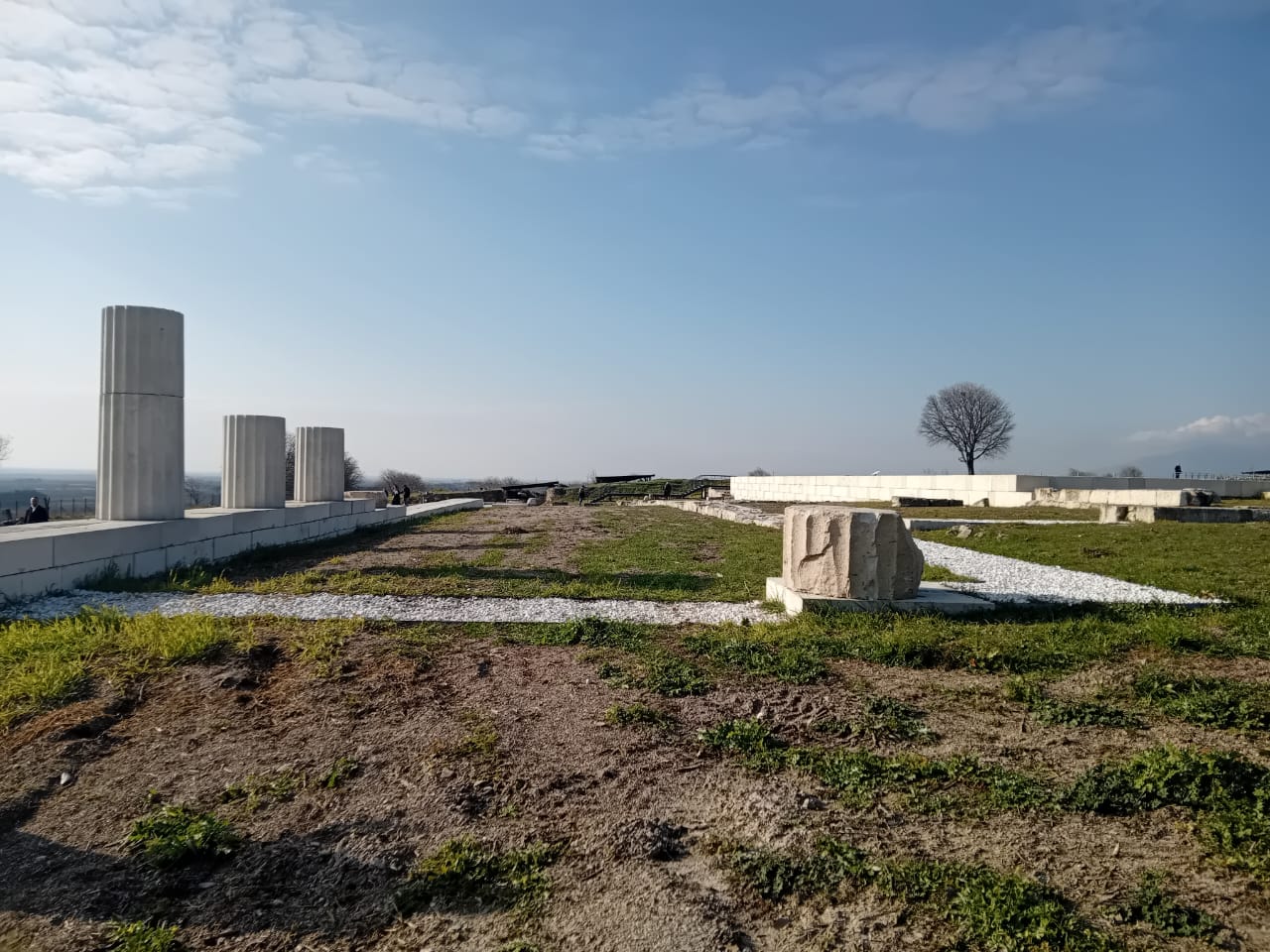
The restored Palace of Ancient Pella (Greek: Πέλλα), birthplace of Alexander the Great, has reopened to the public, drawing attention back to one of the most important archaeological sites in Greece. The project highlights years of excavation, conservation, and careful study aimed at revealing how the royal center of ancient Macedonia once functioned.
Excavations reveal powerful royal center
Archaeologists say the palace helps explain how Macedonia built and projected power. The site shows where Alexander the Great was born and raised, and where King Philip II organized political life. Excavation work revealed foundations of massive structures, formal courtyards, ceremonial spaces, and administrative areas.
These discoveries help historians better understand how royal authority, military leadership, and daily governance were organized inside the palace.
New finds deepen understanding of ancient life
Alongside the reopening, the Archaeological Museum of Pella unveiled two Hellenistic statues, now on display for the first time. Archaeologists discovered them in 2015 during excavations in the Ancient Agora of Pella.
One depicts a female figure. The other represents Silenus, a figure from Greek mythology linked to Dionysus. The statues once decorated a fountain and provided rare insight into artistic style, public aesthetics, and cultural life in ancient Pella.

Strategic design uncovered through research
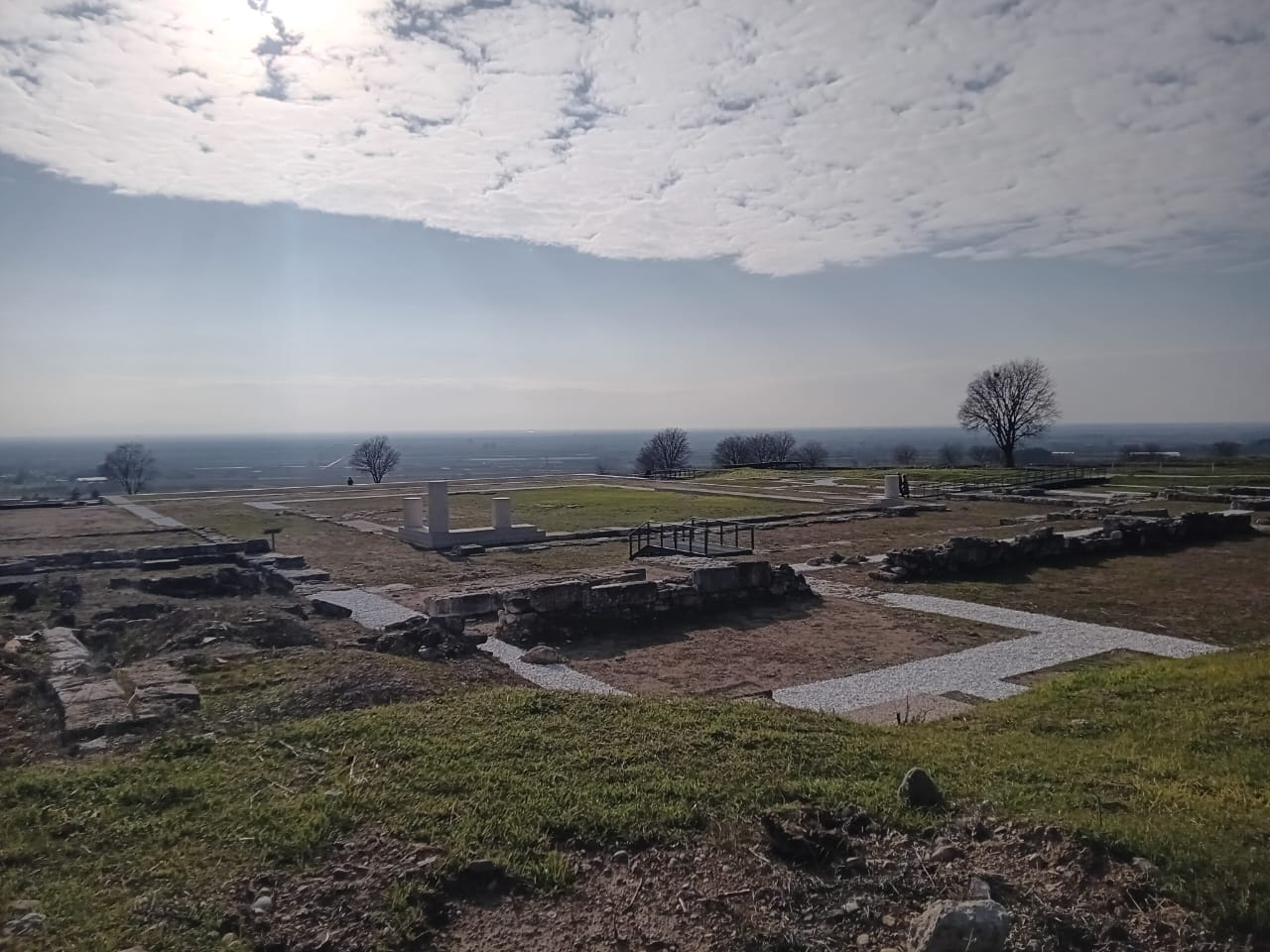
Excavations confirmed the palace’s strategic placement. Built on a plateau north of the city, it overlooked the lagoon, port, roads, and farmland. Two main roads connected the Agora to the palace, symbolizing the rise from civic life to royal authority.
Archaeologists found that the palace covered roughly 70 acres and consisted of seven major buildings set on stepped terraces, connected by corridors and stairways. Evidence shows a clear separation between ceremonial areas, political chambers, residential quarters, and training spaces.
Findings reveal daily royal life

Research also uncovered key elements of royal life. To the north were the royal apartments. Nearby were the palaestra and a training college for royal children and the sons of elites. Another section housed officers, auxiliary rooms, and stables. These discoveries show that the palace did not only represent power. It also functioned as an organized center of education, administration, military planning, and daily living.
Traces of destruction and centuries of change
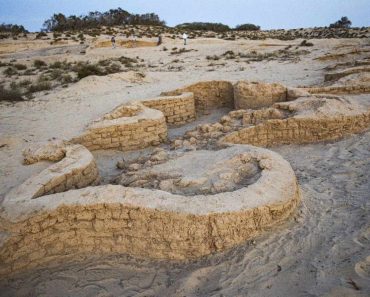
Archaeologists also documented the palace’s decline. After the Roman defeat of Macedonia in 168 BC, the site was looted but never rebuilt. During Byzantine times, the area shifted to agricultural use. In later centuries, stone theft stripped much of the palace, leaving mainly foundations. This history explains why many remains appear low today and has shaped how researchers approach reconstruction.

Restoration supports clearer interpretation
A master plan created in 2015 guided the restoration. Work began in 2020, strengthening structures and improving visibility of key discoveries without altering authenticity. Limited additions help visitors read the architecture more easily. Archaeologists say the restored site now allows the public to better understand how the palace once dominated political, social, and cultural life in ancient Macedonia.
Today, the reopened Palace of Pella offers a clearer, more evidence-based picture of Alexander the Great’s world, bringing archaeological discoveries to the center of public experience.