
MELBOURNE — The genocide against the Syriac (Aramean–Assyrian–Chaldean), Armenian, and Greek peoples is regarded as one of the darkest chapters of the twentieth century. These communities were subjected to widespread campaigns of deportation and mass killings aimed at erasing their presence. Yet more than a century after the crimes were committed by the Ottoman Empire and allied Kurdish tribes, scholars and historians continue to debate how best to characterize and recognize those events.
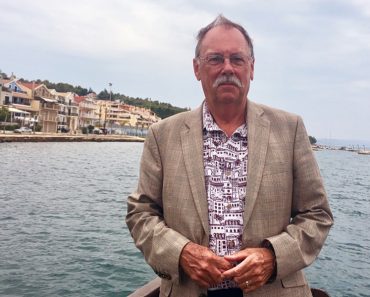
In his new book, Armenian, Greek, and Assyrian Genocide Recognition in the Twenty-First Century, historian Themistocles Kritikakos revisits Ottoman and foreign archival documents, as well as survivor testimonies, in an effort to better understand the contexts that led to this humanitarian catastrophe.
Published by Springer, the book examines the enduring consequences of the genocide against Syriac (Aramean–Assyrian–Chaldean), Armenian, and Greek communities in the final years of the Ottoman Empire. It presents what is described as the first comprehensive comparative analysis of these communities’ efforts to secure official genocide recognition in Australia.
Drawing on oral interviews with descendants of survivors, as well as research in memory and genocide studies, the book explores the intergenerational impact of silence, violence, and displacement within diaspora families and communities. It also highlights how descendants of Syriac, Armenian, and Greek survivors commemorate their ancestors and build alliances with other communities.
Dr. Kritikakos sheds light on how individuals, families, and communities confront and move beyond traumatic experiences across time and space. His research illustrates how communities that have preserved and documented their painful histories have strengthened their pursuit of formal recognition.
Despite the fact that Australians were among the witnesses to these atrocities — reporting on them and providing humanitarian assistance to survivors between 1915 and 1930 — Australia’s national narrative has remained at odds with recognition efforts.
In an interview with The National Herald, Dr. Kritikakos explained that he was inspired to write the book — an expanded version of his doctoral dissertation — by the widespread global recognition of the Armenian genocide compared with what he sees as the relative neglect of Greek and Syriac (Aramean–Assyrian–Chaldean) experiences. This disparity, he said, motivated him to examine those communities more closely.
“On a personal level, my mother inspired me to explore this topic from a young age by sharing stories she had heard about my grandparents and their experiences in Asia Minor,” he said.
Dr. Kritikakos continued:
“Growing up, I encountered fragments of stories of migration, loss, and survival within my family and the wider community. These included accounts relating to my Asia Minor heritage on my mother’s side and the horrors of the Second World War on my father’s side. Much, however, remained unspoken because of the traumatic nature of these events.
As I learned more about the Armenian Genocide and the recognition efforts, I began to consider the Greek and Assyrian cases within the same framework and became interested in why they were less well known. This question led me to explore the different historical trajectories and post-Ottoman experiences that shaped how each community remembered and articulated its past.”
He noted that Armenians, as the largest victim group, led many of the recognition efforts, and that the genocide had a profound impact on Armenian identity. Greeks and Syriacs (Arameans–Assyrians–Chaldeans), he argued, experienced subsequent traumas that overshadowed or suppressed memories of the late Ottoman period.
The Greek-Australian author said he is proud of the project, describing it as the result of significant sacrifice and dedication, supported by many along the way. He expressed deep gratitude to the interviewees who entrusted her with their stories, noting that bringing these often-overlooked experiences into public and academic discussion carries profound meaning. For many descendants, Dr. Kritikakos added, family histories have long remained private, fragmented, or marked by silence.
He emphasized that descendants inherit not only stories but also unresolved grief that can profoundly shape their identities. Understanding how trauma is transmitted across generations and borders — sometimes even through silence — was one of the most significant findings of his research.
In a final comment, Dr. Kritikakos stressed the continued relevance of these issues:
“We have recently witnessed the ethnic cleansing of Armenians from Artsakh, demonstrating that the attitudes and processes that drove the genocide of 1915 have not disappeared and continue to threaten vulnerable populations. Similarly, Assyrian communities faced genocidal violence in Iraq and Syria between 2014 and 2017.”
Australia has yet to recognize the genocides at the national level, in part due to shared historical narratives with Turkey surrounding the Battle of Gallipoli. Australian forces, as part of the Australian and New Zealand Army Corps (ANZAC), participated in the Gallipoli campaign in 1915 during the First World War against the Ottoman Empire. Whether this new book could contribute to advancing official recognition remains an open question.
Recognition efforts surrounding the Sayfo genocide extend beyond Australia. Dr. Sabro Bengaro previously published a dissertation titled Germany’s Islamic Strategy During the World War I and the Impact of the Jihad Declaration on the Sayfo Genocide of 1915, examining the ideological and geopolitical dimensions that paved the way for genocidal campaigns against Syriac (Aramean–Assyrian–Chaldean), Armenian, and Greek communities. The study drew on extensive archival sources, including German diplomatic correspondence, Ottoman military records, missionary reports, and Syriac Church testimonies.
Dutch Member of Parliament Don Ceder of the Christian Union recently called on the House of Representatives of the Netherlands to formally recognize the Armenian genocide and Sayfo in full, urging lawmakers to cease referring to “the issue of the Armenian genocide [also known as Sayfo]” and instead use the term “the Armenian genocide [also known as Sayfo].” He further called on the government to implement this change by 24 April 2026, the annual day of commemoration of the Armenian genocide.