
Last week, the residents of the Greek prefecture on the borders of the country with Bulgaria and Turkey saw their farms and homes being devastated by a great flood of the Evros River. With the waters now receding, the garlic growers of this prefecture, which bears the same name as the river, thank their luck that their own region remained intact from the flood, despite the waters having reached close to it. Evros hosts about 60% of the national garlic production, with plantings having been concluded since October.
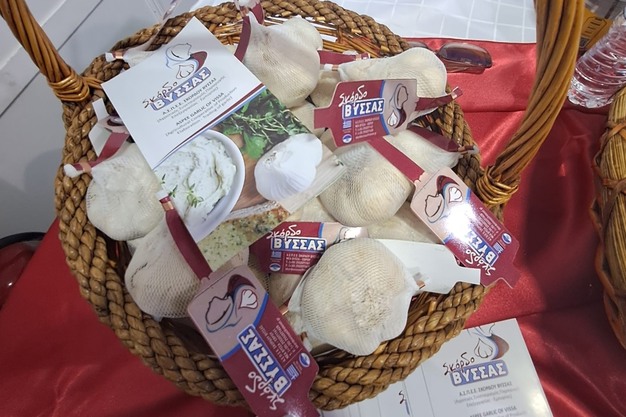 © ASPEE Garlic Vissa
“There are still flooded areas in Orestiada, Ormenio, Ftelia, and Didymoteicho, but Nea Vissa, where garlic plantations are located, is safe. Nor have the transportation arteries of our product been affected,” stresses Mr. Yannis Margaritidis, president of the local agricultural cooperative ASPEE Garlic Vissa.
As he says: “Total plantings in our area reach about 300 hectares, as last season, and 10% of them belong to our cooperative members. The weather has been fine so far, and the various cultivation tasks are being carried out normally. If everything goes well, we estimate starting harvesting in the first week of June and, after ten days of natural drying in the sun, we can start packing and sending our products to the market.”
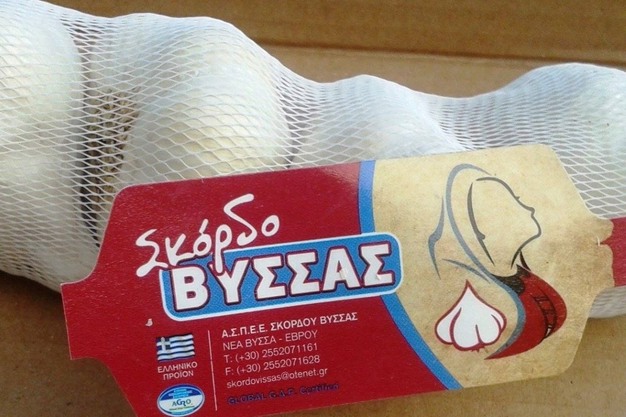 © ASPEE Garlic Vissa
The Greek garlic stocks are depleting. “In our region, only we and one private company still have some significant quantities, but speaking for us, we expect to see them ending by the end of this month. Despite the competition from Spanish and Chinese garlic, the Greek product is not enough to meet market needs, and we have limited ourselves only to supplying the Greek supermarket chains, which are our long-term partners. From April on, there will be even more room for imports.”
“Greek growers sold their products at 0,25-0,30 euros per piece for a braid of 25 pieces. This is not a reasonable price, and sometimes they sold even at 0,15 euros. These garlics were offered at very low prices in the Greek wholesale markets, making trade difficult for those who had bought garlic at higher prices. At the beginning, the market was seeking garlic smaller than 70 grams. Later, it moved to bigger pieces. About 40% of the current crop consists of such garlic,” the president of the Greek cooperative concludes.
For more information:
Yannis Margaritidis
ASPEE Garlic Vissa
Tel: +30 25520 71161
Email: [email protected]