

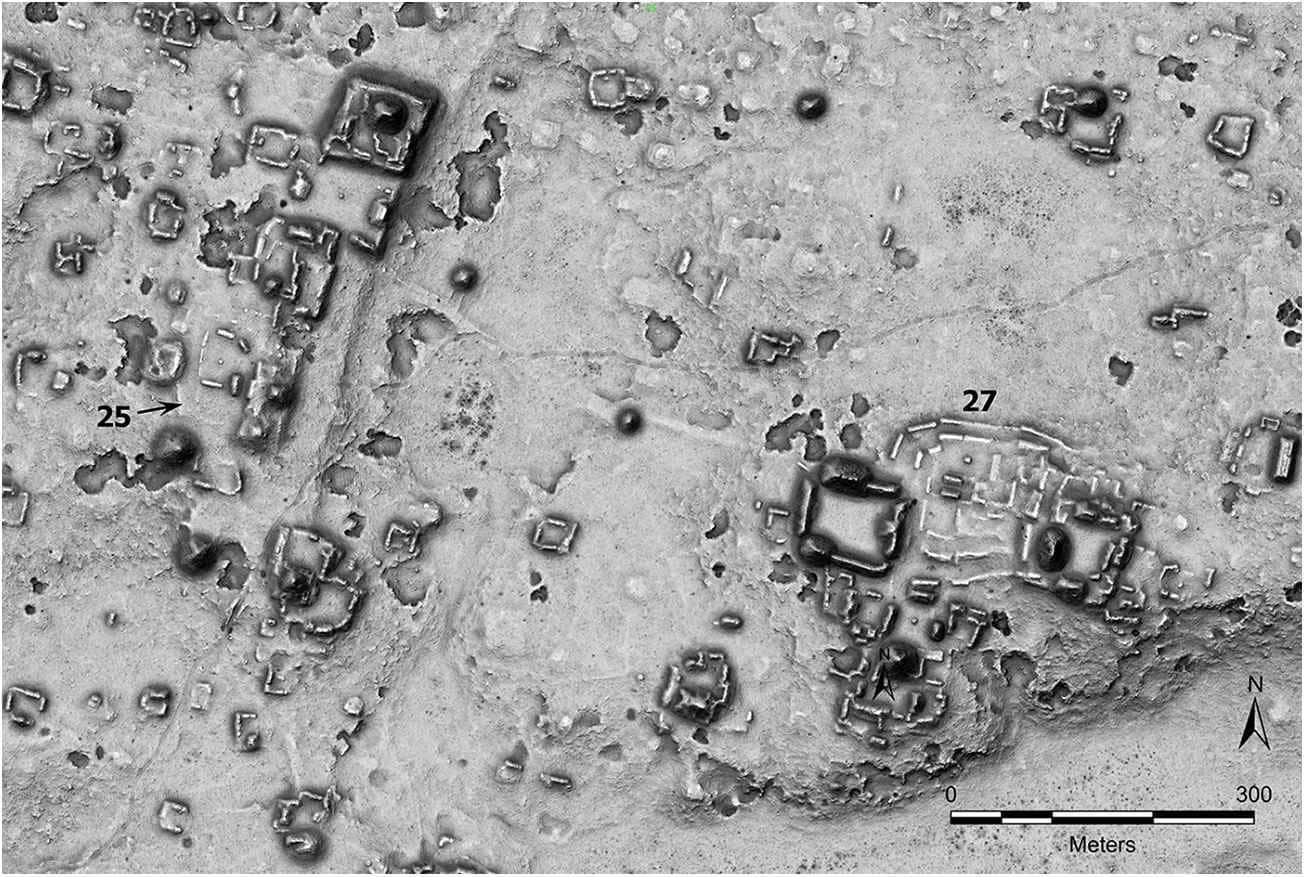
Ancient Maya markets may have been far more organized and widespread than many scholars once thought, according to new research that points to a network of built trading spaces across parts of the Maya Lowlands.
The study argues that these sites were not random open plazas. Instead, they appear to have been carefully planned places for exchange, with layouts that suggest a structured economy that reached beyond royal courts and elite control.
The study, led by Ivan Šprajc of the Research Center of the Slovenian Academy of Sciences and Arts in Slovenia, was published in Ancient Mesoamerica. It focuses on unusual architectural groups found in the central and western Maya Lowlands, especially in present-day Campeche, Mexico.
Ancient Maya markets point to organized trade
These complexes are made up of low, long, narrow mounds arranged in circles or rectangles, often one inside another. Šprajc identified 50 of these “nested constructions” by studying lidar data, a laser-based mapping method that can reveal ancient features hidden under dense forest. Because the platforms are low and hard to spot on the ground, lidar played a key role in finding them.
The shapes of these compounds closely match two Maya sites already linked to trade: the East Plaza at Tikal and the Chiik Nahb complex at Calakmul. Both have been seen as likely marketplaces based on several forms of evidence.

Šprajc argues that the long, low mounds were probably foundations for stalls made from perishable materials. The open spaces between them likely served as walkways for buyers and sellers.
Clues from layout, ritual and daily exchange
Larger buildings attached to some of the compounds may have been used for storage or by officials who managed activity in the market.
Other details strengthen the case. Some of the complexes contain stone altars or remains of shrines. Others sit near ceremonial buildings or ballcourts. That fits with long-known evidence from Mesoamerica showing that trade often had religious and ritual ties.
The study says most of these sites were used during the Classic period, from about 250 to 900 A.D., though some may have begun earlier.
Excavations at a few locations produced ceramics from that period, but the evidence remains limited. Even so, the overall layout of the complexes makes the market explanation the strongest one, the study says.
Why the findings matter beyond elite power
The research also suggests these marketplaces were not spread evenly across the Maya world. Their clustering in some areas may reflect trade routes, local resources and environmental pressures.
In places where farming conditions were harder, communities may have depended more on exchange networks to get food and other goods.
Šprajc cautions that the case is still preliminary. More excavations, soil testing and artifact studies are needed. But the findings offer a sharper picture of Maya life.
They suggest commerce had a visible place in the landscape and that everyday exchange may have played a larger role in Maya society than monumental palaces and temples alone would suggest.