This month, the Manoel Theatre will host a performance that challenges one of music’s most basic assumptions: that sound requires instruments.
Bodyterranean, created by Italian artist and ethnomusicologist Simone Mongelli, is a dance and music work that uses only the human body and voice to generate rhythm, melody and meaning. Featuring Greek and Italian dancers alongside Maltese vocalists, the production explores Mediterranean culture through movement, body percussion and traditional song.
At the heart of Bodyterranean is the idea that the body itself is the most ancient musical instrument. Clapping, stamping, breathing and vocalisation replace drums and strings, creating a soundscape that is as visual as it is audible. Rhythm emerges through choreography, while melody is carried by voices rooted in folk traditions from Greece and Southern Italy.
 Melody is carried by voices rooted in folk traditions from Greece and Southern Italy.
Mongelli, who is based in Greece, brings both artistic and academic perspectives to the project.
Trained as an ethnomusicologist, he studies music within its social and cultural contexts, with a particular interest in how communities use sound to express shared experiences. His connection to Malta is not incidental. His master’s degree research focused on traditional Maltese għana, specifically the spirtu pront style, which he views as part of a wider Mediterranean network of oral and musical traditions.
 At the heart of Bodyterranean is the idea that the body itself is the most ancient musical instrument.
“We can identify two main elements in this project,” Mongelli explains. “On one hand there is research into tradition and the universal themes that drive people everywhere, the same need to tell stories and express emotion. On the other hand, there is the challenge of using a single musical instrument, and a very particular one: the body.”
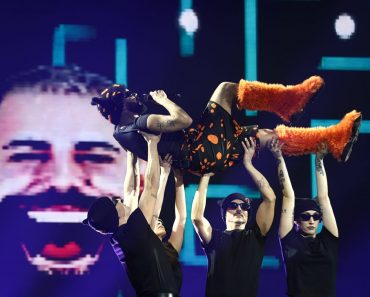
The performance combines traditional Greek and Southern Italian songs with tightly structured choreography and body percussion. The dancers’ movements are not decorative but functional, producing sound through contact with the floor and with one another. The result is a constantly shifting relationship between music and movement, where neither exists independently of the other.
 Clapping, stamping, breathing and vocalisation replace drums and strings.
Originally released as a studio album in 2016, Bodyterranean soon evolved into a live performance. Mongelli believes the stage is where the project truly belongs. Body music, he argues, cannot be fully experienced through sound alone. It requires visibility, spatial awareness and the shared energy of performers and audience.
Since its stage debut, Bodyterranean has toured Greece, Italy and Cyprus. Malta will be the production’s latest stop and its first appearance on the island. Mongelli is no stranger to the country, having visited several times in the past. He speaks warmly of those experiences and expresses confidence that the Maltese performances will be no different.
 The dancers’ movements are not decorative but functional.
“I hope that in Malta we will create the same touching feeling that we experience every time we perform,” he says.
Local vocalists Doreen Galea and Mariele Żammit will join the international ensemble, adding Maltese voices to the Mediterranean mix. Together, the performers tell stories of joy and sorrow, love and exile, motherhood and diversity.
Bodyterranean will be performed at Manoel Theatre on February 7–8 at 7.30pm. Tickets are available from the Manoel Theatre website or by calling the box office on 2124 6389.