
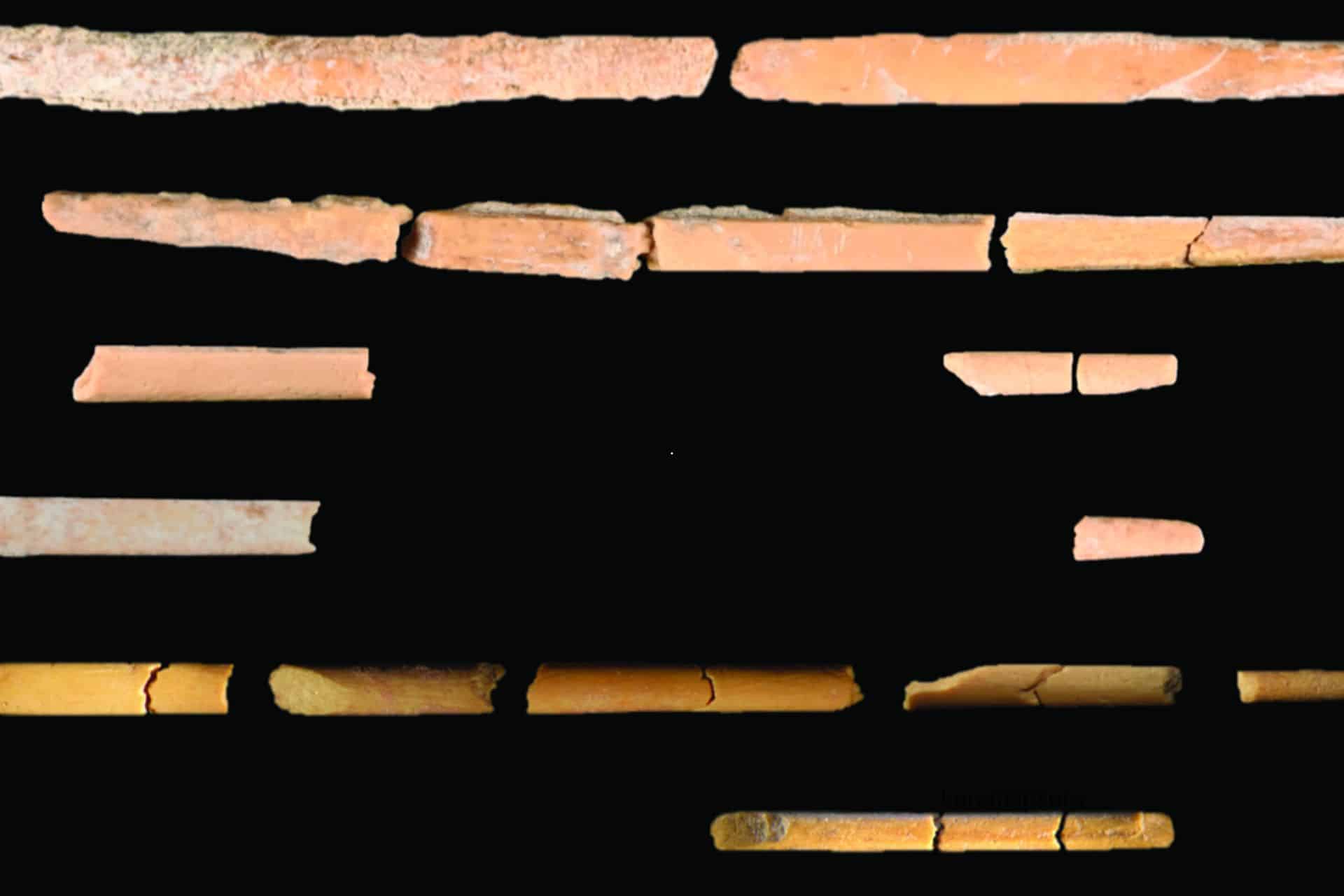
Archaeologists in Wyoming have found a key tool that helped ancient Americans survive during the last ice age. At a site in Converse County, researchers uncovered 32 small pieces of needles made from animal bones.
These artifacts were buried about 15 feet deep at a place called the La Prele site, where a mammoth was butchered around 13,000 years ago.
The needles are not the oldest ever found, but scientists have now learned what kind of animals the bones came from. To find answers, they studied proteins in the bone material. Surprisingly, the results were different from what they expected.
Spencer Pelton, Wyoming’s state archaeologist, explained that researchers thought the needles would be made from bison or mammoth bones.
These animals were common at similar sites in the High Plains and Rocky Mountains during that time. However, the analysis showed something unexpected. They published their findings in the journal PLOS ONE.
Needles created from extinct American cheetah
Researchers discovered that the needles were crafted from the bones of red foxes, bobcats, mountain lions, lynx, hares, rabbits, and even the extinct American cheetah.
“It was extremely surprising that these needles were made out of small carnivores,” Pelton said.
New paper in #PLOSONE reports eyed needles in North America dating to around 13,000 years ago.
Archaeologists have identified bones from foxes, wild cats and hares that were used to make the needles at the La Prele site, Wyoming.https://t.co/T5omkCnQCI pic.twitter.com/XO23tZc0w8— Ian Gilligan (@Gilligan_Sydney) November 27, 2024
To uncover this, scientists used a method to study the chemical makeup of the bone material. They extracted a protein called collagen and examined its amino acid patterns, which act like fingerprints for identifying animals.
The results were compared to data from animals that lived in North America during that time. This process, called ZooMS, helped researchers link the bones to specific species.
North America’s earliest inhabitants belonged to the Clovis culture
The La Prele Mammoth site, discovered in 1986, offers a glimpse into the lives of some of North America’s earliest inhabitants. Archaeologists believe a prehistoric group hunted or scavenged a young mammoth at the site.
They likely set up a temporary camp to cut up and use the animal. Based on the site’s age and unique tools found there, researchers think these people belonged to the Clovis culture, one of the continent’s oldest known human groups.
Finding the small bone needles required careful digging. According to Spencer Pelton, the team first used small test pits, each about one square meter in size, to locate areas with the most buried objects.
Once they identified these areas, they expanded the excavation to larger spaces, ranging from 25 to 30 square meters. These efforts uncovered the floors of many temporary shelters used by the prehistoric group.
The needles were discovered only after the team used fine screen mesh with tiny 1/16th-inch (1.6-millimeter) openings to sift through the soil.