Can a traditional dance tell the story of a place? Can it keep alive the memory of those who left, reflect the social relationships of another era and bridge the distance between homeland and diaspora? For Andromachi Bouna-Vaila, the answer lies far beyond the steps and the music.
A social anthropologist, PhD holder in the Sociology of Education and Gender, author and researcher of folk traditions, she approaches dance as a living archive of collective memory, through which human relationships, social roles and the stories of communities are revealed.
Originally from Agia Paraskevi (Kerasovo) in Konitsa, Epirus, she has devoted much of her work to documenting the history and lived experiences of the people of her ancestral village.
Her five-book series, which together forms a “cycle of life”, explores subjects ranging from the roles of mothers and brides in traditional society to folk tales and mourning rituals.
Through her longstanding involvement with the Lyceum Club of Greek Women in Ioannina, as well as her teaching and organisation of traditional dance seminars, she has also worked to preserve and pass on Greece’s cultural heritage.
On 10 and 11 November, Bouna-Vaila will visit Sydney at the invitation of the Lyceum Club of Greek Women to deliver a talk and workshops on traditional dances from Epirus.
The visit also carries particular emotional significance for her, as migration forms part of her own family history. Her grandfather spent 25 years working as a craftsman in Iran.
Speaking to Neos Kosmos, Bouna-Vaila describes tradition as a living relationship between past and present, explains how dance carries social memories and reflects on the role of Greek communities abroad, which not only preserve their cultural heritage but also give it new dimensions and meanings.

NK: What led you from social anthropology and academic research into the world of traditional dance?
I would not say that I moved from one world into another because, for me, these two worlds have never really been separate.
Social anthropology and traditional dance meet at a common point: the human being, their relationships, memories and the ways in which they construct their identity within a community.
In this sense, traditional dance offers an exceptionally interesting field for anthropological observation.
The body moves within a framework of rules, expectations, symbolism and relationships. The way we stand while dancing, the way we hold hands, the position we occupy in the circle and our relationship with others reveal aspects of our social lives.
For me, therefore, traditional dance is a way of connecting with those who came before us and asking ourselves what remains of their history in our own movements, relationships and collective memory.
NK: What can a traditional dance reveal about the society that created it?
I believe a traditional dance can reveal far more than what is immediately apparent.
It can serve as a kind of social and cultural archive, one that is not written in books but embodied in people’s bodies, movements, music and relationships.
The answers are not always found in the steps themselves. They also lie in the context in which those steps are performed.
The same dance can take on different meanings depending on the occasion, the participants and the historical circumstances.
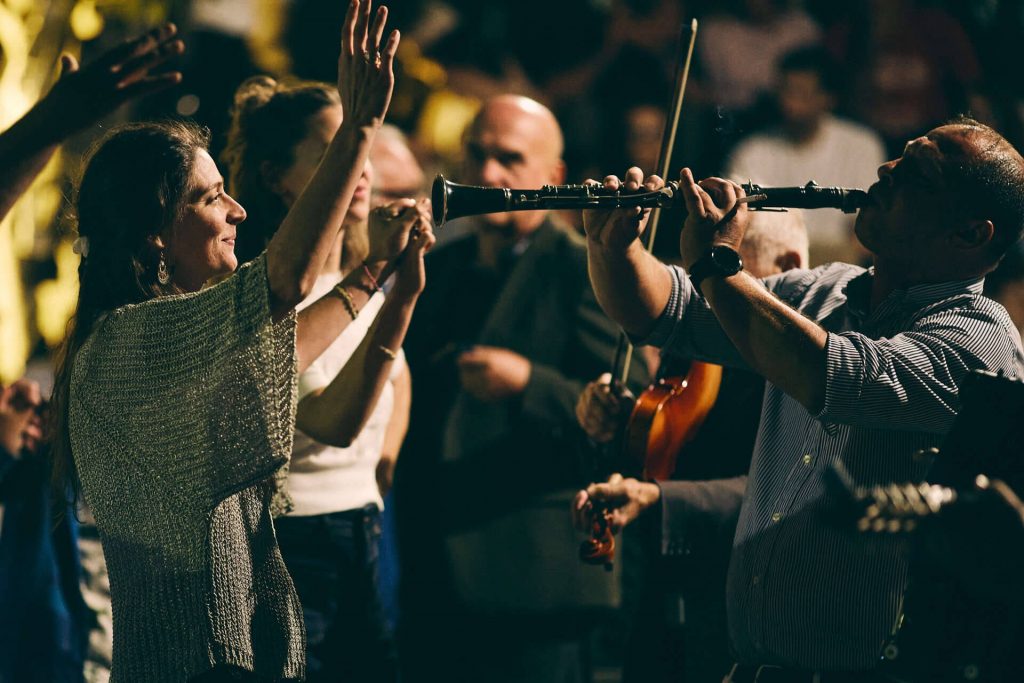
In Epirus, where migration has shaped the lives of many families and communities, dance can serve as a bridge between the homeland and those who live far away.
This does not mean that every dance tells a particular story in itself. Rather, it can awaken memories and emotions that acquire meaning through people’s own narratives.

NK: How were the social roles of men and women reflected in the traditional dances and customs of Epirus?
The position of women in traditional society is a particularly complex issue, and I believe we need to approach it without idealisation, but also without simplistic generalisations.
In many traditional communities, women’s participation in public life was governed by social expectations concerning modesty, behaviour, age and marital status.
These expectations were also reflected in dance. They could influence who participated, who assumed a leading role, what behaviour was considered acceptable and which boundaries had to be observed.
Women played an active role in shaping and transmitting tradition.
Through everyday practices, family rituals, storytelling, songs and celebrations, they contributed to preserving social memory and cultural continuity.
Recognising the cultural value of tradition does not mean that we should regard every historical social convention as desirable or beyond question.
NK: In your books, you have documented testimonies from people in the Konitsa region. Is there a particular story that deeply moved you?
When you record people’s memories and stories, you gradually realise that the history of a place is also made up of the small, everyday experiences of people who may never have received public recognition, yet whose lives reflect with remarkable clarity the social and historical conditions of an entire era.
My writing, through books such as The Mother of Kerasovo, The Bride of Kerasovo and The Man of Kerasovo, is connected to my effort to understand and highlight aspects of life, social roles, family relationships and collective memory in my place of origin.
One of the most heartbreaking testimonies I have recorded concerns a mother watching her child leave for a foreign land.
She was crying and calling out: “Spyro, Spyrooo…”
When someone asked her why she was shouting, she replied: “So that my child will hear me and come back.”
For me, those words capture the entire tragedy of migration: the person who leaves, the mother and wife who remain behind, the absence and the endless anticipation of a return.

NK: Traditional dances continue to play an important role in Greek community life in Australia. What is preserved when a dance is carried far from its place of origin, and what changes?
Perhaps the most important thing that is preserved is the ability of dance to create bonds.
It is the human need to come together, share an experience, feel a sense of belonging to a community and pass on something of the world of previous generations.
Cultural practices do not exist outside society. They travel with people, encounter new environments and acquire new meanings.
In Australia, Greek communities have developed their own history.
Those who migrated brought cultural elements from Greece and established new communities, institutions, associations, schools, cultural activities and places where people could gather.
This change should not automatically be regarded as a loss of authenticity.
For me, the essential question is whether we still know the history of a dance, whether we can recognise its social roots and whether we pass it on to future generations in a way that creates a genuine connection with the culture.
NK: How can we help young Australians of Greek heritage understand the history behind traditional dances?
I believe we need to move beyond teaching dance purely as a technique and towards a deeper understanding of dance as a cultural practice.
The steps matter, as do the music, rhythm and correct execution. But these alone are not enough to convey the social and historical content of a tradition.
It would be particularly valuable for traditional dance workshops to combine practical instruction with short narratives, historical references, oral testimonies and discussions about the societies in which the dances developed.
A child of Greek heritage growing up in Australia could learn a dance from Epirus while also discovering the journeys of their ancestors, life in the villages of Epirus, experiences of migration and the changes their families underwent.
NK: Is there a risk that Greek tradition could be reduced to an impressive stage performance, losing its deeper meaning?
Yes, that risk exists when tradition becomes completely disconnected from its social and historical context and is treated exclusively as a spectacle.
However, I do not believe that stage performances are inherently problematic.
Cultural associations and dance groups carry out important work, giving people of different ages the opportunity to discover traditional dances, collaborate and develop connections with their cultural heritage.
The important thing is to ensure that stage performances do not become the only way we understand tradition.
NK: What would you like to share with Greek Australians during your visit, and what do you hope to gain from meeting the community?
I would like to share with Greek Australians my love and respect for the culture of the communities of Epirus, but above all, my belief that tradition acquires genuine value when it brings us closer to people, their stories and their experiences. My visit to Australia, however, also has a deeply personal dimension. My grandfather spent 25 years living abroad, in Iran, working as a craftsman.
His journey forms part of my family’s memory and connects with the broader history of people from Epirus who were forced, or chose, to leave their homeland in search of work and better living conditions. I did not experience his years abroad myself.
I know about them indirectly, through memories, family stories and an awareness that one person’s absence can affect the lives of an entire family.
That is why this journey to Australia carries particular emotional weight for me. I am travelling with a part of my family’s history.
I believe the relationship between Greece and the diaspora should not be a one-way transmission of culture from the homeland to those living far away.
It is a two-way relationship through which we all learn, redefine our points of reference and discover different ways of connecting with our history.
Recently, I had the opportunity to spend time with our compatriots living abroad in Munich, Germany.
The song Xenitemeno Mou Pouli (My Bird in a Foreign Land), such a moving song about migration and separation, takes on special meaning for me when you hear it in the very place it speaks of: a foreign land.
I am very much looking forward to hearing it in Australia, too.
Story via the original publisher. Read the original article