

Extinguish All Hope | Illustration by Chase Stone
Greek and Roman mythology always fascinated me in school. Maybe that’s because pretending to fight giant scorpions and the Kraken was just the thing for my friends and me on those long summer evenings when it gets dark before your bedtime. The summer after we all saw the original Clash of the Titans and had a good time. We were all still trying to find a way to stay kids as we got old enough to understand our parents’ fights. And mythology helped in that.
And in its own way the mythology IP port into MTG with Theros served a similar purpose, tying Magic back to its Arabian Nights roots as a plunderer of old stories while struggling with the inevitable adolescence of its own IP.
The original Theros set was my second time back to Magic after a pause, and the dual pull of two parts of my elder childhood together was too hard to resist!
Perhaps the classical pantheons had a similarly strange place in the timing of your lives. And maybe it was the same for your journey into or back into Magic.
Let’s rank the Therosian god cards, and order our nostalgia properly, I say!
What Are Theros Gods in MTG?

Purphoros, God of the Forge | Illustration by Eric Deschamps
The gods of Theros in MTG all have a type line that reads, “Legendary Enchantment Creature – God”. They’re all part of the pantheon of Theros, a plane that’s heavily based on Greek and Roman mythology. The gods are part of Therosian lore, which feels inspired by the way gods work in the Neil Gaiman universes and even the way gods work in the Age of Mythology video games: Worship makes them real.
In MTG terms, that means most of these gods share rules text that prevents them from being creatures until you reach a certain devotion threshold, which is measured by colored pips on your permanents. That changed when some showed up for March of the Machine, when the multiplanar Phryrexian horrors were enough to rouse some gods from their somnolence without the structures of worship the pips on permanents would represent.
These are powerful cards that function as build-arounds, from the basic workings of devotion to the ways they interact in the game in very specific ways that reward certain deckbuilding choices. In that way, I find there’s a fun puzzle to try to make them work.
#24. Iroas, God of Victory
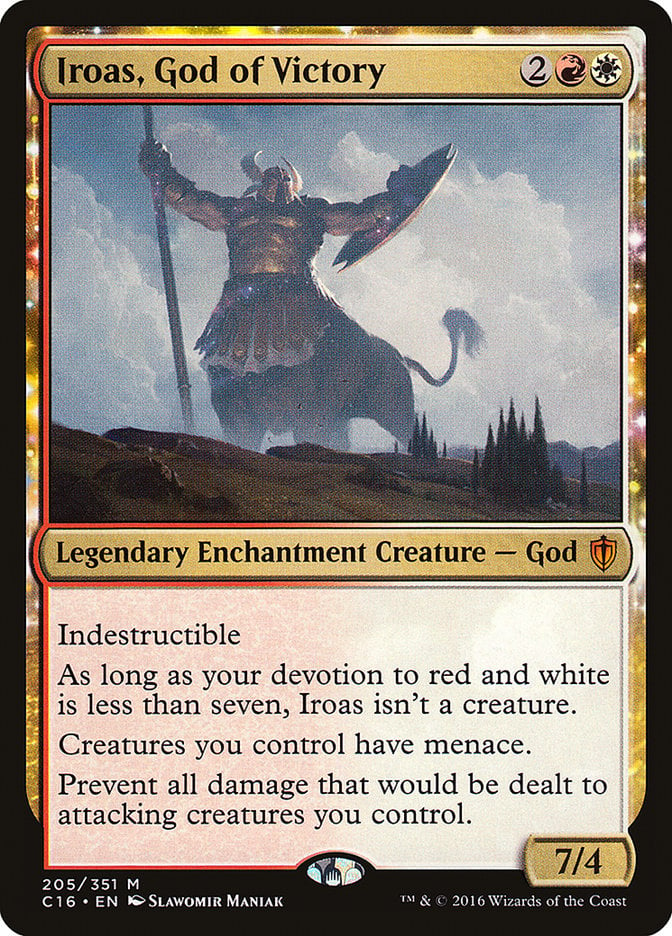
A Boros () aggro commander for a different age, Iroas, God of Victory protects attackers from defenders. But what if there are no blockers, as is an increasing situation at Commander tables where midrange piles are fading out of the format? I like this card as a supporting player in Isshin, Two Heavens as One.
#23. Nylea, God of the Hunt
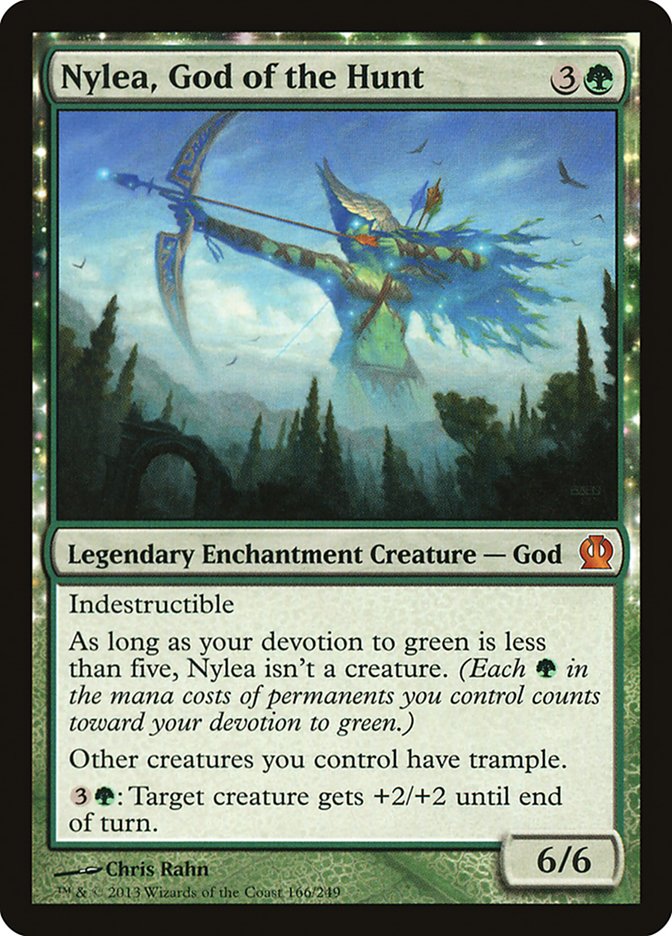
This feels a bit like trying to make fetch happen, rolling out Nylea, God of the Hunt with a devotion package including stuff like Gigantosaurus and Primalcrux. Aside from that try-hard build, Nylea, as a kind of onboard Overrun, is a nice inclusion in a variety of green and Gruul () stompy decks.
#22. Erebos, Bleak-Hearted
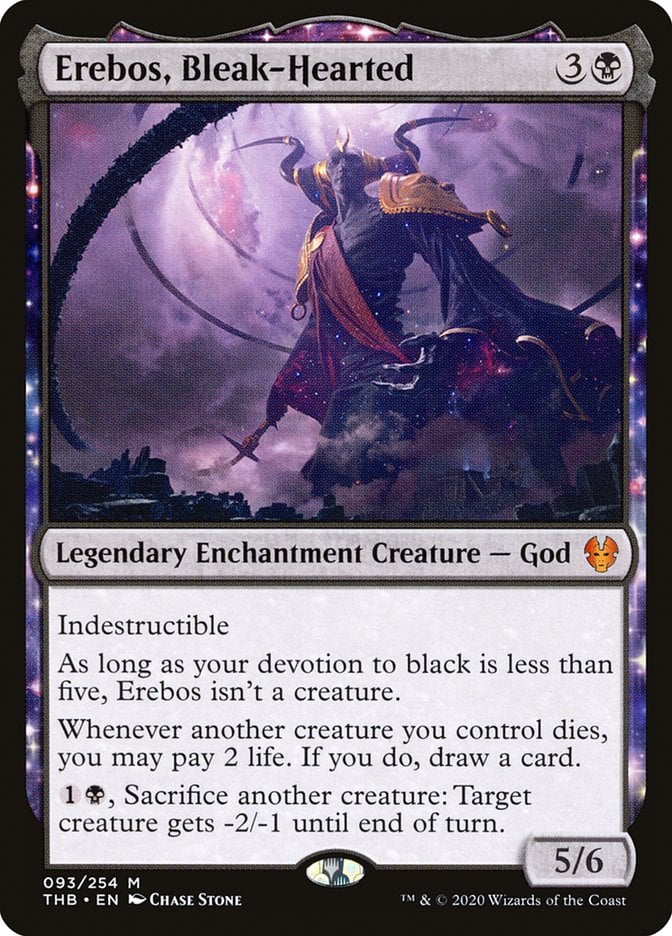
Both versions of Erebos are quite disappointing, I think. You want to play with the god of the dead in black, especially, but each is a 4-mana snoozefest. Erebos, Bleak-Hearted is a kind of decent support card in a sacrifice deck because it draws you cards for your dying things. But if you run out of things, it can’t even sacrifice itself to get the train rolling. It’s not quite strong enough to take the field from the command zone, but it can be useful as support in decks like Rendmaw, Creaking Nest, Ratadrabik of Urborg, or those wild Zodiark, Umbral God decks!
#21. Heliod, God of the Sun
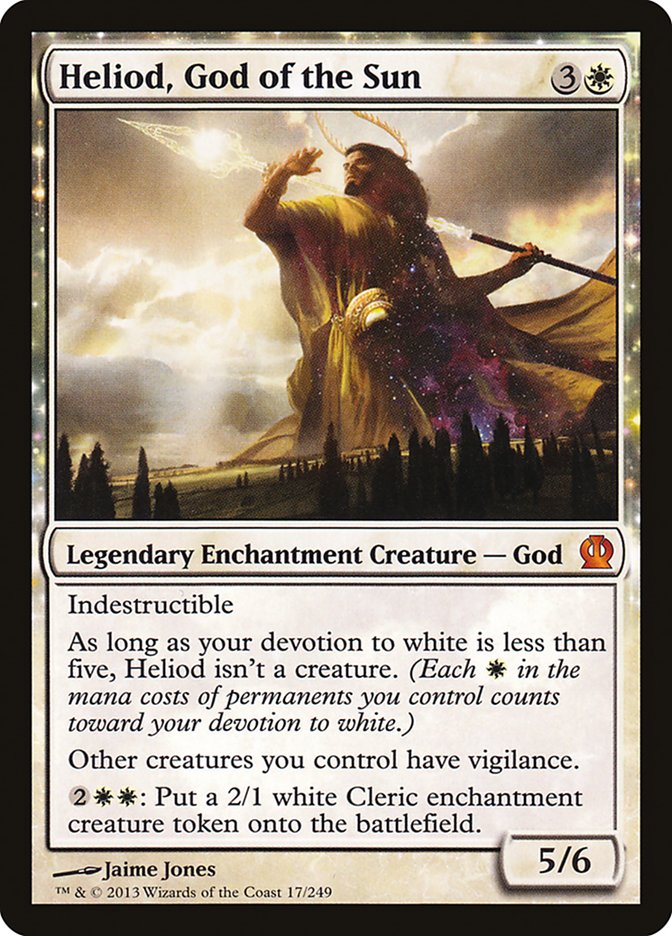
No one likes Heliod. So it makes sense for this to be a stax commander, right? With onboard creature birthing, Heliod, God of the Sun is fine with stuff like Rule of Law, Ghostly Prison, and Sphere of Safety. Of course, you can also play the deck more straightforwardly with clearly non salty cards like Smothering Tithe, Esper Sentinel, and Elesh Norn, Grand Cenobite. It’s an odd sort of card that doesn’t have a ton of homes.
#20. Erebos, God of the Dead
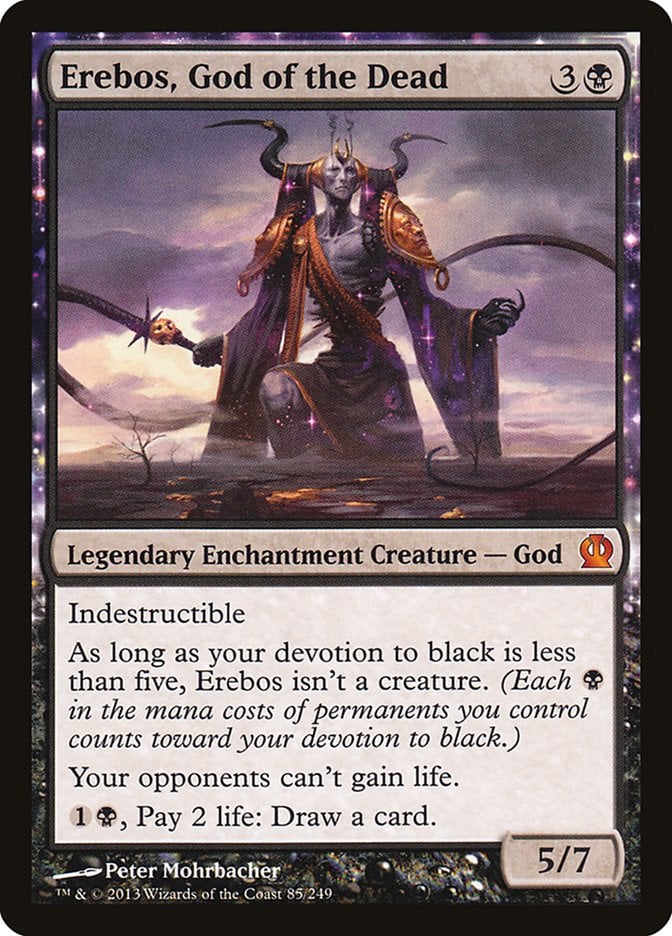
Better than the newer version of Erebos, Erebos, God of the Dead at least allows you to start to draw cards just by itself. It’s cute to slot into a Sheoldred, the Apocalypse deck, of course, and it holds its own as a Gray Merchant of Asphodel style commander, including what you’d expect: the combo of Sanguine Bond and Exquisite Blood.
#19. Thassa, God of the Sea
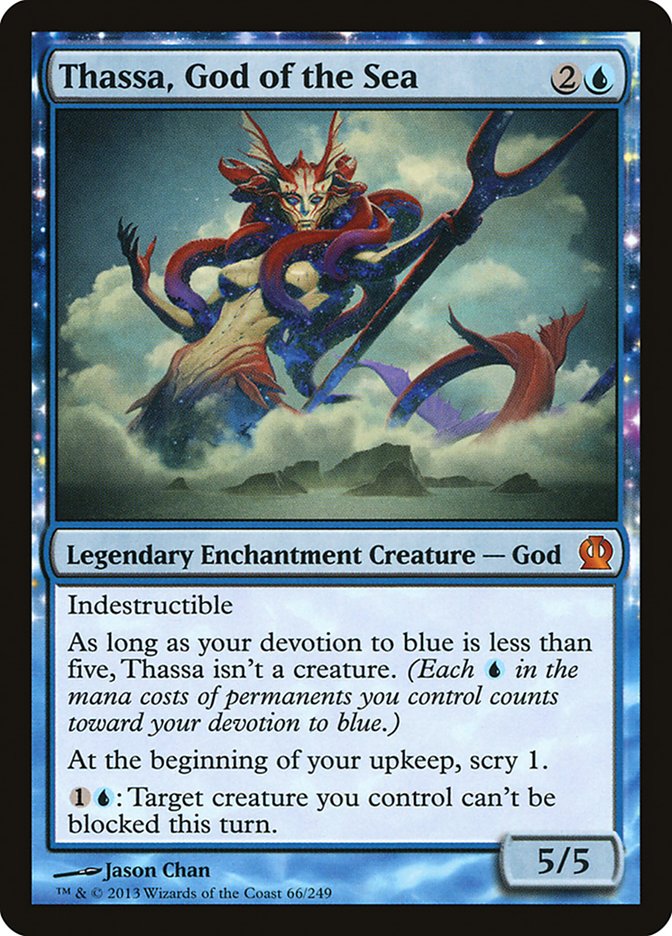
This is about as high on the list as a god that’s relatively serious about being a devotion-oriented commander goes. Thassa, God of the Sea seems like it would be great in a go-wide merfolk deck, and it does have a place there because its activated ability helps with Coastal Piracy types of effects. But folks seem to play into the theme here and give the god of the deep some chonky kaiju to play with, especially if they’re fat with blue pips, like Stormtide Leviathan. I respect the commitment to story, but I play this in the 99 of merfolk decks, and that seems to be where this sleeping god lies best.
#18. Ephara, God of the Polis
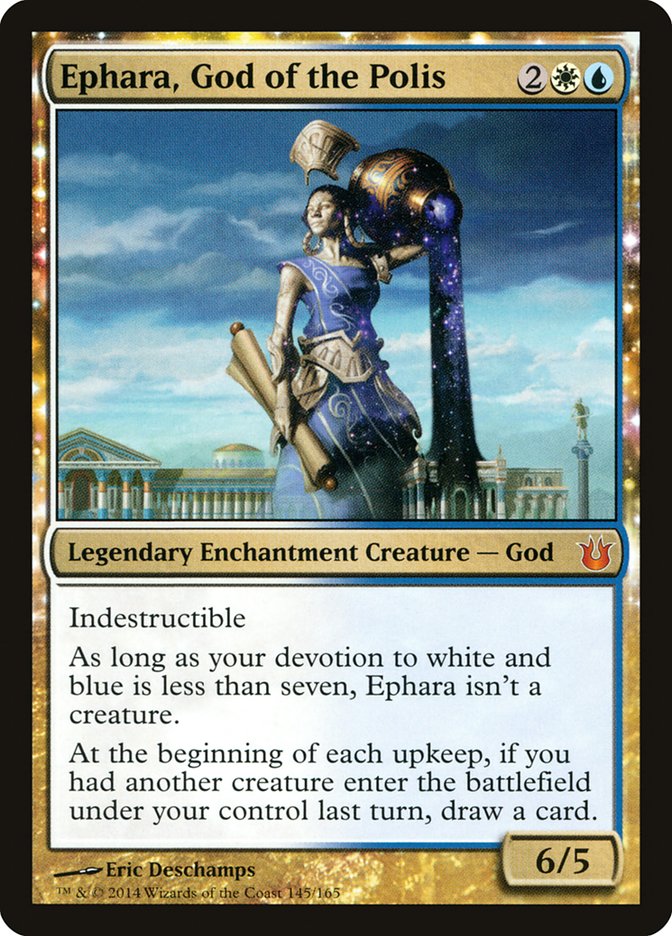
Ephara, God of the Polis wouldn’t be my first choice for a blink commander, but perhaps that’s the secret? It’s a bit unassuming, and you don’t really want to try that hard to interact with it when it’s not a creature, unlike some of the better, kill-on-sight blink commanders like Brago, King Eternal. The one card per turn helps a bit, especially early.
#17. Athreos, Shroud-Veiled
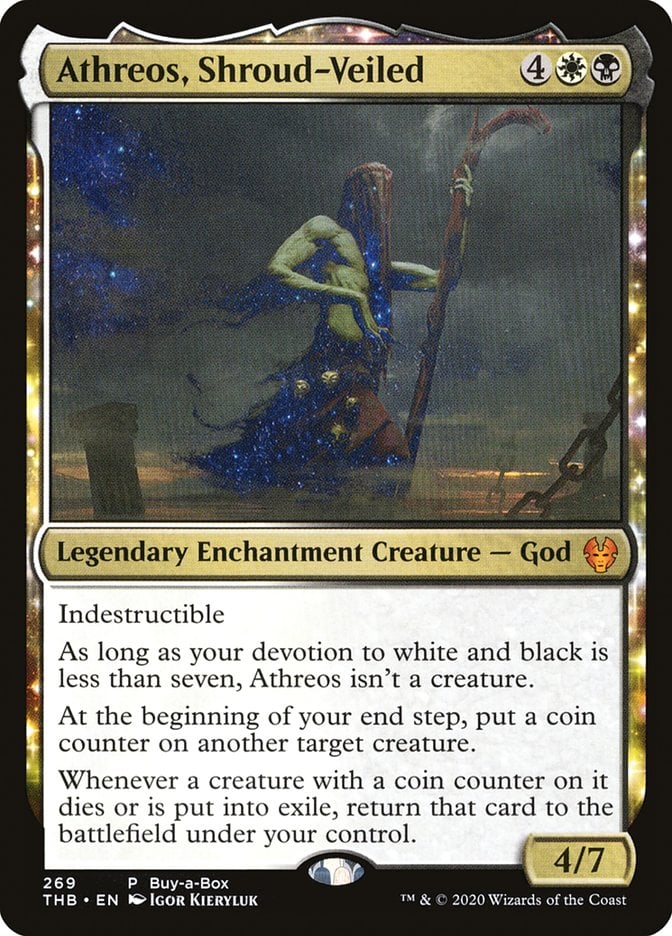
This is an odd commander choice, in a lot of ways. It’s expensive to get down, and the trick is harder to use than the cheaper Athreos. Counters shenanigans with cards like Contractual Safeguard and Resourceful Defense are kind of the thing you want to do with an Athreos, Shroud-Veiled deck, and that sounds fun, but it also sounds like third place at the EDH table.
#16. Pharika, God of Affliction
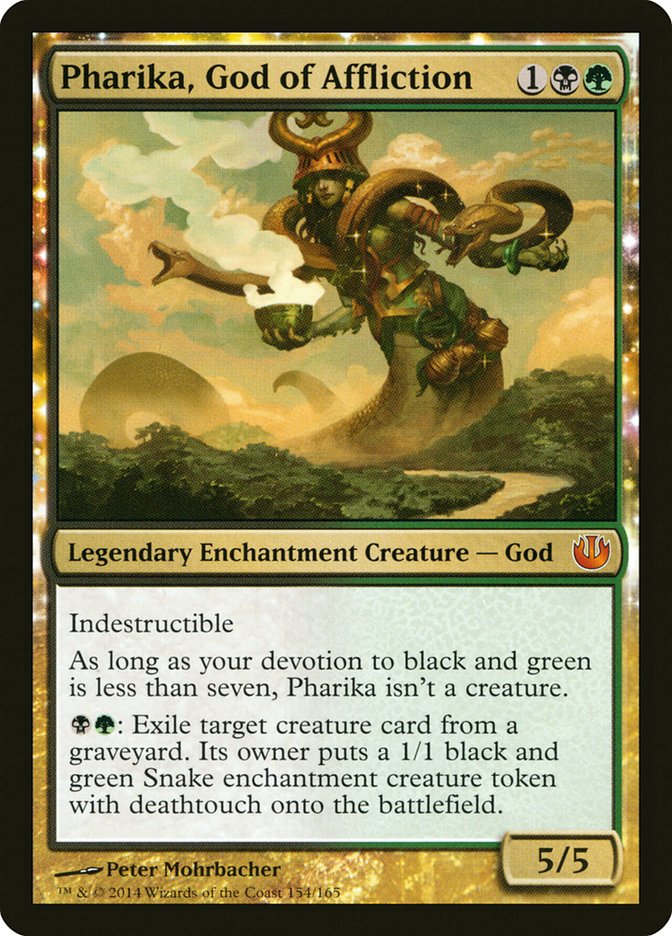
Pharika, God of Affliction is a simple way to play an Insidious Roots style EDH deck that staples on an enchantress subtheme. You know you’re deep in territory that can make you feel like a boomer even if you picked up the game in 2018 when you’re sleeving up Setessan Champion! You won’t really see it in other formats.
#15. Nylea, Keen-Eyed
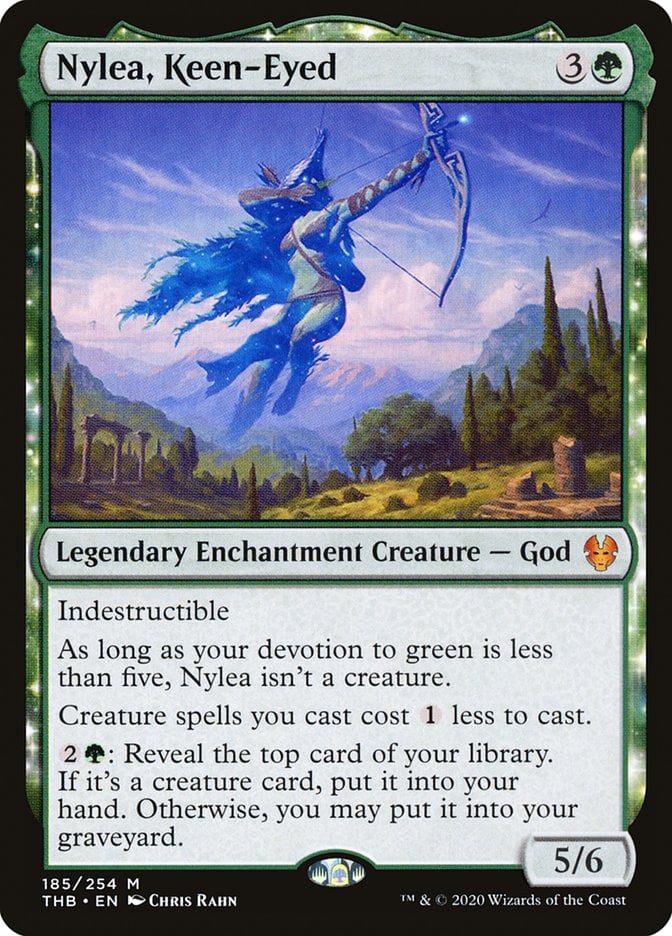
This card used to be a decent option for Pioneer mono-green devotion decks, but that was before an infinite number of powerful options dropped for that deck. Nylea, Keen-Eyed is still a useful card in green Commander decks, sometimes as the commander, even in try-hard (but in my mind pretty underpowered) cEDH attempts. The idea is that Nylea gives you something to do with your infinite mana with its activated ability so that you ultimately drop your whole deck on the table.
#14. Purphoros, Bronze-Blooded
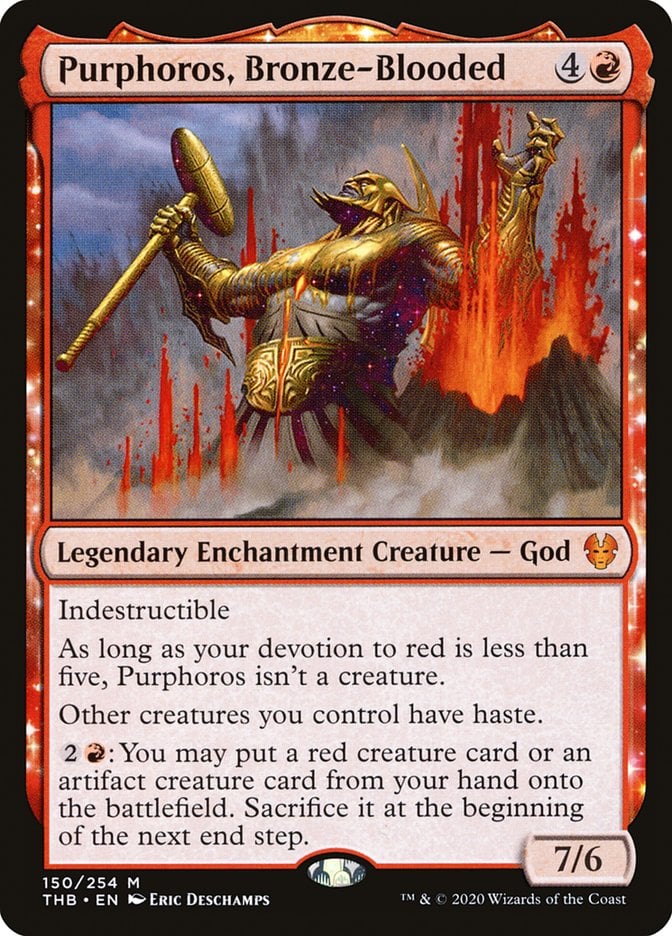
A Sneak Attack in the command zone sounds pretty good, right? Purphoros, Bronze-Blooded is about as popular a commander as you’d imagine given the number of players you know who’d want to play that kind of deck. Degenerate versions of the deck pack all the red combos, like Kiki-Jiki, Mirror Breaker and the pile of cards that go ham with it, Flameshadow Conjuring plus Worldgorger Dragon, and a dozen or more others. My “favorite” is Blightsteel Colossus plus Chandra’s Ignition, which is sure to get you uninvited from the next EDH night.
This card also shows up as an accelerant in the 99 of a ton of other Commander decks.
#13. Klothys, God of Destiny
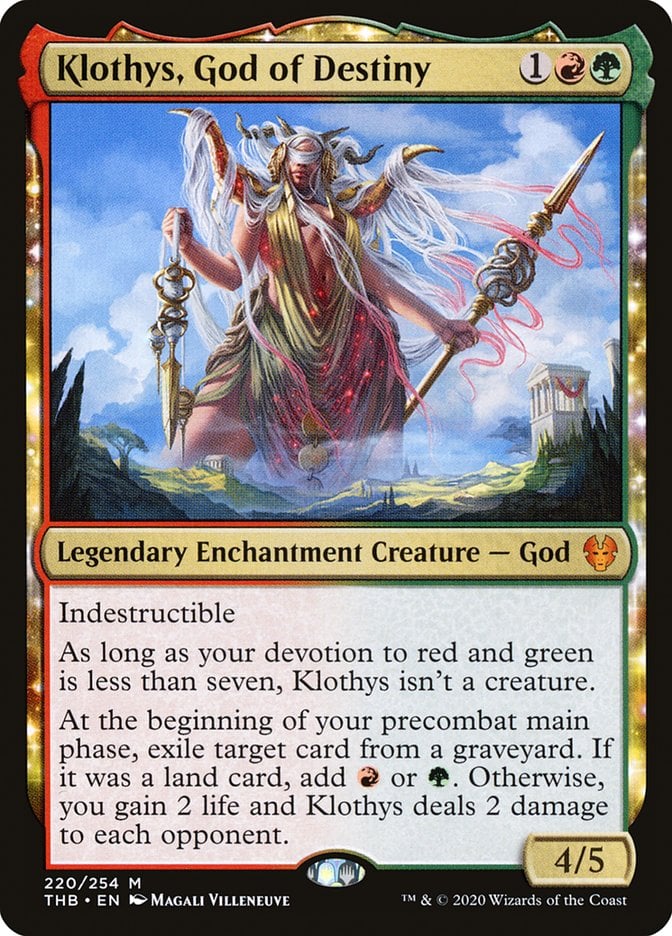
A now longtime staple in Pioneer sideboards, Klothys, God of Destiny gives you some mana and eats some graveyard cards while being hard to interact with. I’ve been in games where it’s just a clock that slowly drained me as I looked for an answer.
It serves a similar toolbox purpose in Commander decks, even decks where it’s the general.
#12. Invasion of Theros / Ephara, Ever-Sheltering
Invasion of Theros / Ephara, Ever-Sheltering is an awkward card, like all the underpowered battles. It’s a reasonable playable in an enchantress deck that doesn’t use green, like Zur, Eternal Schemer or Eriette, the Beguiler, but flipping the battle to the Ephara side isn’t a simple task or choice.
#11. Thassa, Deep-Dwelling
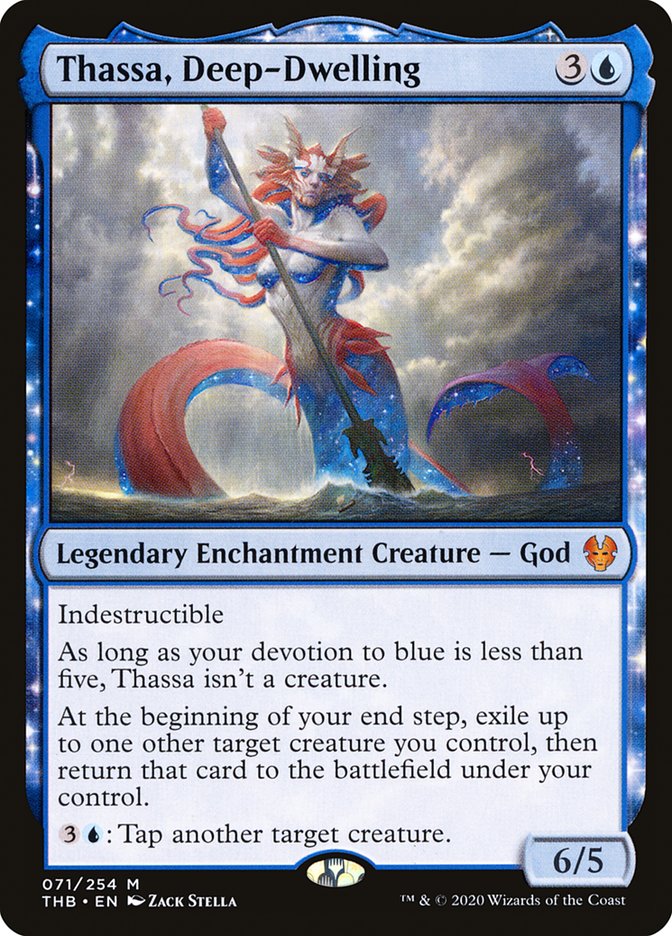
A source of blink that’s both difficult to interact with and that can start to turn the tide in grindy matchups with the expensive tap down ability, Thassa, Deep-Dwelling is a possible commander, but it really occupies that niche of a must-play card in any blink deck you build in Commander. With airbending now a thing, I imagine interest in this kind of deck may tick upwards.
#10. Purphoros, God of the Forge
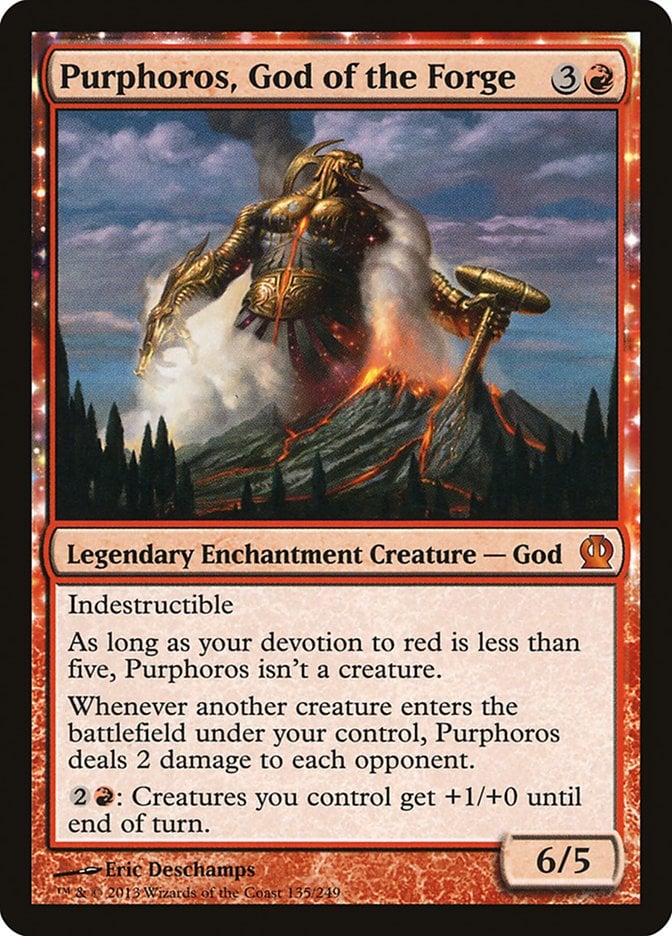
Again, we have a Purphoros who’s another good red card on a devotion stick. Purphoros, God of the Forge, as you can imagine, goes in Impact Tremors style decks, usually in builds that spew Goblins. Which, when I first thought about it seemed like a flavor foul. Like, my Fallen Empires brain wants this to be dwarves instead. Hammer, check. Forge, check. But goblins live their best lives churning out subterranean weapons, as well. And when I see Big Purph posing here, I think of drums. Drums. Drums in the deep.
#9. Keranos, God of Storms
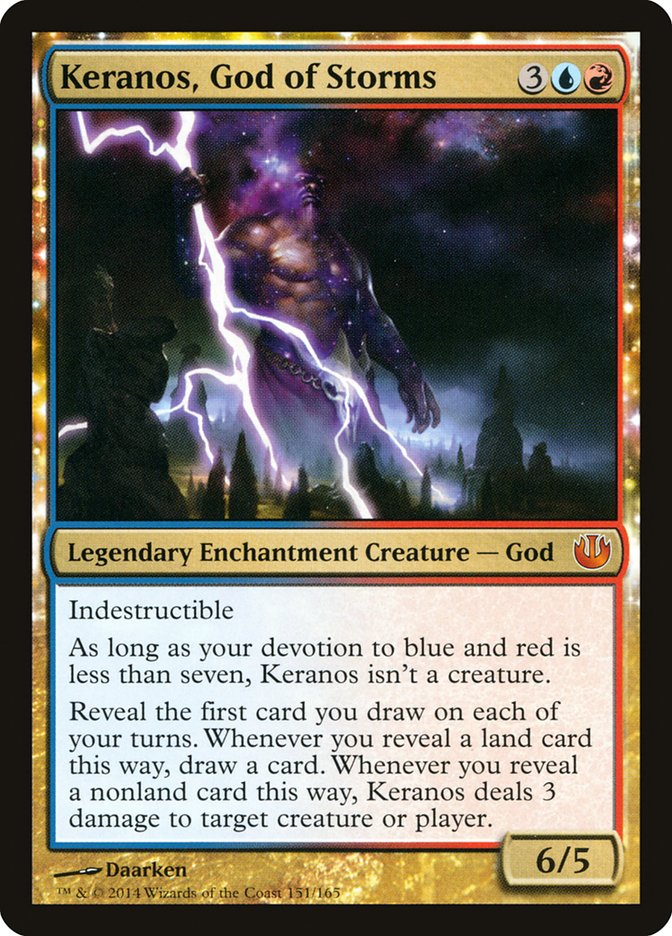
A formerly good choice for an Izzet () spellslinger commander until the floodgates opened with choices, Keranos, God of Storms is finding a second life as an Izzet burn commander. That possibility was always there in the card text, but that text is even more useful as a way to filter through some of the big red payoff cards in this archetype while it deals with more immediate problems. Cards like Fiery Emancipation, Thousand-Year Storm, and Niv-Mizzet, Parun can drop away with a touch of burn, and Izzet stalwarts like Goblin Electromancer, other spellslinger cards like Archmage Emeritus, and then a suite of blue countermagic can amp up the attack.
#8. Mogis, God of Slaughter
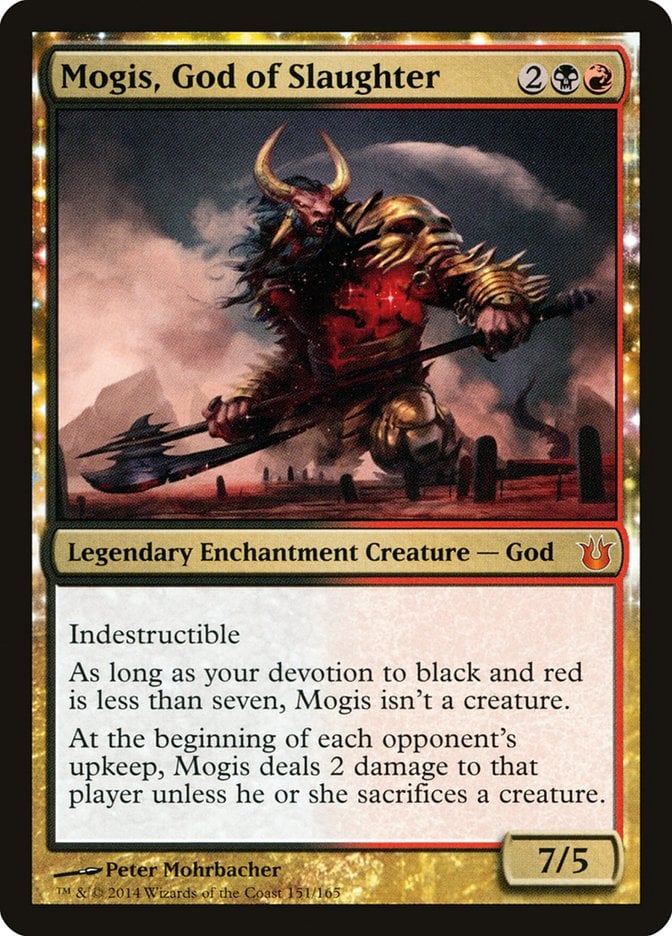
A Rakdos () burn commander at heart, Mogis, God of Slaughter is sometimes reduced these days to playing second fiddle in Valgavoth, Harrower of Souls decks. If Spellshock and Underworld Dreams are your bag, here’s where those cards go.
#7. Heliod, the Radiant Dawn / Heliod, the Warped Eclipse
This was the card that surprised me when I started to go through all the Theros gods. Heliod, the Radiant Dawn / Heliod, the Warped Eclipse helms a fascinating EDH deck that looks to flip Heliod and spew mass table card draw with cards like Prosperity and Fascination. And then it wins with… well, that’s a good question. Cards like Psychosis Crawler and Scrawling Crawler are common plays. Big stuff like Hullbreaker Horror or massive Eldrazi come down easy when the Eclipse if fully Warped, and there’s always the Laboratory Maniac play. There are cEDH versions I’m not sure I believe in here. Seems fun, anyway.
#6. Kruphix, God of Horizons
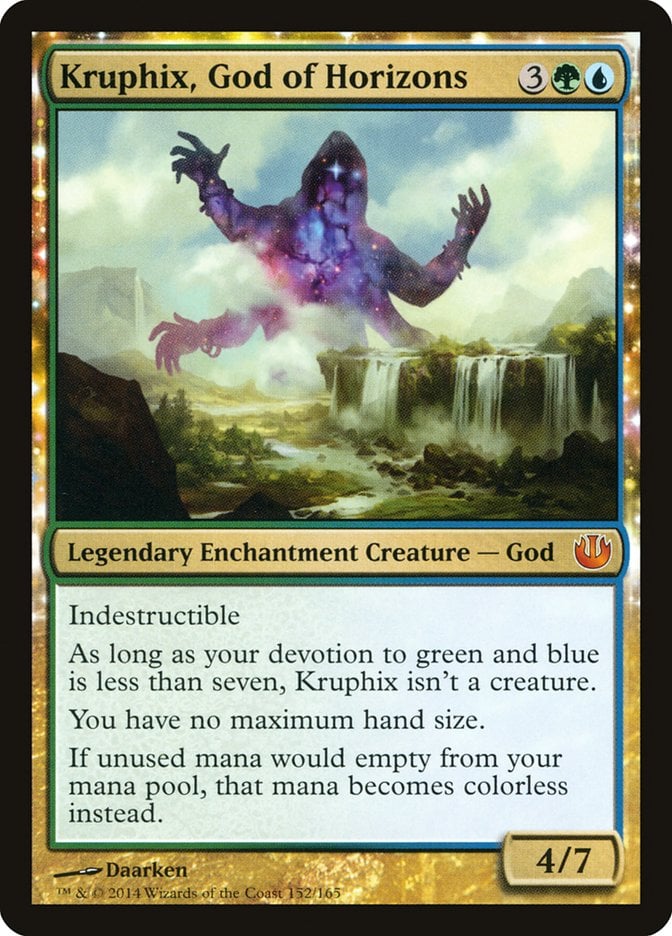
Full-on Wilderness Reclamation time! Kruphix, God of Horizons goes big mana ramp, with massive X-spells like Pull from Tomorrow, and a slightly different flavor than other powerful Simic commanders (). There are quite a few infinite combos, like Sol Ring and Hullbreaker Horror, Doppelgang with Eternal Witness, and more. And all those cards are good in the deck without the combo coming to bear.
#5. Karametra, God of Harvests
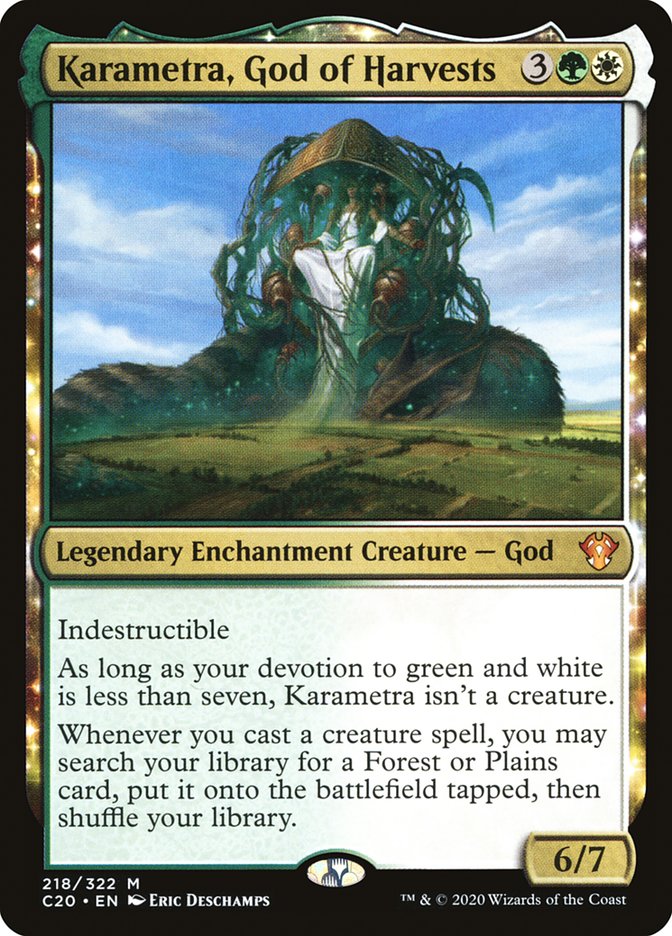
A Soul of the Harvest creaturefall style deck is the most popular choice for this commander, using white for removal and cards like Teferi’s Protection. You’re drawing cards and using Karametra, God of Harvests for ramp and landfall triggers for some select effects like Felidar Retreat. But it’s also a useful card in legends decks, enchantress decks, and whatever’s going on in Kathril, Aspect Warper decks.
#4. Athreos, God of Passage
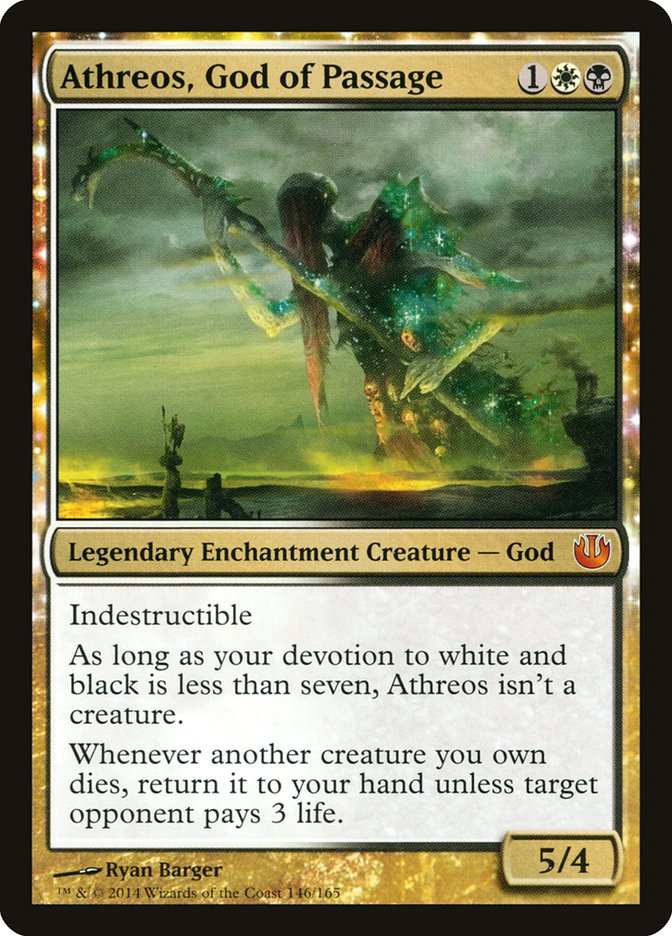
The second most popular commander of all the Theros gods, Athreos, God of Passage is cheap to get down and provides a ton of value in a sacrifice and/or recursion deck, which the Orzhov colors () excel at. Add in some infinite stuff with cards like Ashnod’s Altar (I mean, right?) and Luminous Broodmoth, and you have a grindy slugfest. This is also a popular commander for the Shadowborn Apostle decks, given that you have access to helpful cards that touch white like Immortal Servitude and Edgewalker.
#3. Phenax, God of Deception
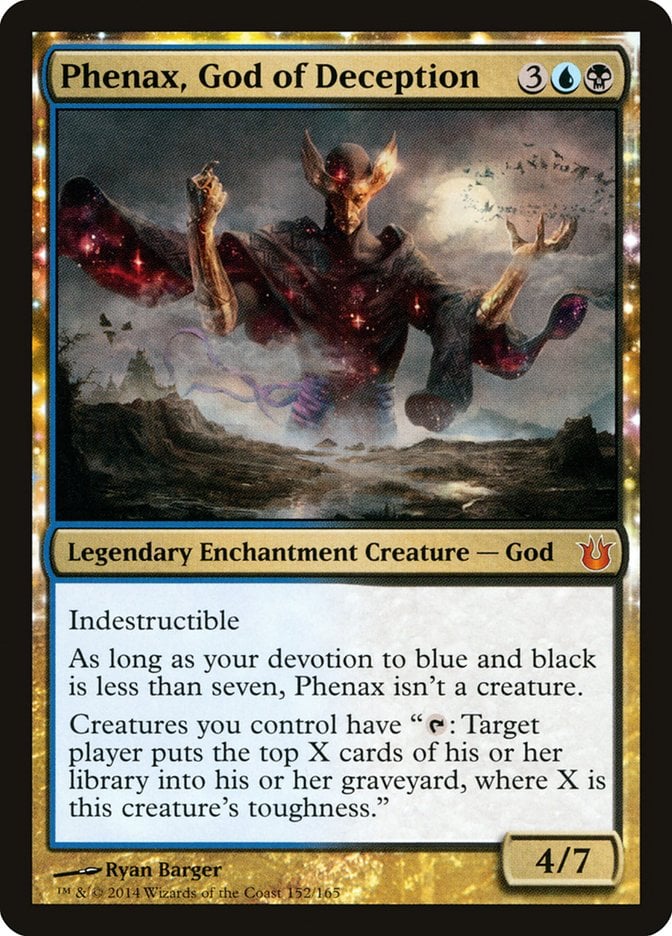
Probably the highest charting commander of the Theros gods, Phenax, God of Deception is like a Dimir () mill/control player’s fever dream, with all the mill classics, plus extra special spaces for big-butted things like The Walls of Ba Sing Se, Charix, the Raging Isle, Tree of Perdition, and, of course, Consuming Aberration.
A lot of Theros gods are a particular groan test for other players, but this is likely the groaniest.
#2. Xenagos, God of Revels
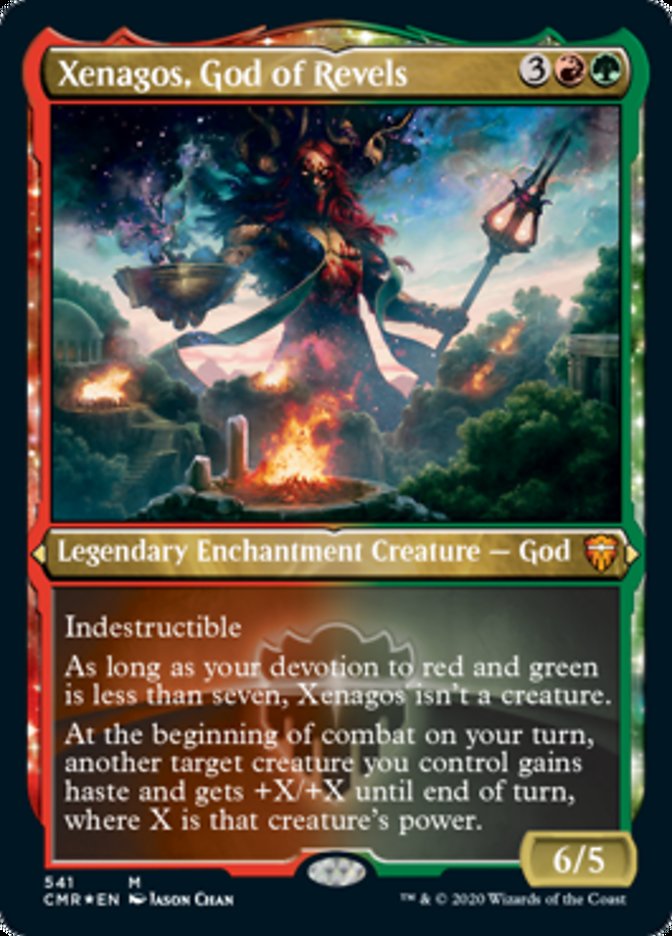
Xenagos, God of Revels was one card in the two-card combo with Worldspine Wurm in the Izzet Indomitable Creativity decks that won Reid Duke the Pioneer format Pro Tour Phyrexia. It remains a popular commander with the kind of Gruul stompy decks that want to play cards like Goreclaw, Terror of Qal Sisma.
#1. Heliod, Sun-Crowned
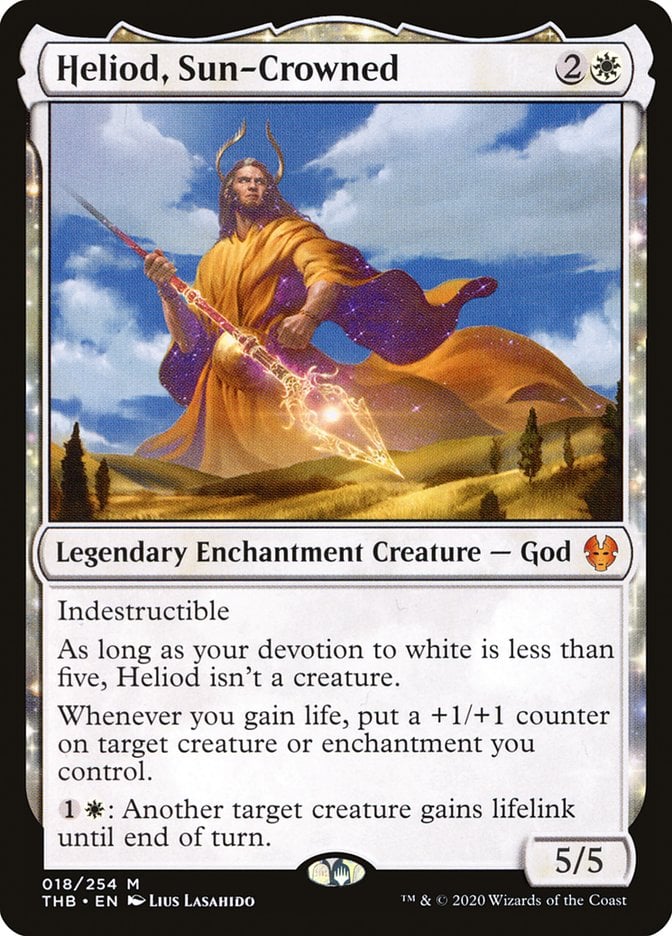
Top of the list has to go to everyone’s least favorite Theros god in the form that anchors a thousand combos. Heliod, Sun-Crowned goes infinite with any number of cards across formats:
And that isn’t counting the large number of 3-card combos. The Ballista combo, specifically, has found many formats where it’s powerful.
It’s a popular card in enchantress EDH decks like Sythis, Harvest’s Hand, the Shalai and Hallar deck, and lifegain decks like Hope Estheim. And it’s a reasonably popular lifegain commander that uses those artifact combos as finishers.
What Happened to Xenagos?

He’s dead, Jim. Killed by Elspeth in a Deicide. He probably had it coming for murder, mayhem, and destruction.
What Happened to Heliod?
Kaya kills him during the events of March of the Machine. He spills Phyrexian ichor as he goes down. He “fades”, and Kaya is called a “godkiller.” Can he still come back? Honestly, it likely depends on the needs of the future plot!
Who Are the Theros Titans?
This seems to be like the Greek titans, the precursors of the gods who may have been destroyed by the later pantheon. The fact that they can’t exist without escaping is very like Chronos in Greek myth, dead but in a way that they can break free of. Perhaps they’re only very well tied up, as in The Binding of the Titans? The titans we know of are Uro, Titan of Nature’s Wrath, Kroxa, Titan of Death’s Hunger, and Phlage, Titan of Fire’s Fury. There is also Skotha, a titan of eternal darkness, who doesn’t have a card yet.
Who Is Cacophony in MTG?
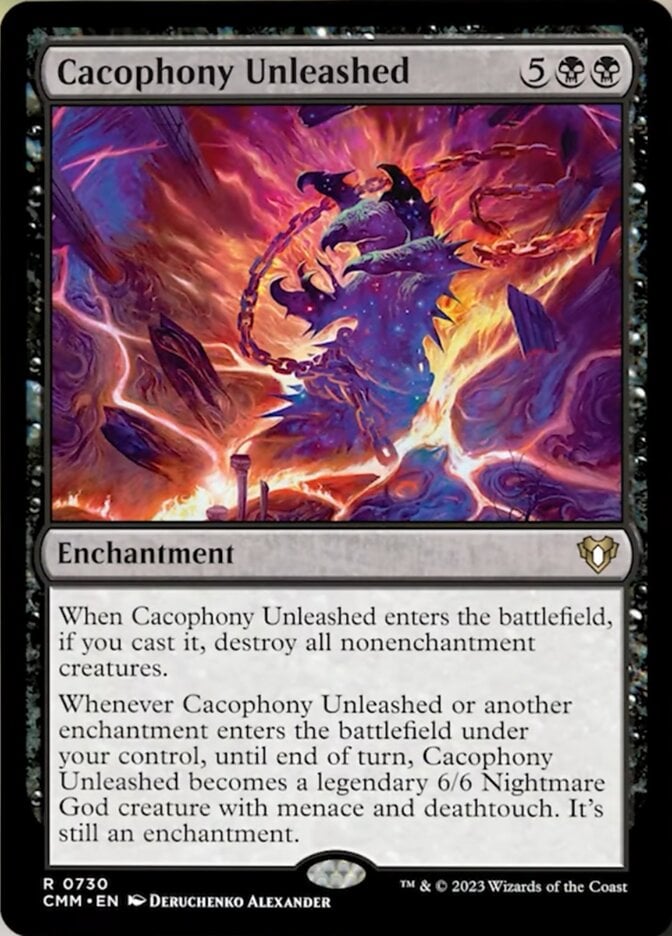
Cacophony was a short-lived god of dreams of the city from Ashiok’s manipulations, killed by Ephara.
Wrap Up
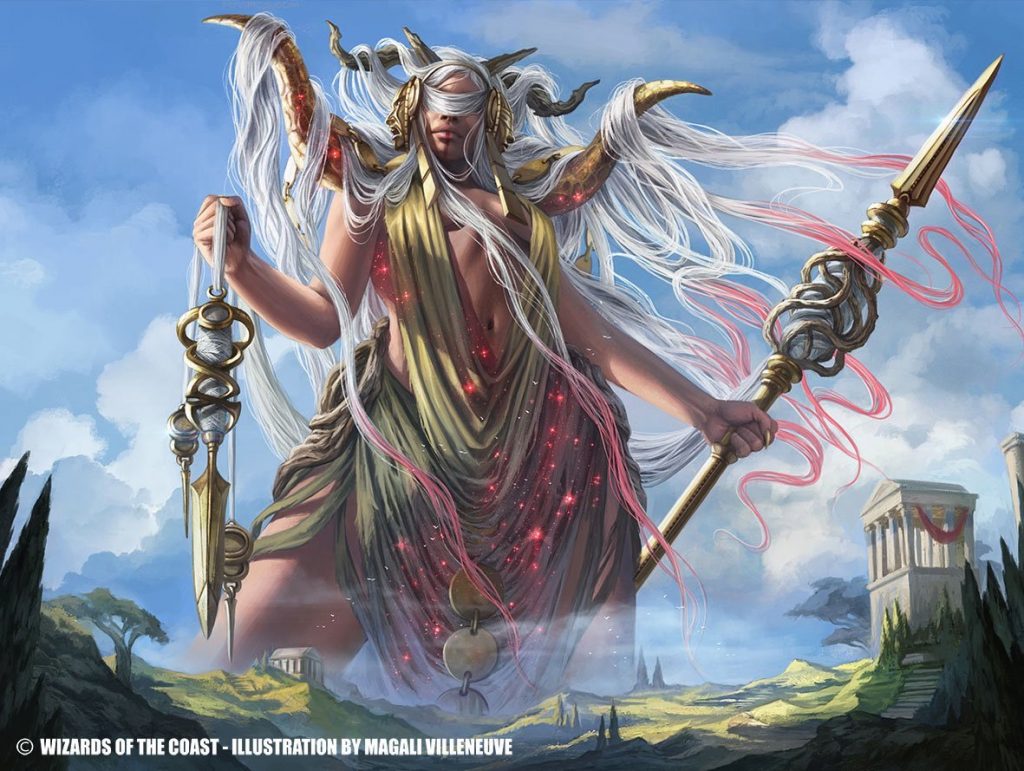
Klothys, God of Destiny | Illustration by Magali Villeneuve
The Theros gods are a bit too on-the-nose Greek for me, but I like the ideas and worldbuilding there. I also like that gods have different ways of being difficult to kill in the MTG multiverse based on different structures of myth.
The Theros gods remain interesting build-arounds that continue to find homes in EDH and in a few stray formats. Their uniqueness plus their lore makes them perennially interesting. And despite my reservations, I’d like to some day again return.
Which Theros gods do you run, and in which decks and formats? Would you like to see new gods in a future Theros set? Let me know in the comments below or over on the Draftsim Discord.
Happy deckbuilding!
Follow Draftsim for awesome articles and set updates: